

General News
Sanwo-Olu, Others Grace Launch of 50-Bed Hospital in Surulere by Avon Medical

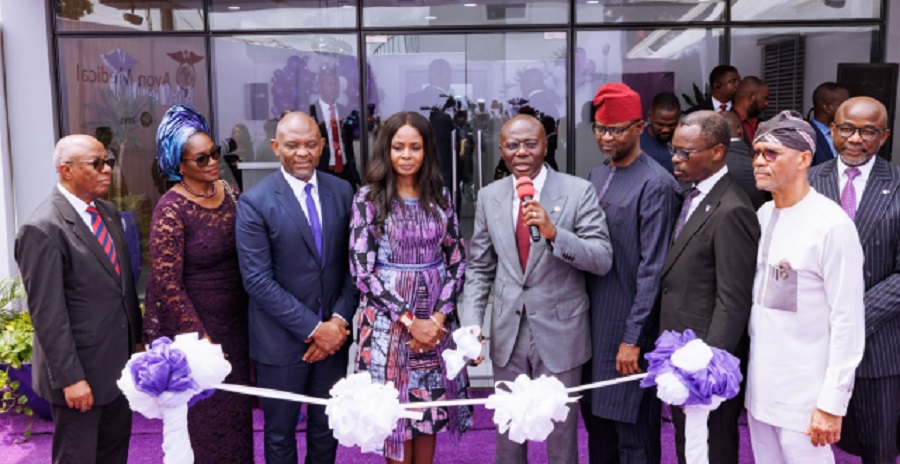
Avon Medical, a subsidiary of Heirs Holdings has officially launched an ultramodern hospital facility in Surulere, Lagos.

L-R: Emmanuel Nnorom – Group CEO, Heirs Holdings; Dr. Kemi Ogunyemi, Special Adviser on Health to the Lagos State Governor; Tony O. Elumelu, CFR, Group Chairman, Heirs Holdings; Dr. Awele Elumelu, Chairperson, Avon Medical Practice; H.E. Babajide Sanwo-Olu, Executive Governor, Lagos State; Prof. Wasiu Adeyemo, CMD, LUTH & Representative of the Minister for Health; Dr. Akinbiyi Oke, CEO, Avon Medical; Professor Emmanuel Akinola Abayomi, Honorable Commissioner for Health, Lagos State; Chidi Okpala, Group Executive Director, Heirs Holdings; at the launch of the Avon Medical ultramodern facility in Lagos on April 14, 2025.
At the historic event, Babajide Sanwo-Olu, governor, Lagos state, who inaugurated the 50-bed, fully equipped facility, said that Avon Medical has put its name in the sand of time in this industry.
The opening ceremony was attended by top government officials, healthcare professionals, and industry stakeholders.
Also present at the event were Group Chairman of Heirs Holdings, Mr. Tony Elumelu, Lagos State Commissioner of Health, Prof. Akin Abayomi; Minister of Health, Prof. Muhammad Ali Pate represented by the Chief Medical Director of LUTH, Prof. Wasiu Lanre Adeyemo.
The new hospital features comprehensive diagnostic services, obstetrics and gynecology (O&G), pediatrics, and neonatal care, and is designed to serve the growing healthcare needs of Lagos residents.
Speaking at the commissioning, Governor Sanwo-Olu praised Avon Medical for its long-standing commitment to improving healthcare delivery in Nigeria.
Sanwo-Olu said: “This is more than just a hospital. It’s a bold statement of what private sector collaboration can do in transforming our healthcare landscape. For one facility to offer full diagnostics, O&G, pediatric, and neonatal care, it shows the level of intentional investment and vision behind Avon Medical.”
The Governor further commended Dr. Awele Elumelu, Chairperson, Avon Medical and co-founder of the Tony Elumelu Foundation, for her dedication to building sustainable healthcare institutions.
He said: “Dr. Awele Elumelu chose not to be comfortable in her success, but instead to invest in something meaningful something that impacts lives directly.”
“The health sector requires long-term commitment rather than short-term returns. Healthcare is not a sector where profits come quickly. It takes vision, compassion, and a strong sense of purpose.”
“We are building the largest pediatric hospital and the largest mental health facility in Sub-Saharan Africa. Health is wealth, and we’re backing that statement with action and funding. 8–10% of Lagos State’s annual budget is allocated to the health sector.”
Also speaking, Dr. Elumelu, AVON Medical Chairperson said they from the beginning resolved to focus on the problems which include overburdened public hospitals, lack of modern equipment, medical professionals being stretched to their limits, too many people frustrated as they simply couldn’t get medical help in time.
“We could not look away, so we decided to do something about it,” she said.
“That single decision to step in gave birth to Avon Medical and our health insurance company, Avon HMO.
“The first, to provide excellent healthcare services, and the other to ensure that people could actually afford them.
“That combination was deliberate. It was our way of ensuring we were not only building facilities, but we were also creating access to them.”
She said the initiative them from the humble beginnings of operating just a work-site clinic at a single location had grown into a 50-bed hospital network, including a Dialysis Centre, and several worksite clinics.
She said why the decision they took then matter could be seen from the staggering facts about our healthcare system on the Africa continent which has over 20% of the global disease burden yet has access to only 1% of healthcare resources; approximately 48% of Africans lack access to the quality healthcare they need; Only about 3% of global health workers serve our continent; In Nigeria alone, the gap in the number of available and qualified doctors, beds, and equipment reflects a system under pressure; The African healthcare system is the hardest hit by the migration crisis.
She said the challenges were not just mere numbers, but real people, real stories, real lives.
“And far too often, they represent women and children. Which is why this facility matters,” she said.
With the medical facility, she said more women will now receive the maternal care they need to safely bring life into the world.
“It means more children will get timely diagnoses, life-saving treatments, and a better shot at long, healthier lives,” she said.
“ It means more families will have access to quality and affordable healthcare services that they deserve.
“This is what we are building: a healthcare system that leaves no one behind.”
Describing the project as a reflection of “our philosophy—Africapitalism, she said, “The belief that the private sector has a major role to play in our continent’s development.
“The belief that we have a responsibility, not just to generate profit but most importantly, to create a lasting impact, to do well and do good.”
She also made it clear that to solve problems, to improve lives that will transform Africa would not end with the new project.
“ This achievement is not the end. It is only a springboard. Our vision has always been bold: to create a network of health solutions that are not only accessible and affordable, but also world-class,” she said.



Nigeria Centre for Disease Control and Prevention (NCDC) has placed Lagos, the Federal Capital Territory and several other states on high Ebola alert following the outbreak of the deadly Bundibugyo strain of Ebola Virus Disease in parts of East and Central Africa.

In a national public health advisory issued to Commissioners for Health across the country, the agency warned that Nigeria faces a high risk of importing the virus due to increasing regional transmission, international travel, porous borders, and population movement.
The advisory, dated May 27, 2026, comes amid growing concerns over the spread of the Bundibugyo variant of Ebola, a rare strain for which there is currently no approved vaccine or specific treatment.
States classified by the NCDC as high-risk include Lagos, the FCT, Rivers, Kano, Enugu, Borno, Akwa Ibom, Cross River, Taraba, and Adamawa because of their international airports, seaports, border routes and high human traffic.
“The immediate objective of our national preparedness and readiness efforts is to ensure that every State and the FCT can reasonably detect, contain, and respond swiftly to any suspected case while protecting health workers and sustaining essential health services,” the NCDC stated.
The agency disclosed that although Nigeria has not recorded any confirmed case, a dynamic risk assessment conducted after the outbreak was declared a Public Health Emergency of International Concern showed that the danger of importation into Nigeria remains high.
According to the NCDC, 1,077 suspected cases and 247 deaths have already been reported in Uganda and the Democratic Republic of Congo, with a fatality rate of 24.6 per cent.
It added that the outbreak has also triggered international concern, with suspected cases reportedly identified in India, while Canada announced temporary restrictions on travel applications involving residents of Uganda, DRC and South Sudan.
Uganda has also reportedly introduced border closure measures to contain the spread.
The NCDC stressed that the Bundibugyo strain differs from the Zaire Ebola strain, which existing vaccines and antibody treatments primarily target.
“The current Bundibugyo virus outbreak has no licensed vaccines or approved targeted therapeutics,” the advisory warned.
Health officials also cautioned that Ebola symptoms could initially resemble malaria, Lassa fever, or other common illnesses, making early detection more difficult.
“Health workers must not wait for bleeding before suspecting Ebola in any patient with compatible symptoms and relevant travel or exposure history,” the agency said.
The NCDC noted that Ebola is not airborne and spreads mainly through direct contact with infected blood, body fluids, contaminated materials, or infected animals.
As part of emergency preparedness measures, the agency said its National Emergency Operations Centre has already been activated in alert mode to coordinate nationwide response efforts.
State governments were directed to immediately activate Ebola preparedness structures, identify isolation centres, intensify surveillance at entry points, equip frontline health workers with personal protective equipment and begin public sensitisation campaigns to counter panic and misinformation.
The agency also asked states to submit readiness reports within 72 hours.
Nigeria’s renewed Ebola alert has revived memories of the country’s successful containment of the virus during the 2014 outbreak, when an infected Liberian-American traveller, Patrick Sawyer, arrived in Lagos and exposed dozens of people before authorities intervened.
At the time, public health experts feared a catastrophic outbreak in Lagos due to its dense population and status as one of Africa’s busiest commercial hubs.
However, rapid contact tracing, aggressive isolation measures, emergency coordination and public awareness campaigns helped Nigeria stop the spread within months.
The World Health Organisation (WHO) later praised Nigeria’s response as one of the most effective Ebola containment efforts in Africa.
The latest alert is considered particularly serious because the Bundibugyo variant remains less understood than the more common Zaire strain.
Unlike the Zaire strain, which has approved vaccines and treatments developed after previous West African outbreaks, the Bundibugyo strain currently lacks licensed countermeasures.
Public health experts have long warned that Nigeria’s heavy air traffic, extensive land borders, crowded urban centres and overstretched healthcare system leave the country vulnerable during regional disease outbreaks.
The warning also comes as Nigeria continues to battle multiple infectious disease outbreaks, including Lassa fever, cholera, and meningitis in several states, increasing pressure on the healthcare system.
Health authorities are now urging Nigerians to remain calm, avoid rumours and fake cures, maintain proper hygiene and report suspected symptoms early as surveillance and preparedness measures intensify nationwide.

The ongoing transformation at Enugu State Housing Development Corporation (ESHDC) is gradually positioning the corporation as one of the strongest examples of institutional reform and modern public service delivery in Enugu State.

With the recent launch of its digitized land transaction and documentation system, ESHDC has taken a major step toward improving transparency, operational efficiency, accountability, and investor confidence within the housing and land administration sector.
The reform initiative, introduced as part of Governor Peter Mbah’s broader governance modernization agenda, is expected to significantly improve land documentation processes, digital payments, workflow coordination, property verification, and the issuance of Certificates of Occupancy (C-of-O), while reducing delays and inefficiencies previously associated with manual systems.
Beyond technology, however, the transformation reflects a deeper institutional shift focused on building systems that work more efficiently for the people while strengthening public trust in government operations.
One of the personalities increasingly associated with this evolving reform culture is Adenike Okebu, whose involvement in key accountability, audit, and operational restructuring processes within the corporation continues to attract attention.
Her professional background spans EY Nigeria, Deloitte, BUA Group, Platform Capital, and Pinnacle Oil and Gas, giving her a rare combination of Big Four audit rigour, corporate financial governance experience, and frontline public sector reform capability.
Her growing public profile is increasingly associated with helping governments and organizations improve revenue governance systems, strengthen financial transparency, optimize revenue collection structures, detect and remediate revenue leakages, and produce credible financial reporting capable of supporting both domestic accountability and international investor engagement.
Industry observers note that her contribution to audit-driven reforms and operational restructuring within ESHDC helped create a more organized and transparent institutional framework capable of supporting the corporation’s digital migration and modernization goals.
The impact of the reforms is already becoming visible through improved workflow systems, better records management, increased operational coordination, and stronger confidence in the corporation’s administrative structure.
For many stakeholders, ESHDC is now becoming more than a housing institution. It is emerging as a model of institutional modernization; a platform demonstrating results; a reflection of transparent governance, and a symbol of operational reform and accountability.
At the same time, Adenike Okebu’s increasing visibility within the transformation narrative is positioning her as a modern governance advocate and a public-sector personality associated with institutional reform, measurable impact, and people-centered leadership.
As Enugu State continues to push its broader reform agenda, the ESHDC transformation story is gradually reinforcing a growing perception that sustainable governance is built not only on policies, but on accountability, transparency, operational efficiency, and institutions capable of delivering measurable results.
General News
How MTN and SMEDAN are Closing Nigeria’s $158 Billion Funding Gap for 40 Million Small Businesses


Nigeria’s mySMEville platform is becoming a key driver for Africa’s digital economy by closing the financial and skills gaps holding back the country’s nearly 40 million MSMEs. This was highlighted on Tuesday, May 12, 2026, during a visit hosted by the Small and Medium Enterprises Development Agency of Nigeria (SMEDAN) to the MTN head office by Angola’s INAPEM, the National Institute of Support for Micro, Small and Medium Enterprises. The delegation was led by its Chairman, Mr. Bráulio Augusto.

L-R: Njideka Jack, General Manager Enterprise Marketing, MTN Nigeria; Dr. Charles Odii, Director General, Small and Medium Enterprises Development Agency of Nigeria (SMEDAN); Lynda Saint-Nwafor, Chief Enterprise Business Officer, MTN Nigeria; Bráulio Augusto, Chairman of The Board of Directors for National Institute for the Support of Micro, Small, and Medium Enterprises (INAPEM) and Omowunmi Olatunbosun, Head, SME Segment, MTN Nigeria, at the mySMEville Angola INAPEM visit to MTN and SMEDAN, at MTN Plaza, Ikoyi, Lagos on Tuesday, May 12, 2026.
The delegation was focused on studying the success of the MTN and SMEDAN mySMEville partnership. The initiative targets four core areas: information, funding, infrastructure, and markets, to support a sector that contributes 48% of Nigeria’s GDP but remains largely underserved.
mySMEville moved quickly from a strategic idea (the MOU was signed in November 2025) to a continental success. After a pilot in Lagos onboarded 200 businesses in December, the platform rapidly grew to include over 2,600 businesses nationwide by May 2026.
This rapid expansion is essential given that 80% of Nigerian SMEs are currently informal and only 3.9% access formal credit, leaving a staggering $158 billion annual financing gap.
Emphasising the strategic necessity of this collaboration, Lynda Saint-Nwafor, Chief Enterprise Business Officer at MTN Nigeria, stated: “At MTN Business, our ambition is clear: to serve as the leading technology partner enabling Africa’s enterprises to scale, compete, and create sustainable impact. We are intentionally building platforms that matter, solutions that scale, and ecosystems that accelerate inclusive economic growth across the continent.
“This is why initiatives such as mySMEVille are strategically important to us. SMEs remain the backbone of our economy, driving innovation, creating jobs, and strengthening national competitiveness. Through our partnership with SMEDAN, we are focused on unlocking the full potential of these businesses by providing access to guidance, digital tools, market opportunities, financing ecosystems, and workforce support.” Supporting this view, Dr Charles Odii, Director-General of SMEDAN, said that the initiative represents the future of business on the continent, asserting that “What we are witnessing here is a formidable force for economic progress. Through this deliberate Public-Private Partnership, Nigeria is aligning its public and private sectors to lead the way for Africa.”
Olatunbosun Agosu, Senior Specialist, ICT Segment Management, MTN Business demonstrated with a live demo, how the mySMEville platform, a joint effort by MTN and SMEDAN, is the “one-stop orchestrator” for Nigeria’s 40 million small businesses.
The platform is an intuitive, centralised platform that bridges the $158 billion funding gap and digital divide. By aggregating diverse partners, it gives entrepreneurs direct access to funding, infrastructure (like solar power), e-commerce tools, and essential growth information.
INAPEM’s Chairman, Mr. Bráulio Augusto, confirmed that Angola intends to adapt the framework to its own economic reality. Reflecting on the visit, the Chairman stated during his remarks, “The key thing I learned here is the strength of the public and private sector partnership. mySMEville clearly shows what’s possible, and we will absolutely use these insights as we adapt this model back home in Angola.”
Looking ahead, the partnership aims to reach a monumental target of 5 million MSMEs through the mySMEville Academy, e-commerce integrations, and national policy advocacy. As the platform continues to grow into a “one-stop shop” for resources, it’s clear that Africa’s future depends not on luck, but on the smart, collaborative work of partners like MTN and SMEDAN.

CBN Extends PoS Geo-Fencing Enforcement Deadline to August 2026

Nigerian Capital Market to Transition to T+1 Settlement Cycle on Monday

Report Shows Start-ups Fuel Innovations in Africa

NCC Expands IPv6 Board with the Appointment of Olusola Teniola, Funke Opeke Others

FidBank UK Broadens Investment Pathways for Nigerians into the UK Market

MTN, VDT, Zoracom, Digital Realty Back 2026 Girls in ICT Campaign

Vitel Wireless Partners Fintechs to Expand Access to Services

Opay Plans IPO in US, Targets $4Bn in Valuation

CPN Begins Crackdown on Quack IT Professionals, Vows Tougher Action against Cybercrime

Nigeria Hit by 24.1m Data Breaches – Surfshark




 E-Business3 days ago
Anthropic Raises $65 Bn to Expand AI Research, Innovation

 Telecom3 days ago
Telcos Mull Calculator to Address Data Depletion Complaints

 General News3 days ago
NCDC Says Lagos, FCT, Others on High Ebola Alert
 E-Financial2 days ago
Nigerian Capital Market to Transition to T+1 Settlement Cycle on Monday
 Telecom2 days ago
NCC Expands IPv6 Board with the Appointment of Olusola Teniola, Funke Opeke Others
 E-Business2 days ago
Report Shows Start-ups Fuel Innovations in Africa

 E-Business2 days ago
NDPC Raises Alarm: Fake News, Data Abuse Could Destroy Nigeria’s 2027 Elections

 Telecom2 days ago
QNET, Manchester City Host Football Clinic for Young Talents in Ghana