

E-Business
Security: How Your Fingerprints Are Used


Your fingers have never been more important – they can unlock doors, open phones and even secure your savings, explains Greg Sarrail, Vice President, Solutions Business Development, Biometrics, HID Global in this article exclusive to Nigeria CommunicationsWeek.
Fingerprint scanners are considered the second most popular biometric devices by consumers around the world according to research undertaken by the 2016 Future Password Index. This research was defined by how interested people were in using fingerprints to verify their identity when handling their devices, banking and other forms of security.
Fingerprint biometrics saw a steady rise in popularity from 2014 to 2016 and remains one of the most trusted on the market today.
It is a trend that isn’t going to change anytime soon and this is further underscored by the rise in fingerprint scanners, ATMs, devices and solutions. Your fingerprint has become a coded key that only you can wield.
People are being asked for their fingerprints on a daily basis. When you go to work, transact at your bank, and when you apply for certain government documents.
Biometrics even play a fundamental role in the criminal justice system. However, not all biometric systems are created equal. There are important differences between specific systems, their capabilities, the data they access and the data they share.
Some biometric solutions are not linked to a shared network, so you could transact at your bank or enter your office park with your unique identity, but this information will not be shared anywhere else. The data is captured and secured by each individual system to ensure absolute security and controlled access.
In addition, it is important to know the difference between biometric verification and biometric identification as their applications vary, as do their relevance to your security. When undertaking biometric identification, you are asking – ‘Who am I?’
Whereas with biometric verification you are asking – ‘Am I who I claim to be?’ For example, once your fingerprint has been submitted to a specific database, an identification application would compare it against a larger database of fingerprints that are associated with identities. If your fingerprint is found within that database, then the question of ‘Who am I?’ has been answered. This is biometric identification in a very simple nutshell.
When it comes to biometric verification and proving an identity, there is a need to add in some extra factors that can support the process and make it more secure. These can be account numbers, credit cards, or even smart devices.
The system then pulls up the biometric data associated with your fingerprint and attempts to make a match. It’s important to note that the verification process doesn’t examine all fingerprint data for all users to find a match. Instead it checks to see if the fingerprint template that’s presented to the system is the same one that was originally enrolled, and it provides a quick answer.
Biometric verification is very quick and is often used in commercial applications. It is private and efficient and often requires two-factor authentication – something you have or know plus your fingerprint that identifies who you are.
Enrolling and verifying individuals using this process doesn’t demand huge processing power and is ideally suited to the growing trend in enterprise mobility.
Users can simply store their own biometric data on their own devices for privacy, portability and convenience. Of the two types of biometric application, this is the simplest and most easily found on smaller devices and has recently grown in popularity within the consumer space.
When you use your finger to access your phone, this is defined as biometric verification. The device uses your singular print stored in its database to confirm that you are who you claim to be, further backed up by passwords and PIN numbers.
Biometric identification is more complex and requires a system that’s advanced and comprehensive. An example of this would be when you access your bank account using a biometric pad at the teller, or when you are applying for specific government papers and the system checks your fingerprint against a vast database of prints and identities.
Biometric verification is the hurdle you jump to prove that you are who you say you are, biometric identification is when a system identifies you from within a vast database.
Both systems are invaluable when it comes to protecting your identity and assets, but the latter demands a level of sophistication in technology to manage a significantly larger database and it is prohibitive for more basic devices and biometric systems.
Whether you are about to use biometrics to identify or verify, your fingerprint remains your own proof of who you are. It is unique to you and you alone, and it is your highly personalised key to unlocking your world.
Quoted sources: http://www.paymentscardsandmobile.com/consumer-demand-banks-adopt-biometric-technology-doubles/


E-Business
Kaspersky Discovers New Phishing Campaign Exploiting Google Tasks Notifications to Steal Corporate Credentials

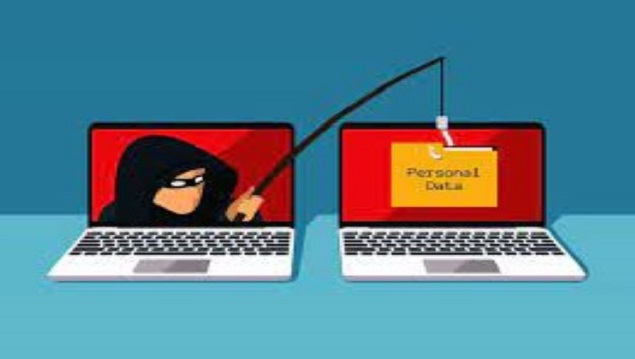
Kaspersky has uncovered a new phishing scheme that abuses legitimate Google Tasks notifications to trick corporate users into revealing corporate login credentials.

By leveraging Google’s trusted @google.com email domain and notification system, attackers bypass traditional email security filters and exploit users’ trust in familiar services.
In this campaign, victims receive an authentic-looking notification from Google Tasks with the subject line “You have a new task.” The message creates the illusion that the recipient’s company has adopted Google’s task management tool, pressuring them to act quickly. The notification often includes elements of urgency, such as a high-priority flag and a tight deadline, to prompt the victim’s immediate response.
Upon clicking the embedded link, users are directed to a fraudulent form disguised as an “employee verification” page, where they are asked to enter their corporate credentials under the pretense of confirming their status. These stolen credentials can then be used for unauthorised access to company systems, data theft, or further attacks.
“Google’s vast ecosystem of services gets exploited by scammers. The scheme with Google Tasks is part of a broader trend observed before and continuing into 2026, where cybercriminals misuse legitimate platforms to distribute scams and phishing.
Notifications originating from legitimate domains naturally evade many spam and phishing filters, while the social engineering aspect – making it seem like an internal company process – lowers the victim’s guard,” comments Roman Dedenok, Anti-Spam Expert at Kaspersky.
E-Business
esentry 2025 Report Shows Healthcare, Financial Services and Telecoms as Staging Grounds for Increased Cyberattacks in Africa

Cyber adversaries targeting African organisations are increasingly shifting away from opportunistic attacks toward deliberate, sector-specific campaigns aimed at the continent’s most critical digital infrastructures, according to the esentry 2025 Annual Report released by esentry, Lagos-based Africa’s leading indigenous Managed Security Service Provider (MSSP).

The report identifies healthcare, financial services, and telecommunications as the primary staging grounds for high-velocity cyberattacks, reflecting a growing focus on sectors that underpin economic stability, public welfare, and digital connectivity across Africa.
The findings are drawn from one of the largest cybersecurity datasets analysed in the region. Over the course of 2025, esentry processed more than 31 billion security events, generating 3.5 million alerts and successfully blocking over 15,000 malicious attempts. This monitoring scale shows that, while traditional financial institutions remain a core target, the threat landscape has expanded to include digital lending platforms, healthcare systems that store sensitive personal data, and telecom operators responsible for national and regional connectivity.
Within the healthcare sector, the report highlights ransomware as the most acute risk, with attackers frequently exploiting exposed Remote Desktop Protocol (RDP) services to compromise patient data and disrupt essential medical operations. In financial services, organisations are facing a surge in credential abuse, insider-related threats, and info-stealer malware designed to enable fraud and unauthorised access. Telecommunications providers are increasingly targeted by highly tailored phishing campaigns and attacks on exposed web services, which aim to harvest credentials and compromise customer data.
Commenting on the findings, Gbolabo Awelewa, Chief Business Officer at esentry, said the nature of cyber threats across Africa has evolved significantly. “The threats we are seeing today are deliberate, informed, and carefully tailored to local enterprises. Attackers are exploiting trusted access and moving quietly within networks, which makes early detection critical. Our coordinated cybersecurity model, spanning Defence, Intelligence, Offence, and Security Engineering, allows us to combine scale, speed, and deep contextual insight to detect and neutralise threats before they escalate,” Awelewa said.
A defining trend identified in the report is the shift from overt system exploitation to the abuse of legitimate access. By leveraging compromised credentials and ‘living-off-the-land’ techniques, attackers can blend into routine enterprise operations and significantly delay detection. This approach has compressed the attack lifecycle, enabling adversaries to move from initial access to full operational impact in fewer than 15 days.
To counter this acceleration, the report emphasises the importance of early detection and automated response. esentry says it currently contains low-complexity incidents in under 90 seconds, using a combination of structured threat hunting and centralised telemetry to anticipate and absorb attacker pressure rather than reacting after damage has occurred.
As African organisations continue to digitise, the esentry 2025 Annual Report positions itself as a critical reference point for understanding the continent’s evolving cyber threat environment. The report concludes that protecting Africa’s digital trust will require a shift away from fragmented security tools toward disciplined, coordinated defence frameworks, what esentry describes as a unified Phalanx formation.

The African Development Bank Group (AfDB) and the United Nations Development Programme (UNDP) have launched an ambitious $10 billion project to support the adoption of Artificial Intelligence (AI) across the continent.

The 10 Billion Initiative intends to accelerate ethical AI adoption and inclusive digital economic growth in Africa.
The initiative follows the Nairobi AI Forum, which took place earlier this month in Kenya and brought together governments, private sector leaders, development partners, and tech innovators to define pathways for impactful AI adoption.
According to the organisations, the strategy is a co-designed collaboration between the Bank Group, UNDP, and commercial partners that aims to raise up to $10 billion by 2035.
The resources will be used to create up to 40 million new jobs across the continent by 2035, through targeted investments that provide the groundwork for AI and accelerate widespread adoption in everything from entrepreneurship and regional data infrastructure to policy frameworks and skill development.
Nicholas Williams, AfDB Group ICT operations division manager, commented: “As a leading multilateral development institution, the bank is leveraging its comparative advantage to ensure Africa is not left behind in the AI era.
“The AI 10 Billion Initiative paves the way for expanded partnerships and sustained investments that will accelerate AI entrepreneurship, strengthen data and infrastructure ecosystems, and support inclusive growth across the continent.”

Iran-Israel-US Conflict and CBN’s FX Gains: A Stress Test for Nigeria’s Monetary Stability

JAMB Uncovers AI-Driven Fraud Targeting UTME Candidates, Warns Parents

SERAP Asks FCCPC to Investigate Google, Meta, Others over Alleged Rights Abuses

Reps Mull Commission to Regulate Fintech Operations

TeamApt, Awabah Partner to Boost Pension Drive for Nigerians

Accidental Billionaire Opts for Jail Instead of Returning Money Credited Him by Mistake

New Horizons Nigeria Breaks Ground: First to Fuse Mandarin into ICT Curriculum

Kaspersky Brings more Transparency to Threat Detection with New Hunt Hub

NDPC Commits to Balancing Data Privacy, Protection Information

OADC Lagos Reinforces Commitment to Local Data Hosting and Digital Transformation @ NDPC’s National Privacy Week Summit




 Telecom2 days ago
MTN Nigeria Posts Record N1.70 Trillion Pre‑Tax Profit, Declares N20 Dividend for 2025

 General News2 days ago
More 14m Farmers to Benefit from AfDB-backed Initiative

 Telecom2 days ago
Dimension Data Nigeria Secures ₦20Billion Funding to Strengthen Digital Infrastructure

 Telecom2 days ago
Alerzo Liquidates Delivery Fleet as N4.38bn Moniepoint Loan Row Deepens

 News2 days ago
Galaxy Backbone Confirms Over 150,000 Active Official Government Email Accounts, Clarifies Status of GOVMAIL

 General News2 days ago
Newmark Webinar Explores How AI Could Transform Healthcare in Africa
 General News3 hours ago
SERAP Asks FCCPC to Investigate Google, Meta, Others over Alleged Rights Abuses

 News3 hours ago
FlashChange CEO, Bidemi Oke, Urges Startups to Build Strong Governance Structures Early