

News
SERAP Drags Tinubu to Court over Alleged Missing $3.4Bn IMF Loan

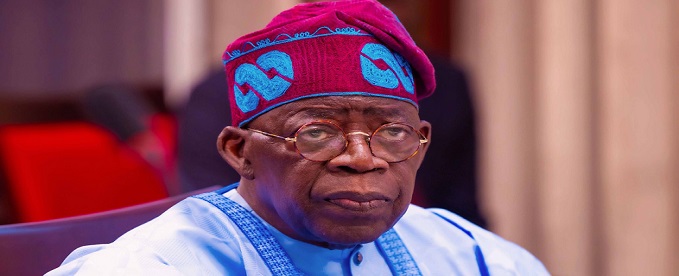
Socio-Economic Rights and Accountability Project has filed a lawsuit against President Bola Tinubu over “the failure to probe the grim allegations that $3.4 billion loan obtained by Nigeria from the International Monetary Fund to finance the budget and respond to COVID-19 is missing, diverted or unaccounted for.”

President Bola Tinubu
The allegations are contained in the recently published 2020 Nigeria’s annual audited report by the Auditor-General of the Federation.
In the suit number FHC/ABJ/CS/269/2024 filed last Friday at the Federal High Court, Abuja, SERAP is asking the court “to direct and compel President Tinubu to probe the allegations that $3.4 billion loan obtained by Nigeria from the IMF to finance the budget and respond to COVID-19 is missing, diverted or unaccounted for.”
SERAP is also seeking, “an order of mandamus to direct and compel President Tinubu to ensure the effective prosecution of anyone suspected to be responsible for the alleged mismanagement and diversion of the $3.4 billion IMF loan obtained by Nigeria to finance the budget and respond to the COVID- 19 pandemic.”
SERAP is also seeking: “an order of mandamus to direct and compel President Tinubu to ensure the full recovery of the missing $3.4 billion IMF loan obtained by Nigeria to finance the budget and respond to the COVID-19 pandemic.”
In the suit, SERAP is arguing that: “Investigating these grave allegations, bringing suspected perpetrators to justice, and recovering any missing IMF loan would contribute to addressing the country’s economic crisis and debt burden.”
SERAP also argued that “The findings by the Auditor-General suggest a grave violation of the public trust, the provisions of the Nigerian Constitution 1999 [as amended], national anticorruption laws, and the country’s obligations under the UN Convention against Corruption.”
According to SERAP, “Servicing IMF loan that is allegedly missing, diverted or unaccounted for is double jeopardy for Nigerians—they can neither see nor benefit from the projects for which the loan was approved; yet, they are made to pay back both the loan and accrued interests.”
SERAP also stressed that “Unless the President is directed and compelled to get to the bottom of these damning revelations, suspected perpetrators would continue to enjoy impunity for their crimes and enjoy the fruits of their crimes.”
The suit filed on behalf of SERAP by its lawyers Kolawole Oluwadare and Andrew Nwankwo, read in part: “There is a legitimate public interest in ensuring justice and accountability for these serious allegations. Granting the reliefs sought would end the impunity of perpetrators and ensure justice for victims of corruption.”
“Granting the reliefs sought would facilitate the effective implementation of the recommendations by the Auditor-General in the 2020 annual report that the missing $3.4 billion IMF loan be fully recovered and remitted to the public treasury and those responsible be ‘sanctioned and handed over to anticorruption agencies.’”
“The allegations of corruption in the spending of IMF loan documented by the Auditor-General undermine economic development of the country, trap the majority of Nigerians in poverty and deprive them of opportunities.”
“According to the 2020 annual audited report by the Auditor-General of the Federation published last week, the US$3.4 billion emergency financial assistance obtained from the International Monetary Fund (IMF) to finance the budget and respond to the COVID-19 pandemic is missing, diverted, or unaccounted for.”
“According to the Auditor-General, no information or document was provided to justify the movement and spending of the Fund.”
“The Auditor-General has recommended that the money should be fully recovered and remitted to the public treasury and for the evidence of remittance to be forwarded to the Public Accounts Committee of the National Assembly.”
“The Auditor-General has also recommended that anyone suspected to be involved should be ‘sanctioned and handed over to the EFCC and ICPC for investigation and prosecution, as provided for in paragraph 3112 of the Financial Regulations’.”
“According to SERAP’s information, Nigeria has signed an agreement to spread the repayment of the IMF loan/interests from 2023 to 2027. The first instalment, due in 2023, is worth $497.17 million. The second instalment, due in 2024, will be worth $1.76 billion. The third instalment, due in 2025, will be worth $865.27 million.”
“The final two instalments, due in 2026 and 2027, will each be worth $33.99 million. These instalments will only be interest payments.”
“Impunity for corruption in the management of loans obtained by Nigeria will continue as long as high-ranking public officials go largely unpunished for their alleged crimes.”
“The consequences of corruption are felt by citizens on a daily basis. Corruption exposes them to additional costs to pay for health, education and administrative services.”
“The Nigerian government has a sacred duty to ensure that the country’s loans including those obtained from the IMF are transparently and accountably used solely for the purposes for which the loans are obtained, and for the effective development of public goods and services as well as the general public interests.”
“Section 13 of the Nigerian Constitution 1999 [as amended] imposes clear responsibility on the Nigerian government to conform to, observe and apply the provisions of Chapter 2 of the constitution. Section 15(5) imposes the obligations on the government to ‘abolish all corrupt practices and abuse of power’ in the country.”
“Under Section 16(1) of the Constitution, the Nigerian government has a responsibility to ‘secure the maximum welfare, freedom and happiness of every citizen on the basis of social justice and equality of status and opportunity.’”
“Section 16(2) further provides that, ‘the material resources of the nation are harnessed and distributed as best as possible to serve the common good.’”
“Similarly, articles 5 and 9 of the UN Convention against Corruption also impose legal obligations on the Nigerian government to ensure proper management of public affairs and public funds including loans obtained by the country, and to promote sound and transparent administration of public affairs.”
“The UN Convention against Corruption and the African Union Convention on Preventing and Combating Corruption to which Nigeria is a state party obligates the Nigerian government to effectively prevent and investigate allegations of corruption and mismanagement of public funds including loans obtained by the country.”
“Specifically, article 26 of the UN convention requires the Nigerian government to ensure ‘effective, proportionate and dissuasive sanctions’ including criminal and non-criminal sanctions, in cases of grand corruption.”
“Article 26 complements the more general requirement of article 30, paragraph 1, that sanctions must take into account the gravity of the corruption allegations.”
Joined in the suit as Respondent is Mr Lateef Fagbemi, SAN, the Attorney General of the Federation and Minister of Justice.
No date has been fixed for the hearing of the suit.



PalmPay, Nigeria’s leading digital banking platform, has announced the launch of its ₦400 million festive rewards campaign, designed to reward users with cash prizes and fully sponsored international travel experiences for everyday transactions on the PalmPay app.

The campaign will run from December 17, 2025, to January 8, 2026. The campaign is designed to reward everyday transactions with extraordinary experiences. It runs alongside PalmPay’s Purple December brand campaign, which focuses on wrapping up the company’s key brand and community initiatives for the year.
At the centre of the rewards campaign is the PalmPay World Travel Carnival, an interactive card collection experience that allows users to earn city cards by completing transactions on the app. Users are required to collect five city cards – London, New York, Dubai, Sydney, and Cape Town and combine them into a World Card, which unlocks a share of the prize pool.
The more World Cards a user creates, the larger their share of the cash rewards. Any extra uncombined cards can be swapped with friends and other PalmPay users to help complete additional World Cards.
Beyond cash rewards, the Carnival also offers Free Global Trips. In each round, the top two users with the highest number of eligible transactions (₦100 and above) and at least one World Card will win an all-expense-paid international trip.
The travel grand prize covers:
- Visa fees
- Round-trip international airfare
- 5-day, 4-night hotel accommodation
- Side attraction
- Meal expenses
- Airport pick-up and drop-off
- All transportation for scheduled tour activities during the trip
Winners will be determined through a transparent leaderboard system, with prizes credited automatically at the end of each round on December 25, December 31, and January 8.
Participation is simple:
- Complete tasks on the PalmPay app, such as Airtime, Data, Transfers, and other specific transactions listed in the app, to earn cards.
- Collect all five city cards.
- Swap cards with friends to complete your collection.
- Combine cards to form a World Card and earn cash rewards.
- Perform more transactions to climb the leaderboard for a chance at the global trip prize.
To ensure fairness, PalmPay has instituted strict rules: no cheating, bots, fake accounts, or manipulation. Any violations may lead to disqualification or account bans. Additionally, the Free Travel Prize is limited to one per user throughout the campaign.
Speaking on the launch, Femi Hanson, Head of Marketing & Communication, “This festive rewards campaign is about turning everyday banking into meaningful value for our users. With the World Travel Carnival as the headline activation, we are reinforcing PalmPay’s promise of being the smarter way to bank—where smart financial decisions unlock bigger opportunities.”

The Rural Electrification Agency (REA) and the National Bureau of Statistics (NBS) have signed a Memorandum of Understanding (MoU) to conduct a nationwide energy survey aimed at closing long-standing data gaps in Nigeria’s power sector. The initiative is expected to guide policy, attract investment, and accelerate universal electricity access.

Signed in Abuja, the agreement establishes a National Energy Survey based on the Multi-Tier Tracking Framework (MTF), a globally recognized methodology that measures electricity access not only by grid connection but also by quality, affordability, reliability, and usage of electricity and clean cooking solutions.
The survey will be implemented under the Energy Sector Management Assistance Program (ESMAP) of the World Bank. Dr. Abba Aliyu, REA Managing Director/CEO, said the partnership underscores REA’s commitment to evidence-based rural electrification planning and will generate detailed insights on electricity access and off-grid solutions nationwide.
Prince Adeyemi Adeniran, Statistician-General of the Federation/CEO of NBS, emphasized that reliable statistics are essential for effective policymaking, assuring that NBS will provide technical oversight, sampling expertise, and quality assurance to meet global standards.
The survey will assess energy access, household affordability, expenditure patterns, and the adoption of off-grid technologies such as solar home systems, mini-grids, and clean cooking solutions. REA will provide sector expertise and policy alignment, while NBS manages regulatory approvals, methodology, and technical supervision.
Funded and technically overseen by the World Bank, the exercise will run for 18 months, with the resulting data expected to improve national energy planning, programme targeting, and private sector investment, particularly in underserved and rural communities.
Officials said the collaboration reflects the Federal Government’s commitment to strengthening inter-agency coordination, enhancing energy data availability, and advancing Nigeria’s goal of universal electricity and clean cooking access.

The Stakeholders in Blockchain Technology Association of Nigeria (SiBAN), the nation’s foremost self-regulatory body for the blockchain industry, has completed its election cycle, heralding the beginning of a new executive council dedicated to scaling Nigeria’s digital economy.

The highly anticipated elections concluded recently with the emergence of a new leadership team poised to champion industry standards, foster innovation, and drive widespread adoption of blockchain technology across the country.
The newly elected executives, who will officially assume their roles in January 2026, represent a blend of legal, financial, and technical expertise critical for navigating the evolving regulatory landscape.
Leading the charge is Mela Claude-Ake, a lawyer, who has been elected the President of SiBAN to succeed the outgoing President, Obinna Iwuno, whose tenure was marked by significant achievements, including facilitating crucial reforms and forging strategic partnerships with regulators and other critical stakeholders in the digital asset industry. Mr. Iwuno will formally hand over the reins to the new council in January 2026.
Other elected to the executive council are Chimene Chinah – Vice President 1, in charge of Blockchain education and adoption; Oroke Cornelius – Vice President 2, in charge of membership, strategic partnerships, and funding; and Ayo Shonibare – Vice President 3, in charge of policy, regulation, and ethics.
Others are Ugochukwu Peters – Vice President 4 in charge of digital asset operations and capital markets, Mbene Vivian – Chief strategy officer in charge of projects and incubation, Olufunmilayo Tugbobo as Financial Secretary/Chief Financial Officer, and Chiemeka David Ohajionu as Chief Communications Officer.
The newly elected council’s structure reflects SiBAN’s commitment to addressing key pillars of the blockchain ecosystem: from grassroots education and fostering innovation through projects, to establishing robust regulatory frameworks.
In his acceptance speech, Mela Claude-Ake emphasized the vital role SiBAN plays in shaping the future of finance and technology in Nigeria.
“The trust placed in this new council is not one we take lightly. We inherit a great foundation built by the outgoing team. Our mission now is to accelerate. We stand at a critical juncture where the potential of blockchain to revolutionize every sector, from finance and governance to supply chain, is undeniable. This new council will focus relentlessly on advancing smart, collaborative regulation, democratizing blockchain education, and protecting the interests of all stakeholders to ensure that Nigeria remains a leader in the African digital economy space,” he assured.
He added that he is humbled by the opportunity to be the face of one of Nigeria’s youngest and most promising sectors — blockchain tech.
“As a tech enthusiast I am excited at the possibilities. The ecosystem needs careful nurturing by the government. My administration will be focused on building new bridges for the blockchain sector internationally and domestically, establishing trust with the public and unifying the sector. I enjoin all blockchain stakeholders in Nigeria, connected to Nigeria or of nigerian heritage to join hands together with my administration in building the industry of our dreams.”
The industry now looks forward to the handover ceremony in January 2026 and the initiatives the new SiBAN leadership will unveil to solidify the association’s role as a catalyst for innovation and a respected partner to the Nigerian government.

PalmPay Launches N400 Million World Travel Carnival, Rewarding Users with Free Global Trips

Nigeria Takes the Lead in the Global WSIS+20 Digital Agenda

Qualcomm Completes Third Edition of Make in Africa Startup Mentorship Program

FirstCap Acts as Joint Issuing House on Veritasi Homes & Properties Plc’s ₦30 Billion Bond Programme

Fynd Expands Global Footprint, Adds Africa With Surtee Group Partnership

Nigeria Records Highest Weekly Cyberattacks in Africa — Report

Hackers Breach Phones of Dangote and Otedola, Demand Ransom

Cyber Tsunami Hits Nigeria as Breaches Surge 1,047%, esentry Q3 Report Reveals

MTN Nigeria Has Invested Over ₦32.23 Billion in National Priorities Through Its Foundation

Group Deepens Digital Rights Advocacy in Ghana Through Judicial Training and Policy Dialogue




 News3 days ago
SiBAN New Executive Council to Champion Vision for Nigeria’s Digital Economy

 E-Financial3 days ago
Tax Reform or Financial Exclusion? The Trouble with Mandatory TINs

 General News3 days ago
NITDA DG Calls for Innovation-Led Economic Rebirth @ Kano Startup Weekend

 Telecom3 days ago
NCC Blames NOGASA for Abuja Outage

 Telecom2 days ago
Airtel Africa Partners Starlink to Launch Direct-to-cell Service in 14 Markets

 E-Business2 days ago
Check Point Reveals Nigeria as Second Most Targeted African Country for Cyberattacks in November

 News3 days ago
APC National Chairman Appoints Mr. Abimbola Tooki as Special Adviser on Media

 News2 days ago
REA, NBS Partner to Deliver Comprehensive Energy Data for Nigeria