

News
SERAP Gives Tinubu 7days Ultimatum to Publish Details of N400Bn Fuel Subsidy Savings

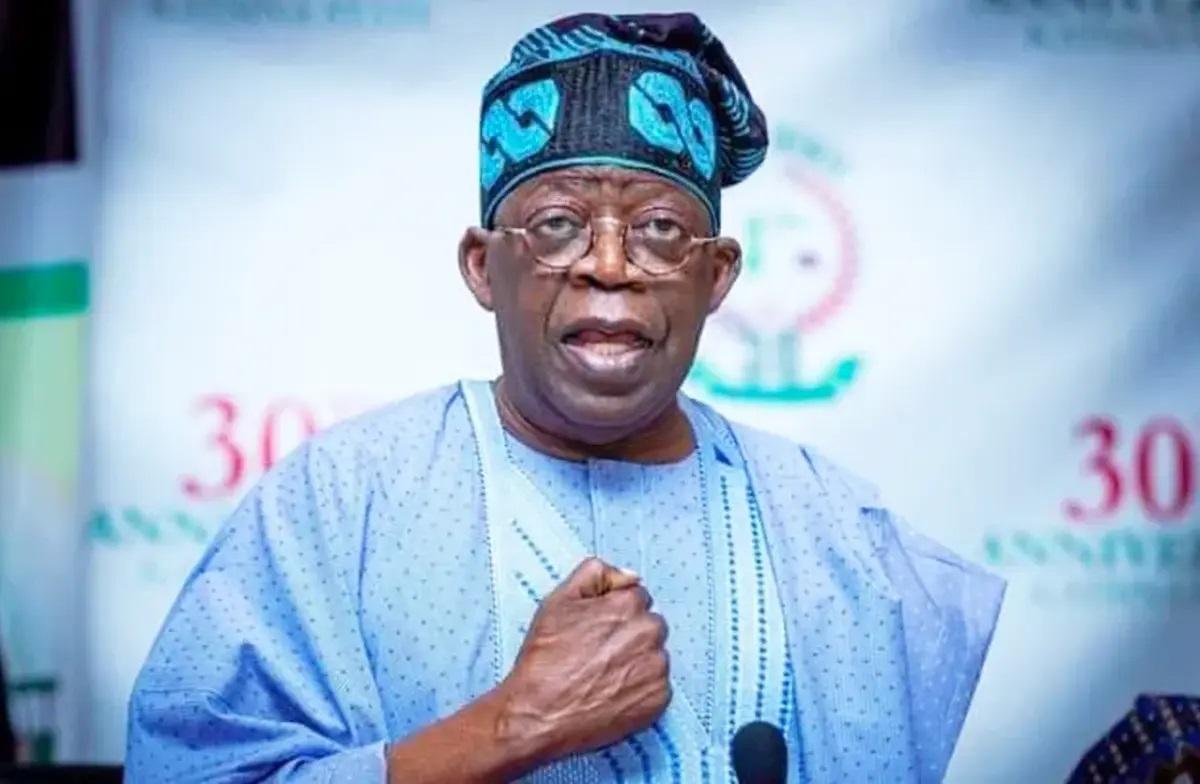
Socio-Economic Rights Accountability Project (SERAP) has demanded that Nigerian President Bola Tinubu publish spending details of the N400 billion saved as a result of removal of fuel subsidy over the past four weeks.

President Bola Tinubu
In a post via its Twitter page on Sunday, July 2, SERAP threatened to institute legal actions against the President if the details demanded are not made available.
SERAP also addressed a letter to Tinubu dated July 1, stating that there were concerns about embezzlement of the funds and making the information public would promote accountability and reduce the risk of corruption.
“Your government has a legal responsibility to ensure that the savings from the removal of subsidy on petrol are spent solely for the benefit of the 137 million poor Nigerians who are bearing the brunt of the removal.
“Publishing the details of the spending of the N400bn and other savings from the removal of subsidy would also ensure that persons with public responsibilities are answerable to the people for the performance of their duties including the management of the funds.”
The organisation said transparency would ensure that Nigerians, who have been affected by the hike in cost of petrol, benefit from the funds and overcome the effects of the removal.
“We would be grateful if the recommended measures are taken within 7 days of the receipt and/or publication of this letter. If we have not heard from you by then, SERAP shall consider appropriate legal actions to compel your government to comply with our request in the public interest.
“Unless the government is transparent and accountable to Nigerians in how it spends the savings from the removal of subsidy on petrol, the removal will continue to undermine the rights of Nigerians, and increase their vulnerability to poverty and social deprivation,” SERAP noted.
While delivering his inaugural speech, Tinubu announced the removal of fuel subsidy, after which fuel prices surged by about 200 per cent.
The surge in fuel costs resulted in some hardship for Nigerians, as transport costs and other businesses have been affected by the hike.
On Friday, June 30, oil marketers said that the Federal Government has saved N400 billion as a result of the removal, based on calculations by Chief Executive Officer (CEO) of the Nigerian National Petroleum Company Limited (NNPCL) Mele Kyari on Nigerians monthly subsidy expenditure.
“Today, by law and the provisions of the Appropriation Act, there is a subsidy on the supply of petroleum products, particularly PMS imports into our country. In current data terms, three days ago, the landing cost was around N315/litre.
“Our customers are here; we are transferring to each of them at N113/litre. That means there is a difference of close to N202 for every litre of PMS we import into this country. In computation, N202 multiplied by 66.5 million litres, multiplied by 30 will give you over N400bn of subsidy every month,” Kyari was reported to have said in February 2023.


The Fiscal Responsibility Commission (FRC) and the Independent Corrupt Practices and Other Related Offences Commission (ICPC) have signed a memorandum of understanding (MoU) to enhance institutional synergy and accountability in public finance management.

The partnership is also to deepen transparency and strengthen the fight against corruption in Nigeria.
The Executive Chairman of the FRC, Mr. Victor Muruako, and the Executive Chairman of the ICPC, Dr. Musa Adamu Aliyu, expressed profound satisfaction over the partnership, describing the signing as timely and symbolic, coming on a day dedicated globally to integrity, transparency, and the fight against corruption.
Speaking at the ceremony, both chairmen reaffirmed their agency’s shared commitment to prudent management of Nigeria’s resources, fiscal discipline, and the coordinated strategies to confront corruption and financial mismanagement.
Under the MoU, both agencies will collaborate extensively in capacity building, joint investigations, information sharing, asset recovery, and enforcement operations.
The ICPC, through its Anti-Corruption Academy of Nigeria (ACAN), will provide specialised training to FRC staff in forensic investigations, financial crime detection, digital evidence recovery, and prosecution strategies. In turn, both agencies will exchange resource persons for workshops and public enlightenment programmes.
The agreement further empowers both institutions to conduct joint investigations and coordinated operations where violations cut across the mandates of both the Fiscal Responsibility Act, 2007 and the ICPC Act, 2000. It also establishes a framework for mutual assistance in tracing, freezing, confiscating, and recovering stolen public funds.
On information sharing, the MoU guarantees the confidential exchange of intelligence, financial records, and technical data, while upholding strict ethical standards and full compliance with all applicable laws.
According to the parties, the collaboration will significantly enhance Nigeria’s anti-corruption architecture by eliminating institutional silos and strengthening enforcement outcomes.
The Memorandum of Understanding, which can be terminated with a 30-day notice by either party, marks a renewed and expanded phase of cooperation between the two key integrity institutions.
The signing ceremony concluded with both chairmen reaffirming their resolve to work tirelessly to promote accountability, transparency, and sustainable national development in line with the Constitution of the Federal Republic of Nigeria and existing anti-corruption laws.
Meanwhile, the Chairman of the FRC, Victor Muruako, has commended the ICPC Chairman, Dr. Musa Adamu Aliyu, and his team for sustaining the Commission’s legacy as one of Nigeria’s frontline anti-corruption institutions. Muruako particularly highlighted the signing of the MoU between the two agencies, describing it as a major step toward strengthening inter-agency collaboration in tackling corruption at all levels of government.
According to him, both agencies have, in recent months, intensified joint efforts to enhance accountability and prevent corruption at the local government level. These efforts, he noted, focus on improved budget preparation, prudent management of public funds, and the modernisation of tax, financial and asset administration systems.
He emphasised that where acts of corruption are detected, the law must take its full course to deter future offenders.

As AI fever has propelled global stocks to record highs, the data centres needed to power the technology are increasingly being financed with debt, adding to concerns about the risks.

A UBS report last month said AI data centre and project financing deals surged to $125 billion so far this year, from $15 billion in the same period in 2024, with more supply from the sector expected to be pivotal for credit markets in 2026.
“Public and private credit seems to have become a major source of funding for AI investments, and its rapid growth raised some concerns,” said Anton Dombrovskiy, fixed income portfolio specialist at T. Rowe Price.
“Although up until now an increase in supply has been met with relatively healthy demand, this is the area to watch especially taking into account large financing needs estimates,” Dombrovskiy added.
The Bank of England warned last week that the growing role of debt in the AI infrastructure boom could heighten potential financial stability risks if valuations correct.
Christopher Kramer, portfolio manager and senior trader on Investment Grade Credit team at Neuberger told Reuters that the market has seen a structural shift as the largest technology companies finance their AI infrastructure ambitions.
“They really haven’t been focal points in our market from a debt issuance standpoint, and that’s obviously shifting really dramatically … anytime you have that, it creates a lot of opportunity,” he said on November 28.
“We’re excited just from the standpoint that the market’s changing. You’re going to have a different dynamic, it creates an opportunity to take risks and create value for our investors,” Kramer added.

Lateef Fagbemi (SAN), the Attorney-General of the Federation and Minister of Justice, has said that Federal Government is intensifying its use of digital-economy initiatives to curb corruption among young Nigerians.

Speaking at the commemoration of the 2025 International Anti-Corruption Day held on Tuesday in Abuja, the AGF said the administration of President Bola Ahmed Tinubu has deliberately positioned technology, innovation training, and digital-skills development at the heart of its anti-corruption strategy for young people.
The event, organized by Technical Unit on Governance and Anti-Corruption Reforms (TUGAR) domiciled at the Nigeria Extractive Industries Transparency Initiative (NEITI) had the theme: “Uniting with Youth Against Corruption: Shaping Tomorrow’s Integrity”.
Fagbemi, who delivered the keynote address, said the government believes that empowered, skilled and economically engaged youths are less vulnerable to corrupt influences.
According to him, programmes such as the 3 Million Technical Talents Programme (3MTT) and the recently launched Nigerian Youth Academy (NiYA) are already equipping millions of young Nigerians with ICT and digital-innovation skills, reducing their dependence on patronage systems that fuel corrupt practices.
“A hopeful youth is harder to corrupt; an engaged youth is harder to mislead; and an empowered youth is a powerful force for national transformation,” Fagbemi said.
He explained that by investing in digital literacy, tech entrepreneurship and innovation-driven training, the Tinubu administration aims to create a generation of young Nigerians who are globally competitive and resistant to corruption.
Beyond digital skills, the AGF pointed at several government efforts to expand educational access through the Nigeria Education Loan Fund (NELFUND), and support youth entrepreneurship via the Nigeria Youth Investment Fund (NYIF) and the iDICE programme, providing funding, training and mentorship for young innovators in tech, entertainment, agriculture and design.
Fagbemi added that the inclusion of young people in governance, through appointments and expanded civic-engagement platforms, was another strategic tool to strengthen integrity and transparency in public life.
He urged stakeholders to deepen efforts to integrate anti-corruption values into school curricula, establish integrity clubs, mentor young leaders, and leverage ICT tools to promote transparency, whistleblowing and public accountability.
Earlier, the Head of TUGAR, Mrs Jane Onwumere said the gathering was especially meaningful because it reflected a shared truth: that tomorrow’s integrity rests significantly in the hands of the youth.
“The theme therefore, is not just a slogan but a call to action and a reminder that young people are not only beneficiaries of good governance, they are co-architects of it.
“Corruption has affected lives and the economy negatively in many ways. One of such is the “japa wave” which has seen young Nigerians leave the country in droves in search of greener pastures. This syndrome has drained the country of resources and human capital. It has in many situations split the family unit, a critical foundation for anti-corruption efforts”, Onwumere, added.
In his speech, the Executive Secretary, NEITI, Hon. Musa Sarkin Adar expressed the agency’s commitment to empowering young Nigerians not only as advocates for accountability but also as active partners in shaping the future of integrity in the extractive industries and beyond.
“At NEITI, we recognize that corruption undermines opportunities for growth, distorts resource governance, and deepens inequality. We also know that a united, informed, and courageous generation can dismantle these barriers.
“This is why NEITI will continue to expand civic education, strengthen our reporting mechanisms, support youth-led innovation, and create more platforms for constructive engagement with young professionals, students, and entrepreneurs”, he added.

Davido, Babajide Sanwo-Olu, Karl Toriola, Others To Be Honoured At The Most Influential People of African Descent Awards In Lagos

Union Bank Clinches Top Workplace Practice Honour at Sustainability Awards

Preventing Financial Crimes Amid Mounting Insecurity: Why Following the Money is Now a Survival Imperative

Supreme Court Clears Fidelity Bank in ₦225bn Sagecom Saga

Cellulant Taps Freddie Oduro to Lead Enterprise Payments Expansion in Ghana

Nigeria Records Highest Weekly Cyberattacks in Africa — Report

Hackers Breach Phones of Dangote and Otedola, Demand Ransom

Cyber Tsunami Hits Nigeria as Breaches Surge 1,047%, esentry Q3 Report Reveals

MTN Nigeria Has Invested Over ₦32.23 Billion in National Priorities Through Its Foundation

FG Lists Bank Charges Nigerians Will Stop Paying from January 2026




 Telecom3 days ago
Minister Claims Bandits Exploit Poor Network, Bounce Calls Off Multiple Towers

 E-Financial3 days ago
FIRS says MOU with DGFIP Won’t Compromise Nigeria Tax Data Sovereignty

 General News3 days ago
Top Nigerian Startups Secure Funding Boost @ iHatch Demo Day Awards

 Broadcasting3 days ago
NCC Blocks Piracy Sites as Nollywood Faces Rising Digital Theft

 Telecom3 days ago
CBN, NCC to Launch Short Code for Swift Consumer Complaint Resolution

 Telecom3 days ago
Google.org Backs CyberSafe’s Resilio Africa to Shield 2m People from Cyber Threats

 Broadcasting3 days ago
Four Must-Watch African Films Debut Free on Glo TV

 Telecom3 days ago
NASENI Launches FutureMakers to Inspire Innovation in Young Nigerians