

E-Business
Service exports will be bigger than oil export in Nigeria – Expert

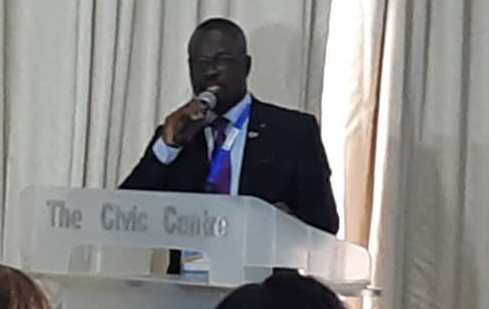
Mr Oyesola Oworu, the Chief Executive Officer, AFRITEX, on Wednesday said that service exports, in a matter of years, would be bigger than the oil export in Nigeria.
Oworu said this in an interview with the News Agency of Nigeria (NAN) on the sidelines of the Nigeria Export Summit and Awards 2019.
The theme of the event was “Digital Era Business on the Move: Export in the Fast Lane”.
NAN reports that the event, which was organised by AFRITEX, was aimed at encouraging export and sensitising Nigerians on it.
Oworu also said that the programme was aimed at encouraging Nigerians to invest more in service export, which he said was the next big thing to happen to the Nigerian economy.
“We have enough resources to go round and we are yet to realise one per cent of our potential as a nation.
“If we really focus on service export, we will forget about oil exports, because that is the next big thing to happen in Nigeria. The developing countries are the ones that have benefited from this most.
“Countries such as China have Ali Baba and other export lines on internet and they are making it big from such IT applications for export,’’ he said.
Oworu said that ICT support exports could fetch the country more revenue than oil, and is more convenient and rewarding.
“ICT export is a model which allows the exporter to interface with their customers without physical contact. Exporters can now send their products abroad and earn good returns.
“We are talking about exports online where investors can look for customers, book online and cash in without necessarily meeting in camera.
“Nowadays, ICT is here to help us achieve all what we want to achieve, and if all hands can be on deck, Nigerians will soon forget about investment in oil export.
“We need the support of all to get more people involved in service exports because it is easy and convenient; above all, a money spinning venture,’’ he said.


E-Business
Jumia Tech Week 2026 Begins with Tech Deals on Smartphones, Electronics, and Everyday Technology

Jumia Nigeria has announced the launch of Jumia Tech Week 2026, a two-week campaign offering customers access to discounted technology products across key categories, including smartphones, computing, home entertainment, and wearable devices.

Starting from March 2 to March 15, Jumia Nigeria’s Tech Week 2026 is themed ‘Tech Products for Less’ – a deliberate commitment by the e-commerce giant to drive down the cost of technology products for Nigerian consumers. The campaign offers significant price reductions across key product categories, enabling more Nigerians to access the devices they need at prices that reflect the company’s dedication to affordability and consumer value.
Jumia Tech Week will feature deals across a wide range of product categories, including mobile phones, computer systems and accessories, televisions and audio equipment, gaming products, home appliances, portable power solutions, health technology,, and wearable devices.
Customers will also have access to curated recommendations, including top smartphone deals, must-have accessories, gaming essentials, and home technology upgrades.
According to Temidayo Ojo, CEO of Jumia Nigeria, the campaign reflects Jumia’s broader commitment to making everyday technology more accessible to Nigerians.
“Technology has become an essential part of everyday life, and access to the right devices enables more people to participate fully in the digital economy,” said Ojo. “At Jumia, we remain focused on expanding access and improving the shopping experience as we continue to build Nigeria’s everyday retail destination.”
The campaign will include a range of customer engagement initiatives such as flash sales, brand days, anchor deals and interactive activities designed to enhance the online shopping experience.
Special highlight periods, described as Explosion Days, will take place on March 6 and March 13, featuring limited-time offers across selected technology categories. Customers will also be able to participate in interactive activities, including product-based games, treasure hunts,, and live shopping sessions during the campaign period.
The campaign will feature participation from leading brands including Oraimo, Silver Crest, Samsung, Ecoflow, Nivea and Aeon, offering customers a wide selection of technology, household and lifestyle products. Early access promotions already begun during the teaser period from February 16 to March 1, allowing customers to preview selected deals ahead of the official launch.
Jumia Tech Week forms part of the company’s broader strategy to expand e-commerce adoption by improving access to essential products and enhancing the customer experience across its platform. As Nigeria’s e-commerce market continues to grow, Jumia remains focused on strengthening its product assortment, logistics capabilities, and digital experience to serve customers better nationwide.
Customers can participate in the campaign by using the Jumia mobile app or visiting the Jumia website and following the conversation online using #JumiaTechWeek.

Nigeria Deposit Insurance Corporation (NDIC) pays between ₦2 million and ₦5 million as deposit insurance to customers of liquidated banks, Managing Director Thompson Oludare Sunday told the House Committee on Insurance and Actuarial Matters during 2026 budget defence.

NDIC
House Spokesperson Akin Rotimi Jr sought details on depositor entitlements, citing Heritage Bank’s June 2024 collapse and public concerns over financial confidence.
Sunday explained NDIC’s mandate: banks pay risk-based premiums (now under 1%, down from 15/16 of 1%) to guarantee deposits. Coverage is ₦5 million for deposit money banks, primary mortgage banks (PMBs), and microfinance banks (MMOs); ₦2 million for other financial institutions.
Using BVN, NDIC auto-pays guaranteed sums without visits for amounts up to the limit. For Heritage, post-revocation, NDIC liquidated assets—selling buildings, recovering loans, realizing investments—and paid a second ₦24.63 billion dividend on January 6.
“Anything above ₦5 million or ₦2 million depends on recoveries,” Sunday said, noting ongoing asset sales and debt chases.
Committee Chairman Ahmed Jaha Babawo commended the clarity, noting the limit rose from ₦500,000 to ₦5 million recently. Over 90% of Heritage depositors got insured sums in under four days, meeting International Resolution Deposit (IRD) standards.
Babawo added liquidation dividends would be discussed in executive session.
E-Business
Kaspersky Discovers New Phishing Campaign Exploiting Google Tasks Notifications to Steal Corporate Credentials

Kaspersky has uncovered a new phishing scheme that abuses legitimate Google Tasks notifications to trick corporate users into revealing corporate login credentials.

By leveraging Google’s trusted @google.com email domain and notification system, attackers bypass traditional email security filters and exploit users’ trust in familiar services.
In this campaign, victims receive an authentic-looking notification from Google Tasks with the subject line “You have a new task.” The message creates the illusion that the recipient’s company has adopted Google’s task management tool, pressuring them to act quickly. The notification often includes elements of urgency, such as a high-priority flag and a tight deadline, to prompt the victim’s immediate response.
Upon clicking the embedded link, users are directed to a fraudulent form disguised as an “employee verification” page, where they are asked to enter their corporate credentials under the pretense of confirming their status. These stolen credentials can then be used for unauthorised access to company systems, data theft, or further attacks.
“Google’s vast ecosystem of services gets exploited by scammers. The scheme with Google Tasks is part of a broader trend observed before and continuing into 2026, where cybercriminals misuse legitimate platforms to distribute scams and phishing.
Notifications originating from legitimate domains naturally evade many spam and phishing filters, while the social engineering aspect – making it seem like an internal company process – lowers the victim’s guard,” comments Roman Dedenok, Anti-Spam Expert at Kaspersky.

Sunil Bharti Mittal Conferred GSMA Lifetime Achievement Award for Transforming Global Telecommunications

Jumia Tech Week 2026 Begins with Tech Deals on Smartphones, Electronics, and Everyday Technology

AfDB Supports Francophone Africa Start-ups with €6.5M

Krishnan Exits Africa Data Centre to Embark on Professional Chapter

House Probes Fintech Regulation via Public Hearing on New Commission Bill

Accidental Billionaire Opts for Jail Instead of Returning Money Credited Him by Mistake

New Horizons Nigeria Breaks Ground: First to Fuse Mandarin into ICT Curriculum

Kaspersky Brings more Transparency to Threat Detection with New Hunt Hub

Dr. Cairo Ojougboh Foundation Bolsters Nigeria’s Education Drive with ₦2.7m Student Support

NDPC Commits to Balancing Data Privacy, Protection Information




 E-Financial2 days ago
Iran-Israel-US Conflict and CBN’s FX Gains: A Stress Test for Nigeria’s Monetary Stability

 E-Financial2 days ago
Mutual Benefits Assurance Reaffirms Full Regulatory Compliance, Enhanced Governance

 General News2 days ago
JAMB Uncovers AI-Driven Fraud Targeting UTME Candidates, Warns Parents

 General News2 days ago
SERAP Asks FCCPC to Investigate Google, Meta, Others over Alleged Rights Abuses

 News2 days ago
TeamApt, Awabah Partner to Boost Pension Drive for Nigerians

 News2 days ago
FlashChange CEO, Bidemi Oke, Urges Startups to Build Strong Governance Structures Early

 E-Financial2 days ago
Reps Mull Commission to Regulate Fintech Operations

 General News2 days ago
Capelli Institute Commits to Advancing Trichology in Nigeria