

E-Business
Siemon, Arista Networks Partner to Deliver Cloud & Infrastructure Forum in Nigeria


Siemon, global IT network infrastructure provider and Arista Networks, a leader in building scalable, high-performance and ultra-low latency cloud networks, have collaborated to share their expert knowledge at the recent ‘Cloud & Infrastructure Development Forum’ in Lagos.
The forum delivered insight into key technologies that can enable pan-African businesses successfully migrate to the cloud and support a growing digital economy.
The partners also demonstrated how the collaboration of complimentary manufacturers to deliver a turnkey solution for cloud deployments can add true value to customers.
In Nigeria, where the population stands at close to 200 million, consumption of data and other cloud-based business applications continues to rise now and in the foreseeable future.
“For businesses, this means robust infrastructures must be put in place to support this growth. For managed service providers and data centre operators, it is important to understand which solutions will best serve their purpose and give them the competitive edge”, said James Kiriamiti, marketing and partner manager for Europe, Russia and Africa.
The forum was aimed at data centre/colocation carriers, telecommunications, financial and educational institutions, installers as well as public sector and government organisations who especially benefited from understanding how to leverage software-driven, cognitive cloud networking solutions and deploy the right passive infrastructure products for a robust, future-proof deployment.
Dinesh OP, technical manager for Africa at Siemon stated, “Nigeria truly has a need for speed. With many business-critical applications consuming vast amounts of data coupled with the rise of connected devices via the Internet of Things (IoT), organisations need to be equipped with the right infrastructure to deliver robust networks.” In his presentation he demonstrated how selecting high-performance copper or fibre optic cabling solutions from day one ensures that networks can be deployed ready to support applications demanding 100G, 400G and beyond.
Arista Networks demonstrated the advantages of using their switches and emphasised their unique approach to designing high-performance products for scalable networks that solve real world problems. By clearly outlining the core differences between legacy networking and cloud networking practices, attendees were able to understand the tangible benefits of migrating to the cloud. This includes moving from manual ‘box-by-box’ to automated network-wide networking, standards-based architectures, deeper control through programming at all infrastructure layers and ability to use virtualisation, scripting, devops and other skill sets.
In coming together with Arista Networks, Siemon underscores its strategy to add value to its customers by working in partnership with complimentary manufacturers. “As cloud driven technologies continue to see vast growth globally, relationships such as that of industry leaders Siemon and Arista work well to deliver proven, high quality solutions that complement each other and provide great benefits to the customer”, added Kiriamiti.
Taking a look into the future, he concluded “The growth that Nigeria and other sub-Saharan countries are enjoying is fundamentally driven by the appetite for technology seen across various sectors. The right networking solutions can deliver sustained support for Africa’s evolving digital economy and we are keen to continue discussing these critical topics with IT leaders in the future”.



By Shameel Joosub
For centuries, Africa has powered global economic growth through its resources, labour, and human potential, yet too little of that prosperity has been realised on the continent itself. Today, artificial intelligence presents a rare opportunity to change that trajectory.

As the global economic order undergoes its most significant transformation since the end of the Second World War, Africa stands at a decisive inflection point.
With the world’s youngest population, rapidly expanding digital adoption, and vast untapped potential, Africa is uniquely positioned not just to participate in the AI era, but to help shape it.
Realising this opportunity, however, will require deliberate investment, enabling regulation, and a commitment to ensuring that the benefits of AI reach all 1.5 billion people across the continent.
When I reflect on AI, what strikes me most is that it is enabled by humanity.
Intelligence is fundamentally human, and AI is an extraordinary amplifier of human creativity and capability.
It is not about replacing people. It is about empowering them to do more, faster, and better.
While this progress is remarkable, our responsibility as African businesses is to extend these capabilities beyond our corporate walls so that AI can unlock Africa’s underutilised potential and drive inclusive growth.
Unlocking Africa’s Potential Across Industries
As a purpose-led African connectivity and digital services company serving 223.2 million customers across South Africa, the DRC, Egypt, Ethiopia, Kenya, Lesotho, Mozambique, and Tanzania, Vodacom has invested strategically in AI across multiple sectors.
Our mobile networks reach a population of 588 million people. That reach must translate into opportunity.
Consider agriculture. One of our subsidiary companies, Mezzanine, leverages AI to unlock previously invisible insights into soil composition, empowering farmers to make data-driven decisions that improve crop yields and profitability.
When farmers thrive, food security strengthens and rural communities prosper. That is inclusive growth in action.
In financial services, AI is strengthening trust and security. In Kenya, Graph Network Analytics enhances M-Pesa fraud detection by mapping money movements in real time, helping protect more than 37 million customers who rely on the service in their daily lives.
As criminals target digital payment platforms, AI helps predict and prevent fraud scenarios, including SIM swap fraud and identity theft.
AI is also supporting national infrastructure. In South Africa, connectivity and IoT solutions monitor coal transport in real time from pit to port to power station.
This improves operational efficiency and supports energy security, addressing critical infrastructure challenges that have constrained economic growth.
These are not isolated examples. They represent a broader truth. Technology delivers its greatest value when it solves real problems for real people.
The Infrastructure Imperative: Modernising Regulation
Yet none of this is possible without one fundamental prerequisite: connectivity. Connectivity requires sustained investment in infrastructure, supportive policy environments, and regulatory frameworks that enable innovation.
If Africa is serious about universal access, modern and enabling regulation is essential. Spectrum licensing must be efficient and predictable. Infrastructure sharing must be supported. Universal service funds must be effectively deployed. Administrative barriers to infrastructure rollout must be reduced. Cloud and data platforms, which power AI capabilities, must be supported through enabling policy environments. These are not peripheral issues. They are fundamental to accelerating Africa’s digital and economic transformation.
These challenges represent only a portion of the regulatory barriers that must be addressed to deliver affordable, reliable connectivity to all Africans.
Pan-African Coordination: Our Collective Responsibility
Africa’s greatest advantage is its youth, but demographics alone will not deliver growth. To realise this potential, we must actively skill up young people in our schools and universities so they can take full advantage of an AI-driven future.
That requires modernising education curricula to embed AI literacy, data capability and practical problem-solving at scale. Companies like Vodacom are investing in digital skills development, but unlocking Africa’s potential will require coordinated action across government, academia and industry.
This is why governments and intergovernmental institutions such as the African Development Bank Group, the African Union, SADC, ECOWAS, and other regional bodies play a critical role in harmonising regulatory frameworks across the continent. Greater coordination can accelerate investment, enable scale, and support the development of an integrated digital economy.
Pan-African alignment of telecommunications regulation is not merely a technical objective. It is essential to unlocking inclusive growth and ensuring that Africa can compete effectively in the global digital economy.
Our Moment
Africa has long contributed to global progress. In the AI era, it has the opportunity to define its own future as a creator of innovation, productivity, and inclusive growth. The foundations are already in place. Our young population, expanding connectivity, and accelerating digital adoption position the continent to lead in ways that were not previously possible.
But this outcome is not guaranteed. It depends on the choices we make now. By modernising regulation, investing in connectivity as foundational infrastructure, and ensuring that AI empowers individuals, businesses, and communities, Africa can secure its place as a central force in the global digital economy.
That is the Africa I believe in. That is the Africa we are building at Vodacom, connecting people, enabling opportunity, and ensuring that technology serves the progress of society as a whole
Shameel Joosub, is group Chief Executive Officer, Vodacom Group
Source: Tech Africa News


Nigeria has begun consultations on plans to introduce age restrictions for social media use, as Africa’s most populous country joins the global trend of strengthening protections for children in the digital space.

The Ministry of Communications, Innovation and Digital Economy this week launched a nationwide survey inviting parents, educators, young people and technology experts to help shape policies aimed at regulating children’s access to social media and other digital platforms.
The consultation comes amid rising concerns over online risks facing Nigerian minors as smartphone ownership and internet usage continue to increase across the country.
Dr. Bosun Tijani, Minister of Communications, Innovation and Digital Economy, said the government is seeking a balanced approach that protects children while preserving the educational and social benefits of digital access.
“While the internet offers significant opportunities for learning, creativity, and communication, it also exposes children to risks such as cyberbullying, harmful content, online exploitation, misuse of personal data, and emerging challenges linked to artificial intelligence tools,” Tijani said.
The proposed framework could include age restrictions on social media platforms, stronger age-verification systems, and tougher accountability requirements for technology companies.
“As Nigeria evaluates potential policy approaches for protection of children online, including age restrictions, improved age verification systems, platform accountability measures, and enhanced regulatory oversight, public input is essential,” Tijani added.
The move follows alarming findings from a 2025 study cited by Nigeria’s telecom regulator. According to the Nigerian Communications Commission (NCC), nine in ten Nigerian children face at least one form of cyber risk online.
Nigeria’s push reflects a broader global trend as governments tighten online safety rules for minors.
Australia, for instance, implemented a social media ban for children under 16 in December 2025, requiring platforms such as TikTok, Instagram and YouTube to restrict access. Indonesia has also announced plans to bar under-16s from social media, while France and Denmark are pursuing similar restrictions for users under 15.
Similarly, Nigeria is confident that feedback from the public survey will help shape an evidence-based policy framework aimed at creating a safer digital environment for children.

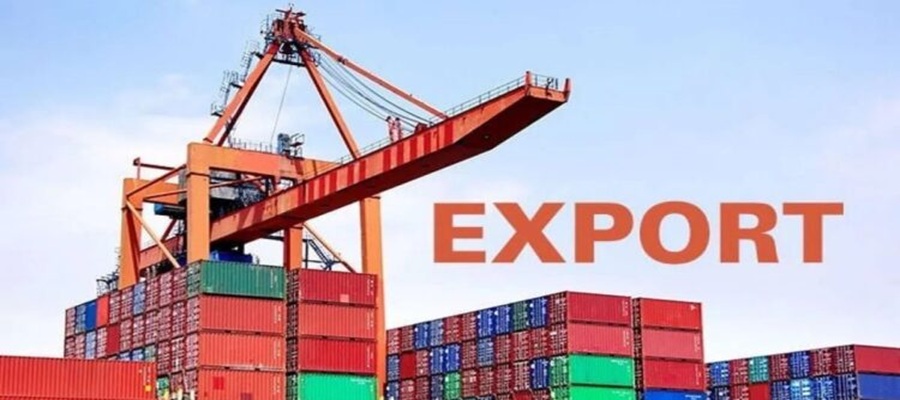
Nigeria’s non-oil exports rose sharply to N12.36 trillion in 2025, up from N9.09 trillion in 2024, according to the National Bureau of Statistics’ Foreign Trade in Goods Statistics report.

The performance underscores ongoing efforts to diversify the economy away from crude oil, with stronger activity recorded in agriculture, manufacturing, solid minerals and other value-added sectors.
The data show that non-oil exports, which stood at N3.14 trillion in 2022 before slipping to N2.56 trillion in 2023, rebounded strongly in 2024 and climbed further in 2025, pointing to a sustained recovery across several industries.
Monthly figures for 2025 indicate relatively steady performance: exports were N1.23 trillion in January, N964.73 billion in February, and N975.45 billion in March. They rose to N1.22 trillion in April, then moderated to N903.02 billion in May and N923.13 billion in June.
In the second half, non-oil exports again firmed up, recording N1.23 trillion in July, N875.62 billion in August and N894.18 billion in September.
October exports stood at N965.60 billion, while November and December closed stronger at N1.07 trillion and N1.11 trillion respectively, reflecting consistent trade activity through most of the year.
A breakdown of the figures shows that mineral products were the top non-oil export earners in 2025. Other major contributors included prepared foodstuffs, beverages, spirits and tobacco, as well as products of the chemical and allied industries.
Agricultural exports were also significant, with vegetable products valued at N1.54 trillion, while live animals and animal products accounted for N103.4 billion.
Vehicles, aircraft and associated transport equipment generated N1.10 trillion in export earnings, and base metals and metal products contributed N646.16 billion.
Exports of stone, plaster, cement and ceramic products were valued at N369.58 billion, plastics and rubber at N244.17 billion, and machinery, boilers and mechanical appliances at N207.48 billion.
Several smaller categories collectively bolstered overall performance. Raw hides and leather products brought in N48.39 billion, footwear N27.34 billion, paper products N19.60 billion, and textiles N16.55 billion.
Miscellaneous manufactured articles recorded N22.85 billion, optical and measuring instruments N6.69 billion, precious stones N511.8 million, and wood products N636.99 million.
The latest figures, analysts say, highlight the growing role of non-oil exports in Nigeria’s trade profile and the potential for further growth as government policies continue to support production, value addition and market access in non-oil sectors.

How Africa Can Turn the AI Wave into Inclusive Growth

CBN Directs Banks to Activate Anti-Money Laundering Systems

FG to Connect Schools Nationwide to Internet – Education Minister

FG Moves to Strengthen Children’s Online Safety

WhatsApp Launches Parent-managed Accounts for Pre-teens Amid Safety Concerns

Dr. Cairo Ojougboh Foundation Bolsters Nigeria’s Education Drive with ₦2.7m Student Support

Kaspersky Brings more Transparency to Threat Detection with New Hunt Hub

Kaspersky Discovers New Phishing Campaign Exploiting Google Tasks Notifications to Steal Corporate Credentials

esentry 2025 Report Shows Healthcare, Financial Services and Telecoms as Staging Grounds for Increased Cyberattacks in Africa

AfDB, UNDP Launch $10Bn AI Initiative for Africa




 General News2 days ago
Zedvance Hits ₦96bn Lending Milestone, Eyes ₦250bn Target in 2026

 Broadcasting2 days ago
Madonna University Taps Tech Guru Adote for Strategic Board Role

 News2 days ago
Another Oil Boom: Will Nigeria’s Government Turn Windfall into Growth or Squander it?

 Telecom2 days ago
Education Priorities to Help Young People Shape Africa’s Future

 Telecom2 days ago
Starlink Rolls Out V2 Satellites for Direct 5G Connectivity to Smartphones, Eyes Nigeria’s Rural Gaps

 E-Financial2 days ago
First Asset Management Secures Ratings Upgrade

 Broadcasting2 days ago
Healthcare Under Attack: Why Cybersecurity is Now Critical Care

 Telecom1 day ago
US Court Dismisses All Claims Against Binance in Major Anti-Terrorism Lawsuit Victory