

General News
Solo Phone Leverages Digital Contents & Services for Growth- Ogundipe


Tayo Ogundipe, is co-founder of Solo, an experience-driven digital content and smartphone company focused on delivering the best content and services on the mobile platform to African consumers.
Ogundipe, a Nigerian-born, former senior global executive with HTC and Sony Ericsson together with other Solo management team bring an unusual blend of global sector expertise and deep knowledge of African markets that enable the team to conceive and implement a market-leading, mobile consumer proposition uniquely suited to African markets.
Solo, among other things, is packaged with competitive data bundles from mobile operator partners, content and service offerings, to create a revolutionary, new customer-centred user experience, never before been seen on the African continent, he told peter ugwu in this interview.
Concept of Solo Phone
The very premise of Solo, is a belief that the digital contents and services huge, obviously, globally, and incredibly huge in the emerging markets, because Solo, is really an emerging market player. Probably, we started in Nigeria, but the vision is to go across the emerging markets.
The way we look at it is that the digital contents are not enough to have them, especially in the value added services (VAS) are, they will have life-changing and transformative impacts on our quality of live, how we executive services and will hopefully increase quality of live in the emerging markets.
We believe that the direction to digital contents and services is set; nothing is going to stop that, but how quickly the adoption happens is a function of who the players are in the space.
And Solo Phone hopes to be one of the catalysts to help in the adoption of those digital contents and services in this market in the ways that create wealth, profitable and valuable to the end users.
So, we look at it from the point of view of contents first, value added services later.
Contents are around entertainment: music, movies; we will be talking about games very soon, to complete the entertainment side of the content.
On the VAS area, we are actually looking at it becoming the most interesting part in the coming years; where there will be incredible innovative solutions on digital platform around critical sectors like health, banking & finance, education, commerce, and other significant aspects of our economy or way of life.
In those cases, we believe that the mobile platform will be the primary media through which these things will be consumed. We feel strongly about that.
We see Nigeria and other country on this continent leapfrogging the personal computer, laptop world into smartphone world, because of the economics of it; it is cheaper to buy it, the mobility, ubiquity that makes it possible to go anywhere and do a lot with it.
It could be your voice, internet, music, mobile Tv device; there is just a lot one can do within the smartphone arena. It is going to enable a lot of things and digital content and services are going to play a big role.
The whole idea of Solo is to be a key player in that help to accelerate the directions it go. As a local pedigree, we will help speed up the process.
Market Penetration
The way to look at Solo is, we are primarily in the digital content and services business. What we do on the hardware side is driven by the need to provide the platform for consuming the contents.
So, in the device side of the business, we are barely one year in the market. For us, it is about setting the foundation for success.
This is a long time play. We are not going to sell and disappear like many do. A huge chunk of our time, last year, was on building that foundation: establishing brand presence, distribution partners with critical players like Slot, Micro Station and other big names, establishing regional presence and of course, establishing our digital apps around music.
So, the actual sells and penetration didn’t kick off till the second half of last year, but in terms of how it works, were we have distribution we do extremely well.
It is a sign of how far we are going. Although, we are new, we are present in every regional chain. And the retailers are happy to carry us along as they expand nationwide.
We are on the process of growing that distribution. Clearly, the preposition is resonating with the consumers; they are willing to work with us and embrace the platform.
Solo View Application
Like I said earlier, it is part of the continuum of our entertainment package in the digital platform. We started with Solo music, which is at this point limited to solo phones, because we have some exciting things coming down the pipe.
The way we started that, we entered into agreement with the top three global labels that offer us access to millions music catalogues and they keep getting better by the day.
When you benchmark Solo music with other platforms out there, it sets itself apart both on the depth of our offering, experience and everything that is done around it.
At the moment, you have to buy Solo smartphone phones to enjoy it. Beyond music, everything we are doing is available on Android platform.
So in Solo View we moved from music to movies. The way we look at it is this: mobility is the core of the preposition; the ability to take these stuffs to the subscribers.
If we look at the quality of our lives coupled with busy-engagements of the day; traffic, running from one place to another, we spend more time outside than at home.
To add insult to injury, not all time we spend on the road are productive. So, the ability to take entertainment with you has value anywhere in the world, here, it has magnifying value. To us, entertainment is the combination of music, movies, games and other interesting things that get people excited.
What prompted Solo View was the urge to set ourselves apart in the market. We looked at the market and saw people trying to do amazing things, but they have fundamental limitations often dictated by infrastructure.
Most solutions, before we came were streaming based, which was tied to protecting the intellectual property right of the company.
That affected the consumer experience. Well, the operators have done magnificent job by investing in the 3G network, but the truth of the matter is that growth in usage and demand is still outpacing investment in the networks. So, the customer experience is still lagging in so many areas.
If it is hard to make a call, you can imagine trying to stream a movie on such network, probably, while you are traveling.
That is a challenge and a limitation to the consumer. When we came into the space, we asked ourselves the pertinent question as what we can do to differently.
Therefore, we decided that one essential thing for good customer experience is a download solution; the ability to sit at a place, download as much content into the device or any Android Device that you have.
One, the experience is better. Two, it is more predictable. And that affects our pricing model. For us, the idea it is about that optimal experience for an average customer to enjoy the device, even on the go.
Solo view is a rental service. If it were a Nigerian content, it gives you 15 days window to watch it as many times as you want. It expires on its own.
If it were a Hollywood movie, for instance, it stays on your phone for 30 days. So, we don’t just make it easy for download, the pricing model enables the subscriber to enjoy the content. At the expiration, you delete and create more space for the next one.
Promotion of Local Digital Content
That is the goal and we are achieving it. On the music side we are getting good traction on the local content.
The basic assumption is that 70% of the content is local. For us at Solo, we believe that when you have a movie or video platform, like the Solo View, you actually optimize the platform with the richness of the offering.
When it comes to richness of offering it has to be tied to relevance with the target market which makes local content very compelling. We have huge Hollywood stuffs; they are compelling, current, good quality of 2014 movies of SD/HD option, we are very proud of them.
We get it faster than any other person in this market does. But as we still look at how to enrich the overall experience, we still think the local part is going to be critical. We believe that in not too distant future we will work with the content generating platforms-the publishers, writers, directors, even the artistes; probably, to engage on production of custom-made proprietary content to be deployed on our platform, maybe redistribute afterwards.
We will look beyond the traditional movies. Ours is a society that has some defined segments-religion, finance, et cetera.
The bottom-line is: we are looking at multiple ways to generate contents. It goes to show that this is a customer-centric business.

Solo View and Other Online Content Providers
Obviously, we have the download option. The depth of our offering expands to Nollywood, Hollywood, and others.
And we have to consider the vision. We see are just starting, but in the next three to six months, people will get more abreast with the concept. We see the foundations we are laying as critical in the business continuum.
To us, it not just an isolated movie offering, rather an entertainment offering. For us, we are not a one-shop-movie play station rather a digital entertainment company that is trying to maximize what we have for customer satisfaction.
You cannot take away our commitment to constantly search for that content that makes sense for the people.
Our goal is to build Solo Loyalists to trust us and be at the forefront of innovation around the entire digital content spectrum.
Connectivity Challenge
That is an excellent observation, but that is the principal thing that sets us apart. We deploy our own Solo Hotspots.
Others don’t! The primary deployments were done around our retail locations. We have more than 100 hotspots deployed nationwide and on the second phase to deploy at non-retail location, like where people congregate.
Therefore, aside the arrangements we have made, we are still looking at solving the data issue. It is expensive to pay for data to be able to access contents. We decided that music is more data-friendly, and even went ahead to partner operators to offer free data at some points.
For instance, if you buy Solo phone you get 500mgbyte of data for a period of time from either Etisalat or Airtel.
On the movie side, even with the download solution, it is still expensive. So, we came into the market with our hotspots. At any point of sale, you use Solo phone or any Android device, go to the playstore, download our application and download movies as you like.
The speed is unbelievable. You can download a full length of Nollywood movie in less than two minutes.
The bigger catch is: it is free data. We are using that to solve connectivity problem. So, for the movie, you are just paying for the content and should not the data.
If there is no hotspot close-by, it gets to the next level which is click to use either the WiFi or 3G network. So, we go through that three-stage progression to make sure connectivity experience is optimized and the reduction in the cost.
Solo’s Preparedness towards Digital Migration
The design of our devices (the hardware part of the business) is critical when you talk about the digital era in Nigeria and the experience.
We have our 5” product and still looking at tablets and others. We try to optimize the experience to the consumer with power banks, ear-phones, and other features.
In terms of opportunities beyond the mobile platforms, in the content business, the key is finding ways of monetizing the services. Good enough, we are not limited in any way, to a particular content.
Solo In 2015
A lot of people see Solo as just a device company, which is cool; we are proud of that too. However, in 2015, we are going to emerge more in the digital content space. We have the roadmap on how to revolve our experience.
Like I said earlier, in music, we will be leading the way. We will be making more noise in the digital content and services business. So, we start filling-in the true picture of Solo; what it represents to every segment of the society.


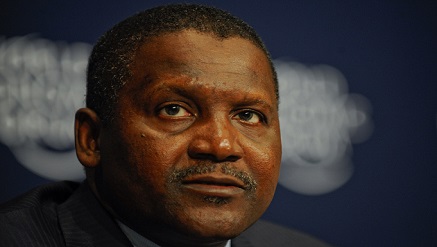
Aliko Dangote, Africa’s richest man, plans to dedicate one-third of his wealth to charity as part of his succession plan, Halima Dangote, his daughter, has revealed.

Aliko Dangote
Halima, a trustee of the Aliko Dangote Foundation, disclosed this in an interview with Bloomberg published on Tuesday, saying the billionaire had secured the support of his family to commit 33 per cent of his estate to philanthropy.
According to the Bloomberg Billionaires Index, Dangote’s net worth is estimated at $35.1 billion, meaning one-third of his current wealth would be worth about $11.7 billion if his fortune remains at that level.
Halima explained that her father views philanthropy as a key part of his legacy and has incorporated it into the family’s long-term succession plans.
She said Dangote had structured his estate to ensure that charitable giving continues across generations, particularly in areas such as healthcare and education.
“He sort of put all the structure in place whereby we focus a lot on health and education. He actually donated 25 per cent to the foundation. If you look at it, it is what we call in Sharia Code in Islam; it means he has donated 33 per cent of his whole inheritance to his foundation,” she said.
Halima added that Dangote believes giving back is central to the success of his businesses and the family’s values.
She said the billionaire asked her, her two sisters, and his mother to sign the agreement allowing 33 per cent of his inheritance to be dedicated to humanitarian causes.
The planned donation builds on Dangote’s longstanding philanthropic activities through the Aliko Dangote Foundation, which was established in 1994.
According to Halima, the foundation received an endowment of $1.25 billion about a decade ago and has since received an additional $700 million in funding.
She said about 70 per cent of the foundation’s spending goes to programmes in Nigeria, while 20 per cent supports projects across Africa, with the remaining funds directed to initiatives in other parts of the world.
The foundation’s interventions focus on healthcare, education, nutrition, and humanitarian support, including partnerships that contributed to the eradication of wild poliovirus in Africa.
Dangote’s planned charitable commitment adds to increasing global attention on billionaire philanthropy.
Although the proposed 33 per cent allocation is below the 50 per cent commitment associated with the Giving Pledge, it would rank among the largest philanthropic commitments announced by an African billionaire.
Earlier this year, Dangote was named among the world’s most influential philanthropists by TIME magazine’s inaugural TIME100 Philanthropy list, recognising the impact of the Aliko Dangote Foundation, which reportedly spends more than ₦50 billion annually on programmes across Africa.

Nigeria Atomic Energy Commission (NAEC), has said that there are plans for Nigeria to begin to generate electricity from nuclear sources.

Mr Anthony Godwin Ekedegwa, chief executive, NAEC stated this when he recently visited Mr Umar Yusuf Girei, acting managing director, National Inland Waterways Authority (NIWA),in Abuja.
He was at NIWA’s office to solicit the support of NIWA in achieving the numerous advantages of using nuclear energy technology in the country.
According to him, the partnership of critical stakeholders in Nigeria will position the country well in developing and maintaining its nuclear power plant.
The NAEC chief said Nigeria intends to begin the generation of electricity from nuclear sources instead of fossil-based power plants and hydro-based power plants, stressing that for Nigeria to develop, there is a need for the country to diversify its energy needs.
In his remarks, Mr Girei assured NAEC of his agency’s readiness to collaborate on the advancement of a nuclear power plant in Nigeria.
He promised the full support of NAEC for the success of a nuclear power plant in the country, saying that as the organisation saddled with the responsibility of regulating and developing Nigeria Inland Waterways, his entity is strategically positioned to play a critical role in the federal government’s quest for sustainable energy through the new technology.

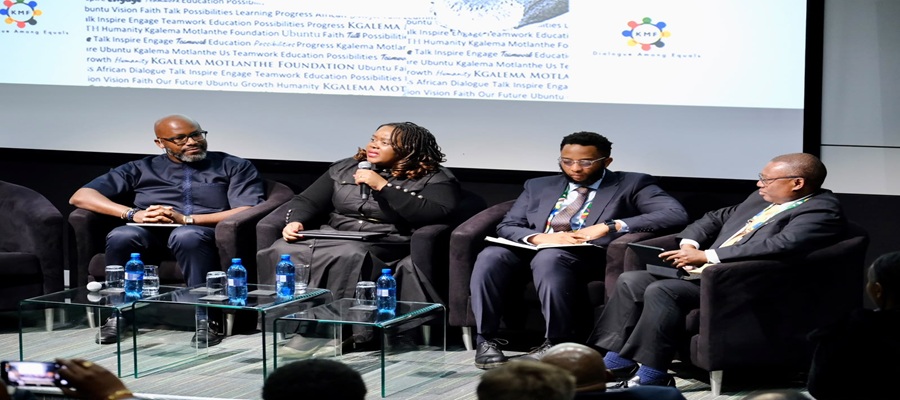
In a powerful call for continental solidarity, Ralph Mupita, Group CEO of MTN, has asserted that the future of the African continent depends on the dismantling of xenophobic barriers.

Speaking at the Kgalema Motlanthe Foundation (KMF) Winter Seminar, Mupita framed migration as a fundamental characteristic of the African identity, urging South Africa and other nations to embrace integration over exclusion.
He emphasised that the survival of African enterprises depends on a borderless approach to trade and talent. “The digital economy we’re fast moving to knows no borders.” Mupita declared, noting that the mindset of exclusion is an outdated relic that hinders the continent’s ability to compete globally.
He argued that for Africa to leverage the African Continental Free Trade Area (AfCFTA), the psychological barriers of xenophobia must be eradicated.
Providing a stark financial justification for this stance, Mupita highlighted MTN’s own operational reality as a blueprint for Pan-African success. “We earn about 80 to 82% of our earnings from outside South Africa,” he revealed, illustrating that the prosperity of South African-born entities is inextricably linked to their success across the rest of the continent. This figure underscores the interdependence of African economies and the danger of isolationist policies.
Mupita’s stance was strong advocating for unity: “The future of Africa will not be determined by the borders that separate us, but by the economic opportunities that connect us. Governments must set predictable policy and regulations.
Businesses will follow and allocate resources and capital. Together, we can build a continent where opportunity is more evenly shared and prosperity is more widely created.”
Analysts observing the seminar noted that Mupita’s remarks come at a critical juncture where economic volatility often fuels nationalist rhetoric. By tying the fight against xenophobia to the balance sheet, MTN is positioning Pan-Africanism beyond the moral imperative to its function as a business necessity. The CEO stressed that “Migration is part of who we are,” suggesting that the movement of people is the primary engine for the movement of capital and innovation.

Fact-Check: Elon Musk’s “Tesla Pi Phone” is Internet Rumor

Dangote Plans to Donate One-Third of Wealth to Charity as Legacy

NDPC Directs DCPMIs to Register with Agency or Face Legal Consequences

Malpass, Ex World Bank Chief Raises Alarm over Nigeria’s Secretive Debt Structures

How and Why Apps Deplete Data – ALTON

NRC, Ponzi Scheme Collapses Resulting Loss of Billions of Naira

EFCC Busts NIS Visa Overstay Racket, Uncovers N700m in an Account

Tokenization, Blockchain Technology will Transform Financial Institutions – IMF

From Scarcity to Scale: What Africa Can Learn from India’s Agricultural Transformation

BON Establishes Six Ad Hoc Committees to Modernize Broadcasting




 News2 days ago
See Verified 20 Countries Nigerian Passport Holders Can Travel Visa-Free

 E-Business2 days ago
Report Says Cybercriminals Deploy Malware to Hijack Crypto Wallets, Monitor Browsers Telegram

 Telecom2 days ago
NCC, REA Partner to Cut Telecom Costs with Renewable Energy

 Telecom2 days ago
Subscribers, Telcos Warn FCCPC over Airtime Lending Enforcement

 E-Business2 days ago
NPC Opens 131 Births, Deaths Registration Centres in Anambra

 General News2 days ago
AfDB, Nigeria Urge African Control of Mineral Resources

 General News2 days ago
Lagos Chamber Opposes 21 Percent Pension Contribution, Warns of Job Losses

 News1 day ago
History as Lagos Becomes First Nigerian State to Launch Greenhouse Gas Registry