

General News
Solve Electricity Theft to Save the Power Sector

The FG has taken vital steps in resuscitating the electricity sector – from privatisation, intervention funds, meter procurement, and investment in new power plants to mention a few.
It is understandable that these fundamental changes will take time to fully turn the sector around and assure Nigerians of constant power supply.
As the minister of Power has recently pointed out however, with technical and commercial losses running at 75% in some areas, the entire system will struggle to make the necessary investment to ensure a sustainable and reliable power system.
A large percentage (perhaps, 50-60%) of these losses can be attributed to energy theft – people consuming power without paying for it.
This can happen either inadvertently or deliberately. Inadvertently because the power companies are not metering and collecting the payment.

This is usually a smaller percentage because the power companies simply use estimated billing to cover for the unmetered consumers.
The deliberate stealing of electricity is widespread and happens through various schemes including – direct connection to the overhead low tension distribution cables, bypassing the meter so that only a small load is connected to it while the rest are connected directly to the supply behind the meter or tampering with the meter to make its reading inaccurate.
The deliberate stealing of electricity is more often than not aided and abetted by experienced (current or past) technicians who understand how the systems work.
In these instances, the use of smart meters which are able to send their status readings to a central server are easily outfoxed.
The smart meter will only have records of the electricity passing through the network it is connected to.
If it is bypassed, or the connection is directly to the distribution line, the smart meter is unable to detect and report the anomaly.
When the meter is itself tampered with by experienced technicians, they may also be able to fool the meter into not reporting the breach.
Smart meters depend on being able to communicate their status to a central server which can then analyse the information and hopefully be able to infer thefts using different algorithms.
Considering the amount of data each meter produces, few organisations can afford the computing power needed to execute these algorithms in near real time.
For instance in the case of Austin Energy in the US with 500,000 meters, the utility’s yearly data storage needs grew from 20,000 MB to 200,000 MB in a relatively short period (each meter producing in excess of 140MB a year). It is of very little use detecting theft once a month.
If done in real time, perpetrators can be caught and prosecuted. If done in real time, the theft can also be stopped.
Analysing the large quantity of data to detect theft in real time using data from smart meters in one central server soon exceeds the cost of the theft.
Working with technical partners around the globe, CWG Plc has developed a solution that makes it possible to detect theft and alert the power companies with the precise location where the theft is happening in near real time, not more than 3 minutes after it occurs without requiring large computers and complex expensive algorithms.
This system uses distributed microcomputers mounted on pole top units, continuously applying Kirchokoff’s laws of electricity flow to determine when the energy flows do not balance and using that to detect energy losses most likely due to theft.
Once a theft is detected, the central server is alerted and the alert is passed on to line men or other dedicated technicians who can be mobilised to investigate.
The unit can also cut off power if needed. This system is far cheaper and more robust than the ‘smart meter and super computer combo’ being promoted by most other vendors.
We can very quickly reduce the losses due to theft by more than 80% within a few months. In addition our system is able to carry out metering or integrate with the meters now being deployed by the DISCOS. If those meters are deployed by themselves without a system such as ours, the impact on reducing theft will be minimal.
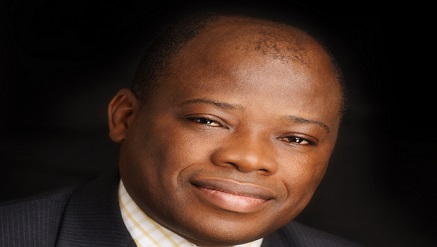
James Agada, is Chief Technology Officer, CWG Plc


United States Government has said that Nigeria is not making significant progress in fiscal transparency, referencing gaps in the country’s budget disclosure, expenditure reporting, public procurement transparency and audit processes.

The assessment is contained in a report by the United States Department of State, which reviewed Nigeria’s fiscal transparency practices in its 2026 fiscal transparency report for countries published on Tuesday.
The report noted that the US government stated that Nigeria made some key fiscal documents available to the public, significant shortcomings remained in the disclosure of budgetary information and the management of public finances.
The report noted that “the government made its enacted budget and end-of-year report widely and easily accessible to the public, including online, but did not publish its executive budget proposal within a reasonable period.”
It also stated that while the Nigerian government had made information concerning the country’s debt obligations publicly available, its budget documents failed to provide a comprehensive picture of government revenues and expenditures.
“The government made information on debt obligations, including major state-owned enterprise debt, publicly available, but budget documents did not provide a substantially complete picture of the government’s revenues and expenditures, or break down expenditures to support executive offices in the budget,” the report stated.
The US government further raised concerns about discrepancies between Nigeria’s approved budget and the actual revenues and expenditures recorded during implementation.
It said, “Actual revenues and expenditures did not reasonably correspond to those in the enacted budget.”
The report also criticised the country’s supreme audit institution, stating that it did not meet international standards of independence and did not publish substantive reports, although it had access to the entire executed budget.
“The supreme audit institution did not meet international standards of independence or publish substantive reports but did have access to the entire executed budget,” it stated.
The assessment, however, acknowledged that Nigeria’s sovereign wealth fund had an adequate legal framework and disclosed information about its funding and the general approach to withdrawals.History
“The sovereign wealth fund had a sound legal framework and disclosed its source of funding and general approach to withdrawals,” the US government said.

The World Bank Group is supporting the expansion of Africa’s digital commerce infrastructure to help small businesses reach new markets, create jobs, and strengthen economic opportunities across the continent.

Through Jumia, Africa’s leading e-commerce platform, the investment is expected to enable approximately 60,000 local annual active sellers to participate more fully in the digital economy, support around 1,800 direct jobs, and create income-generating opportunities for more than 100,000 independent sales agents.
As digital commerce continues to grow across Africa, reliable access to online marketplaces, logistics networks, and digital payments are becoming increasingly important for entrepreneurs and small businesses seeking to expand beyond local markets. Strengthening this infrastructure can help firms increase sales, improve productivity, and connect consumers with a wider range of affordable goods and services.
To support this effort, the International Finance Corporation (IFC), the private sector arm of the World Bank Group, is investing US$25 million in equity in Jumia Technologies AG (Jumia), Africa’s largest public e-commerce platform. The investment will support Jumia’s next phase of growth across its core African markets, strengthening its integrated marketplace and logistics network.
By expanding access to digital commerce tools and services, the investment will help businesses grow, improve price transparency, and contribute to more inclusive and resilient private sector development across Africa.
“The support of the World Bank Group is a milestone for Jumia and for African e-commerce more broadly. It validates both the discipline we have brought to our business in recent years and the tangible impact our platform has on small businesses, jobs, and consumers across our eight markets. With partners like the IFC, we can accelerate the digital commerce infrastructure Africa needs” said Francis Dufay, CEO of Jumia.
“Jumia demonstrates how pan-African e-commerce platforms can expand economic opportunity at scale. Our investment supports the company’s next phase of growth while contributing to create jobs, digitizing supply chains and distributions channels and mobilizing private investment” said Farid Fezoua, Director for Equity, Funds, and Venture Capital at the International Finance Corporation, World Bank Group.

Nigerian Upstream Petroleum Regulatory Commission (NUPRC) has cautioned the public against fake recruitment offers and fraudulent employment letters circulating in the agency’s name.

Eniola Akinkuotu, head of Media and Corporate Communications of the Commission, stated that NUPRC has received reports of counterfeit and AI-generated appointment letters bearing names not known to the regulator.
The Commission also said fraudsters have been extorting money from jobseekers by promising placement within the agency.
NUPRC has reported the incidents to law enforcement and said investigations are underway.
The regulator reiterated that there is no ongoing recruitment exercise and warned members of the public not to make any payments for supposed job offers.
“Whenever the Commission decides to recruit, the process will be conducted strictly in accordance with extant laws and government regulations,” the statement said.
The Commission urged jobseekers to verify any purported offer and to rely only on official NUPRC communications for recruitment information.
The warning follows growing concerns about the misuse of digital tools, including artificial intelligence, to fabricate apparently authentic documents that can deceive the public.

Nigeria Not Making Progress in Fiscal Transparency –US

NCAA to Introduce RFID Technology to Tackle Missing Luggages

SEC Directs Operators to Subscribe to NigSac Alerts, Freeze Terrorists-Linked Funds

Davido Bets $1m in Hit-for-Hit Battle with Colleagues

GSMA Industry Services Unveils Circularity Services to Help Operators Reduce E-Waste and Unlock Value

EFCC Busts NIS Visa Overstay Racket, Uncovers N700m in an Account

Fact-Check: Elon Musk’s “Tesla Pi Phone” is Internet Rumor

NBC Tasks Broadcasting Stations over 2028 DSO Global Deadline

NBC Scraps Annual Digital Access Fee on DSO

Glo Sponsored African Voices to Feature Netflix’s “The Polygamist” Stars




 News2 days ago
Moove Achieves Unicorn Status With $250m Funding

 Telecom2 days ago
MTN Nigeria Clocks 25, Connects over 90m People

 E-Financial2 days ago
FG Suspends NAICOM’s N680m Insurance Recapitalisation Fees

 E-Business2 days ago
Microsoft to Unveil Next-generation AI Chip in September

 Telecom2 days ago
Subscribers to Seek Legal Redress if Poor Quality of Service Continue in September

 Broadcasting2 days ago
Affordable, Flexible Streaming Platforms May Kill PAYtv – Report

 E-Financial2 days ago
SEC Moves to Recover Unclaimed Dividends, Inherited Investments Nationwide

 Telecom2 days ago
ipNX Collaborates with ICT Stakeholders on the Future of Fibre-to-the-Home in Nigeria @ ATCON Forum