

E-Business
South East Technology Ecosystem Requires Courageous Investors- Anika


Nnamdi Anika is the managing director, Genesys Tech Hub, by Tenece Professional Services, and a twin-purpose Technology Hub that serves as a talent refinery and innovation incubator for young minds in all technology-driven sectors of the economy, with focus mainly on startup ecosystem in South East, Nigeria.
Located in Tenece’s state-of-the-art Eastern Regional Hub in Enugu, which is designed to support and equip its residents – who are mostly budding entrepreneurs – with sophisticated tools for unearthing the most formidable startups, Genesys Tech Hub represents an oasis of technology in the region. Anika, the managing director, Genesys Tech Hub, Enugu State, in a chat with select technology reporter in lieu of the just concluded GenesysIGNITE, shares the idea behind establishing the Hub. Peter Oluka was there for Nigeria CommunicationsWeek
Can you speak briefly on Genesys Tech Hub’s key focus areas?
Genesys Tech Hub is what we call ideas, creativity and knowledge-based platform. It is designed to drive innovation and productivity in the South East, and Nigeria at large. Our focus is on undergraduates and earlier graduates. The Hub is designed to serve three main purposes; first, it is a centre of learning and development that is tilting towards mitigating the areas of digital divide in this region. In that regard we created- Codename: Learnable. Essentially, it is a six months internship/bootcamp. Most of the participants are drawn from undergraduates who are undergoing internship or Industrial Attachment Training (IT) programme.
The second programme is focused on creating enabling environment for startups. The idea is to expand their horizons, give them access to market and resources that may not be readily at their disposal. In this regard, we created a division called Genesys StartZone. It is simply our incubation programme; where we expose young startups to business mentoring, exposing them to some resources like legal support. The idea, for us, is to make sure that these startups get to a point they are matured to exist and run as independent business.
The third division serves as the nucleus of community of smart-young technology enthusiasts; these are talented individuals who are going to lead the tech revolution in the ecosystem, our region and Nigeria as a whole. That led to the creation of Agora.
How will these programmes and others in the offing help position startups for greater impacts?
The way we are running the system currently and based on the resources at our disposal, we try to take things in bits. We intend to upscale, accommodating as many as possible. We are aware that what we are doing is scratching the surface; there is a lot to be done. But in the last three years we have focused on undergraduates and fresh graduates. This has been the case because we have access to over 19 tertiary institutions based; it is based on our business model which we expect to impact the region even more in few years time.
Why South East? Why Enugu?
From a personal perspective, I grew up in this region. My undergraduate programme was the University of Nigeria Nsukka (UNN), before travelling to London School of Economics for my Master programme. So, from the onset there has been an observation. If you look at the peers around, upon graduation everybody is in a hurry to move to Lagos. For me, I have always thought that economies don’t grow in pockets.
To grow your economy, there must be diversification. Therefore, every region should have niche and create an ecosystem, such that, as people are graduating they can see an area capable of propelling the career. From that perspective, I always thought we need to do something. We can’t all keep running to Lagos.
As I was returning from UK, after my graduation, I had a lot of job offers from Lagos and Abuja. But I decided that I have to be in Enugu; somebody has to be here, working hard to ensure that our people have more opportunities. We have to diversify this economy.
I look at Lagos as an example and I am always like life’s expectancy rate is dropping; people are wake up at odd hours just to overcome traffic hurdles. Now is the time to spread the economy. From that perspective and attraction, I align with the saying ‘charity begins at home’. If you are looking outside Lagos, what comes to mind is the environment where you understand the terrain and the needs.
Then, if you look at Enugu, it has the most tertiary institutions in the regions- both private and public universities. It has the best access; very easy to access Ebonyi State, Anambra, Abia, Imo and others. It is central and it the international airport is a value addition.
It remains the capital of South Eastern region. In terms of infrastructure, you will see that Enugu is also leading in the park. It is the central point to create the Hub. At the end of the day, you intentions can’t be materialised if focused in one direction, but we need to have a base from which we can spread out.
Majority of the young people believe if it is not Lagos then you can’t make it. How is Genesys Tech Hub going to help them change the mind-sets, especially among the undergraduates?
We have started in a number of ways. The idea is to create a platform and enabling environment or a structure that can fertilise ideas (which is why many rush to Lagos). If you have such platform, then, why not stay back here and try it out. We are making this happen through the effort of our parent company Tenece Group. The business environment, especially, in the South East has proven there are a lot of opportunities here. We have over 200 staff in Genesys who may have desired to go to Lagos, searching for job. Genesys is on a pacesetting mission; such that people can observe us and see reasons to stay back here. The first things this Hub shows: it is possible.
The Hub is trying to create a sort of exposure to the undergraduates. There are different ways to build a system- some are meant to follow the system and learn along the way or you can actually create something, make yourself a leader for others to follow.
We have realised that it is doable and we are scaling it up. There are pockets of activities going on in the region requiring aggregation. Such way, key stakeholders gather, discuss the realities and show there is hope for this region by making a spark. That was the basis for GenesysIGNITE.
It was like getting more people to appreciate our startups and create platform for Government and private sector (that is the established technology related OEMs- Google, Microsoft, Nokia, etc.) to add value to what we are doing. Someone has to provoke that thought in these OEMs that there is more to Nigeria than Lagos. That is how we can make technology thrive in this region. We are looking at igniting the whole technological evolution in this region.
What are the intentional steps for a larger scale of conversion and restructuring the South East startup ecosystem?
What I have observed is that, in life, there are different approaches to solving a problem. There are textbook approaches, but the reality is that you can only take one step at a time. It is not easy to change peoples’ perception or make them align with a carefully designed roadmap. The first crucial step is creating a platform for people to understand that this thing can be done here. Create opportunity for them to meet others who have gone similar circle. They (the startup) need to understand why some people failed and other succeeded. Where they government policies that caused this? Is it because Lagos is the commercial city and naturally most things aggregate towards smart city. Are there conscious or deliberate things that the government and private individuals can do to reduce the pressure on Lagos? I have a lot of friends who are eager to come back to Enugu because people are risk averse. So, someone needs to enlighten the startups in the region; you can either be a leader or a follower.
Tenece has set the pace and I can promise you that a lot of organisations are encouraged by the Tenece’s story. The truth is that it is not going to happen in a day, we need to continue to create platform for this discourse and build the necessary infrastructure and systems to be able to impact the region. I was in a conversation with a friend, and he insisted, it is generally difficult to change the mentality of Nigerians.
So, he suggested that as new babies are born we need to create a space and start feeding them with the right information when you are used to a pattern it is usually difficult to break it. Some people are still querying me: guy, what are you doing in Enugu? However, we all recognise there is a problem, thinking or tilting towards the same pattern will not do us any good. We need courageous people, which is the idea behind what we are doing. We can’t run away from empowering our people; create supportive platforms.
Personally, supports shouldn’t always be financial. But the reality is that some people need those things to set up. We are working hard to see that happens. Our people like success stories; they believe in what they see, not visionary in most cases and that is the people. They want to ‘see and touch’ before believing. So, we want people to see that Genesys is not just another outliner. If you think so, what happens to TutorFinder or is it an outliner too? PlayJoor or House of Uwe, are they outliners too?
The GenesysIGNITE has also thought us that we need to get everybody involved. The platform is expanding beyond just ‘Genesys event’. Experience matters, so that they can talk to the young people. On our part, we are determined to back-up anything we say with action, such that the young people will see this is not just the usual talk and go. Daily, I see startups springing up in the South East.
This wasn’t the case about a year ago. To me, what has happened to Nigeria is that our over dependence on oil has exposed us. Today, everybody is sitting back to rethink and be more creative. One artiste sang ‘Owu saa gi, I ga-amalu ihe o’ (meaning, when you are broke, you become smarter). So, sometimes you need to be pushed to the wall. What we are trying to do is to see how we can reduce the gap and the timeline for this change to materialise. We don’t have all the answers, but consciously taking the steps to make things right. People are frustrated, even in Lagos.
How will GensysIGNITE assist in tackling startups waste in the region?
At the end of the day, which is what matters a lot, you can only execute a project as much as your strength can carry you. What we are trying to do is create a spark. With regards those that couldn’t get the $10,000 cash prize at the recent event, all hope is not lost. For instance, after the convergence some people walked up to me asking for database of the startups that pitched. Others said they didn’t hear the about the event on time. You may not believe this, all this was planned within a month. The idea came as a flash.
We just told ourselves there is need to do this. It was an eye opener. If you call for another pitch today, we will receive over 1000 pitches. The recent GenesysIGNITE had 147 pitches and it was due to time constraints; we reduced the number to nine who were exposed to external judges to bring about fairness and harness different opinions. I am a proponent of one step at a time, but make sure that at every second you are making progress. The idea behind IGNITE was to get more venture capitalists, and other interested investors to see that these startups exist and see how they can get involved. The spark will cause many successes among the startup ecosystem.
What are the plans to sustain GenesysIGNITE?
We believe what we have done has actually shown people there are a lot areas seeking solution. We believe people (and the Government) are going to come in and ask where and how to get involved. I remembered the first time I met our CEO, Mr. Kingsley Eze. One of the things that made me to align with him is the passion for the development of young people. Nobody can take this step without the passion. There are lot of people with similar passion but lack ideas on how and where to channel the intentions.
They are looking for structure to channel that. So, this has created the right pulse for stakeholders (government and private sectors) to come together; we are already getting feedbacks. Genesys is lucky to have Tenece as support system, but the truth is that we need more of Teneces to get involved. There are different means through which organisations can add value. As you are dwelling on your passion, a time comes that you need to partner to achieve greater impacts. In fact, during one of sessions after IGNITE, we agreed that a day is not enough for event of such magnitude. But as an inaugural event it served the purpose- to gather passionate people to carve a tech niche for the region. We can make South East one-stop (technology) attraction, not only from the Nigerian perspective, but at the global stage.
What has Genesys Tech Hub has been doing in the last three years of (structural) existence?
When you are engaged in a process, as you process you seek better ways of doing things. We started off with the internship programme. It was designed, not just a technical based training. We have structures for business entering programme. Each session ends with a bootcamp. From the onset the startup will understand they need to start looking at the environment and business ideas selling to the market. Towards the year, we usually have an exhibition where people pitch their ideas. While the pitching sessions are on you see the business sense of certain ideas, then, we go back and think of how to turn this to an acceptable ‘product’.
We also realised there are high techies that are not interested in business. They just want to build things based on latest trends- is it Artificial Intelligence, there are coming up with good ideas, but they are focused on the business side. So, we want to create a business side where these guys are opened to the opportunities. That was how Agora was initiated.
The Agora is still young; StartZone started last year and we have a product launched at the exhibition called ParkShop- which is almost ready to go into the market. It is an auto-spare parts market place. There are other startups showcasing. We have three startups incubating in StartupZone and they all came from the internship programme. Aside in-house instructors, we leverage partnership with OEMs to get other instructors.
How would you assess the quality of undergraduates coming for internship or fresh graduates who seek mentorship?
Truly, the government needs to pay attention to the educational sector. To achieve whatever mileage we desire, as a country, we must pay attention to the deteriorating educational sector. We probably don’t know how bad it is. I understand passion in teaching because as someone who grew up in the university environment I saw how my dad prepared for classes and how he carried the students along. I can’t tell how we lost it! I don’t think you should teach because you are smart, or because it’s the last resort. If you don’t have the passion, don’t get in there.
The passionate teachers don’t end up in the classrooms rather contribute further by engaging in research and development (R&D). The change should start from the basic education and even the way we (parents) teach our children. There is need for a teaching pattern that encourages people to explore their passions. We should stop all this long division, and flogging a child because h/she couldn’t solve a problem. We should deploy education that supports more of practical than theoretical learning.
For instance, when we are looking for basic skills before accepting an applicant, most of them are developed through self-help. Others would go out their way to approach people (in the industry) who have those skills, even when they are students. We must change our facilitators in these schools and revamp the curriculum to give room for productivity.
Do you think Startups (in South East) should focus on software or hardware or both)?
I think the world is changing; the world is gravitating around two things: renewable energy and artificial intelligence. We must make ourselves ready to become a global market in the technology space, specifically on artificial intelligence.
Future Plans for Startups at Genesys Tech Hub
We are looking at building hostels with adequate facilities to create a relaxed environment. Presently, the startups have to move to town, get what they want and come back. But in the next two to three months, the hostels should be ready so that if you are tired you can relax there and come back. This is actually what they want- there are swimming pool, sports centres and other facilities, so they don’t have to go to town before they can enjoy these things. In fact, some of them wouldn’t mind working for whole day, but we have to, at a point, force them to get refreshed.



Okitipi Samuel, a Nigerian man, has been taken into custody by the Nigeria Police Force for his alleged role in a global cyberattack on Microsoft 365 users.

Benjamin Hundeyin, Force public relations officer, disclosed this on Thursday in Abuja while briefing journalists on the outcome of investigations carried out by the National Cybercrime Centre of the Nigeria Police Force.
Hundeyin said the centre, under the leadership of Ifeanyi Uche, its director and Commissioner of Police, commenced investigations in collaboration with Microsoft, the Federal Bureau of Investigation, the United States Secret Service, and the United Kingdom’s National Crime Agency.
According to him, investigations revealed that a phishing toolkit known as “Raccoon 0365” was used to create fake Microsoft login portals to harvest user credentials and unlawfully access email accounts belonging to corporate organisations, financial institutions, and educational institutions in several countries.
“This investigation commenced following credible intelligence received from Microsoft USA through the FBI, indicating that a malicious phishing toolkit known as Raccoon0365 was being used to create fake Microsoft login portals, harvest user credentials, and unlawfully access the email accounts of corporate organisations, financial institutions, and educational establishments,” Hundeyin said.
He added that between January and September 2025, several reports of unauthorised access to Microsoft 365 accounts were traced to phishing emails designed to mimic legitimate Microsoft login pages, enabling business email compromise, internal phishing, data breaches, and other cyber-enabled fraud.
Hundeyin said digital forensic analysis and cryptocurrency tracing identified wallets connected to the illegal operation.
He noted that operatives were deployed to Lagos and Edo states, leading to the arrest of three suspects identified as Joshua, James, and Okitipi Samuel between September 20 and October 4, 2025.
“Following extensive digital forensic and technical intelligence analysis, the centre conducted cryptocurrency tracing that identified suspicious wallets connected to cash-out schemes.
“Acting on actionable intelligence, operational teams were deployed to Lagos and Edo states, resulting in the arrest of Joshua, James, and Okitipi Samuel. Searches at their residences led to the recovery of mobile devices, laptops, and other digital exhibits linked to the fraudulent scheme,” he said.
Hundeyin identified Okitipi Samuel, also known as “0365” and Moses Felix as the principal suspect and developer of the phishing infrastructure.
He added that investigations confirmed Samuel unlawfully used the email details of one of the arrested individuals without consent to register some of the accounts used in the operation.
The police spokesperson said further investigations revealed that the identities of Joshua and James were used without their consent.
“There was no evidence linking them to the creation or operation of the phishing scheme. They were victims of identity theft,” Hundeyin said.
He said a prima facie case had been established against Samuel for identity theft, unlawful access to computer systems, creation and distribution of malicious software, unauthorised interference with network data, and aiding and abetting fraud.
Hundeyin added that the suspect would be charged under relevant provisions of the Cybercrimes (Prohibition, Prevention, etc.) Act, 2024.
He said the suspect would be prosecuted in Nigeria, noting that the country has the capacity to enforce its cybercrime laws, although extradition could be considered if formally requested through due process.
Hundeyin assured Nigerians that the police, under the leadership of Kayode Egbetokun, inspector-general of Police, would continue to protect the country’s digital ecosystem and urged citizens to practise good cyber hygiene by being cautious when clicking links and sharing personal information online.
Speaking separately, Ifeanyi Uche, director of the National Cybercrime Centre, urged Nigerians to exercise caution online.
Uche advised members of the public to avoid clicking on links from unknown or unexpected sources, noting that such links often contain malware or phishing tools designed to compromise devices and personal data.
He warned that indiscriminate clicking of links or responding to unsolicited emails could lead to unauthorised access to personal and corporate accounts, urging citizens to “wash their cyber hands” by verifying sources before taking action online.


Nigeria has unveiled a comprehensive, multi-pronged strategy designed to localise WSIS+20 commitments. This roadmap accelerates national transformation by prioritising robust infrastructure, transparent internet governance, and advanced cybersecurity through deep stakeholder collaboration.

Unveiled in New York at the Nigerian high-level side event titled “Re-Imagining Digital Cooperation for Sustainable Development: From WSIS+20 Vision to Local Action,” the strategy cements Nigeria’s position as a primary architect of the world’s digital future.
Speaking at the event, the Director General of the National Information Technology Development Agency (NITDA), Kashifu Inuwa, CCIE represented by Director, Corporate Planning and Strategy, Dr. Dimie Shively Wariowei said Nigeria’s approach is deliberately aligned with the four core activity areas identified under the ongoing WSIS+20 review process.
According to him, the focus areas provide a practical framework for translating global digital commitments into measurable national outcomes, ensuring that international resolutions drive inclusive growth and sustainable digital development at the country level.
Inuwa identified digital infrastructure as the foundation of effective localisation, noting persistent challenges in extending connectivity to underserved and remote communities. Beyond infrastructure gaps, he highlighted affordability constraints and digital literacy deficits, stressing that addressing these issues remains central to Nigeria’s digital inclusion drive.
He explained that government alone cannot shoulder the burden of nationwide digital infrastructure deployment, given Nigeria’s vast geographical spread, hence the adoption of collaborative Public-Private Partnership (PPP) models. He disclosed that Nigeria, in collaboration with the World Bank, is implementing a major fibre-optic project spanning about 90,000 kilometres nationwide to boost connectivity.
The NITDA DG also revealed that the current National Broadband Plan, which has guided broadband expansion in recent years, is nearing completion, with plans underway to renew and reposition it for the next five years. The renewed plan, he said, will strategically target increased broadband penetration as a catalyst for digital access and economic growth.
On internet governance, Inuwa referenced Nigeria’s active participation in the Internet Governance Forum (IGF), noting that the country successfully hosted its annual national IGF. He said the forum operates on a multi-stakeholder model that brings together government, the private sector, civil society and the technical community to foster cooperation and informed policy dialogue.
Cybersecurity, he added, remains a critical pillar of Nigeria’s localisation efforts. He cited the existing Cybersecurity Act and ongoing efforts to strengthen the legal framework through a reviewed version currently awaiting parliamentary approval. These measures, he said, are designed to mitigate risks associated with increased internet use and to protect users and critical digital infrastructure.
Inuwa further stressed Nigeria’s ambition to play a leadership role in advancing digital cooperation across Africa through inclusive, multi-stakeholder engagement. He underscored the importance of coordinated national data collection, noting that reliable, country-specific data is essential for tracking progress and presenting Africa’s digital development story on the global stage.
He concluded that sustained engagement and follow-up actions arising from the WSIS+20 review would strengthen digital cooperation among African countries and ensure that global digital commitments translate into tangible national and regional impact.
Stakeholders commended Nigeria’s efforts in the digital space, acknowledging the country’s growing role in shaping Africa’s digital future.
Earlier, Ms. Jennifer Chung, Co-Convener of the Informal Multi-Stakeholder Sounding Board (IMSB), praised Nigeria for convening a broad-based, multi-stakeholder delegation and for its commitment to the meaningful implementation of WSIS+20 outcomes.
Chung stressed the growing demand for localised WSIS follow-up mechanisms, noting that platforms such as the annual IGF, National and Regional IGF Initiatives (NRIs), and youth-led forums are vital for tracking progress towards the 2030 Agenda and Africa’s Agenda 2063.
She described the WSIS+20 review as a critical step toward effective monitoring, reliable data collection and evidence-based evaluation, particularly for developing countries in the Global South. According to her, these measures are essential to achieving WSIS targets and ensuring that no region is left behind.
Drawing parallels with the Asia-Pacific region, Chung noted that challenges around affordable and meaningful connectivity remain widespread across developing economies. She emphasised that expanding broadband penetration and reducing the cost of access are crucial to closing digital divides in Africa, Asia-Pacific and other parts of the Global South.
She also highlighted the need to enable active citizen participation in emerging technologies, including artificial intelligence and future innovations such as quantum technologies, stressing that inclusive digital access is key to maximising the benefits of digital transformation.
Reflecting on the WSIS+20 review process, Chung praised the innovative and inclusive approach adopted through the informal multi-stakeholder sounding board, describing it as one of the first of its kind in global digital governance. She called for sustained collaboration among governments, the private sector, civil society and the technical community to carry the WSIS vision from global commitments to local action.
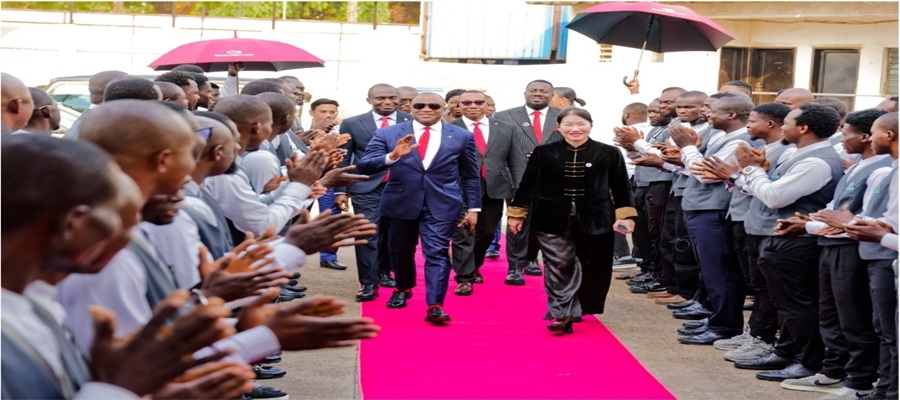
United Bank for Africa (UBA) Plc has announced a $100 million financing partnership with CIG Motors, Lagride and the Lagos State Government to promote urban mobility and financial inclusion through a scheme tagged “Drive to Own.”

Group Managing Director/CEO, United Bank for Africa(UBA) and, Chairman, LagRide, Chief Diana Chen, flagged by LagRide drivers, at the signing ceremony of $100 Million Expansion Facility, strengthening smart mobility, driver asset ownership of over 3,500 cars, financed by UBA in partnership with Lagos State Government and LagRide, held in Lagos on Tuesday.
The initiative, unveiled on Wednesday in Alausa, Lagos, will empower 3,500 drivers in the state by enabling them to own vehicles with an equity contribution of 10 per cent of the total cost, while the balance is payable over 48 months.
UBA’s Group Managing Director/CEO, Oliver Alawuba, described the scheme as transformational, noting that it would foster inclusive economic growth, support MSME development and create opportunities for the younger generation.
“This partnership with Lagride is transformational. It will drive inclusivity for economic growth and ensure progress for everyone,” he said.
Alawuba shared a personal story, recalling that his father worked as a driver and was able to fund his education through that income. He said the scheme would provide similar opportunities for many families.
UBA’s Head of SME Banking, Babatunde Ajayi, said the partnership reflected a rethinking of traditional banking models.
“Not every business has a shop. Some businesses have wheels. Every commercial driver is running a business, yet they have remained outside formal finance. We designed credit that fits their reality,” he said.
Chairman of Lagride, Diana Chen, said the company had built a data-driven and credit-ready mobility platform for drivers, stressing that transportation remained the backbone of Africa’s economic future.
“Lagride now stands as the most structured, data-driven and credit-ready mobility platform in Nigeria,” Chen said.
The partnership aligns the strengths of the three organisations, with UBA providing financial support, CIG Motors offering viable business opportunities, and Lagride delivering a technology-driven platform to ensure sustainable livelihoods for driver-partners.

US Okays $2.1Bn for Christian Healthcare in Nigeria

Leo Stan Ekeh: A “Rare Avis”, an Unconquerable Entrepreneur

SERAP Asks Tinubu to Release CTC of Tax Bill

Tim Akano Recounts 20-Year Growth, Media Support at NITRA End-of-Year Meet

Sterling Bank, Water.org, Sterling One Foundation Partner on WASH Loan for Millions

Nigeria Records Highest Weekly Cyberattacks in Africa — Report

Cyber Tsunami Hits Nigeria as Breaches Surge 1,047%, esentry Q3 Report Reveals

GenAI Adoption Among African workers Outpace Global Peers

Jumia’s Data Shows Nigerians Turning to Digital Retail to Navigate Inflation Pressures

Minister Claims Bandits Exploit Poor Network, Bounce Calls Off Multiple Towers




 General News3 days ago
Jumia Kicks Off December Holiday Sale, Bringing Festive Deals to Shoppers Nationwide

 E-Financial3 days ago
Access Holdings Shareholders Approved to Raise N40bn Capital Through Private Placement

 Broadcasting3 days ago
NIMC rolls out Pre-Enrolment Portal for seamless NIN registration

 General News3 days ago
Dangote, Monopoly Power, and Political Economy of Failure

 General News3 days ago
OAU, Baptist Day School Oluponna honour Akano with Distinguished Alumnus Awards

 General News23 hours ago
The Mood Market to Light Up Lagos with a Rooftop Gifting, Food & Lifestyle Fair this Christmas
 News17 hours ago
US Okays $2.1Bn for Christian Healthcare in Nigeria
 Broadcasting17 hours ago
Tim Akano Recounts 20-Year Growth, Media Support at NITRA End-of-Year Meet