

E-Financial
Standard Bank Steps Up Digital Banking Innovations


Standard Bank said it is on a committed journey of rapid digitization across the continent, offering its customers more convenient ways to interact with their personal banking services.
The latest innovation in this digital transformation journey is the expansion of the existing Standard Bank banking app to four additional African markets simultaneously, namely Uganda, Namibia, Ghana and Botswana with plans to roll it out to Nigeria, Kenya, Zambia and Zimbabwe by the end of 2016.
The Banking App already enjoys high usage amongst Standard Bank’s South African and Offshore customers.
Rapid developments in Standard Bank’s drive to enhance its digital customer interface in Africa and simultaneous multi country enablement on the continent have been combined with extensive customer testing and prototyping, to deliver a consistent customer experience which is locally relevant to users in each of the four additional markets.
The release of the app is a demonstration of Standard Bank’s significant investment in an enterprise technology framework that is reusable in all its markets, providing a world-class and a consolidated view of banking portfolios within the Group from a single mobile interface.
Through the single interface customers will enjoy a seamless integration of their personal and business banking profiles, with a singular view of all their accounts across multiple geographies, as well as single sign-on capability from anywhere in the world – all from the convenience of their smart phone.
“Essentially this is one of the first mobile banking interfaces in Africa that allows our bank customers access to their accounts across multiple countries within the Standard Bank Group,” said Adrian Vermooten, Head Customer Channels Africa, Standard Bank.
“It is particularly important to us to ensure we continue to leverage and build banking solutions that ultimately make the lives of our customers easier and more convenient – enabling customers to bank on their terms whenever they want,” he added.
The app offers a richer and intuitive customer experience as it takes advantage of smartphone sophistication such as biometrics for secure access, access to device contacts, and social networks for sharing of information.
Future releases of the app in late 2016 will include additional features such as Real Time Payments, Online account opening and numerous other value-added services for individuals and businesses.
“The introduction of this app is a further step in Standard Bank’s drive to build a universal bank for its customers across the continent. As a bank that operates in 20 markets across the continent and has a deep understanding of our customers in diverse markets, we are committed to delivering services that are aimed at meeting the needs of our customers and enhancing their banking experience. Africa is our home, we drive her growth” said Vermooten.


NGX Regulation Limited (NGX REGCO), a wholly owned subsidiary of Nigerian Exchange Group (NGX Group) has sanctioned five trading license holders for alleged market manipulation and other prohibited trading activities, imposing fines totaling N291million.

In a notification dated March 27, 2026, and addressed to Emomotimi Agama, director-general of the Securities and Exchange Commission (SEC), the regulator said the decision followed deliberations of its Regulatory and New Business Committee (RNBC) held on March 16 and 24, 2026.
The sanctioned firms are CSL Stockbrokers Limited, Cowry Securities Limited, Meristem Stockbrokers Limited, SMADAC Securities Limited, and Associated Asset Managers Limited.
NGX RegCo stated that the cases were escalated by its Investigation Panel after hearings on February 25 and March 17, 2026, which uncovered repeated infractions such as wash trades, self-matching transactions, artificial price formation, and misleading market activity.
CSL Stockbrokers was fined N91.29 million, while Cowry Securities, Meristem Stockbrokers, SMADAC Securities, and Associated Asset Managers were each penalized N50 million in accordance with the Investment and Securities Act 2025.
The Exchange also directed the affected firms to undertake mandatory compliance and market conduct training to reinforce regulatory adherence and enhance market discipline.
It noted that the sanctions are proportionate to the violations and are intended to deter future misconduct, reaffirming its commitment to safeguarding market integrity, protecting investors, and strengthening confidence in Nigeria’s capital market.
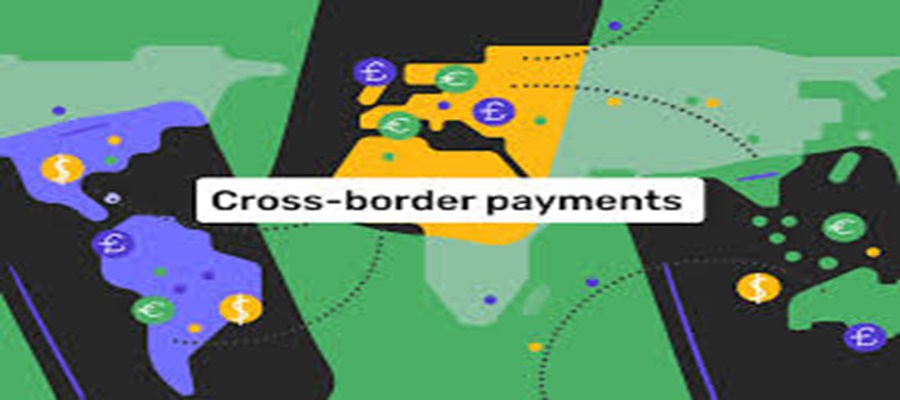
Federal government has launched the “Cross-Border Digital Payments and Identity in Nigeria under the AfCFTA” report, urging stakeholders to unlock trade opportunities for Micro, Small and Medium Enterprises (MSMEs) to access the $3.5 trillion African Continental Free Trade Area (AfCFTA) market.

The high-level report, hosted by the Office of the Vice President in collaboration with ODI Global under the Supporting Investment and Trade in Africa (SITA) programme, was unveiled by Ibrahim Hassan-Hadejia, deputy chief of staff to the President, in Abuja.
Hassan-Hadejia described the research as both timely and strategic, noting the strong coordination by the Office of the Vice President and the leadership of the Federal Ministry of Industry, Trade and Investment.
He revealed that the cross-border payments report followed earlier milestones, including the development and launch of Nigeria’s Digital Trade Strategy and a capacity-building programme for subnational leaders.
Furthermore, he said Nigeria is increasingly assuming a leading role in shaping the digital trade agenda across the African continent, necessitating that the country remains at the forefront of AfCFTA implementation.
He noted that deepening engagement with AfCFTA and enabling businesses, particularly SMEs, to conduct seamless cross-border transactions will be critical to unlocking trade, fostering growth, and creating jobs.
He further stated that efficient cross-border payments, supported by trusted digital identity systems as recommended in the report, will be key to realising President Bola Ahmed Tinubu’s Renewed Hope vision for Nigerian MSMEs.
The Deputy Chief of Staff also observed that while the report identifies the Pan-African Payment and Settlement System as a critical platform for cross-border digital payments, Nigerian fintech firms such as PalmPay and Moniepoint, which have some of the largest and most active user bases, will play a pivotal role in driving adoption.
He assured that the Federal Government remains committed to strengthening critical infrastructure, regulatory frameworks, and partnerships to ensure Nigeria is not only ready for digital trade but continues to lead.
“I appreciate the efforts of all stakeholders and urge us to move AfCFTA beyond a continental agreement to a $3.5 trillion trade juggernaut that will reinvigorate our industries, unlock intra-African trade, and domesticate African prosperity,” he added.
He said “intra-African trade will be driven not only by large corporations but by small businesses empowered through digital trade and e-commerce, while noting that issues of trust, identity, and logistics, as highlighted in the report, must be addressed”.
Commenting on the report, Temitola Adekunle-Johnson, special Adviser to the President on Job Creation and MSMEs, said the report – developed under the purview of the Office of the Vice President-would significantly strengthen the MSME ecosystem.
He expressed optimism that the report’s findings and recommendations would enable Nigerian SMEs to achieve seamless access to continental markets.
Salihu Dasuki, special Assistant to the President on ICT Policy, Office of the Vice President, disclosed that the office, in partnership with development partners, has developed a framework to fast-track seamless cross-border payments for MSMEs.
He added that “a key pillar of President Tinubu’s Renewed Hope Agenda is enabling Nigerians to access digital trade, which informed the capacity-building programme conducted for subnational governments last year”.
Shuda Ahmed, special assistant to the President on Project Support, Office of the Vice President, commended ODI Global for leading the research underpinning the report.
She noted that without seamless and affordable cross-border payment systems, MSMEs across the continent would be unable to scale beyond their domestic markets.
The event was attended by officials of ODI Global, representatives of AfCFTA, the National Information Technology Development Agency (NITDA), National Identity Management Commission (NIMC), Nigerian Petroleum Development Company (NPDC), Federal Competition and Consumer Protection Commission (FCCPC), and MSMEs, among other key stakeholders.
E-Financial
Interswitch Deepens Strategic Partnership with KCB Group to Advance Digital Payments and Financial Inclusion


Interswitch, Africa-focused integrated payments and digital commerce enabler, has reaffirmed and expanded its longstanding partnership with KCB Group within the East Africa region, marking a significant milestone in the drive to accelerate seamless, secure, and inclusive digital payments across the region.

During a recent executive engagement at KCB Group Headquarters in Nairobi, Interswitch Founder and Group CEO, Mitchell Elegbe, led a cross-functional delegation from the company’s Lagos and Nairobi offices, including Interswitch’s Kenya Country General Manager, Bernard Kinara, in high-level discussions with KCB leadership, including Group CEO, Paul Russo, and Director of Strategy & Innovation, Mark Mwongela.
The engagement reinforced both organizations’ shared commitment to scaling digital payment infrastructure and delivering innovative financial solutions that meet the evolving needs of individuals, businesses, and institutions across the region.
Interswitch recently announced an expansion of Verve card acceptance footprint in Kenya, leveraging it’s consolidated partnership with KCB Group, Kenya’s largest financial services group by assets, following a similar move in Uganda through the local KCB Franchise in February 2022.
At the core of the strengthened collaboration is the integration of Interswitch’s robust payment rails, card scheme, and emerging digital token solutions with KCB Group’s expansive regional footprint and trusted banking franchise. This integration enables the acceptance of Verve cards and tokenized payment solutions across KCB’s extensive merchant point-of-sale network in Kenya and Uganda, significantly enhancing everyday usability for customers while strengthening KCB’s digitally driven retail payments offering.
The consolidated partnership is expected to drive increased merchant acquisition, improve interoperability across payment ecosystems, and expand access to secure, cashless transactions. It also reinforces both organizations’ shared objective of deepening financial inclusion and accelerating digital commerce across East Africa.
Speaking on the strategic engagement with KCB Group, Mitchell Elegbe noted:
“Our collaboration with KCB Group represents a powerful alignment of vision and capability. By combining our technology-driven payment solutions with KCB’s strong regional presence, we are unlocking new opportunities to scale access, drive innovation, and deliver greater value to customers across East Africa.”
As digital transformation continues to reshape Africa’s financial services landscape, Interswitch and KCB Group remain focused on building resilient, interoperable systems that empower businesses, support economic growth, and drive broader participation in the digital economy.

EFCC Waxes Worriedly over $160Bn Crypto Crime Losses

Dangote Refinery Debunks Speculations on IPO

FG Awards N50m Each to 45 Students under S-VCG

NGX REGCO Fines 5 Firms N291m for Market Manipulation

FG Launches Cross-Border Digital Payments Report

Spotify’s Loud & Clear Report Reveals Over ₦60Bn Revenue for Nigerian Artists in 2025

Madonna University Taps Tech Guru Adote for Strategic Board Role

China Threatens to Shut Nigeria’s Satellite Over $11.44m Unpaid Debt

Jumia Tech Week 2026 Begins with Tech Deals on Smartphones, Electronics, and Everyday Technology

FCCPC Bans Lagos ‘No Refund’ Policy, Vows Fines and Shutdowns for Traders



 General News3 days ago
Anti Graft Agencies Raise Alarm over Rising Crypto-Linked Financial Crimes

 E-Business3 days ago
NITDA Takes Over National Digital Architecture System

 E-Financial1 day ago
CBN bars large‑ticket loan defaulters from banking services in tough new crackdown

 General News1 day ago
ARN Rejects Medical Bill over Attempt to ‘Scrap’ Profession

 Telecom1 day ago
NIGCOMSAT Supports Startups Growth with the Launch of Accelerator 3.0

 News1 day ago
Meningitis Kills a Quarter Million People a Year -Study

 Telecom1 day ago
FG Unveils Digital Economy Research Fund Scheme

 News1 day ago
Stakeholder says AI is Crucial to Nigerian Data Centres Amid Persistent Grid Collapse