

News
Starcomms, Reltel Go Public, Shop for N60Bn by Private Placement

Starcomms and Reltel Wireless, two of Nigeria’s triple-play" (mobile, fixed wireless voice, wireless broadband) providers are to be listed on the Nigerian Stock Exchange (NSE) by the last quarter of this year, CommunicationsWeek investigations has revealed.
Ahead of the planned listing the two companies who are running neck and neck in the Code Division Multiple Access (CDMA) market are shopping for $520 million by private placement for network expansion and enhancement of their services.
Private placements are privately offered and are restricted to qualified individuals, which typically mean individuals with certain net worth.
But with the listing on the main board of the NSE, ordinary investors would be able to own part of the largely lucrative telecom business.
gathered that Starcomms is out to raise N30billion for network expansion and improvement of the quality of its services.
Starcomms, expects to raise N22.8 billion of the total sum in Nigeria, while the remainder would be raised outside Nigeria.
The private placement would be carried out utilising the concept of "book running" whereby prospective investors would state the volume of shares they desire, and at what price per share.
With a little over a million subscribers, Starcomms is a market leader. It commercially launched in 1999 and has invested heavily over the years to improve the quality of its products.
Starcomms’ closest rival, Reltel, is also raising N30 billion to drive its nationwide expansion plans across 51 cities in the country.
Reltel reputed for improved services, said that 100 percent of the money raised will be invested in the company and that the company will be listed on the Nigerian Stock Exchange before the end of the year.
Reltel which is set to relaunch its brand cuurently operate across seventeen cities in the federation including Lagos, Onitsha , Port-Harcourt, Abuja , Aba , Owerri, Umuahia, Enugu , Ibadan , Nnewi, Asaba, Awka.
CommunicationsWeek



In March 2026, Kaspersky Threat Research has identified a new malicious campaign targeted at developers looking for installation instructions for Claude Code, a development agent created by Anthropic. When searching for “Claude Code download”, sponsored advertisements appear at the top of the search results.

One of these ads redirects users to a malicious webpage that closely imitates the official installation documentation for Claude Code. As a result, users are tricked into installing malware which harvests sensitive information including credentials, crypto wallet data, browser sessions, and other confidential files. Similar malicious campaigns mimic other popular AI tools, including OpenClaw.
The fake documentation page is visually identical to the legitimate one and is hosted on the website-building and hosting platform Squarespace. Because the page precisely copies the original instructions, users may not notice the difference when copying and executing installation commands.
However, instead of installing the developer tool, the commands deliver malware to the victim’s system. Depending on the operating system, the malicious commands deploy different infostealers:
. Windows systems receive Amatera, an information-stealing malware that collects data from user directories, web browsers, and cryptocurrency wallets before sending the stolen information to a remote server. Amatera has previously been observed in campaigns using the ClickFix distribution technique and is operated under a Malware-as-a-Service (MaaS) model.
. macOS systems receive AMOS, another infostealer previously documented in several malware campaigns targeting Apple devices. It has been described by Kaspersky before.
Kaspersky researchers also identified similar malicious campaigns targeting other popular AI tools, including OpenClaw and Doubao. Using the same approach, attackers registered multiple domains and distributed files containing the Amatera infostealer while disguising them as legitimate downloads for these tools.
“The campaign poses significant risks because AI development tools such as Claude Code and OpenClaw are widely used not only by hobbyists and automation enthusiasts but also by professional developers working in large organisations.
If infected, victims may unknowingly expose source code from active projects, confidential corporate data, authentication credentials, and private accounts. This makes such campaigns particularly dangerous for businesses whose developers rely on AI-assisted coding tools,” comments Vladimir Gursky, cybersecurity expert at Kaspersky.
In December 2025, Kaspersky detected that attackers spread a macOS infostealer using Google Ads. A specially generated chat interface designed to resemble a ChatGPT tutorial pretended to guide users through installing the Atlas Browser. The malicious instructions appeared to be hosted on a legitimate site associated with OpenAI, helping attackers gain users’ trust.

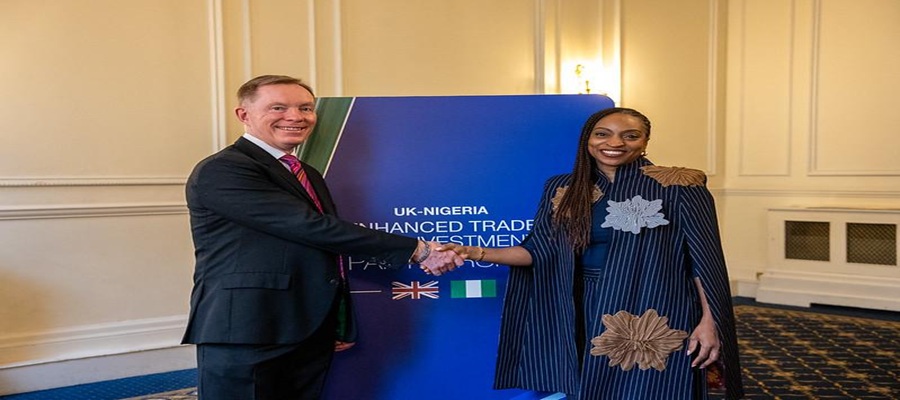
Hundreds of new jobs are set to be created as Nigerian banks, fintech innovators and creative industry businesses scale up their operations in Britain.

UK-Nigeria
The move will see millions invested, reinforcing the UK’s position as a leading global business hub, backed by world‑class talent, strong access to capital, and a stable regulatory environment – while showcasing Nigeria’s expanding role as a key source of innovation and investment into the UK, growing both economies.
UK’s Twinings Ovaltine has launched a £24 million manufacturing facility in Lagos, its first in Africa, creating over 100 direct jobs and boosting the company’s exports across West Africa.
It comes as the President of the Federal Republic of Nigeria, Mr. Bola Ahmed Tinubu, accompanied by the First Lady, Mrs. Oluremi Tinubu, are set to commence an historic State Visit on Wednesday [tomorrow, 18th March], strengthening the UK’s position as a global hub for African business.
Thanks to the UK’s Trade and Industrial Strategies – combined with commitments made through the UK-Nigeria Enhanced Trade and Investment Partnership (ETIP) – the government is attracting investment into key growth sectors including financial services, technology, education and advanced manufacturing.
The Deputy Prime Minister held an ETIP reception yesterday at Kensington Palace, bringing together 180 senior representatives from government and industry to celebrate the breadth, depth, and continued growth of our trade relationship across priority sectors including financial services, education, creative industries, infrastructure and technology. The UK’s Trade Envoy to Nigeria, Florence Eshalomi, also addressed the group.
Business and Trade Secretary Peter Kyle said: “The UK and Nigeria share a belief in the power of enterprise, innovation and education to transform lives, and today’s commitments show exactly that. With Nigerian firms creating jobs across the UK and British businesses expanding into one of the world’s fastest growing markets, our partnership is strengthening both economies and delivering real benefits for people in both countries.”
Deputy Prime Minister David Lammy said: “The UK and Nigeria’s Strategic Partnership is bringing momentum and opportunity to innovators in both our countries.
“We are reducing barriers, creating jobs and opening new pathways for growth. Growth is the core mission of this government, and it underpins our relationship with Nigeria.
“I am deeply proud that the cultural and commercial bonds between our nations are thriving and that both our businesses and people are feeling the benefits of that.”
Zenith Bank, one of Nigeria’s largest financial institutions, opens its Manchester branch today [Tuesday 17 March] with the capacity to create up to 30 new direct jobs in a boost for the Northwest economy.
The bank is also exploring a 2027 London Stock Exchange listing to deepen its UK market presence and unlock long-term funding for UK-Africa growth.
Fidelity Bank’s acquisition and rebrand of Union Bank UK into FidBank UK with plans to double its 62‑person workforce in 2026 and add new capital, while the Fidelity Group makes London its global hub.
FCMB has also selected the UK as the first international destination for its digital cross border payments platform, boosting trade and investment flows between Africa and the rest of the world. Seven Nigerian banks now operate in the UK, supporting at least 1,000 jobs in total.
Dame Dr. Adaora Umeoji OON, Group Managing Director/CEO, Zenith Bank PLC said: “The United Kingdom remains a key global financial centre.
“The opening of Zenith Bank, Manchester, therefore, marks another important milestone in our international expansion strategy, enabling us to deepen relationships with our customers, support trade and investments, and connect businesses between Africa and the UK more effectively.”
Nigerian fintech investment is also accelerating rapidly:
- LemFi will invest £100 million over the next five years as it designates London its global headquarters.
- Moniepoint plans to grow its London based team to 100 employees in 2026, building the infrastructure that supports millions of African users worldwide.
- Kuda Bank is strengthening its UK headquarters as the base for global expansion and plans to double its UK footprint in 2026.
The UK’s reputation as a global creative capital also continues to deepen ties through:
- EbonyLife, one of Nigeria’s leading creative industry brands, will launch EbonyLife Place London, creating up to 40 new jobs and strengthening the UK’s role as a home for African storytelling and creative talent.
- The SCALE Creative Entrepreneur Award Programme, developed by the British Council and supported by the Department for Business and Trade, will support young Nigerian and UK creative entrepreneurs to grow internationally and build lasting ties to benefit both the UK and Nigerian creative economies.’
- The UK Advertising Exports Group will announce a strategic partnership with the Nigerian advertising sector. This will include a UK-Nigeria Advertising Summit taking place later this year and a talent exchange scheme which will deepen bilateral engagement.
- The British Council and the Federal Ministry of Art, Culture, Tourism and Creative Economy in Nigeria, will deliver the UK/Nigeria Season of Culture in 2028, involving a range of innovative initiatives and events designed by UK and Nigeria creative organisations.
- A Creative Industries Roundtable at Lancaster House will bring together alumni, Chevening scholars and creative leaders from both countries.
The following British businesses are also set to benefit thanks to:
- Twining’s Ovaltine launching a £24 million manufacturing facility in Lagos, its first in Africa, creating over 100 direct jobs and boosting the company’s exports across West Africa.
- British fintech Wise will receive approval for its first Nigerian licence, enabling it to expand in a remittances market valued at up to £39.9 million.
- The Nigeria Sovereign Investment Authority (NSIA), which was set up with UK Support in 2011, has signed an agreement with Asset Green Ltd to explore a largescale integrated dairy project that will strengthen Nigeria’s dairy value chain, reduce reliance on imports and improve nutrition.
Leading UK universities are also expanding into Nigeria, helping train the next generation of Nigerian and British scientists, technologists and innovators. Nigeria is a key education partner and a priority country for the UK’s International Education Strategy.
- The University of Birmingham and the University of Lagos have signed a new agreement to deliver programmes in Applied AI, Digital Communications and Global Surgery.
- The LSE has launched a new Data Science partnership with Nile University of Nigeria alongside the University of the West of England opening a dedicated office in Lagos.
- Wellington College International Lagos will open in 2027, offering places for 1,500 students – becoming one of West Africa’s flagship British curriculum schools.
- EStars, a UK‑owned educational esports and technology company, will partner with the Lagos State Ministry of Basic and Secondary Education to deliver esports‑based digital learning programmes to around three million students.

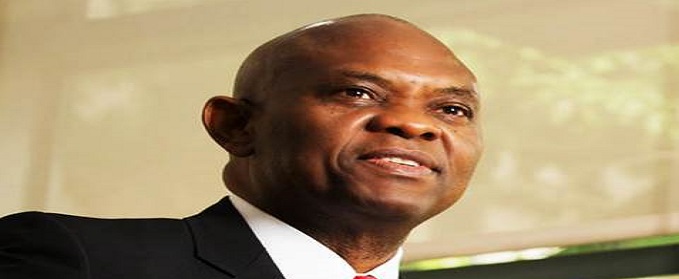
Tony Elumelu, Nigerian businessman and philanthropist, has warned about the growing dangers of artificial intelligence misuse after an AI-generated video falsely showed him promoting a forex and cryptocurrency trading platform.

Tony Elumelu,
The founder of Tony Elumelu Foundation revealed this in a post on his X account on Monday, explaining that the video appeared highly convincing but was entirely fabricated.
In the post, he also tagged Elon Musk, X owner, and Nigeria’s Federal Ministry of Communications, Innovation and Digital Economy while calling for stronger safeguards against the misuse of artificial intelligence.
“A few days ago, my team flagged an AI-generated video of me endorsing a forex and crypto platform.
“It looked and sounded remarkably real, but it was completely fake. This incident highlights a growing and serious threat to digital trust,” he wrote.
He stressed that he has no affiliation with any cryptocurrency or foreign exchange trading platforms.
“For the avoidance of doubt, I am not associated with any crypto or forex trading platforms.
“My commitment to inclusive prosperity has always been through long-term investments, building sustainable businesses, and empowering entrepreneurs,” he said.
While acknowledging the transformative potential of artificial intelligence, Elumelu urged African youths to embrace the technology responsibly and use it to develop scalable solutions.
“I strongly believe in the potential of AI. It is a defining technology of our time, and African youth must be at the forefront of adopting it to build scalable solutions. We cannot afford to be left behind in the global tech race,” he added.
The business leader, however, warned that rapid technological advancement also presents risks if not properly regulated.
“But the flip side of rapid innovation is the risk of abuse. The ease with which identities can now be cloned to deceive the public is alarming.
“Policymakers and regulators must act now to establish safeguards and hold those using it to scam innocent people accountable,” he said.
Elumelu also urged the public to remain vigilant and protect themselves from digital fraud.
“We must create a safe digital environment where true innovation can thrive without being overshadowed by fraud. Protect your hard-earned money, stay alert, and let us continue to build the Africa we deserve,” he said.

SEC Shuts Over 400 Fraudulent Investment Schemes, Arrests Operators

NigComSat-1R, Nigeria’s Only Satellite to Expire this Year

Nigeria, Ghana Trigger Stunning 45 Percent Surge in MTN Dividends

Banks, Offices to Close for Thursday and Friday for Eid-el-Fitr

ATCIS Urges FG to Ensure Safety of Consumers Data

Kaspersky Discovers New Phishing Campaign Exploiting Google Tasks Notifications to Steal Corporate Credentials

esentry 2025 Report Shows Healthcare, Financial Services and Telecoms as Staging Grounds for Increased Cyberattacks in Africa

AfDB, UNDP Launch $10Bn AI Initiative for Africa

Mutual Benefits Assurance Settles ₦5.9bn Claims in January 2026

MultiChoice Suspends Yearly DStv Price Hike as Canal+ Pushes Growth




 E-Financial2 days ago
CBN Rolls Out New Rules for Safer Instant Payments, More Customer Control

 News2 days ago
NIMMME Inaugurates Engr. Michael Orekyeh as 13th National Chairman in Abuja

 Telecom2 days ago
MTN Nigeria Races Ahead in Fibre Broadband Market

 E-Financial2 days ago
CBN Tightens BVN Rules to Curb Fraudulent Banking Transactions

 E-Financial2 days ago
Nova Bank Appoints Jude Anele as Managing Director/CEO

 E-Business2 days ago
Tech Expert Unveils BAT-BOT AI App to Curb Fake News ahead of 2027 Elections

 Broadcasting1 day ago
Spotify’s Loud & Clear Report Reveals Over ₦60Bn Revenue for Nigerian Artists in 2025

 Telecom1 day ago
PwC Warns Nigeria Telcos of AI Fraud Risks