

E-Financial
Sterling Bank Introduces Free Bus Rides for Nigerians

After sparking a national movement with its Zero Transfer Fees campaign, Sterling Bank has once again pushed the boundaries of what corporate citizenship can mean to everyday Nigerians.

Last week, regular Lagosians stepping out after long workdays were met with an unexpected gift: Sterling OneBank-branded buses waiting to take them home, free of charge.
Starting as a push against bank transfer fees, the initiative has now taken to the streets, as the bank began offering free bus rides to customers across major Lagos corridors, a gesture that will continue through May 2025 to ease the return of workers after the May Day holidays.
For a city where a single bus fare can be the difference between feeding a family or not, Sterling’s free ride initiative struck a deep chord.
What began with free transfers through its OneBank platform has now evolved into a movement on wheels, connecting digital convenience with real-world survival.
In a time of skyrocketing costs, the bank is reaffirming a simple belief: financial freedom should not end at the removal of bank charges, it should move you, carry you, and lift you.
Across Lagos, from Obalende to Ikorodu and TBS to Oshodi, the sight of Sterling buses pulling up to offer free rides sparked moments of disbelief, gratitude, and quiet celebration.
For thousands of commuters, it was a tangible reminder that sometimes, the biggest changes come not from slogans, but from small, deliberate acts of care.
“For customers who have to choose between transport fare and groceries, this is more than a ride, it’s hope, said Chidimma Okoli, Masterbrand Marketing Lead at Sterling.
“When we said we were tearing down the barriers to moving your money, we meant it. But we also meant the barriers to moving yourself, to moving your dreams, to moving your life forward.
This isn’t just about banking apps. It’s about freedom, in every sense of the word.”Mary E., a market trader from Oshodi, stepped off a Sterling bus last Friday and captured the mood perfectly.
“This is the first time a bank is not just advertising but acting, she said, beaming.
“I have saved on transfers all month because of OneBank. And today, I saved on my transport. Sterling ehn, dem sharp. Dem dey move.”
Across town, a young professional shared his own experience on LinkedIn: “Every naira matters o. I already saved money on bank transfers using OneBank. Today, Sterling saved me time, money, and stress after a brutal day at work. They just get it.
Another rider, Amaka I., a single mother and hairdresser from Ajah, described the free ride as “a blessing nobody told me was coming.” She added, “We Lagos people work so hard just to move. Today, I didn’t have to count Naira for my bus fare. That is dignity. That is respect.”
Chidimma Okoli emphasized that this initiative was never about fanfare, but about putting philosophy into action. “Financial systems have for too long extracted from Nigerians,” she said.
“At Sterling, we are making a different choice. We are giving back, not just in naira and kobo, but in opportunities, in relief and in real dignity.”
This initiative builds on Sterling’s history of standing with Nigerians during critical moments.
During the pandemic, Sterling was one of the first banks to support remote work transitions and provide digital lifelines to struggling SMEs. Through programs like AltSchool Africa and entrepreneur bootcamps, Sterling has opened new doors to skills development and affordable financing.
After fuel subsidies were removed, the bank financed transport cooperatives to keep mobility alive for thousands who would otherwise have been stranded.
But according to Okoli, what matters now is not history, it’s momentum. “We’re not trying to relive past glories,” she said. “We’re building new victories, alongside the people who trust us every day with their journeys.”
Beneath the buses and smiling faces lies a deeper story of infrastructure strength. Sterling’s robust digital banking backbone, capable of handling over 180 million transactions and scaling rapidly, allows it to absorb costs that many banks would have pushed onto customers. It is this invisible engine that has further helped make visible change possible.
As the month of May approaches, the momentum will continue. Workers returning from the holidays can expect to find the free rides still running across locations, a daily reminder that real banking doesn’t just live in apps but also on the streets, in the choices that make hard lives a little easier.
Sterling is encouraging all riders to share their experiences online, turning thousands of quiet journeys into a loud statement that Nigeria deserves a financial system that carries its people forward, not holds them back. Because true banking is not about hoarding profit; it is about moving lives and moving freely.


The Nigeria Inter-Bank Settlement System (NIBSS) is looking into offline payment solutions as part of its efforts to increase financial inclusion and reach Nigerians who have limited or no access to mobile data.

The project was announced by Ngover Nwankwo, NIBSS executive director for business and products, at the 2026 CHBO Conference in Lagos.
Nwankwo pointed out that the rapid expansion of digital payments must be matched by purposeful inclusion initiatives, cautioning that innovation should not exclude groups of the population that still rely largely on cash.
She emphasised that cash is still an important element of Nigeria’s economy and that digital and cash-based payments must coexist to safeguard disadvantaged users while boosting efficiency for digitally connected customers.
Nwanko also commended banks for operational performance, particularly during the December 2025 cash demand period, which she said was met with few public complaints.
Lloyd Onaghinon, Bankers Warehouse Plc,had similar sentiments on the enduring need of cash. He explained that cash usage remained high globally due to cultural, demographic, and trust-related factors
However, he cautioned that surplus currency outside the banking system undermines financial intermediation and monetary policy efficacy, demanding greater cooperation among regulators, banks, and other stakeholders.
Director Solaja Olayemi, representing the Central Bank of Nigeria, stated that around 90% of Nigeria’s cash remained outside the banking system and encouraged banks to collaborate with fintechs and microfinance institutions..
He added that fintechs with substantial agent networks, such as Moniepoint, OPay, and Kuda, are better positioned to drive inclusion, with some companies now holding national licenses.
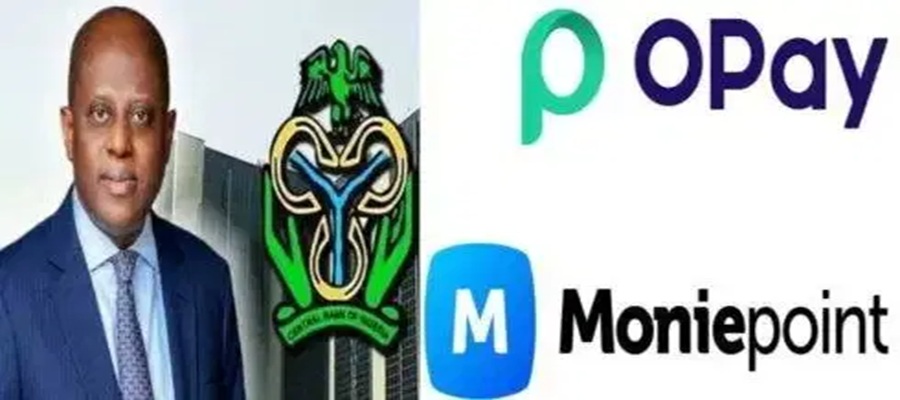
Central Bank of Nigeria (CBN) has approved the upgrade of operating licences for major FinTech companies and Microfinance Banks (MFBs), including Opay, Moniepoint MFB, Kuda Bank, Palmpay and Paga, to national status, formalising their nationwide operations after fulfilling regulatory compliance requirements.

The development addresses the rapid expansion of these digital platforms, which have leveraged mobile technology and extensive agent networks to serve millions across Nigeria, outgrowing their previous regional or state-level licences.
Yemi Solaja, Director of the CBN’s Other Financial Institutions Supervision Department, announced the upgrades during the annual conference of the Committee of Heads of Banks’ Operations (CHBO) in Lagos.
Institutions like Moniepoint MFB, Opay, Kuda Bank and others have now been upgraded. In practice, their operations are already nationwide, Solaja stated, highlighting the mismatch between prior licensing scopes and actual service footprints.
He underscored the critical need for physical customer support infrastructure, especially for informal sector users who form the bulk of their clientele, noting that Most of their customers operate in the informal sector. They need a clear point of contact if any issues arise.
With national licences, these institutions must adhere to elevated standards, including a minimum capital base of N5 billion for national MFBs, establishment of dedicated offices for complaint resolution, and rigorous Know-Your-Customer (KYC) protocols to bolster consumer protection and financial system stability.
The reforms align with CBN’s broader strategy to integrate large-scale digital operators into a robust regulatory framework commensurate with their reach, while harnessing their potential to deepen financial inclusion across Nigeria’s underserved populations.
This milestone follows intensified oversight, exemplified by 2024 penalties of N1 billion each imposed on Moniepoint and Opay for KYC non-compliance during routine audits, alongside similar actions against other players like Kuda and Palmpay, which prompted operational overhauls.
Such measures reflect the apex bank’s commitment to balancing innovation with risk management in the fintech sector, which has revolutionised access to banking services for millions in the informal economy through agent banking and mobile wallets.
Industry observers view the national upgrades as a vote of confidence in these trailblazers, while signalling that sustained compliance remains non-negotiable for their continued dominance in Nigeria’s digital finance ecosystem.

Nigeria’s leading financial technology companies are now collectively valued at about $10.6 billion as of January 2026, underscoring the country’s growing influence in Africa’s digital finance ecosystem and renewed investor confidence in technology-driven financial services.
According to report by the Tribune, based on data from Securities and Exchange Commission (SEC) filings, Bloomberg and other publicly available sources, Flutterwave remains Nigeria’s most valuable fintech company with an estimated valuation of $3 billion.
It is followed closely by OPay at $2.75 billion.
Together, both firms account for more than half of the total valuation of the country’s top fintech players, reflecting their dominance in payments infrastructure, merchant services and consumer finance.
Moniepoint and Interswitch are valued at about $1 billion each, reinforcing their positions as critical pillars of Nigeria’s digital payments architecture.
While Moniepoint has rapidly expanded its reach among small and medium-sized businesses, Interswitch continues to play a foundational role in switching, transaction processing and payment infrastructure for banks and fintechs across the country.
PalmPay, valued at $0.85 billion, and Moove, estimated at $0.75 billion, illustrate how Nigeria’s fintech ecosystem is evolving beyond traditional payments.
PalmPay has built a strong footprint in mobile financial services, while Moove represents the growing convergence between fintech and mobility by providing innovative vehicle financing solutions for drivers on ride-hailing platforms.
Kuda and Paystack, both valued at $0.5 billion, remain important players in digital banking and online payments, respectively.
Kuda has strengthened its position as one of Nigeria’s leading digital-only banks, while Paystack continues to be a trusted gateway for online transactions across Africa.
Paga, valued at $0.25 billion, completes the list, sustaining its relevance through mobile payments and a strong focus on financial inclusion, particularly in underserved and unbanked communities.
In summary, Nigeria’s top fintech companies by market value as of January 2026 are: Flutterwave ($3.0 billion), OPay ($2.75 billion), Moniepoint ($1.0 billion), Interswitch ($1.0 billion), PalmPay ($0.85 billion), Moove ($0.75 billion), Kuda ($0.5 billion), Paystack ($0.5 billion) and Paga ($0.25 billion), bringing their combined valuation to $10.6 billion.
These figures reinforce Nigeria’s position as Africa’s leading fintech hub, driven by its large and youthful population, rising smartphone penetration and increasing demand for digital financial services.
Analysts note that fintech remains one of the most attractive sectors for venture capital on the continent, consistently accounting for a significant share of startup funding over the past decade.
Commenting on the broader impact of technology-driven businesses, Professor Chris U. Kalu said fintech has become a major force in reshaping Nigeria’s financial landscape.
“Generally, fintech has played a very significant role in the Nigerian financial ecosystem,” he said. “The same applies to e-commerce, where platforms like Konga and Jumia are competing favourably and contributing meaningfully to the economy. In e-hailing too, companies such as Uber, Bolt and Lagride are creating value and jobs. This is really a good time for Nigeria and Nigerians, even though development challenges still exist. They are surmountable.”
Despite the impressive valuations, industry observers caution that the fintech ecosystem still faces challenges, including regulatory uncertainty, infrastructure gaps, currency volatility and uneven access to capital. However, the steady rise in company valuations suggests that investors remain optimistic about long-term opportunities in the sector.
EnterpriseNGR recently noted that Nigeria remains Africa’s undisputed fintech capital, with digital payment platforms processing ₦1.08 quadrillion in transactions in 2024, representing a 79 per cent year-on-year increase. It added that by 2026, the payments segment alone is expected to contribute about $6 billion to GDP, supported by strong growth in digital payments and lending, as well as the expansion of wealthtech and insurtech services.
With innovation spreading across payments, digital banking, lending, mobility finance and e-commerce enablement, Nigeria’s fintech sector is increasingly being viewed not only as a regional leader, but also as a critical driver of economic transformation and financial inclusion across Africa.

DHQ Indicts Brigadier General Abubakar Sadiq, 15 Others in Alleged Coup Plot againt Tinubu

Court Fines Airtel N210m for Unauthorised Use of ‘Nigeria Go Survive’ Song

Tech Executives Double Down on AI, Talent and Adaptive Strategies to Lead in the Intelligence Age

Firm Identifies AI as Common Denominator in Entertainment Industry’s 2026 Security Threats

NIBBS to Boost Financial Inclusion with Offline Payment Solutions

19 Nigerian Banks Meet CBN Recapitalization Targets Ahead of March Deadline

Jumia CEO says Black Friday Signals Nigeria’s E-Commerce Maturity

Galaxy Backbone Celebrates the Federal Government’s Paperless Civil Service Milestone

DStv Offers Instant Package Upgrade for Customers from January to February

Banks to Impose N50 Stamp Duty on Transfers of N10,000 and Above from January 1




 E-Financial2 days ago
First Asset Management Receives Upgraded Ratings from Agusto &Co and DataPro

 News2 days ago
Anambra Cuts Monday Pay to Kill Sit-at-Home

 News2 days ago
LIRS to Invoke NTAA to Recover Unpaid Taxes from Bank Accounts, Others

 General News2 days ago
Nigeria Treats Religious Violence as Attack on State – NSA Ribadu

 E-Financial2 days ago
CBN Prepares Fresh Debit Card Rules to Improve ATM Services

 E-Financial2 days ago
NIBSS, Others Flag 13,417 Nigerian Fraudsters on Person of Interest Portal
 News20 hours ago
Tech Executives Double Down on AI, Talent and Adaptive Strategies to Lead in the Intelligence Age
 E-Financial20 hours ago
NIBBS to Boost Financial Inclusion with Offline Payment Solutions