

News
Tax Conference: Sanwo-Olu, Zulum, Amosun, Other Experts Seek Transparent Tax System to Boost Internally Generated Revenues

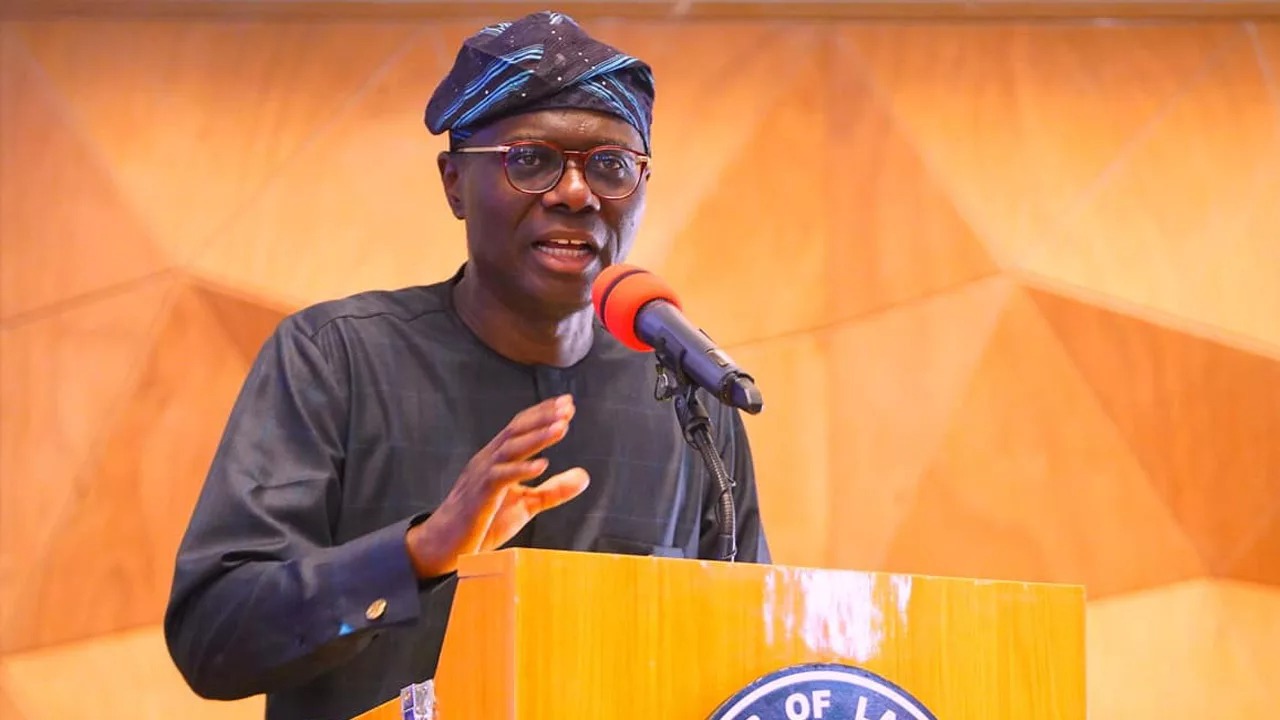
Lagos State Governor, Mr. Babajide Sanwo-Olu, and his counterparts from Sokoto and Borno States have emphasised the need to make the country’s tax system more transparent and accountable to Nigerians to boost confidence and voluntary compliance.

The governors made the call at the ongoing 26th Annual Tax Conference organized by the Chartered Institute of Taxation of Nigeria (CITN) in Abuja, with the theme, “Sustainable Tax Culture and Economic Roadmap for Nation Building”.
Speaking at the conference, Governor Sanwo-Olu who was represented by his Special Adviser on Taxation and Revenue, Mr. Abdul-Kabir Opeyemi Ogungbo, said the theme of the Conference was apt and timely given that Nigeria, like many other nations, is currently facing significant economic challenges.
While underscoring the crucial role of a transparent and efficient tax administration in fostering confidence and voluntary compliance among taxpayers, he emphasized the necessity for citizens to witness tangible outcomes from their tax contributions, highlighting the pivotal role taxes play in fueling public services and infrastructural development.
Sanwo-Olu stressed the shift in mindset needed, urging taxpayers to view tax payments not as a burden but as an investment in a better future for Nigeria.
He said building a strong and sustainable future through a robust tax system that fosters economic growth and development had become inevitable.
Sanwo-Olu said, “We must all understand the crucial role taxes play in building a better Nigeria for ourselves and for generations to come.
“The theme also highlights the need for a clear economic roadmap which should take note of the architecture of our developmental ideologies as they are designed to provide the government with the necessary resources to cater for the social needs of its citizens, therefore we need a tax system that incentivizes investment, job creation, and economic diversification.
“We need to explore innovative ways to expand the tax base while fostering a business environment that allows our economy to thrive. The good news is that Nigeria is already taking positive steps in these directions. The recent efforts to streamline state-level taxes and the focus on integrating the growing remote workforce into the tax net are commendable initiatives.”
The governor said, “The CITN plays a vital role in fostering this vital shift. Your commitment to professional excellence and education is instrumental in ensuring a tax system that is fair, efficient, and promotes economic development.”
However, former Governor of Ogun State, Senator Ibikunle Amosun, who declared the conference open, while stressing the need to prioritize growing Internally Generated Revenue (IGR) over relying solely on borrowing to fund national and sub-national budgets, said borrowing to fund the budgets was not the way to go amid the current national economic challenge when “our nation and its constituent states and local governments are going through very difficult times and finding it hard to provide for its teeming populace, acceptable standards of living, employment with the growing population of youths, infrastructure and basic amenities that will make life more meaningful”.
Governor Babagana Zulum of Borno State criticized inefficiencies and corruption in the current tax administration system.
Zulum, represented by the Deputy Governor of Borno State, Umar Kadafur, highlighted the shortcomings of the current tax system, including tax evasion, avoidance, and lack of transparency.
He called for critical reforms to address these issues, including tackling corruption in both the oil sector and governance system. He criticized the political protection of tax evaders and emphasized the importance of transparency and accountability in tax administration.
While calling for critical reforms, he lamented the manipulation and connivance of multinationals with tax administration to short-change the system, he added that this represented one of the hallmarks of corruption in both the oil and governance system.
In his remarks, the Governor of Sokoto State, Ahmad Aliyu Sokoto, said the conference will greatly assist in exploring innovative ways of improving revenue generation in the country.
He said the economic and revenue challenges had made it difficult for governments at all levels to implement their people-oriented programmes, thus the need for the government to devise a means for more funds to provide the dividends of democracy to the people.
The governor said taxation remained a veritable source of resource mobilization for the government adding that his administration would work with CITN to boost IGR in the state.
The Auditor-General for the Federation (AuGF), Mr. Shaakaa Chira, said the country’s tax system was plagued by instances of tax evasion especially by the upper class, multiple taxation and inability to properly account for taxes collected by administrators.
The Chairman of the conference planning committee, Dr. Adeyemi Sanni, noted that for Nigeria to achieve meaningful fiscal development over the long term, it is imperative to establish a tax culture that can withstand economic fluctuations and challenges.
President and Chairman of the CITN council, Mr. Samuel Agbeluyi, emphasized the importance of investing in technology and people at the subnational level to effectively track revenues in the digital space, including cryptocurrency. This, he believes, will help maximize government revenue flow.
Mr. Agbeluyi stressed the need to provide support to revenue authorities through financial and administrative autonomy, empowering them to effectively administer taxes as he noted it is clear that a strategic approach to revenue management is crucial for the overall financial health of the government.
The CITN boss stated further, “This is a thought-provoking topic that requires all of us to put on our thinking hats. As we deliberate, we must recognize that our nation faces significant challenges. Our current economic realities as a country are multifaceted, despite efforts to improve the narrative by the current government.
He said, “The 2024 budget of “Renewed Hope” as we know relies significantly on non-oil revenue, and this trend is expected to continue in the future. Therefore, building a sustainable tax culture capable of significantly improving our tax revenue performance for an effective. economic and capital formation becomes a top priority.”



The African Development Bank Group last week approved an investment of €6.5 million in the Saviu II fund in order to support technology start-ups through their seed phase and first institutional fundraising, mainly in French-speaking Central and West Africa.

The Bank will invest €4.5 million as equity and €2 million as a first-loss hedging tranche on behalf of the European Commission, under the Boost Africa Programme.
This participation of the Bank Group will enable the Saviu II fund to give priority to companies with a strong technological or digital component.
Saviu II, the second investment vehicle of Saviu Partners, plans to invest between €500,000 and €3 million in about 20 technology or technology-oriented business-to-business start-ups in the seed phase or carrying out first institutional fundraising.
The Saviu II venture capital fund aims to make at least 60% of its commitments in the French-speaking countries of West and Central Africa: Côte d ‘Ivoire, Cameroon, Benin, Senegal, Togo, Burkina Faso and Mali.
The fund can also co-invest in promising technology companies in East Africa that have a strong team and business model, and whose strategy includes entering the market in French-speaking West African countries and establishing a strong presence there.
In addition, the fund will devote a dedicated envelope to pre-seed investments, focusing on minority equity investments, usually in co-investment with studios, incubators or other ecosystem partners.

Nigerian Government has signed a $1.3 billion Memorandum of Understanding (MoU) with Africa Finance Corporation (AFC) via the Solid Minerals Development Fund (SMDF) to fund an alumina refinery, national geoscience mapping, and a strategic investment vehicle for mining growth.

Special Assistant to the Minister of Solid Minerals Development, Segun Tomori, said the refinery will process one million tonnes of bauxite yearly using a modern Bayer process, powered by an on-site gas-fired cogeneration plant.
Minister Dele Alake called it a transformative milestone boosting GDP, aligning with reforms that improve investment climate, regulations, and licensing to attract private capital. He directed agencies to fast-track permits.
The 20-year project at 95% utilization eyes 19 million tonnes total output, $1.2 billion annual GDP addition, $25 billion economic impact, and $8 billion forex earnings, per feasibility studies.
SMDF Executive Secretary Fatima Shinkafi termed it the agency’s biggest funding deal, supporting value-addition policy.
The partnership extends to geoscience mapping for mineral data, de-risking exploration, and a joint vehicle for mining assets.
Permanent Secretary Engr. Farouk Yabo praised the reforms. Shinkafi signed for government; AFC’s Franklin Edochie for the corporation, witnessed by AFC CEO Samaila Zubairu.
Tomori positioned it as Nigeria’s largest private mining investment and FDI magnet.

TeamApt Ltd., a subsidiary of Moniepoint Inc. and a leading financial infrastructure provider, has partnered with Awabah, the National Pension Commission’s first licensed Accredited Pension Agent, to expand pension access for millions of Nigerians in the informal economy.

The partnership was unveiled in Abuja at the launch of Awabah’s agent licence, themed “Building Financial Resilience: Securing the Future with Personal Pensions.”
At the event, PenCom Director-General Omolola Oloworaran underscored a major imbalance in Nigeria’s pension system, noting that while pension assets have grown to over ₦27 trillion, the benefits remain largely concentrated among formal-sector workers. She observed that most informal-sector workers—who make up the majority of Nigeria’s workforce—still retire without any form of savings.
This challenge is further highlighted in Moniepoint’s 2025 Informal Economy Report, which reveals that although 65 per cent of informal businesses recorded revenue growth, most lack the structural resilience required for long-term sustainability and succession.
Through the partnership, TeamApt—a Central Bank of Nigeria–licensed switching and processing company—will enable seamless pension registration and contributions for Awabah users via its Direct Debit service on Point of Sale (POS) terminals nationwide. Informal workers can enrol for personal pensions, tokenize their cards, and automate periodic contributions in just a few steps.
The initiative simplifies pension savings by turning what was once a complex, bureaucratic process into a routine transaction, enabling business owners and workers to build financial security beyond their productive years.
“When we started Awabah, we were driven by one core belief—that no African worker should be one accident or crisis away from poverty,” said Tunji Andrews, Chief Executive Officer of Awabah.
“This partnership with TeamApt allows us to scale that vision. By leveraging their Direct Debit service and extensive POS network, we are meeting informal workers where they already operate—markets, workshops, kiosks, and roadside businesses. With small, regular contributions, workers can now access personal pensions bundled with health, accident, and life insurance,” he added.
TeamApt CEO Dennis Ajalie said the collaboration aligns with the company’s long-standing mission to power Nigeria’s informal economy.
“At TeamApt and Moniepoint Inc., our focus has always been on enabling the informal sector,” Ajalie said. “Today, working within our licence framework and alongside our co-subsidiary, Moniepoint Microfinance Bank, we operate across all 774 local government areas, serving millions of Nigerians who drive economic activity.”
He described the partnership as a critical step toward pension inclusion, adding that it demonstrates how financial infrastructure can deliver real, long-term value to everyday Nigerians.
Ajalie also praised PenCom’s leadership for creating an enabling environment for innovation, noting that Oloworaran’s reforms have opened the door for partnerships capable of delivering sustainable pension coverage for informal workers.
The initiative is powered by TeamApt’s robust financial technology ecosystem, which has supported banks, fintechs, and financial institutions for more than a decade. Its omni-channel Direct Debit service allows automated recurring collections—such as pension contributions, subscriptions, and repayments—directly from customers’ bank accounts with their consent.
Beyond pensions, the platform enables informal workers to automate investments in the capital market, access healthcare through HMOs, and secure insurance coverage for themselves and their families—extending financial security far beyond retirement.

Sunil Bharti Mittal Conferred GSMA Lifetime Achievement Award for Transforming Global Telecommunications

Jumia Tech Week 2026 Begins with Tech Deals on Smartphones, Electronics, and Everyday Technology

AfDB Supports Francophone Africa Start-ups with €6.5M

Krishnan Exits Africa Data Centre to Embark on Professional Chapter

House Probes Fintech Regulation via Public Hearing on New Commission Bill

Accidental Billionaire Opts for Jail Instead of Returning Money Credited Him by Mistake

New Horizons Nigeria Breaks Ground: First to Fuse Mandarin into ICT Curriculum

Kaspersky Brings more Transparency to Threat Detection with New Hunt Hub

Dr. Cairo Ojougboh Foundation Bolsters Nigeria’s Education Drive with ₦2.7m Student Support

NDPC Commits to Balancing Data Privacy, Protection Information




 E-Financial2 days ago
Iran-Israel-US Conflict and CBN’s FX Gains: A Stress Test for Nigeria’s Monetary Stability

 E-Financial2 days ago
Mutual Benefits Assurance Reaffirms Full Regulatory Compliance, Enhanced Governance

 General News2 days ago
JAMB Uncovers AI-Driven Fraud Targeting UTME Candidates, Warns Parents

 General News2 days ago
SERAP Asks FCCPC to Investigate Google, Meta, Others over Alleged Rights Abuses

 News2 days ago
TeamApt, Awabah Partner to Boost Pension Drive for Nigerians

 News2 days ago
FlashChange CEO, Bidemi Oke, Urges Startups to Build Strong Governance Structures Early

 E-Financial2 days ago
Reps Mull Commission to Regulate Fintech Operations

 General News2 days ago
Capelli Institute Commits to Advancing Trichology in Nigeria