

Broadcasting
TB Joshua’s Emmanuel TV’s Removal by MultiChoice on Mutual Agreement—Report

A fresh report has it that the removal of Emmanuel TV by MultiChoice, owners of DStv and GOtv, was based on mutual agreement.

There had been speculations in the social media space that the channel was delisted in the aftermath of a damning documentary by BBC, on the life and times of the founder of the Synagogue Church of All Nations, Pastor TB Joshua, who died in June 2021.
According to a report by TheCable, a senior member of the church who revealed the details, said the church received two letters signed by Mr. John Ugbe, MultiChoice West Africa CEO,, in 2023, warning of the poor performance of the channel and impending removal.
The source revealed that officials of the church consented to the removal of the channels via a letter to MultiChoice, dated December 22, 2023.
“Last year, we got a letter dated 7 August 2023 from MultiChoice Nigeria Limited regarding the channel distribution agreement between MultiChoice Africa (Proprietary) Limited and Emmanuel Global Network South Africa entered into on 29 October 2015.
“The letter was signed by Mr John Ugbe, the Nigeria CEO. He said the metrics of all channels on DStv and GOtv platforms are monitored by the Multichoice regularly and that Emmanuel TV was performing poorly.
“This was not surprising, to be honest. The moving spirit of Emmanuel TV was Pastor Joshua and since his death, things were never going to be the same again.
“MultiChoice said it expends considerable resources in terms of satellite and DTT capacity and subscriber management to distribute channels. As a result, only channels which maintain minimum performance standards are carried on their platforms, according to the CEO.
“Multichoice wrote to us again on 7 December 2023 saying that they had concluded the reassessment of Emmanuel TV’s performance between 7 August 2023 and 8 November 2023. They concluded that the channel had not met the 90-day improvement targets and would be discontinued effective 17 January 2024,” the source said.
According to the official, Emmanuel TV responded two weeks later, precisely on December 22, 2023, requesting termination “by mutual consent”.
It also said the wording of the messages to subscribers should read “Emmanuel TV Channel Exit” and not “Emmanuel TV Channel Termination”.
On December 19, 2023, MultiChoice sent an SMS to subscribers to notify them that Emmanuel TV would be discontinued.
In the SMS sent to its DStv customers, MultiChoice said: “Dear DStv Customer, please be advised that Emmanuel TV (DStv channel 390) will no longer be available from 17 January 2024 at 10.59. Please, visit dstv.com to check our latest content line-up.
Emmanuel TV was finally removed from both broadcast platforms on January 17, 2024, after a final performance review.
The BBC Africa Eye documentary accusing Joshua of rape, torture, and forced abortions was aired on January 8, 2024.



Nigeria has ranked first globally in the ownership of the two largest stablecoins, Tether (USDT) and USD Coin (USDC), reflecting the country’s growing reliance on dollar-linked digital assets.

USDT, USDC
Stablecoins such as USDT and USDC are designed to maintain a fixed value against the U.S. dollar, allowing users to store money digitally while avoiding the price volatility associated with cryptocurrencies like Bitcoin.
According to the 2026 Stablecoin Utility Report released by BVNK, about 59 percent of Nigerian crypto users hold USDT, while 48 percent own USDC, giving the country the highest combined ownership rate among all nations surveyed.
The report placed Nigeria ahead of several major economies, including Australia and India, highlighting the country’s strong adoption of dollar-denominated digital assets. Australia ranked second with 34 percent USDT ownership and 29 percent USDC, while India placed third with 30 percent USDT and 27 percent USDC holdings.
The study also examined adoption levels across other regions. Countries such as Colombia and Singapore showed strong usage of both stablecoins, while adoption levels were also notable in South Africa and the United States.
Other markets included in the analysis were Philippines, Thailand and Argentina, where stablecoin ownership has also increased significantly. Among European economies, the report said France and Germany showed moderate levels of adoption, while Latin American markets such as Mexico and Brazil recorded smaller but growing usage rates.
The United Kingdom also appeared in the ranking with modest levels of stablecoin ownership. The report noted that USDT ownership exceeds USDC in many countries, including Nigeria, Australia, India, Singapore, the Philippines, Thailand, Argentina and France.
However, USDC is often viewed as a more compliance-focused stablecoin because of its stronger transparency and regulatory alignment. In some markets, including South Africa, Colombia, Germany and Brazil, the report found that USDC adoption slightly exceeds USDT.
More broadly, the data suggests that stablecoin adoption is being driven largely by emerging economies rather than advanced financial markets. According to the report, countries such as Nigeria, Argentina and the Philippines are among the biggest users of stablecoins, where people increasingly rely on dollar-pegged digital assets to protect savings from currency volatility and facilitate cross-border payments.
Spotify has unveiled Nigeria-specific data from its annual Loud & Clear report, highlighting how Nigerian artists generated more than ₦60 billion in revenue from the platform alone last year, amid explosive growth in streams, local consumption, and global discovery.

The report, which analyzes millions of data points to illuminate music streaming economics, shows Nigerian artists’ revenue surged over 140% in the past two years.
This boom stems from rising global appeal and stronger domestic engagement, with 30.3 billion streams and 1.6 billion listening hours on Spotify in 2025. First-time discoveries of Nigerian music hit 1.3 billion, up 26% from 2024.
Locally, Nigerian tracks dominated Spotify Nigeria’s Daily Top 50, accounting for over 80% of features, while consumption of homegrown artists jumped 170% year-on-year.
“Nigeria’s music scene thrives on creativity, innovation, and global influence,” said Jocelyne Muhutu-Remy, Spotify’s Managing Director for Africa. “Loud & Clear spotlights how artists are forging sustainable careers and deepening local ties.”
Key highlights include:
55% year-on-year growth in local streams for Nigerian female artists.
75% surge in streams for independent Nigerian artists.
Independents and indie labels earning 58% of all royalties from Nigerian artists on Spotify.
Spotify’s editorial playlists featured nearly 2,000 Nigerian artists in 2025, boosting visibility. Nigerian music appeared in 320 million global user playlists and over 12 million in Nigeria, totaling more than 60 million playlists worldwide.
The report also notes evolving tastes, with top-growing genres in Nigeria over five years including pop urbaine, alternative pop, anime, emo, and drill.
For full details, visit spotify.com/loudandclear.
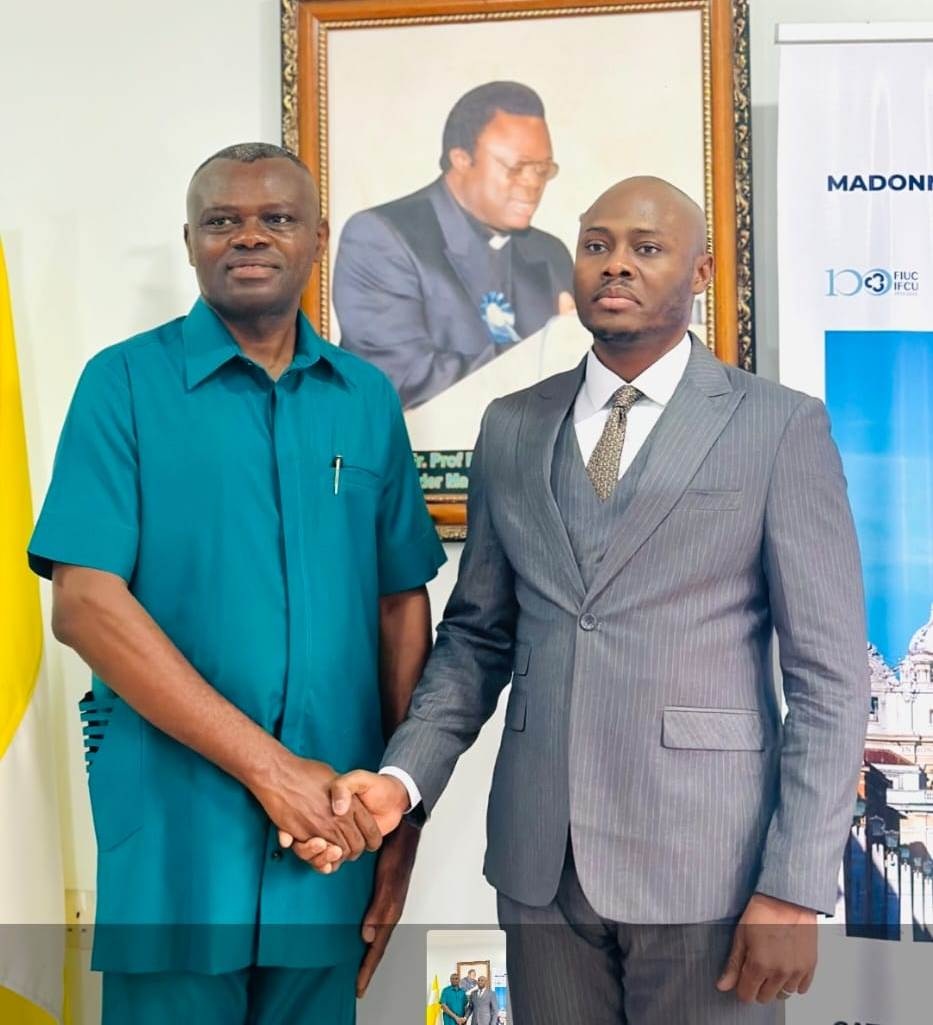
Technology strategist Rock Adote has been appointed to the Board of Trustees of Madonna University Nigeria, a move expected to strengthen the institution’s push toward digital governance and modern technological systems in higher education.

Madonna University
Adote, who has built a reputation in cybersecurity, enterprise identity management and digital transformation, brings over a decade of experience in designing secure digital infrastructure and managing identity systems for organizations.
Stakeholders believe his expertise will support the university’s efforts to strengthen data security and modernize its academic and administrative digital frameworks.
The appointment reflects the university’s growing commitment to technology-driven leadership as institutions increasingly rely on digital systems for academic operations, data management and research collaboration.
Universities today manage large volumes of sensitive digital information, including student records, research data and staff credentials, making strong cybersecurity and identity management frameworks essential.
As a member of the Board of Trustees, Adote will participate in providing institutional oversight and guiding strategic policy direction for the university.
The board is responsible for safeguarding academic standards while steering long-term development initiatives and ensuring the institution remains responsive to evolving global trends in education and technology.
Industry observers say Adote’s background in enterprise digital systems positions him to contribute significantly to the university’s digital transformation agenda, particularly in strengthening technological resilience and governance frameworks across its operations.
Other newly appointed members of the board include Sir Nwagwu Aloysius Emeka, Chief Arthur Obi Okafor (SAN), Professor Anagboso Martin Osita, Mrs. Ike Angela Unaoaku, Barrister Augustine Nenwa Obo and Rev. Fr. Stephen Ifeanyichukwu Nwatah.
Speaking on the appointment, Adote expressed appreciation for the opportunity to serve, emphasizing the importance of aligning higher education institutions with emerging technological realities.
According to him,
“Digital transformation will play a crucial role in shaping the future of academic administration, research and learning environments”.
Analysts note that the inclusion of technology leaders in university governance structures signals a growing recognition that digital transformation is becoming central to the competitiveness and sustainability of modern higher education institutions.
With Adote’s appointment, Madonna University is expected to further strengthen its technology strategy and position itself as a forward-looking institution within Nigeria’s higher education landscape.

UBA, NiDCOM Deepen Collaboration to Unlock Diaspora Capital for Nigeria’s Growth

Vitel Wireless Lures Subscribers with “Data that Never Expires” Campaign

FG Deploys Technology, Approves $54m Drugs to Tackle Tuberculosis

BoI, MTN Foundation Launch N1Bn Fund for Women Entrepreneurs

Luno Launches First Crypto Prediction Market in Nigeria

Kaspersky Discovers New Phishing Campaign Exploiting Google Tasks Notifications to Steal Corporate Credentials

esentry 2025 Report Shows Healthcare, Financial Services and Telecoms as Staging Grounds for Increased Cyberattacks in Africa

AfDB, UNDP Launch $10Bn AI Initiative for Africa

Mutual Benefits Assurance Settles ₦5.9bn Claims in January 2026

MultiChoice Suspends Yearly DStv Price Hike as Canal+ Pushes Growth




 Broadcasting3 days ago
Spotify’s Loud & Clear Report Reveals Over ₦60Bn Revenue for Nigerian Artists in 2025

 E-Financial3 days ago
CBN Relaxes Dormant Account Rules with Removal of Affidavit Requirement

 Telecom3 days ago
PwC Warns Nigeria Telcos of AI Fraud Risks

 News3 days ago
Elumelu Tags Elon Musk, Disowns AI-Generated Scam Video

 E-Financial3 days ago
Crypto Transactions Hit $96Bn in Nigeria -SEC

 E-Business3 days ago
FG Determined to Protect Rights, Privacy Online- NITDA

 E-Business3 days ago
Firm Warns of Malware Aiming to Steal Data from Individuals, Organisations in Nigeria

 News3 days ago
NITDA DG Appraised the Role of Teachers as Key to Nigeria’s Digital Transformation