

E-Financial
Telcos Are Becoming Banks for The Next 2Bn Customers


By Douglas B. Laney
Telecommunications companies across Africa and Latin America spend $15-21 billion annually on customer retention programs.

According to GSMA Intelligence’s State of the Industry Report, telcos in Sub-Saharan Africa lose up to 67% of their customers each year, despite spending 10-14% of their revenue on customer retention efforts.
Meanwhile, these same customers desperately need financial services that traditional banks often fail to provide.
The fix might already exist. Every smartphone in Lagos or Lima contains more processing power than major banks had twenty years ago.
Yet telecom companies use them only for calls and data, missing a massive opportunity to transform these devices into financial infrastructure.
Three Forces Reshaping the Financial Market
However, three global trends are occurring to encourage an expansion and stickiness of the services telcos provide:
First, 2 billion people are getting connected for the first time, mostly through smartphones in developing countries.
The ITU reports that 2.1 billion people remain unconnected or under-connected globally, with 96% in developing nations.
But unlike early internet users who dealt with dial-up and basic websites, today’s new users get immediate access to sophisticated applications and stable networks.
Second, these markets altogether skip the traditional banking evolution. The World Bank’s Global Findex Database shows 1.4 billion adults remain unbanked, concentrated in regions where mobile money already dominates.
Rural Colombia never built bank branches.
Nigerian villages never installed ATMs. So when mobile payments arrived, people switched from cash directly to digital money without the friction of introducing banks or changing established habits.
“The mobile industry has never been more important to the world’s citizens and economy,” says Mats Granryd, Director General of GSMA. “Mobile money is a game-changer for the financial inclusion of women and other underserved groups.
It provides a gateway to a wider range of financial services, including savings, credit, and insurance, which can help people build resilience and improve their livelihoods.”
Third, global financial control has begun to fragment. The Bank for International Settlements found that only 3 of 114 central bank digital currency pilots have actually launched, with most failing due to technical problems and poor adoption.
BRICS nations built their own payment systems. Some countries added Bitcoin to their national reserves. The old centralized system no longer holds sway.
Chris Surdak, CEO of ReLeaf Financial, puts it bluntly: “The World Bank, the World Economic Forum, CBDCs, all were aligning to constrain free market adoption of cryptocurrency..After decades of dipping our toes in these waters, people are now ready to cross the crypto Rubicon in force.”
From Payphones to Phones that Pay
Most people haven’t considered the possibility of earning money while their smartphones sit idle.
However, ReLeaf developed a patent-pending system called “Proof of Intent” that turns phones into transaction validators.
When someone in Peru sends money to their family, phones in Colombia could verify the transaction.
Phone owners can earn small cryptocurrency rewards that add up to cover data plans, airtime, or groceries—thereby potentially solving the loyalty and retention problem.
“There are billions of people living on three or four dollars a day if they’re lucky,” Surdak explains. “How can you meaningfully exist today without being digitally connected? ReLeaf makes both happen at the same time.”
Claro, a major Latin American telecom, calculated that there is over $350 million in potential new revenue out there over the next five years, with significantly lower churn. This doesn’t even require any new infrastructure, just software updates to existing apps.
Dante Disparte, Chief Strategy Officer at Circle, sees broader implications: “In many parts of the world, having access to a stable currency is not a given.
Stablecoins can provide a safe and reliable store of value for people in countries with high inflation or political instability.” He adds that stablecoins are programmable, which “opens up a whole new world of possibilities for financial services in emerging markets, from micropayments and remittances to decentralized finance applications.”
David Chaum, the inventor of digital cash in the 1980s and creator of much of the encryption that protects modern transactions, warned about surveillance capitalism decades before Facebook existed. Yet he just joined ReLeaf’s strategy team.
“ReLeaf is what I have always dreamed that cryptocurrency would be,” Chaum says. “A win for telcos, retailers, and consumers.”
Coming from the man who founded DigiCash in 1989 and whose patents enable every secure transaction today, this means something. Chaum wanted regular people to control their money without surveillance or permission. He imagined cryptography empowering individuals, not corporations. After forty years, he sees it happening through ReLeaf’s approach: phones earning money for their owners without tracking or central control.
The Merging of Emerging Markets
Traditional banks in New York or London can’t pull this off. They face centuries of regulations, customers expecting physical branches, and systems held together with outdated COBOL code. Emerging markets don’t have that baggage.
In Kenya, M-PESA proved it. One telecom company, using basic phones and zero banking infrastructure, now processes half of Kenya’s GDP. The GSMA’s 2024 Mobile Money report reveals that global mobile money transactions exceeded $1 trillion, with Africa accounting for 70% of that volume.
Elizabeth Rossiello, CEO of AZA Finance, stresses the need for local solutions: “Africa is not a country. It’s a continent of 54 different countries, each with its own regulatory environment, its own currency, its own challenges, and its own opportunities. You can’t have a one-size-fits-all approach.”
She’s watched the transformation firsthand: “The future of payments in Africa is mobile. We’ve seen a huge leapfrog effect, where many people have skipped the traditional banking system and gone straight to mobile money. This has created a massive opportunity for innovation in the digital payments space.”
Laney, is a Contributor Data, Analytics and AI Strategy Advisor and Researcher



Central Bank of Nigeria (CBN) has directed banks and other financial institutions to complete a newly deployed cybersecurity self-assessment tool (CSAT) as part of efforts to strengthen resilience across the financial system.

In a circular dated March 30, the apex bank said the tool was introduced in line with its mandate under the Banks and Other Financial Institutions Act 2020 and is designed to assess the cybersecurity posture of regulated entities.
According to the circular signed by Olubunmi Ayodele-Oni for the director of the compliance department, deposit money banks are required to submit their completed assessments within three weeks, while other institutions have five weeks.
The directive, which takes immediate effect, applies to deposit money banks, payment service banks, microfinance banks, payment service providers, finance companies, and development finance institutions.
“The CSAT is a structured supervisory instrument designed to obtain comprehensive information on the cybersecurity posture of regulated institutions,” the circular reads.
“It covers key areas including cybersecurity governance, risk management practices, technology and third-party risk controls, incident response capabilities, and overall operational resilience.
“Insights derived from the CSAT will support risk-based supervision and enhance regulatory oversight of cybersecurity risks across the financial system.
“Accordingly, all the referenced institutions are required to complete and submit the CSAT through a dedicated submission portal.”
The regulator added that access to the submission portal and guidance would be provided to chief information security officers and other relevant officials of the affected institutions.
CBN said all submissions must reflect data as of December 31, 2025, and be accompanied by relevant supporting documentation where applicable.
The apex bank warned that “submission of false, misleading, or inaccurate information constitutes a regulatory breach,” and would attract sanctions in line with BOFIA 2020.
CBN also said validation exercises, including off-site reviews and supervisory engagements, would be conducted to verify the accuracy of submissions.
NGX Regulation Limited (NGX REGCO), a wholly owned subsidiary of Nigerian Exchange Group (NGX Group) has sanctioned five trading license holders for alleged market manipulation and other prohibited trading activities, imposing fines totaling N291million.

In a notification dated March 27, 2026, and addressed to Emomotimi Agama, director-general of the Securities and Exchange Commission (SEC), the regulator said the decision followed deliberations of its Regulatory and New Business Committee (RNBC) held on March 16 and 24, 2026.
The sanctioned firms are CSL Stockbrokers Limited, Cowry Securities Limited, Meristem Stockbrokers Limited, SMADAC Securities Limited, and Associated Asset Managers Limited.
NGX RegCo stated that the cases were escalated by its Investigation Panel after hearings on February 25 and March 17, 2026, which uncovered repeated infractions such as wash trades, self-matching transactions, artificial price formation, and misleading market activity.
CSL Stockbrokers was fined N91.29 million, while Cowry Securities, Meristem Stockbrokers, SMADAC Securities, and Associated Asset Managers were each penalized N50 million in accordance with the Investment and Securities Act 2025.
The Exchange also directed the affected firms to undertake mandatory compliance and market conduct training to reinforce regulatory adherence and enhance market discipline.
It noted that the sanctions are proportionate to the violations and are intended to deter future misconduct, reaffirming its commitment to safeguarding market integrity, protecting investors, and strengthening confidence in Nigeria’s capital market.
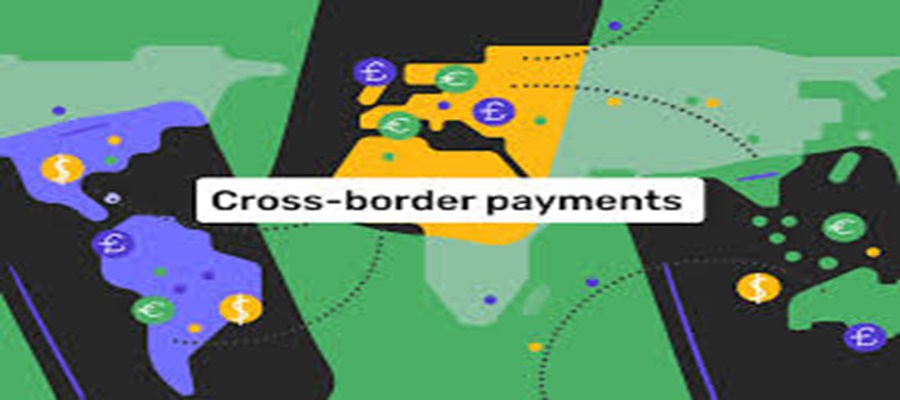
Federal government has launched the “Cross-Border Digital Payments and Identity in Nigeria under the AfCFTA” report, urging stakeholders to unlock trade opportunities for Micro, Small and Medium Enterprises (MSMEs) to access the $3.5 trillion African Continental Free Trade Area (AfCFTA) market.

The high-level report, hosted by the Office of the Vice President in collaboration with ODI Global under the Supporting Investment and Trade in Africa (SITA) programme, was unveiled by Ibrahim Hassan-Hadejia, deputy chief of staff to the President, in Abuja.
Hassan-Hadejia described the research as both timely and strategic, noting the strong coordination by the Office of the Vice President and the leadership of the Federal Ministry of Industry, Trade and Investment.
He revealed that the cross-border payments report followed earlier milestones, including the development and launch of Nigeria’s Digital Trade Strategy and a capacity-building programme for subnational leaders.
Furthermore, he said Nigeria is increasingly assuming a leading role in shaping the digital trade agenda across the African continent, necessitating that the country remains at the forefront of AfCFTA implementation.
He noted that deepening engagement with AfCFTA and enabling businesses, particularly SMEs, to conduct seamless cross-border transactions will be critical to unlocking trade, fostering growth, and creating jobs.
He further stated that efficient cross-border payments, supported by trusted digital identity systems as recommended in the report, will be key to realising President Bola Ahmed Tinubu’s Renewed Hope vision for Nigerian MSMEs.
The Deputy Chief of Staff also observed that while the report identifies the Pan-African Payment and Settlement System as a critical platform for cross-border digital payments, Nigerian fintech firms such as PalmPay and Moniepoint, which have some of the largest and most active user bases, will play a pivotal role in driving adoption.
He assured that the Federal Government remains committed to strengthening critical infrastructure, regulatory frameworks, and partnerships to ensure Nigeria is not only ready for digital trade but continues to lead.
“I appreciate the efforts of all stakeholders and urge us to move AfCFTA beyond a continental agreement to a $3.5 trillion trade juggernaut that will reinvigorate our industries, unlock intra-African trade, and domesticate African prosperity,” he added.
He said “intra-African trade will be driven not only by large corporations but by small businesses empowered through digital trade and e-commerce, while noting that issues of trust, identity, and logistics, as highlighted in the report, must be addressed”.
Commenting on the report, Temitola Adekunle-Johnson, special Adviser to the President on Job Creation and MSMEs, said the report – developed under the purview of the Office of the Vice President-would significantly strengthen the MSME ecosystem.
He expressed optimism that the report’s findings and recommendations would enable Nigerian SMEs to achieve seamless access to continental markets.
Salihu Dasuki, special Assistant to the President on ICT Policy, Office of the Vice President, disclosed that the office, in partnership with development partners, has developed a framework to fast-track seamless cross-border payments for MSMEs.
He added that “a key pillar of President Tinubu’s Renewed Hope Agenda is enabling Nigerians to access digital trade, which informed the capacity-building programme conducted for subnational governments last year”.
Shuda Ahmed, special assistant to the President on Project Support, Office of the Vice President, commended ODI Global for leading the research underpinning the report.
She noted that without seamless and affordable cross-border payment systems, MSMEs across the continent would be unable to scale beyond their domestic markets.
The event was attended by officials of ODI Global, representatives of AfCFTA, the National Information Technology Development Agency (NITDA), National Identity Management Commission (NIMC), Nigerian Petroleum Development Company (NPDC), Federal Competition and Consumer Protection Commission (FCCPC), and MSMEs, among other key stakeholders.

How Recycled SIM Card Linked to N50m Kidnapping Nearly Landed me in Jail – Businesswoman

Senate Gives Tinubu Nod to Borrow Fresh $6Bn

FG Earmarks $2Bn to Launch 2 Satellites in 2028, 2029

CBN Directs Banks, Fintechs to Complete Cybersecurity Audit Tool

FG Launches CLHEEAN to Streamline Access to Government Services

Spotify’s Loud & Clear Report Reveals Over ₦60Bn Revenue for Nigerian Artists in 2025

Madonna University Taps Tech Guru Adote for Strategic Board Role

China Threatens to Shut Nigeria’s Satellite Over $11.44m Unpaid Debt

Jumia Tech Week 2026 Begins with Tech Deals on Smartphones, Electronics, and Everyday Technology

FCCPC Bans Lagos ‘No Refund’ Policy, Vows Fines and Shutdowns for Traders




 E-Financial3 days ago
CBN bars large‑ticket loan defaulters from banking services in tough new crackdown

 General News3 days ago
ARN Rejects Medical Bill over Attempt to ‘Scrap’ Profession

 Telecom3 days ago
NIGCOMSAT Supports Startups Growth with the Launch of Accelerator 3.0

 News3 days ago
Meningitis Kills a Quarter Million People a Year -Study

 Telecom3 days ago
FG Unveils Digital Economy Research Fund Scheme

 News3 days ago
Stakeholder says AI is Crucial to Nigerian Data Centres Amid Persistent Grid Collapse
- General News3 days ago
Nigeria Advances Digital Governance as NITDA takes over NGEA Portal

 E-Financial2 days ago
NGX REGCO Fines 5 Firms N291m for Market Manipulation