

General News
The Economist Says President GEJ is “Bad luck for Nigeria”


The Economist, influential United Kingdom-based magazine, has returned a damning indictment on President Goodluck Jonathan and said his “discredited ruling party faces its greatest electoral test yet”.
This is coming on the heels of the endorsement of Muhammadu Buhari, presidential candidate of the All Progressives Congress (APC), for the February 14 election by The Economist.
The newspaper said it was endorsing Buhari because a “former dictator is a better choice than a failed president”.
Although the newspaper does not have much influence on the majority of Nigerians, its views are highly respected among Western leaders.
In the latest report, the newspaper tore President Jonathan apart and poured every invective available to describe his incompetence.
Below is the text of the report: http://www.economist.com/news/middle-east-and-africa/21642236-discredited-ruling-party-faces-its-greatest-electoral-test-yet-bad-luck
A three car convoy is considered modest for leading Nigerian politicians, and modesty appeals to Muhammadu Buhari, the leading opposition candidate in the presidential election due to be held on February 14th.
From his rented house made of simple concrete with few windows, his cars drive into a busy street and are almost immediately stuck in traffic.
Without the armed outriders and flashing lights that ease the passage of officials in the ruling party he inches his way to the airport in Abuja, the capital, his aides glancing around nervously.
The aura of power catches up at the terminal building as he prepares to start the day’s campaigning. Courtiers, jobseekers and hangers-on in colourful garb and headgear rush in.
Shyly he shakes hands. Mr Buhari, a 72-year-old retired general who ruled Nigeria for 20 months in the mid-1980s (and then spent 40 months in detention), may be on the verge of triggering the first democratic change of power in the country’s modern history.
Polling and observers suggest the race between him and the incumbent, Goodluck Jonathan (pictured) is too close to call, with each commanding about 42% of the vote.
Ever since 1999, when the army relinquished power, Nigeria has been ruled by the People’s Democratic Party (PDP), a sophisticated political machine greased by billions of dollars’ worth of oil money. Yet less cash is available these days.
A sharp decline in the oil price has coincided, unluckily for Mr Jonathan, with the election. Government revenues have halved in recent months and the currency has tumbled by a quarter. Civil servants are paid late, if at all. Infrastructure projects have stalled.
But the government’s biggest liabilities are the result of its own greed. Officials have never been shy about dipping into public troughs but the present lot is, by common consent, especially avaricious.
Last year the governor of the central bank said that $20 billion had gone missing. He was sacked for his trouble.
A report into his allegations is now on Mr Jonathan’s desk. Rampant theft has not only harmed the economy and exacerbated poverty but it has also contributed to public insecurity.
With corruption endemic even in the army, soldiers are sent to the front line short of ammunition and rations.
Demoralised and poorly led, they have failed to quell a jihadist insurgency in the north-east that has killed thousands.
Almost a year ago militants from Boko Haram, a jihadist group that claims to have established a “caliphate” over a chunk of the country, kidnapped more than 250 girls from the town of Chibok.
The government barely stirred until it was goaded into action by an international outcry.
With much of the north-east in flames—around 1.5m people have been forced to flee their homes—many voters believe Nigeria’s situation today is worse than at any time since the civil war in the late 1960s.
To be sure, large parts of the country remain secure and the economy has boomed in recent years, but insecurity is spilling southward. Left unchecked, the insurgency could tear Nigeria apart.
At rallies, Mr Jonathan encounters unenthusiastic supporters; many are paid to turn up and so leave before his speech ends.
Chairs are provided, perhaps to make the crowd seem larger. At a rally in Yola in late January they were thrown at him. Elsewhere his convoy has been stoned. Some election billboards are guarded by soldiers, giving rise to calls that the men should fight Boko Haram instead.
The candidates, and their parties, exhibit few ideological differences. The election revolves around questions of honesty and competence as well as ethnic and religious identity—unsurprisingly, given Nigeria’s diversity, with 500 languages spoken among its almost 200m people. Mr Jonathan is a Christian from the south whereas Mr Buhari is a northern Muslim.
The key to victory for either candidate may lie partly in whether people vote along religious lines. To win, Mr Buhari must convince Christian voters, predominantly in the south, that being Muslim is not synonymous with Islamism.
The atmosphere at Buhari rallies—even those held away from his northern heartland—suggest that momentum is on his side. Many attendees are euphoric with optimism that he can fix the country.
They also hope that, as a former military man, he knows “how to make soldiers fight, not run away.” He has some form.
Under his command in the early 1980s the Nigerian army drove out Chadian rebels from areas now held by Boko Haram (and which, ironically, are now being contested by Chadian soldiers who have been sent to assist Nigeria).
They also look at his record in fighting corruption. When he was head of state he, rather unusually for the office, kept his fingers out of the till.
He locked up hundreds during an anti-corruption campaign and launched a “war against indiscipline” in which he got whip-wielding soldiers to enforce orderly queuing. Civil servants who arrived at work late were forced to perform “frog jump” squats.
Yet, during this period thousands of political opponents were detained without trial, political meetings were banned and the press was tightly controlled. Hundreds of people were tried before secret military tribunals and many were executed for crimes that were not capital offences when they were committed.
Eager to play up his past the PDP has been publishing photos of him in military uniform with the headline, “Once a dictator, always a dictator”.
Activists and foreign diplomats are unworried by his past. His running mate, Yemi Osinbajo, is a lawyer and pastor with a strong record of championing human rights. Mr Buhari, for his part, told The Economist: “We have to stick to the constitution of the country. Once upon a time I was a military man. But I do not want to militarise democracy.”
If anything, Mr Buhari’s biggest flaw is the opposite of what the PDP alleges. He has never been a forceful character; he can be Reaganesque in his inclination to set the tone and direction of policy but leave the details to others.
His party, the All Progressives Congress (APC), is the product of a recent merger of the four main opposition groups. Ruling-party bigwigs dismiss it as a “party of candidates” squabbling for power.
Attempts to form a united opposition party at previous elections failed because the leaders could not agree on a joint candidate. This time they did, holding a credible primary before choosing Mr Buhari.
The APC has, moreover, already shown it can govern competently. It runs the two most populous urban areas, Kano and Lagos, and almost half the federal states. Supporters on both sides have threatened to protest violently against a loss.
Tempers will probably also flare if there are widespread irregularities in the conduct of the vote (see article).
Some fear a Buhari victory could lead to an eruption of violence in the Niger Delta, the home region of Mr Jonathan, where the government has bought a precarious peace by paying off former militants. A victory for Mr Jonathan could, meanwhile, spark unrest in the north.
The vote in 2011 was judged one of the country’s fairest, and yet almost a thousand people died in communal fighting.
This election could mark a permanent shift in Nigerian politics away from one-party rule. The powerful used to crowd around one big trough, awaiting their turn. Now they must choose between two troughs. That makes for potentially nastier politics. But if Nigeria can hold together, there is a hope of better government.


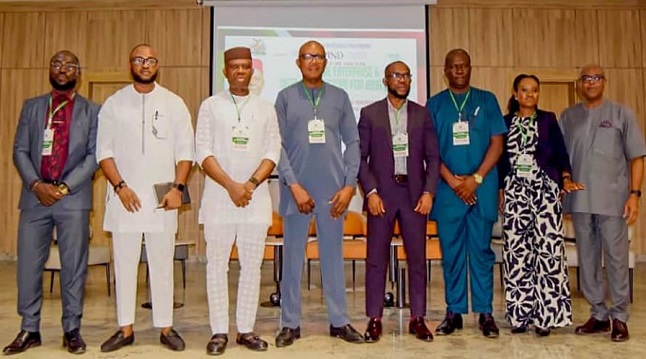
In alignment with President Bola Ahmed Tinubu’s priority areas of economic reform, digital innovation, and improved governance, the National Information Technology Development Agency (NITDA) has reiterated its commitment to supporting sub-national governments in building integrated, data-driven systems that enhance service delivery and drive sustainable growth.

This commitment was reinforced at the Future Enterprise & Data Architecture of Abia State workshop themed “One Citizen, One Identity: Unlocking Data-Driven Governance.” The high-level engagement brought together policymakers, technocrats, and development partners to chart a pathway toward a unified digital public sector anchored on interoperability and citizen-centric governance.
The workshop, organised by the state’s Ministry of Budget and Planning and declared open by Governor Alex Otti, who was represented by the Deputy Governor, Engr Ikechukwu Emetu, focused on strengthening interoperability among Ministries, Departments, and Agencies (MDAs) to enhance revenue generation and improve service delivery across the state.
Speaking during a panel session titled “Breaking Silos, Building One Government,” the Director General of NITDA, Kashifu Inuwa CCIE, who was represented by the Agency’s Director of Stakeholder Management and Partnership, Dr Aristotle Onumo, emphasised that collaboration remains the cornerstone of successful digital transformation.
“One thing that is very clear is partnership and collaboration. If you want to take advantage of collective intelligence, then partnership is the key. If you want to succeed in building a unified government system, collaboration is the way to go,” he stated.
He stressed that digital transformation is not merely about deploying technology but about transforming people and culture. According to him, resistance to change and entrenched institutional silos can undermine even the most sophisticated technological frameworks if mindset shifts are not prioritised.
“Digital transformation is as much about people as it is about process and technology. If culture resists change, it can undermine strategy at every level. We must move from control to collaboration, and from isolation to integration,” he added.
Highlighting NITDA’s strategic direction, the DG noted that the Agency’s action plan prioritises digital literacy as a foundational pillar for national development. He disclosed that NITDA is targeting 70 per cent digital literacy nationwide through structured interventions, including training 30 million Nigerians across formal and informal sectors using digital learning platforms deployed through community and institutional partnerships.
He further revealed that digital education is being integrated into school curricula at primary, secondary, and tertiary levels, while civil servants across the federal public service are undergoing digital capacity development programmes to enhance institutional efficiency and readiness for interoperable governance systems.
On interoperability, Inuwa described it as “not optional but a necessity” for achieving data integrity, efficiency, and innovation in governance. He explained that NITDA is developing a national interoperability framework and advancing Enterprise Architecture (EA) initiatives across government institutions to ensure seamless data exchange.
“When we talk about interoperability, we mean that data generated in one agency should be accessible and usable by another in a consistent and secure format, without contradiction or confusion. That is how you build one government, not multiple disconnected systems,” he explained.
He added that a robust interoperability framework would not only improve internal government efficiency but also create a platform for innovation, enabling startups and young innovators to build solutions on structured public datasets.
While commending the state’s leadership for its vision and commission, he said, “If we achieve even 80 per cent of what has been presented here, Abia will not only lead among states, but it will also become a national reference point for digital innovation.”
The workshop concluded with a renewed call for stronger federal–state collaboration, policy alignment, and sustained investment in digital capacity to ensure that the vision of “One Citizen, One Identity” translates into tangible socio-economic impact.
General News
Zinox Technologies and TD Africa Forge Strategic Partnership to Revolutionize African Tech Ecosystem

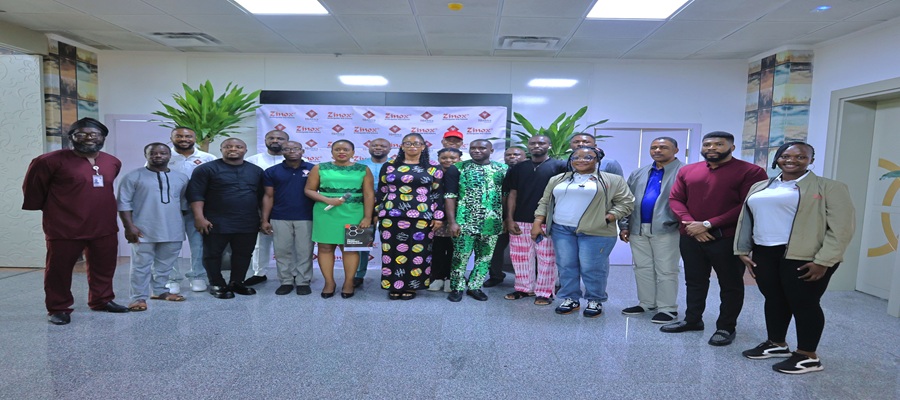
In a landmark development set to reshape Africa’s technology landscape, Zinox Technologies, the continent’s leading manufacturer of trusted technology solutions, and TD Africa, Africa’s largest technology and lifestyle distribution powerhouse, formalized a strategic partnership on Friday at an exclusive press conference attended by industry journalists, key stakeholders, and partners from both organizations.

Zinox Technologies and TD Africa
The event, held to officially announce the collaboration and address stakeholder concerns, marks a pivotal moment in the evolution of indigenous African technology, signalling a new era of continental self-reliance and technological excellence.
The partnership brings together two industry titans whose complementary strengths promise to deliver unprecedented value to the African market.
Zinox Technologies has established itself as Sub-Saharan Africa’s premier indigenous technology manufacturer, producing internationally certified devices that rival global brands while addressing Africa’s unique technological needs.
TD Africa, with its extensive distribution network spanning 43 nations in the continent and expanding, has become the preferred gateway for leading global technology brands including HP, Microsoft, Dell, and Cisco.
This alliance represents more than a business transaction; it harmonizes Zinox’s precision-engineered hardware with TD’s formidable distribution infrastructure to bridge the digital divide, deliver rugged, energy-efficient innovation to the very heart of Africa’s schools, industries, and homes.
Speaking at the event, Chioma Chimere, Coordinating Managing Director of TD Africa, articulated the strategic rationale behind the partnership with evident conviction. “Today represents a moment where Africa meets Africa,” she declared, emphasizing Zinox’s distinction as an indigenous brand that truly understands and produces to meet the unique needs of the continent.
Chimere highlighted Zinox’s comprehensive product range and their remarkable efficiency, noting that the company’s Made-for-Nigeria approach addresses challenges that foreign manufacturers often overlook.
“We are proud to partner with a brand that doesn’t just import solutions but engineers them specifically for our reality,” she added, expressing gratitude to all stakeholders for participating in this historic collaboration.
The event’s opening address set the tone for what promises to be a transformative partnership. The gathering provided partners and the public with comprehensive insights into how this alliance will enhance market access, product availability, and technological solutions across the continent.
Chioma Nwoke, Executive Director, Human Resources Head at Zinox Technologies, offered a compelling vision of the partnership’s broader implications for African technological sovereignty.
She articulated Zinox’s founding vision, to create dependable standards of technology, and traced the company’s evolution from its inception to its current position as a leader in indigenous manufacturing.
“This partnership sends a powerful signal to the market that African technology can compete, innovate, and lead,” Nwoke emphasized.
She stressed that this collaboration transcends mere commercial transactions, encompassing digital education, enterprise development, and nation-building through technology.
“Zinox will continue manufacturing global-standard products, and Africa will be sustained by partnerships like this that demonstrate our capability and commitment to technological independence,” she affirmed.
Moses Edoh, Head of Research and Development at Zinox Technologies, provided technical insights into the company’s diverse product portfolio and the philosophy driving their design approach.
He explained how Zinox, iTEC, and iPower brands compete successfully with foreign manufacturers by creating products tailored to specific customer needs.
“We were the first to produce and introduce hybrid inverters in Nigeria,” Edoh noted, “and every product in our lineup is designed to address the unique challenges Nigerians face daily.”
The Zinox product ecosystem showcases remarkable breadth and innovation. Their technology lineup features cutting-edge All-in-One Smart Boards, PCs with various specifications, tablets, desktops, monitors, and Point-of-Sale systems.
The iPower renewable energy division offers an impressive array of solutions including the Megaforce 125W, GridPro 50KW, Bijimi 30KW, Premium 11KW, Infiniti, Plus, iPower X, iPower Ascend All-in-One, Ascend, Matrix All-in-One, 3KG MPPT Solar Charge Controller, 665 Watts Bifacial Topcon Panel, various monocrystalline panels ranging from 320-550 Watts, multiple battery technologies (lithium, tubular, gel), solar street lights, and portable power banks.
The iTEC brand delivers power generating sets with 100% copper winding, while their consumer electronics range includes AI QLED Smart TVs from 33″ to 95″, microwave ovens, and rechargeable fans.
The testimonials from existing partners underscored the quality and durability of Zinox products. Engineer Anthony Anigbogu, Chief Executive Officer of Orbit Business shared his remarkable experience with an iPower hybrid inverter that served him faithfully for twelve years, only requiring replacement when he needed higher capacity. Such testimonials validate Zinox’s commitment to manufacturing products built for longevity.
Partners called for increased awareness campaigns, noting that many Nigerians continue relying on foreign brands despite having access to Nigerian-made solutions tailored to their unique needs. They pledged to actively promote these indigenous products within their networks.
With TD Africa’s expansive distribution network now channelling Zinox’s comprehensive product range, customers across the continent gain expanded access to world-class, Africa-optimized technology solutions.
Partners of both organizations stand to benefit enormously from this synergy, gaining access to innovative offerings including JOI (Just Own It) for individual consumers, TaaS (Technology as a Service) for corporate clients, and PaS (Product as a Service), among other solutions designed to make technology more accessible and affordable.
For organizations and individuals interested in exploring partnership opportunities or learning more about these innovative solutions, you can send an email to [email protected], with comprehensive information also available on their website.
This partnership represents not just a business alliance but a declaration of African technological capability, a testament that the continent can manufacture, distribute, and sustain world-class technology solutions designed by Africans, for Africans.

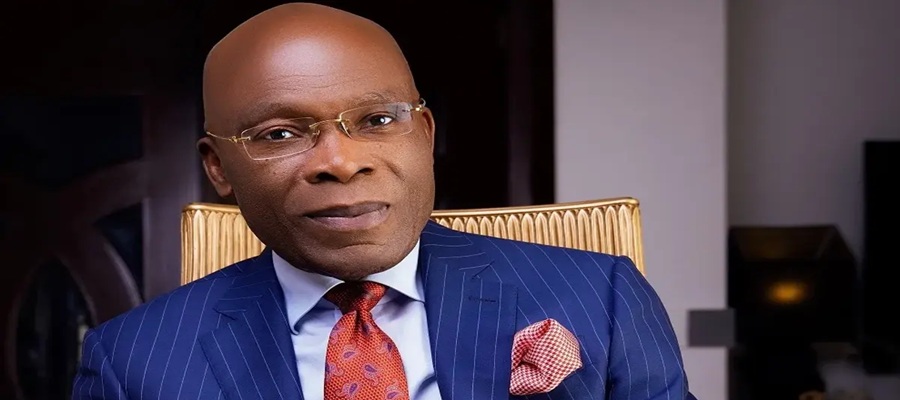
One a quiet Wednesday, February 22, 1956, in Ubomiri, Mbaitoli, Imo State, the family of Chief and Lolo Ebenezer Ekeh leaped for joy at the birth of Leonard Stanley Nnamdi Ekeh- their second son.

Leonard Stanley Nnamdi Ekeh
His birth was both cosmic, and disruptive as his journey down this 70 years on earth has proven.
Leonard Stanley Nnamdi Ekeh, popularly know as Leo Stan Ekeh or LSE is human by birth but profound, rare and has higher consciousness.
Imbued with deep intuition, intense creativity, and compassionate nature, Leo Stan possesses critical thinking ability.
He has relentless drive to succeed across multiple facets of life. This is a self-made construct driven by his deep spiritual and purposeful living, rather than just mere survival.
Despite the recurring and abrupt reversal of government policies, which leave companies including his hemorrhaging, Leo Stan has remained committed and actively participate in the development and nation-building of Nigeria.
Am one of the lucky people to have known him up close and personal for nearly 30 years.
He has endured lots of back biting and campaigns of calumny from competitors and even betrayals from least expected people.
But his tenacity makes him stand firm on his beliefs regardless of feelings, or circumstances.
He has stumbled in businesses, failed in some ventures; but he always get right up. At one point, he nearly lost his head selling international commodities.
LSE takes every loss with equanimity as a dogged fighter.
A serial entrepreneur and with eyes for great minds, Leo Stan does not just walk through life; he leaves a trail of light, lifting everyone around him with kindness and wisdom. And there are testimonials.
For me, he is a pillar of strength and a beacon of hope. My benefactor.
He is also a benefactor to many. He has a way of making associates feel vital, loved, and valued.
Today is his Platinum Birthday but his roads have not always been paved with gold.
His early life was as ordinary as it can be, LSE attended Holy Ghost College, Owerri for his secondary education.
During his early years, he wanted to own the biggest transport company in Nigeria.
He later went to India for his university education, where he received a Bachelor of Science degree in Economics from Punjab University.
Leo Stan believes that studying in India was a great turning point in his life because he found the economy of India a realistic economy”.
He later also earned an MSc in Risk Management from the University of Nottingham.
At 70, he attained his height by trust in God, determination and CAN DO attitude.
Today, his business opinions and advisory are welcome around the world.
Leo Stan once told me “I saw myself from the beginning even when my parents were alive as an orphan. It drives me.”
He has three brothers and two sisters, His mother was a dietitian, and his father was a nurse
“I come from a lineage of people who served God dedicatedly. I am a miracle child and I remember my mother had always predicted that I would be great. I have siblings but I live my life as if I am the only child of my parents” he said
He believes that technology makes life more exciting and helps improve the lives of people around Nigeria and indeed the world.
His solid prints in the business world is well documented. He has his hands in his hands in several businesses including ICT, e-commerce, broadcasting, oil and gas, media publishing and real estate.
Leo Stan is a man of many firsts: he pioneered a new world of digital economy at a time the country was deeply analogue both in the workplace and in schools.
The Nigerian media industry, from advertising to newspapers, owes him much gratitude for changing their operational processes and methodologies from mundane, medieval analogue to the robust and elegant digital platform.
Within 30 years, he has transformed a start-up that sprouted from a make-shift apartment that also doubled as his home into a digital conglomerate with incursions into oil and gas, entertainment and property.
Leo Stan started Zinox Technologies Limited in 2001 to manufacture computers.
He ensured that at launch Zinox Computers already had the WHQL certification, the first in sub-Saharan Africa, consolidated 5 years later with the attainment of the NIS ISO 2000: 9001 QMS Certification.
In October 2013, the company announced the production of its computer tablet line named Zipad
Task Systems, Technology Distributions Limited, Konga (Africa’s foremost truly composite e-commerce outpost combining offline-online mix in service delivery), Konga Radio, and TD Mobile, to name a few, complete the ensemble of businesses in his thriving conglomerate.
In all his companies, there is a growth pathway for every employee.
He deliberately creates a system that rewards every hardworking and dedicated employee.
From drivers sponsored to universities and returning to the conglomerate as degree holders to persons who joined the organisation as janitors working their way up the corporate ladder, he has brought his humanity to bear on people around him.
Making some lowly staff home-owners and sponsoring indigent students to universities at home and abroad comes to him as a routine.
Just a few days ago, ahead of his 70th birthday, he offered University scholarships to additional 1,000 Nigerian indigent wizkids to study Computer Science in Federal Universities. He is committing about N10 billion to the scholarship scheme.
This is so the country’s private and public sectors have a new generation of tech wizkids to support the economy’s growth.
Recall that his group has trained and retrained over 3000 Nigerians and donated tech centres to over 25 institutions nationwide just to mention a few.
The former alter boy and chorister in his local community Catholic Church at Ubomiri, now a multi-billionaire, has stayed humble.
He draws a distinct line between capitalism and welfarism.
Leo Stan is great man, a leader with unparalleled integrity and a heart of gold.
He has earned over 6o international and local awards over many years of incisive entrepreneurship, was equally singled out and honoured by former President Olusegun Obasanjo on the occasion of Nigeria’s Independence Anniversary on October 1, 2001 with an ICON OF HOPE award as a pride to modern Nigeria and as a model for Nigerian youths.
Again, President Obasanjo honoured him with another national award – the Order of the Federal Republic (OFR) in 2003.
A Fellow of the Nigeria Computer Society, the umbrella body of all computer associations in Nigeria, he was also awarded the pioneer ICT Personality of the Year by this professional body.
In November 2019, Ekeh was honoured by President Muhammadu Buhari with the National Productivity Order of Merit award for his sustained leadership in the area of Information and Communications Technology (ICT).
With over four Doctorate Degrees (Honorary) and fifteen fellowships from recognized institutions and as a former global advisor to Microsoft, as well as Forbes Best of Africa Leading Tech Icon Award his outstanding entrepreneurship.
Leo Stan is Ochiririozuo Ubomiri, Ebekuo Dike, Ideato and Iyi of Mbaitoli

NITDA, Abia Partner on Enterprise Architecture Reform

Interswitch Partners Abia to Digitise Public Hospitals

Cyber Immunity Emerges as Shield for Nigerians Amid Rising Scams

WIEG 2026 Summit Shifts to April 22-23 for Maximum Impact

$214Bn Missing, Institutions Silent: Is Accountability Dead in Nigeria?
Nigeria’s 9 Top FinTech Firms Valued at $10.6Bn in January 2026

Kaspersky Launches OT Calculator to Align Cybersecurity Investments with Business Goals

CBN Upgrades Licences of Opay, Moniepoint, Kuda, Palmpay, Paga to National Status

NITDA, NBC Explore Strategic Collaboration on Digital Transformation, Media Regulation

Accidental Billionaire Opts for Jail Instead of Returning Money Credited Him by Mistake




 Telecom3 days ago
Group Condemns Gabon’s Social Media Shutdown Amid Protests

 Telecom3 days ago
IXPN Positions as the Regional Internet Exchange Hub for West Africa

 General News3 days ago
How JustMarkets Is Empowering African Traders with Global Market Access

 E-Business3 days ago
Mutual Benefits Assurance Settles ₦5.9bn Claims in January 2026

 Telecom3 days ago
Menxtt NG Emerges as Nigeria’s Virtual IT Hub for Premium Devices, Solutions

 Broadcasting3 days ago
Pheelz Shares His Journey on Glo-Sponsored African Voices

 E-Business3 days ago
NITDA DG Reaffirms FG Commitment to Responsible and Inclusive AI

 News3 days ago
AI-Driven Memory Chip Fuels Global Phone Price Surge