

News
The Mentality of Winning

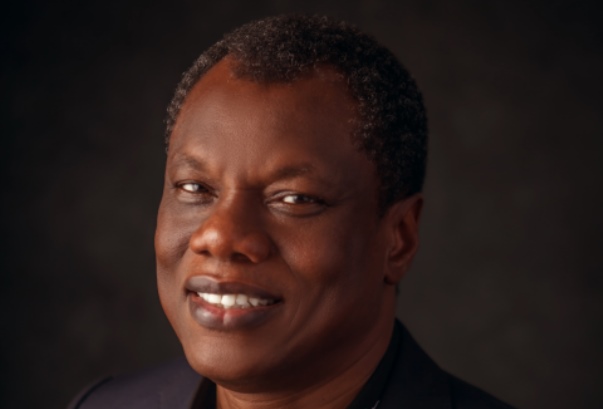
By Austin Okere
I first wrote this article on April 03, 2017, exactly three years ago. I feel compelled to share it again, as I believe that it is even more relevant today in this challenging circumstance; where nothing short of Visionary Leadership and a deep sense of Community and Resilient Followership is needed to steer our nation along this rocky path and to the other side of the wave.

Austin Okere
“The thing about winning and losing is that they are both self-reinforcing.” …Austin Okere
The Gunners as a metaphor
As an Arsenal football club fan, how do I convince anybody that the team is good or that coach Arsene Wenger is doing a good job, given the long spate of trophy draught and inexplicable losses in the current season both in the English Premier league and the Champions league?
The mentality of winning and losing – the Tyson effect
Winning reinforces your self-confidence and instils an inherent mythical fear in your opponents. The whole team is energized and ready for the next win. Losing on the other hand, engenders a loss of confidence and a significant level of demystification, inviting all manner of opponents to fancy their chances at you, as happened when the erstwhile unbeatable heavyweight boxing champion, Mike Tyson lost to a lowly challenger, Buster Douglas in 1990 in Tokyo, Japan.
This was followed by a string of losses leading to a less glorious retirement, highlighted by his biting off the ear of an opponent, Evander Holyfield, during a boxing match. Thus, was dimmed a golden opportunity of going down in history as one of the greatest heavyweights of all time.
Reversing the pattern – Leicester City FC finds her magic
Taking the steps required to reverse your losing spree and shifting into a winning mentality restores your lost glory, seemingly obliterating the past string of losses e.g. Leicester City Football Club; after parting ways with coach Claudio Ranieri (ironically the same coach that propelled them to the dizzying heights of winning the English Premier League title last year) have suddenly become unstoppable again; beating the better rated Spanish side, Sevilla FC for a place in the Quarter Finals of the UEFA Champions League. Even as first timers, they are the only English team still flying the British flag where great teams such as Manchester City and Arsenal have crashed out.
Winning is ‘In spite of’; Losing is ‘because of’ – the Usain Bolt determination
A loser’s mentality is strongly underpinned by a culture of excuses; finding ‘very good’ reasons why you didn’t make it, or why you lost; as if this will magically convert the loss into a win. An earful of balderdash at best.
A winner’s mentality on the other hand, is centred on ‘making it’ in spite of all odds. A very good example being Usain Bolt, who not only holds the world record for the fastest human dead or alive, but also winning three gold medals in the 100m, 200m and 4X100m races in three consecutive Olympics; Beijing (2008), London (2012) and Rio (2016) – Now, that is a winner with a strong winning mentality.
Believe me, it is never a walk in the park. He knew what he had to do when overconfidence brought an embarrassing loss to his training partner and competitor Johan Blake. Blake beat Bolt to second place in both the 100m and 200m at the 2012 Olympic trials in Jamaica, and this was just about a month to the London Olympics.
Just imagine the pressure that Bolt would have felt. In the beginning he resorted to excuses; he blamed the 100m loss on a poor start, and the 200m on a poor bend. Realizing that a golden dream was evaporating before his eyes, he quickly faced reality in his following statement capturing his renewed attitude “it’s all about work and just needing to get my things together and get it right. I’ve got to get in the work and figure out what I did wrong”.
And with that he got himself in shape in time to win both events at the London Olympics. He did work very hard and deserved the results and his place in history (watch the documentary on him titled ‘I am Bolt’).
The Nigerian Super Eagles – Our ‘Invincible’ of old
I remember with nostalgia when all the immigration officers in the countries that I visited in the 1990’s became very friendly upon sighting my Nigerian Passport, reeling the names of our Super Eagle players and asking me if I knew them; Jay-Jay, Kanu, Amuneke, Keshi, Okewchukwu, Taribo, Oliseh, Rufia, Amokachie, Yekini, Siasia, Ikpeba and the host of others .
These were the glory days of Nigerian soccer, where other teams’ reverence of our players conferred on us very deep respect as a country. Not so these days; we have managed to get ourselves stuck in a losers’ mentality to the extent that ‘the giant of Africa’ did not even qualify for the last edition of the African Nations Cup in Gabon this year.
We managed to win the bronze medal at the Rio Olympics, but who remembers, after the unbelievable story of our players being stranded in America and arriving only hours before their opening match; what manner of organization?
The headlines in the global media were enough to make every Nigerian bow their heads in shame. The Mirror succinctly captured it thus “Nigerian Olympic football team stranded in Atlanta hours before first game after unpaid flight bill”.
You did not need to read the body of the copy to see how shoddy our organization could be. How can we aspire to Gold with this attitude?
We need the right attitude to aspire to greatness – the China and Dubai examples
Countries like the UAE did not attain their heights by sudden flight, but rather toiled over the midnight candle while other less ambitious ones floundered, more so the ones with more human and natural resources and much more potential. They have keyed into a certain winners’ mentality that sees them breaking record after record.
For instance, The Burj Khalifa in Dubai is the tallest building in the whole world. A trip to Dubai will convince you beyond doubt about how seriously they take themselves, and how seriously everybody takes them. China is another story. For over three decades, China has had the world’s fastest growing major economy.
The country is in the midst of urbanization on an unparalleled scale. With more than 1.3billion citizens, China is the world’s most populous country. Until the late 20th century, most of her citizens lived in rural areas. Within a 50-year span, the percentage of city-dwellers rose from 13 to 50%.
On a recent visit with my wife, we could only marvel at the scenic beauty of the West Lake area of Hangzhou, the capital of Zhejiang province. Our Chinese tour guide, Mr. Forrest informed us that the plan of the Government was to lift a third of the population into the millionaires club within the next 10 years.
Without power, we have not even started – the Murtala Mohammed Airport blues
Africa is called the Dark Continent for a reason; it is ‘literally’ pitch dark when you fly overhead at night, due to the dearth of electric power. The sound track of Lagos, and indeed many Nigerian cities is the din of generators coughing up smoke into the already polluted environment, making the ban on public smoking of tobacco quite superfluous.
From reliable reports, our International Gateway, Murtala Muhammed Airport (MMA) has had to rely on candle lights more than once, due to power outage (and unbelievably, failure of the Generator secondary source).
To tell it the way it is, MMA being the first and last impression of a visitor to Nigeria is either a misrepresentation, or a sad commentary on us as Nigerians. The non-functioning escalators over many years, projects us as a set of very unserious people.
How complex is the technology and what will it take to fix it? The drive from the airport to the foot of the Third Mainland Bridge that takes you into the commercial business districts of Victoria and Lagos Islands could qualify as one of the most uninspiring airport rides in the world – again, can this not be fixed; Really? A famous Irish proverb that says ‘nodding the head does not row the boat’ seems to sum this up.
Are we passionate about our country – should we be?
Is it true that passion is something you value more than your life? Something you are willing to die for? If so, are we passionate about Nigeria? Should we be? Are other nationals passionate about their countries? Growing up in Ghana, my motherland, I really felt very passionate about her, as I believe were the sentiments shared by my other classmates.
The Chinese, Japanese, Europeans, Americans and all the places we love to flock to are very passionate about their countries and will gladly use their talents to help her to win; be it at the Olympics or the World Cup.
Many a times our Athletes and Players have made money a precondition; and who can blame them? The experience seems to suggest that the officials bail with the money immediately after the games. The objective all round seems to be the money rather than the glory for country.
Epilogue – where we should be headed
As a country, we have the complete ingredients for success; human, mineral and material resources in abundance. What we need are people that can dream and turn the dream into an executable plan. Execute and live the dream. Dubai has proved this theory, we just need to follow the path to success.
We have to strongly shun the temptation to try to ‘win by shortcuts’. Imagine that Nigerians lost a whooping N18b ($45m) to the MMM Ponzi scheme, despite many warnings by the Central bank.
This is not the first time and unlikely to be the last time we embark on such get-rich-quick misadventure. We flock to all manner of religious centres and shrines looking for money doubling miracles instead of putting in brainpower and manpower towards our endeavours.
As Mary Robinson said, nobody can go back to create a new beginning but anybody can start today to create a new ending. This is what we must do as a country. Everybody needs to put in the disciplined hard work and dig into our inner recesses to find our own winning ways! We need to start in earnest to develop and sustain the serious mentality of a winner.
We need to genuinely create an enabling environment underpinned by peace and security that nurtures prosperity for all, rather than all for a cabal.
This is our chance – the tide in the affairs of Nations
“There is a tide in the affairs of men. Which, taken at the flood, leads on to fortune; Omitted, all the voyage of their life Is bound in shallows and in miseries. On such a full sea are we now afloat, And we must take the current when it serves, Or lose our ventures”. This is the admonition of Brutus to Cassius in William Shakespeare’s epic, Julius Caesar.
Nigeria today is presented with such an opportunity. The current economic challenges after decades of squander and squalor have presented us with the golden opportunity of a reality check devoid of the distractions of easy oil money. This difficult period is too painful to waste. We must seize the opportunity for a reawakening, and realign towards doing the right thing and cultivating a winning mentality. If not now, then when? If CWGnot you, who?
Austin Okere is the Founder of CWG Plc, the largest ICT Company on the Nigerian Stock Exchange & Entrepreneur in Residence at CBS, New York. Austin also serves on the Advisory Board of the Global Business School Network, and on the World Economic Forum Global Agenda Council on Innovation and Intrapreneurship. Austin now runs the Ausso Leadership Academy focused on Business and Entrepreneurial Mentorship


The Fiscal Responsibility Commission (FRC) and the Independent Corrupt Practices and Other Related Offences Commission (ICPC) have signed a memorandum of understanding (MoU) to enhance institutional synergy and accountability in public finance management.

The partnership is also to deepen transparency and strengthen the fight against corruption in Nigeria.
The Executive Chairman of the FRC, Mr. Victor Muruako, and the Executive Chairman of the ICPC, Dr. Musa Adamu Aliyu, expressed profound satisfaction over the partnership, describing the signing as timely and symbolic, coming on a day dedicated globally to integrity, transparency, and the fight against corruption.
Speaking at the ceremony, both chairmen reaffirmed their agency’s shared commitment to prudent management of Nigeria’s resources, fiscal discipline, and the coordinated strategies to confront corruption and financial mismanagement.
Under the MoU, both agencies will collaborate extensively in capacity building, joint investigations, information sharing, asset recovery, and enforcement operations.
The ICPC, through its Anti-Corruption Academy of Nigeria (ACAN), will provide specialised training to FRC staff in forensic investigations, financial crime detection, digital evidence recovery, and prosecution strategies. In turn, both agencies will exchange resource persons for workshops and public enlightenment programmes.
The agreement further empowers both institutions to conduct joint investigations and coordinated operations where violations cut across the mandates of both the Fiscal Responsibility Act, 2007 and the ICPC Act, 2000. It also establishes a framework for mutual assistance in tracing, freezing, confiscating, and recovering stolen public funds.
On information sharing, the MoU guarantees the confidential exchange of intelligence, financial records, and technical data, while upholding strict ethical standards and full compliance with all applicable laws.
According to the parties, the collaboration will significantly enhance Nigeria’s anti-corruption architecture by eliminating institutional silos and strengthening enforcement outcomes.
The Memorandum of Understanding, which can be terminated with a 30-day notice by either party, marks a renewed and expanded phase of cooperation between the two key integrity institutions.
The signing ceremony concluded with both chairmen reaffirming their resolve to work tirelessly to promote accountability, transparency, and sustainable national development in line with the Constitution of the Federal Republic of Nigeria and existing anti-corruption laws.
Meanwhile, the Chairman of the FRC, Victor Muruako, has commended the ICPC Chairman, Dr. Musa Adamu Aliyu, and his team for sustaining the Commission’s legacy as one of Nigeria’s frontline anti-corruption institutions. Muruako particularly highlighted the signing of the MoU between the two agencies, describing it as a major step toward strengthening inter-agency collaboration in tackling corruption at all levels of government.
According to him, both agencies have, in recent months, intensified joint efforts to enhance accountability and prevent corruption at the local government level. These efforts, he noted, focus on improved budget preparation, prudent management of public funds, and the modernisation of tax, financial and asset administration systems.
He emphasised that where acts of corruption are detected, the law must take its full course to deter future offenders.

As AI fever has propelled global stocks to record highs, the data centres needed to power the technology are increasingly being financed with debt, adding to concerns about the risks.

A UBS report last month said AI data centre and project financing deals surged to $125 billion so far this year, from $15 billion in the same period in 2024, with more supply from the sector expected to be pivotal for credit markets in 2026.
“Public and private credit seems to have become a major source of funding for AI investments, and its rapid growth raised some concerns,” said Anton Dombrovskiy, fixed income portfolio specialist at T. Rowe Price.
“Although up until now an increase in supply has been met with relatively healthy demand, this is the area to watch especially taking into account large financing needs estimates,” Dombrovskiy added.
The Bank of England warned last week that the growing role of debt in the AI infrastructure boom could heighten potential financial stability risks if valuations correct.
Christopher Kramer, portfolio manager and senior trader on Investment Grade Credit team at Neuberger told Reuters that the market has seen a structural shift as the largest technology companies finance their AI infrastructure ambitions.
“They really haven’t been focal points in our market from a debt issuance standpoint, and that’s obviously shifting really dramatically … anytime you have that, it creates a lot of opportunity,” he said on November 28.
“We’re excited just from the standpoint that the market’s changing. You’re going to have a different dynamic, it creates an opportunity to take risks and create value for our investors,” Kramer added.

Lateef Fagbemi (SAN), the Attorney-General of the Federation and Minister of Justice, has said that Federal Government is intensifying its use of digital-economy initiatives to curb corruption among young Nigerians.

Speaking at the commemoration of the 2025 International Anti-Corruption Day held on Tuesday in Abuja, the AGF said the administration of President Bola Ahmed Tinubu has deliberately positioned technology, innovation training, and digital-skills development at the heart of its anti-corruption strategy for young people.
The event, organized by Technical Unit on Governance and Anti-Corruption Reforms (TUGAR) domiciled at the Nigeria Extractive Industries Transparency Initiative (NEITI) had the theme: “Uniting with Youth Against Corruption: Shaping Tomorrow’s Integrity”.
Fagbemi, who delivered the keynote address, said the government believes that empowered, skilled and economically engaged youths are less vulnerable to corrupt influences.
According to him, programmes such as the 3 Million Technical Talents Programme (3MTT) and the recently launched Nigerian Youth Academy (NiYA) are already equipping millions of young Nigerians with ICT and digital-innovation skills, reducing their dependence on patronage systems that fuel corrupt practices.
“A hopeful youth is harder to corrupt; an engaged youth is harder to mislead; and an empowered youth is a powerful force for national transformation,” Fagbemi said.
He explained that by investing in digital literacy, tech entrepreneurship and innovation-driven training, the Tinubu administration aims to create a generation of young Nigerians who are globally competitive and resistant to corruption.
Beyond digital skills, the AGF pointed at several government efforts to expand educational access through the Nigeria Education Loan Fund (NELFUND), and support youth entrepreneurship via the Nigeria Youth Investment Fund (NYIF) and the iDICE programme, providing funding, training and mentorship for young innovators in tech, entertainment, agriculture and design.
Fagbemi added that the inclusion of young people in governance, through appointments and expanded civic-engagement platforms, was another strategic tool to strengthen integrity and transparency in public life.
He urged stakeholders to deepen efforts to integrate anti-corruption values into school curricula, establish integrity clubs, mentor young leaders, and leverage ICT tools to promote transparency, whistleblowing and public accountability.
Earlier, the Head of TUGAR, Mrs Jane Onwumere said the gathering was especially meaningful because it reflected a shared truth: that tomorrow’s integrity rests significantly in the hands of the youth.
“The theme therefore, is not just a slogan but a call to action and a reminder that young people are not only beneficiaries of good governance, they are co-architects of it.
“Corruption has affected lives and the economy negatively in many ways. One of such is the “japa wave” which has seen young Nigerians leave the country in droves in search of greener pastures. This syndrome has drained the country of resources and human capital. It has in many situations split the family unit, a critical foundation for anti-corruption efforts”, Onwumere, added.
In his speech, the Executive Secretary, NEITI, Hon. Musa Sarkin Adar expressed the agency’s commitment to empowering young Nigerians not only as advocates for accountability but also as active partners in shaping the future of integrity in the extractive industries and beyond.
“At NEITI, we recognize that corruption undermines opportunities for growth, distorts resource governance, and deepens inequality. We also know that a united, informed, and courageous generation can dismantle these barriers.
“This is why NEITI will continue to expand civic education, strengthen our reporting mechanisms, support youth-led innovation, and create more platforms for constructive engagement with young professionals, students, and entrepreneurs”, he added.

NCC Blocks Piracy Sites as Nollywood Faces Rising Digital Theft

Minister Claims Bandits Exploit Poor Network, Bounce Calls Off Multiple Towers

FIRS says MOU with DGFIP Won’t Compromise Nigeria Tax Data Sovereignty

Top Nigerian Startups Secure Funding Boost @ iHatch Demo Day Awards

Four Must-Watch African Films Debut Free on Glo TV

Kaspersky Introduces Cyber Pathways to Support Career Development in Cybersecurity

Firm Urges Organizations to Check Protection of their Websites Amid Search Engine Optimisation Attack Schemes

FCCPC Sets Deadline for Digital Lending Regulatory Compliance

Hackers Breach Phones of Dangote and Otedola, Demand Ransom

Nigeria Records Highest Weekly Cyberattacks in Africa — Report




 Telecom3 days ago
Airtel Africa Foundation Opens Undergraduate Scholarship Portal in Nigeria

 E-Financial3 days ago
Ecobank Nigeria to Fully Repay $300m Eurobond Ahead of Schedule

 Broadcasting3 days ago
CKay’s “Love Nwantiti” Crosses Billion-Stream Mark on Spotify

 Telecom3 days ago
YouTube Nigeria Unveils 2025’s Top Lists and Launches New YouTube Recap Feature

 E-Financial3 days ago
Reps Give Banks Four-Day Ultimatum on Tax Deductions, Charges

 General News3 days ago
PalmPay MD Seeks Deeper Financial Inclusion @ CeBIH Annual Conference 2025

 Telecom2 days ago
MTN Nigeria Launches Unlimited 5G Broadband Plans to Boost Digital Inclusion

 General News3 days ago
AI-Powered Fraud Drives Global Race for Deepfake Defenses