

News
The PTF Collaboration Model Mitigating COVID-19 in Nigeria

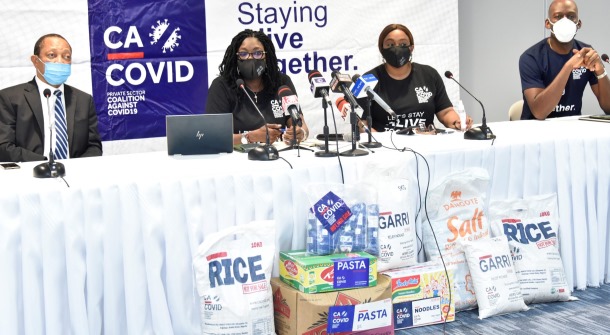
By Chido Nwakanma
There is a long list of organizations and individuals that have been “supporting Nigeria’s emergency response to COVID-19”. Their assistance speaks to the various collaborations and partnerships behind the successful coordination and management of the country’s most significant health emergency in recent memory.

On the exhaustive list include the United Nations, the European Union, Bill and Melinda Gates, Jack Ma Foundation, the China Civil Engineering Construction Corporation, Nigerian Breweries, Nestle Nigeria, BUA Group, Dangote Foundation, the Chinese Chamber of Commerce and Tolaram Group, Me Cure Industries Limited, Flood Relief Fund, Tata Agro Chemicals, MTN Nigeria, Friesland Campina WAMCO.
The support from donors, private sector, individuals both in Nigeria and outside of the country are too many to detail.
However, this positive landscape of private and donor support to the COVID response was marred recently with controversy. Much drama attended the discovery of warehouses containing COVID-19 palliatives for citizens across several states in the wake of the #ENDSARS protests.
Disgruntled citizens, hoodlums, and even security officials scrambled for palliatives while unscrupulous individuals engaged in vandalism of properties.
These actions shocked well-meaning Nigerians, leading to many questions and many lessons for all parties. The key revelation was the unravelling of the collaboration model that secured the procurement and deployment of the palliatives in question.
The Coalition Against COVID-19 (CACOVID) is a private-sector task force partnering with the Federal Government, through the Presidential Task Force on COVID-19 (PTF), with the sole aim of supporting Nigeria’s COVID-19 response. They are a shining star in that exhaustive list of support to Nigeria.
CACOVID, following consultations with partners including the PTF, purchased food items and supplies for distribution by State Governments to citizens. It was the public face of a synergy that has worked well since Nigeria began its COVID-19 response with the establishment of a collaboration model to drive the efforts.
CACOVID garnered resources and expertise across industries to provide technical and operational support while funding and building advocacy through aggressive community-focused awareness campaigns.
In alignment with the PTF, CACOVID was instrumental in the construction of isolation and treatment centres as well as supporting Intensive Care Units and molecular testing laboratories across the country.
Most recently, they supported the re-opening of the Lagos and Abuja international airports with the establishment of the Nigeria International Travel Portal (NITP – www. https://nitp.ncdc.gov.ng) responsible for channeling all international travellers through a protocol of mandatory PCR testing, registration, self-isolation and retesting upon arrival to Nigeria.
CACOVID has worked closely with the PTF to deliver its programmes through a coordinated approach that is an exemplar of both government-to-private sector partnership.
PTF has replicated this model across the government and donor landscape. Through its Secretariat, it coordinates the efforts of the various MDAs and partners to avoid duplication of efforts and facilitate the seamless and targeting channelling of resources.
It works closely with the donor community and multilateral organisations such as the World Health Organisation, the UK Cabinet Office, the World Bank and various agencies in the United Nations System.
It got assistance on project management and governance from firms such as Price Waterhouse Coopers (PWC), Nigeria Economic Summit Group, eHealth, Bill and Melinda Gates Foundation, and many more.
Another outcome of effective collaboration is the establishment of the COVID transparency trackers that foster the PTF’s mandated good governance and accountability frameworks. These are the Incidence and Response Tracker Dashboard developed by the Nigerian Economic Summit Group and the COVID-19 Resource Tracking Dashboard developed by the United Nations Development Programme.
PTF deployed the Incidence and Response Tracker Dashboard in support of the National COVID-19 Multi-Sectoral Pandemic Response Plan to publicize and track the resource requirements across all 36 states and the FCT.
They also bridge gaps that exist in three critical priority areas – testing; treatment and isolation; and contact tracing and tracking.
As a result of the PTF partnership model, the UN launched the One UN COVID-19 Response Basket Fund to complement efforts to mobilise resources in support of Nigeria’s pandemic response plan.
The Presidential Task Force on COVID-19 developed the program in partnership with the UN System. The Basket Fund serves as the centralized COVID-19 Financing and Investment Platform.
Different stakeholders (including UN, other multilateral and bilateral donors, as well as private sector donors, foundations and philanthropists) channel their financial support to the multi-sectoral efforts of the Presidential Task Force on COVID-19 Response. This enables transparency and accountability.
Chairman of the PTF and the Secretary to the Federal Government, Mr Boss Mustapha credits the PTF successes to its broad-based collaborations within government and across the private sector and donor community.
The PTF and its partners must continue and scale up the interventions in a transparent and proactive manner. They must also mitigate any gaps and failures within their partnership structures.
Specifically, the collaboration with CACOVID and the State Governments to ensure effective distribution of relief materials urgently and equitably to circumvent delays and provide much-needed economic support to the vulnerable.
Chido Nwakanma is a Marketing Communications expert


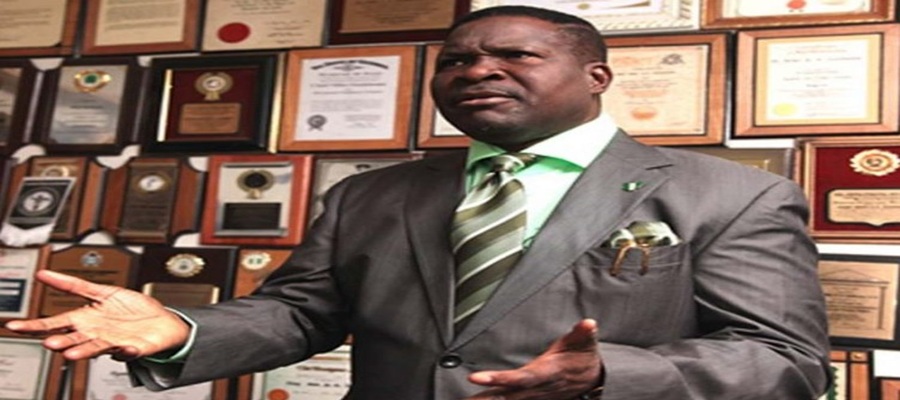
Independent Corrupt Practices and Other Related Offences Commission (ICPC) has filed a criminal charge against Chief Mike Ozekhome, SAN, alleging his involvement in a corruption scheme connected to a London property.

Chief Ozekhome
The ICPC filed a three-count charge before the Abuja High Court through its Head of High Profile Prosecution Department, Osuobeni Akponimisingha. The charge, marked FCT/HC/CR/010/26 and dated 16 January, names Ozekhome as the sole defendant in the case.
In the first count, the commission alleged that Ozekhome, aged 68 and residing at No. 53 Nile Street, Maitama, Abuja, received a property described as House 79, Randall Avenue, London NW2 7SX, around August 2021. The ICPC stated that the property was purportedly given to him by one Mr. Shani Tali and that the act amounted to a felony contrary to Section 13 and punishable under Section 24 of the Corrupt Practices and Other Related Offences Act 2000.
In the second count, the senior lawyer was accused of making a false document with a Nigerian passport bearing the name “Mr. Shani Tali” around the same period. The commission alleged that the passport, marked A07535463, was intended to support a fraudulent claim of ownership of the London property. The alleged offence contravenes Section 363 and is punishable under Section 364 of the Penal Code CAP 532 Laws of the Federal Capital Territory (FCT), Abuja, 2006.
The third count alleged that Ozekhome dishonestly used the same passport to support claims over the property despite allegedly knowing the document was false, an offence said to violate Section 366 and punishable under Section 364 of the Penal Code.
Supporting documents attached to the charge include an extra-judicial statement allegedly made by the defendant on 12 January 2026, a judgment referenced as REF/2023/0155 dated 11 September 2025, interim forfeiture proceedings relating to the London house, a data page for “Shani Tali,” a letter dated 18 December 2025, and other expected materials.
The ICPC also listed several individuals expected to testify, including investigators Wakili Musa and Tosin Olayiwola, a representative of the Nigerian Immigration Service, and investigators Ebenezer Nduo and Blessing Monokpo, alongside any additional witnesses the commission may call. As of the time of reporting, the case had not yet been assigned to a judge.
The development follows an earlier investigation by the ICPC sparked by a petition from Olanrewaju Suraj, head of the Human and Environmental Development Agenda (HEDA), citing a judgment from a London property tribunal.
The tribunal’s ruling had linked Ozekhome and others to alleged forgery and fraudulent claims of ownership of the North London building. The petition accused several individuals of conspiring with corrupt Nigerian officials to procure forged identity documents for the purpose of “fraudulently claim[ing] ownership” of the property.
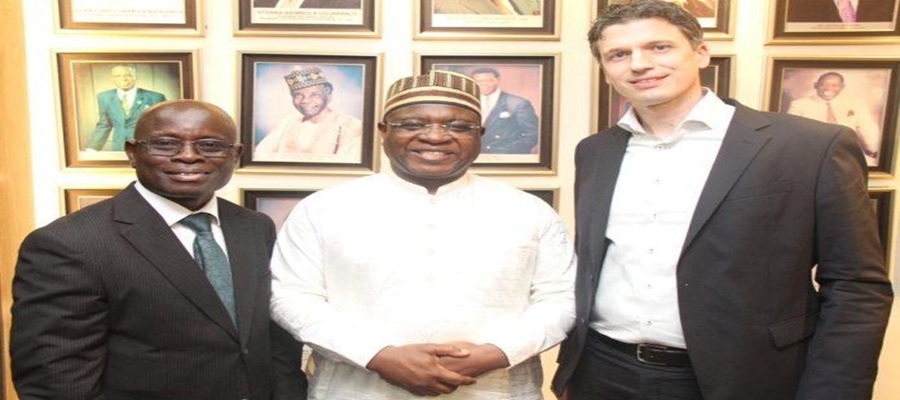
Nigerian Exchange Limited (NGX) has launched the NGX Net-Zero Programme to guide listed companies toward clear carbon reduction pathways and enhanced climate disclosures aligned with global investor standards.

NGX
The high-level launch engaged chief executives of quoted firms alongside development partners including German Investment Corporation KfW, DEG, and African Foresight Group (AFG), NGX’s implementation partner. Issuers and investors discussed financing decarbonisation, sustainability practices, and attracting climate-aligned capital.
NGX Group Chairman Dr Umaru Kwairanga described the initiative as concrete climate action, commending partners for two years of groundwork. “Today marks leadership and decisive action. Climate change has become a core business imperative, with capital markets mobilising capital and setting standards,” Kwairanga said.
He positioned NGX Net-Zero to support emissions measurement, disclosure, capacity building, and sustainable finance access, urging CEOs to embrace it strategically rather than as compliance. Kwairanga reaffirmed NGX’s goal to make Nigeria’s capital market Africa’s green finance hub.
Group CEO Temi Popoola called climate action a business imperative, noting sustainability-embedded firms attract capital, manage risks, and stay competitive. DEG Management Board Member Monika Beck highlighted partnerships scaling impactful, commercially viable climate solutions.
The event closed with a ceremonial gong marking the programme launch and send-off for outgoing DEG Regional Director Bernd Telemann.
Nigerian Financial Intelligence Unit (NFIU) has hailed Nigeria’s removal from the European Union’s list of high-risk third countries for Anti-Money Laundering and Countering the Financing of Terrorism (AML/CFT) as a landmark achievement endorsing the nation’s reform efforts.

Nigerian Financial Intelligence Unit (NFIU)
NFIU CEO Hafsat Abubakar Bakari said the delisting, contained in European Commission Delegated Regulation (EU) C (2025) 8460 adopted December 4, 2025 and effective January 29, 2026, affirms sustained AML/CFT and Counter Proliferation Financing (CPF) reforms.
The move follows Nigeria’s exit from the FATF Jurisdictions under Increased Monitoring after addressing strategic deficiencies, alongside Burkina Faso, Mali, Mozambique, South Africa and Tanzania.
Bakari noted the European Commission recognised Nigeria’s strengthened AML/CFT effectiveness, closed technical gaps, and fulfilled FATF Action Plan commitments leading to grey list removal in June and October 2025.
The delisting eliminates enhanced due diligence requirements for EU financial transactions, easing compliance, boosting cross-border flows, and enhancing Nigeria’s appeal for European trade, investment and partnerships.
The NFIU attributed success to President Bola Ahmed Tinubu’s political will and collaboration among National Assembly, law enforcement, regulators, judiciary, private sector and development partners.
The agency reaffirmed commitment to ongoing FATF, GIABA, EU engagement and domestic framework resilience to maintain international confidence in Nigeria’s financial system.

How Crypto Criminals Stole $700m from People – often Using Age-Old Tricks

Lebara Launches Agent Registration Portal

Nigeria Processed $92.1Bn Crypto Transactions in 12 Months — PwC

Tax Ombudsman will Save Nigerians Money, Time – CEO

Elon Musk Seeks $134Bn from OpenAI, Microsoft for ‘Wrongful Gains’

Banks quietly move to enforce new ₦50 transfer levy from Jan. 1

FIRS says NIN, CAC Numbers to Serve as Tax IDs from 2026

FIRS Declares NIN, CAC Numbers as Tax IDs from 2026

US Begins Partial Visa Ban on Nigerians January 1

Galaxy Backbone Tops FG’s Website Performance Ranking




 E-Financial3 days ago
SEC Hikes Minimum Capital Requirements for Market Operators After a Decade

 Telecom3 days ago
Study Shows Blocks in Telegram are Pushing the Underground Out

 News3 days ago
Nigeria Off EU High-Risk Money Laundering List in Major Financial Win

 News3 days ago
NGX Unveils Net-Zero Plan for Greener Capital Market

 Telecom3 days ago
Vodacom Crowned Africa’s Top Employer 3rd Year Running on Innovation, Ethical AI

 Telecom3 days ago
Galaxy Backbone Marks Two Decades of Powering Nigeria’s Digital Evolution

 Telecom3 days ago
Galaxy Backbone Marks 20 Years, Tops FG Website Scorecard

 E-Financial24 hours ago
Here Are Nigerian Banks That Have Secured Their Licences