

E-Financial
There’re Signs CBN May Cut Monetary Policy Rates Soon- Lukman


In spite the Central Bank of Nigeria (CBN) Monetary Policy Committee’s decision on Tuesday to retain the country’s benchmark interest rate at 14 percent, Lukman Otunuga, research analyst at Forex Times (FXTM) has expressed optimism that positive outlook attainable in the economy might lead to reduction of MPC in no distant time.
Lukman who commented to the CBN Committee’s decision to also leave the existing cash reserve ratios for commercial banks at 22.5 percent and the Liquidity Ratio at 30 per cent, said that it did not come as a surprise.
Following the CBN’s Committee decision, Asymmetry Corridor is maintained at +200 and -500 basis point.
This is the fourth time in a row the CBN has decided to leave all rates at the same level.
The CBN’s decision comes weeks after Nigeria’s inflation rate recorded its first reduction in fifteen months.
The inflation rate fell to 17. 78 in February from 18.72 in January.
“On a Headline basis, the Consumer Price Index (CPI) which measures inflation increased by 17.78 percent (year-on-year) albeit at a slower pace in February 2017, 0.94 percent points lower from the rate recorded in January (18.72) percent,” NBS said.
“This represents the first time in 15 months that the headline CPI has declined on year on year basis representing the effects of slower rises in already high food and non food prices and favourable base effects over 2016 prices.”
MPC said inflation was down, year-on-year, but the food index rose in February from figures recorded in January, mounting pressure on consumers.
Godwin Emefiele, CBN Governor, however advised Government to step up efforts to implement the Recovery and Growth plan
The document is a medium term plan aimed at revamping the economy between 2017 and 2020.
“The Plan outlines bold new initiatives such as ramping up oil production to 2.5mbpd by 2020, privatizing selected public enterprises/ assets, and revamping local refineries to reduce petroleum product imports by 60 percent by 2018.” The document read
“Other initiatives include environmental restoration projects in the Niger Delta, which demonstrate the Federal Government’s determination to bring environment sustainability to the forefront of its policies.
“As part of this Plan, oil revenues will be used to develop and diversify the economy, not just sustain consumption as was done in the past.
In his comment, Lukman said, “The fact that the Central Bank of Nigeria has decided to keep monetary policy unchanged should be no surprise especially when factoring how the nation is in the process of a critical structural transformation.
“Although the lingering fears decelerating economic growth and concerns over surging prices have partially attributed to the Central Bank’s passive stance, the overall sentiment towards the nation continues to display early signs of improvement. Some optimism exists over the nation’s recovery, with Nigeria’s inflation declining for the first time in 15 months in February and the noticeable increase in Dollar sales for importers bolstering the Naira on the black market exchange. If economic data continues to follow a positive path in the longer term and inflation cools then there is a possibility of the Central Bank cutting interest rates to stimulate growth.
“On the foreign exchange front, the Naira was boosted on the black market this week after the Central Bank of Nigeria offered another $180 million to meet bids for forwards.
“While the repeated injections of Dollars in the foreign exchange may buoy the Naira, questions may be raised over the sustainability of this method.
“With the multiple exchanges still a cause for concern that the needs to be dealt with, expectations remain elevated over the CBN taking further steps to fully bridge the gap, ultimately creating one equilibrium currency exchange”.



Central Bank of Nigeria (CBN) has issued new baseline standards requiring banks and other financial institutions to deploy automated anti-money laundering systems capable of detecting suspicious transactions and financial fraud risks in real time.

The directive, contained in a circular released yesterday, mandates banks, mobile money operators, international money transfer operators and other regulated institutions to implement automated solutions that strengthen monitoring, detection and reporting of suspicious financial activities.
According to the apex bank, the framework establishes minimum technical, governance and operational standards for automated systems used to combat money laundering, terrorism financing and proliferation financing within Nigeria’s financial system.
CBN said the move was necessary as the financial services sector becomes increasingly digital and complex, making manual monitoring methods inadequate for managing evolving financial crime risks.
Under the new framework, deposit money banks (DMBs) are expected to achieve full compliance within 18 months from the date of issuance, while other financial institutions will have 24 months to comply.
Institutions are also required to submit detailed implementation roadmaps to the CBN’s compliance department within three months.
The standards apply to all institutions operating under the CBN’s regulatory purview, although the depth and sophistication of implementation will depend on each institution’s size, transaction volumes, operational complexity and risk exposure.
The framework outlines several minimum capabilities that automated anti-money laundering (AML) systems must possess, including customer identification and verification, sanctions screening, transaction monitoring and case management for suspicious activities.
Financial institutions are also expected to ensure their systems integrate customer data with transaction patterns so that suspicious behaviour can be assessed in the context of a customer’s risk profile.
The CBN said institutions should strengthen identity verification processes by integrating onboarding systems with national databases such as the Bank Verification Number (BVN) and National Identification Number (NIN) platforms to support real-time identity checks.
The framework permits the use of emerging technologies such as artificial intelligence and machine learning to improve the detection of unusual financial patterns.
However, the regulator said such technologies must operate under strict governance frameworks, including independent validation and human oversight.
Institutions deploying AI-based monitoring models will be required to conduct periodic validation to ensure accuracy, reliability and fairness in the detection of suspicious transactions.
The standards also require financial institutions to maintain secure data protection controls, including encryption, role-based access and multi-factor authentication, in compliance with Nigeria’s data protection regulations.
In addition, the systems are to maintain comprehensive audit trails of transactions, alerts, investigations and system activities to support regulatory supervision and forensic investigations.
The CBN said compliance with the framework will be monitored through off-site surveillance, on-site examinations and thematic reviews, warning that institutions that fail to implement the standards may face regulatory sanctions under existing banking and financial crime laws.


The Central Bank of Nigeria (CBN) has directed banks and fintechs to implement automated systems to detect suspicious transactions to strengthen anti-money laundering (AML) and financial crime controls in country’s rapidly growing digital payments sector.

In a circular released on March 10, the apex bank established baseline requirements for AML, fighting terrorist financing, and countering proliferation financing.
The framework applies to deposit banks, mobile money operators, international money transfer operators, payment service providers, and other CBN-supervised entities.
Banks have 18 months to comply, while fintech companies and other financial institutions have 24 months. All affected entities must submit implementation plans within three months.
The new requirements will replace manual monitoring with automated anti-money laundering systems that use artificial intelligence, machine learning, and advanced analytics to spot suspect trends, notify compliance teams, and improve real-time reporting.
Institutions will also be obliged to link these technologies with customer due diligence processes such as Know-Your-Customer and Know-Your-Business checks, sanctions screening, and political risk monitoring.
Nigeria has existing financial crime laws and supervisory organisations. Still, regulators warn that the rapid expansion of electronic payments, valued at hundreds of trillions of naira each year, has outpaced traditional monitoring mechanisms.
Weak financial restrictions have previously enabled crimes. Ramon Abbas, a social media star, was arrested in 2020 for allegedly laundering hundreds of millions of dollars through complicated financial networks.
High-profile corruption cases, including allegations against former oil minister Diezani Alison-Madueke, involved billions in illicit financial flows.
Analysts also highlight the importance of monitoring to track the funding of extremist groups such as Boko Haram and Islamic State West Africa Province.
The CBN said the framework aligns with Financial Action Task Force standards and warned that institutions failing to comply could face sanctions under the Banks and Other Financial Institutions Act.
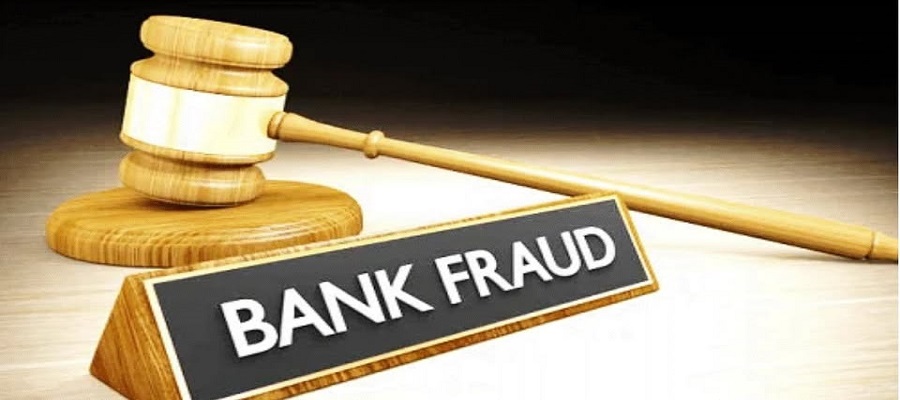
Federal High Court sitting in Ikoyi, Lagos, has ordered the final forfeiture of N81,108,143.8 stolen from Sterling Bank Plc following a system glitch that befell the financial institution.

Justice Yelim Bogoro gave the order on Monday, March 9, 2026, directing that the funds be forfeited to the Federal Government of Nigeria in favour of the bank.
The ruling followed a motion filed by the Economic and Financial Crimes Commission (EFCC) through Hannatu U. KofarNaisa, its counsel.
The court had earlier granted an interim forfeiture order on October 2, 2025 and directed that the order be published in a national newspaper for anyone with an interest in the funds to appear and show cause why the money should not be permanently forfeited.
Investigations revealed that the funds were part of more than N2.5 billion stolen by some customers of Sterling Bank following a system glitch that allowed unauthorised transfers.
The glitch reportedly enabled customers to exploit the PAYATTITUDE Global Ltd banking platform to move funds from their accounts even when they were not funded.
The anti-graft agency said it began investigating the case after receiving a petition from Sterling Bank on July 18, 2022.
According to Maina Gapani Gyal, EFCC investigator, more than N2.5 billion was fraudulently transferred and converted for personal use by several bank customers and third-party beneficiaries.
The investigation traced part of the stolen funds to accounts linked to Sulaiman Kehinde Ojora, identified as one of the major beneficiaries of the fraud.
Further findings showed that N43 million was concealed in the account of his friend, Taiwo Oluwaseyi Alawode, domiciled in Access Bank.
N122.2 million was hidden in the account of his wife, Aminat Olatanwa Ojora, domiciled in Sterling Bank.
The EFCC said the bank was unable to recover N295.9 million from the stolen funds because the money had already been withdrawn and converted by customers.
However, investigators were able to salvage N81.1 million, which became the subject of the forfeiture proceedings.
The bank also recovered N490.3 million from its internal ledger during the investigation.
The EFCC informed the court that the interim forfeiture order was published in The Punch on February 19, 2026, inviting any interested party to challenge the forfeiture.
After reviewing the motion and supporting documents, Justice Bogoro ruled that the application was valid.
“Having gone through the motion and attachments, I find the application meritorious and the same is accordingly granted,” the judge held.
The court subsequently ordered that the recovered N81,108,143.08 be finally forfeited to the Federal Government in favour of Sterling Bank.

How Africa Can Turn the AI Wave into Inclusive Growth

CBN Directs Banks to Activate Anti-Money Laundering Systems

FG to Connect Schools Nationwide to Internet – Education Minister

FG Moves to Strengthen Children’s Online Safety

WhatsApp Launches Parent-managed Accounts for Pre-teens Amid Safety Concerns

Dr. Cairo Ojougboh Foundation Bolsters Nigeria’s Education Drive with ₦2.7m Student Support

Kaspersky Brings more Transparency to Threat Detection with New Hunt Hub

Kaspersky Discovers New Phishing Campaign Exploiting Google Tasks Notifications to Steal Corporate Credentials

esentry 2025 Report Shows Healthcare, Financial Services and Telecoms as Staging Grounds for Increased Cyberattacks in Africa

AfDB, UNDP Launch $10Bn AI Initiative for Africa




 General News2 days ago
Zedvance Hits ₦96bn Lending Milestone, Eyes ₦250bn Target in 2026

 Broadcasting2 days ago
Madonna University Taps Tech Guru Adote for Strategic Board Role

 News2 days ago
Another Oil Boom: Will Nigeria’s Government Turn Windfall into Growth or Squander it?

 Telecom2 days ago
Starlink Rolls Out V2 Satellites for Direct 5G Connectivity to Smartphones, Eyes Nigeria’s Rural Gaps

 Telecom2 days ago
Education Priorities to Help Young People Shape Africa’s Future

 E-Financial2 days ago
First Asset Management Secures Ratings Upgrade

 Telecom1 day ago
US Court Dismisses All Claims Against Binance in Major Anti-Terrorism Lawsuit Victory

 Broadcasting2 days ago
Healthcare Under Attack: Why Cybersecurity is Now Critical Care