

/home/kenneth/web/nigeriacommunicationsweek.com.ng/public_html/wp-content/themes/zox-news/parts/post-single.php on line 153
">
Warning: Undefined array key 0 in /home/kenneth/web/nigeriacommunicationsweek.com.ng/public_html/wp-content/themes/zox-news/parts/post-single.php on line 153
Warning: Attempt to read property "cat_name" on null in /home/kenneth/web/nigeriacommunicationsweek.com.ng/public_html/wp-content/themes/zox-news/parts/post-single.php on line 153
TransRoyal Courier Rewards Staff, Flags off Vehicle Owner-User Scheme

TransRoyal Courier, leading courier company in Nigeria has given car and motor-cycles to its members of staff who have distinguished themselves in the course of their duties to the company.
In an elaborate ceremony held in its head office in Lagos recently, Ismail Delupe, head of bank operations was handed over the keys to a car while Kenneth Amalu, Hosiah Fawolere, Cosmos Judah, Mutui Oladokun and Michael Pedro each went home with a motor-cycle.
Polly Ofido , executive director told Nigeria CommunicationsWeek that the beneficiaries of motor-cycles will use the bikes to render service to the company for one year after which the motor bikes become theirs, while workers that will be given cars will use the car for the company for three years before they take over possession as their personal cars. He said the scheme will be an annual event which will be operated on the basis of five people from the courier department of the company and two others from the marketing benefiting from the scheme every year.
The aim of the exercise according to Ofido is to motivate and encourage hard working staff of the company who have gone thick and thin with the company.’ Some of them have been with us even when the going was rough’, Ofido said.
TransRoyal Courier, a fast growing courier company and a major player for that matter had as its pioneer managing director, the late Obiorah Okeke who was until his death the president of Anco.
Ofido, executive director of the company has been in the courier business for over twenty-two years and also works as consultant to many courier firms. He said that the strength of the courier company lies on its reputable clients saying that out of twenty five banks in the country, the firm enjoys the patronage of eleven of the banks. Again, he said the staff of the company are all committed and complemented by a good board of directors while making a special reference to Chief E.C.Nwandu,company’s chairman, a retired deputy postmaster general of the federation.
The courier firm is into haulage and logistics, overnight delivery of equipment and parcels, bulk delivery for banks registrars even as he hinted that the network of the company is superb as it has presence in virtually all the state capitals and major cities in the country.
On why some of the banks have refused to pay some of the courier firms that handled bulk deliveries for those banks, Ofido said that their major clients are banks and that they are not owed a kobo by any of their bank customers. The reason he said is when banks that contracted the job are not satisfied with the job done by courier firms.
The executive director maintained that TransRoyal Courier ably piloted by Lady Vivian Okeke, managing director of the company is at home with competition even as he pointed out that competition is healthy for the courier industry. He said that most members of the firm’s management team are courier professionals who know their bearing in courier business. He said ‘Without competition, every body will be operating at their own pace, but with competition, there will be improvement in the quality of service delivered by courier firms.’
He also lamented the activities of illegal courier operators who are bent on spoiling the courier business by undercutting the market and making their services available at rock- bottom prices which service most of the time they fail to deliver.
Ofido flayed the harassment of courier operators by government operatives, who they encounter in the process of carrying out their duties,
Those he said include NDLEA, Police, LASTMA officers who they encounter on the way. The state of our roads, Ofido said is deplorable thereby causing unnecessary delay in the movement of goods and services even as he complained the dearth of aircraft in the country that are supposed to enhance courier delivery.


Warning: Undefined array key 0 in /home/kenneth/web/nigeriacommunicationsweek.com.ng/public_html/wp-content/themes/zox-news/parts/post-single.php on line 493
Warning: Attempt to read property "cat_ID" on null in /home/kenneth/web/nigeriacommunicationsweek.com.ng/public_html/wp-content/themes/zox-news/parts/post-single.php on line 493

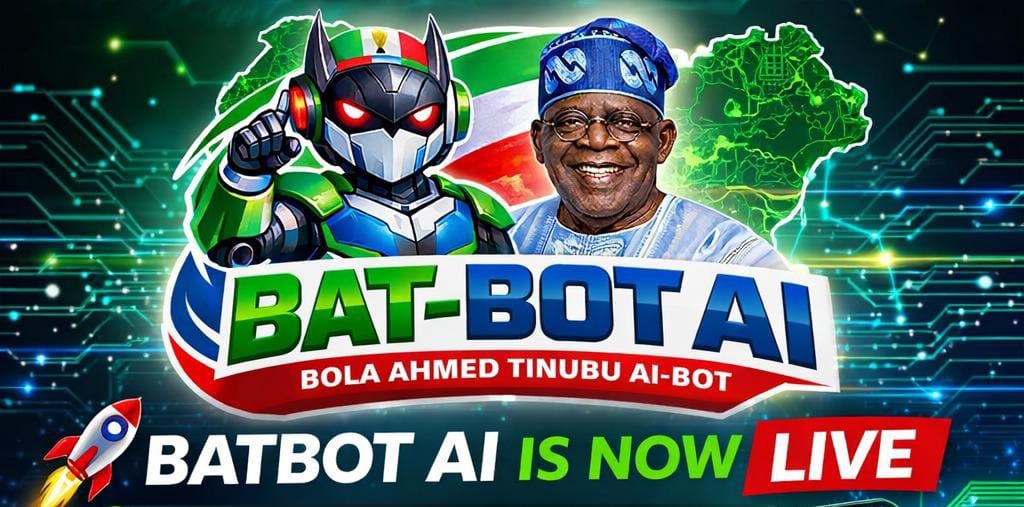
An artificial intelligence (AI) application has been developed to help combat the spread of fake news, misinformation and political propaganda as political activities gradually build toward the 2027 general elections in Nigeria.

The app, known as BAT-BOT AI, was unveiled in Abuja by Mr. Gunu Usman, its founder, who said the platform is designed to assist the federal government in addressing the growing challenge of false information within nation’s digital space.
Mr Usman explained that the new platform was created to ensure that factual information circulates faster than falsehood.
He noted that the rapid spread of misinformation, disinformation, hate speech and manipulated narratives targeting the administration of Bola Tinubu, the ruling All Progressives Congress, and national institutions poses risks to democratic stability and public trust.
According to Mr. Usman, BAT-BOT AI was developed to support public access to verified information while countering misleading narratives online.
The Technology expert described the system as a sovereign AI-powered civic information and fact-verification platform designed to strengthen Nigeria’s digital information ecosystem ahead of the 2027 general election.
He added that the initiative aligns with the government’s policy direction under the Renewed Hope Agenda of President Tinubu, which seeks to promote transparency and encourage informed civic participation.
The founder further explained that the platform is currently accessible to Nigerians through multiple digital channels, enabling users to verify claims, seek clarification on government policies and obtain information on national development initiatives.
Mr. Usman expressed optimism that the tool would help curb the spread of false information and contribute to a more credible digital environment as the country prepares for the next electoral cycle.

MTN Nigeria expanded its lead in Nigeria’s fixed broadband market after adding 13,433 subscribers to its fibre-to-the-home service in December 2025. The gains come as smaller providers struggle to retain users amid rising demand for high-speed internet.

Industry data from the Nigerian Communications Commission (NCC) showed sharp subscriber losses among smaller operators.
21st Century Technologies saw its subscriber base fall from 175 in December to 82 in January, a drop of more than 50 percent.
SWIFT Nigeria recorded an even larger decline.
The company lost 11,285 users, with total subscribers falling from 25,484 to 14,199, a 44.3 percent decrease.
The gap between large infrastructure providers and smaller operators is widening as broadband demand grows across Nigeria.
Companies with extensive fibre networks can offer faster speeds and wider coverage, while smaller competitors face higher costs and limited scale.
MTN has accelerated its investment in network infrastructure to maintain its lead.
The company spent ₦1 trillion, or about $715 million, in capital expenditure in 2025, more than double the ₦443.5 billion invested in 2024.
The investment followed a return to profitability, with profit after tax reaching ₦1.1 trillion after losses in 2024 linked to foreign-exchange pressures.
Spending focused on network modernization, 4G expansion, 5G rollout and deeper fibre deployment.
The operator expanded its fibre-to-the-home footprint to about 4 million households, concentrating deployments in Lagos, Abuja, Port Harcourt, Kano and Ibadan as data traffic rose 34 percent.
Network vandalism remains a challenge. MTN recorded 9,218 fibre cuts in 2025, an average of 25 incidents per day, affecting 211 base stations.
Key Takeaways
Nigeria’s broadband market is entering a scale phase where infrastructure investment is becoming the main competitive advantage.
Telecom operators with strong balance sheets are deploying billions of naira into fibre networks to capture demand for high-speed connectivity driven by streaming, remote work, digital payments and cloud services.
Fibre infrastructure also strengthens mobile networks by connecting base stations and improving 4G and 5G performance.
However, the economics of building and maintaining fibre networks remain challenging in emerging markets. Infrastructure vandalism, power supply instability and high deployment costs increase operational risk.
These factors make it difficult for smaller internet service providers to compete with large telecom operators that can spread costs across millions of customers.
As demand for broadband continues to grow in Africa’s largest economy, the sector may see further consolidation, with dominant operators strengthening their market position while regulators face increasing pressure to maintain competition and affordable access to high-speed internet.
credit…. dabafinance.com
Central Bank of Nigeria (CBN) has introduced stricter Bank Verification Number (BVN) enrolment and data access rules to prevent suspected fraudulent transactions, effective May 1, 2026.

This was disclosed in a statement issued over the weekend and titled “Addendum to the Revised Regulatory Framework for Bank Verification Number (BVN) Operations and Watchlist for the Nigerian Banking Industry 2021.”
The statement was signed by Musa Jimoh, director of the Payment System Policy Department.
The CBN said it introduced the ‘Revised Regulatory Framework for Bank Verification (BVN) and Watchlist for the Nigerian Banking Industry 2021’, to promote a stable financial system.
The apex bank reiterated that enrollment for the BVN be limited to individuals aged 18 and above, while amendments to phone numbers linked to a BVN will be restricted to a one-time change only.
Financial Institutions are mandated to establish and maintain a temporary watchlist for BVNs implicated in suspected fraudulent transactions reported by a financial institution.
“A BVN may remain on this temporary Watchlist for a maximum period of twenty-four (24) hours. During this period, the BVN owner shall be contacted to clarify the identified transaction(s).
Enrolment for BVN is restricted to individuals who have attained the age of eighteen (18) years and above. Amendments to phone numbers linked to a BVN shall be allowed only once,” the statement read.
The CBN insisted that it maintain an exclusive right to access BVN databases and to approve access to them by financial institutions.
“Access to the BVN databases shall be exclusively granted to Central Bank of Nigeria (CBN) licensed financial institutions. Notwithstanding this provision, the Central Bank of Nigeria (the Bank) reserves the right to approve access to the BVN databases in extenuating circumstances and in accordance with the provisions of extant laws,” the statement said.
The directive was part of the CBN’s recent regulatory amendments in combating fraudulent activities.
On Tuesday, the bank issued new regulations, “Baseline Standards for Automated Anti-Money Laundering (AML) Solution for Financial Institutions in Nigeria’, to all financial institutions, in a bid to automatically counter money laundering and terrorism financing.

Tech Expert Unveils BAT-BOT AI App to Curb Fake News ahead of 2027 Elections

MTN Nigeria Races Ahead in Fibre Broadband Market

CBN Tightens BVN Rules to Curb Fraudulent Banking Transactions

Nova Bank Appoints Jude Anele as Managing Director/CEO

CBN Rolls Out New Rules for Safer Instant Payments, More Customer Control

Kaspersky Discovers New Phishing Campaign Exploiting Google Tasks Notifications to Steal Corporate Credentials

esentry 2025 Report Shows Healthcare, Financial Services and Telecoms as Staging Grounds for Increased Cyberattacks in Africa

AfDB, UNDP Launch $10Bn AI Initiative for Africa

Mutual Benefits Assurance Settles ₦5.9bn Claims in January 2026

Pheelz Shares His Journey on Glo-Sponsored African Voices




 General News3 days ago
Interswitch Advocates Trust-Driven Infrastructure as Cornerstones of Africa’s Cross-Border Capital Future

 News3 days ago
NLNG Advances Media Excellence with Change Your Story Workshop

 E-Financial3 days ago
CBN Orders Banks to Restrict Access to Banking Services for Loan Defaulters

 E-Business3 days ago
Why JustMarkets Is a Strong Choice for Gold Trading

 E-Financial3 days ago
UBA Business Series Celebrates ‘Gen.W: The Evolved Woman’ in Push for Female Empowerment

 Telecom3 days ago
NDPC Warns Content Creators Against Privacy Violations in Viral Videos

 Telecom2 days ago
VDT Communications Achieves Two Prestigious Certifications ISO /IEC 27001:2022, ISO/IEC 27032:2023 Reinforcing its Leadership in Broadband Service Provision

 General News3 days ago
FCCPC Launches Fuel Price Surveillance, Probes Airline Price Gouging, Resolves N10bn Complaints