

News
Trump Threatens More Strikes in Nigeria


President Donald Trump has warned that the United States could carry out further military strikes in Nigeria if Christians continue to be killed, reigniting a sensitive debate over religious violence and foreign intervention in Africa’s most populous nation.

President Donald Trump
Trump made the remarks in an interview with The New York Times, published on Thursday, while responding to questions about a US military strike carried out in Nigeria on Christmas Day.
At the time, the US military said the operation targeted Islamic State militants in north-west Nigeria and was conducted at the request of the Nigerian government.
Nigeria, however, described the operation as a joint counterterrorism effort, stressing that it was aimed at armed groups designated as terrorists and “had nothing to do with a particular religion”.
“I’d love to make it a one-time strike,” Trump was quoted as saying. “But if they continue to kill Christians, it will be a many-time strike.”
Pressed on comments by his own Africa adviser that extremist groups such as Islamic State and Boko Haram have killed more Muslims than Christians in Nigeria, Trump acknowledged that Muslims were also victims but insisted that Christians were being targeted disproportionately.
“I think that Muslims are being killed also in Nigeria. But it’s mostly Christians,” he said.
Trump has repeatedly raised alarms about the safety of Christians in Nigeria, beginning in late October when he warned that Christianity faced what he described as an “existential threat” in the country. He has accused Nigerian authorities of failing to adequately protect Christian communities and has openly threatened US military intervention if the violence continues.
Nigeria has firmly rejected claims of systematic persecution of Christians. The government maintains that the country’s security challenges are complex and largely driven by insurgency, banditry and criminal violence rather than religious targeting.
With a population of more than 230 million people, Nigeria is almost evenly divided between Christians, who are concentrated mainly in the south, and Muslims, who predominate in the north. Islamist insurgencies, particularly Boko Haram and its offshoots, have plagued parts of northern Nigeria for more than a decade, killing thousands and displacing millions.
Nigerian authorities have repeatedly pointed out that militant attacks have claimed the lives of both Muslims and Christians, arguing that framing the violence along religious lines oversimplifies the crisis and risks inflaming tensions.
Following Trump’s earlier threats, the Nigerian government said it was willing to continue cooperating with Washington in combating terrorism but rejected language suggesting that Christians alone were under threat.
The latest comments are likely to strain diplomatic relations further, as Nigeria balances its partnership with the United States against concerns over sovereignty, security cooperation and the portrayal of its internal conflicts on the global stage.


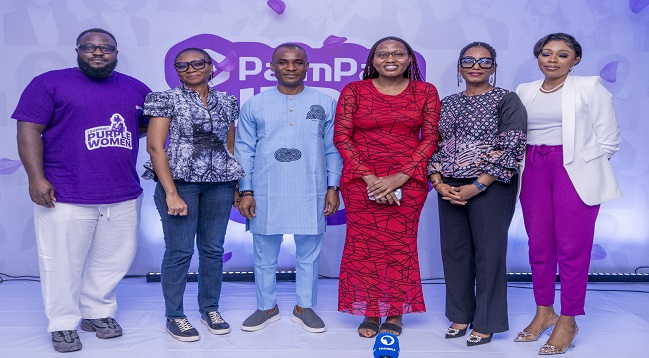
PalmPay Nigeria has expressed commitment to increasing women’s participation in the financial technology sector through its Purple Woman initiative designed to equip young women with digital and professional skills.

Speaking at the event, Chika Nwosu, managing director of PalmPay Nigeria, said the initiative was launched to address the low representation of women in fintech and the broader technology ecosystem.
“This initiative is because we noticed that there are not so many women in fintech and in the tech industry, and we intend to bridge that gap. We want to see a whole lot of women in leadership positions in fintech,” Nwosu said.
The programme, organised in collaboration with the Global Women’s International Campaign Nigeria to commemorate International Women’s Day, forms part of PalmPay’s broader effort to create an inclusive digital economy and empower women with technology-driven skills.
According to Nwosu, empowering women produces long-term social and economic impact. “A money in the hand of a man feeds a family, but money in the hand of a woman feeds generations,” he said, noting that women’s financial empowerment often translates to better education and opportunities for children and stronger households.
Although the programme is hosted in Lagos, he explained that participation is open to women across Nigeria through an online registration platform. “Our head office is in Lagos, but we invite women from all over Nigeria. They register through a link for Purple Woman. It is not only for people in Lagos; it is for all Nigerians,” he said.
At the end of the masterclass, 10 participants were selected for a six month internship programme at PalmPay where they will receive practical experience across different departments.
Explaining the selection process, Anthony Iwuala, head of human resources at PalmPay, said the company used a merit-based system to identify the most qualified candidates. “For us at PalmPay, we believe in equity and equality and following the right process. As a company, we believe in people who have skills and talent, so we ensure that we select people who are qualified,” Iwuala said.
According to him, participants were assessed through the classes and written tests conducted during the programme. “Participants went through the classes and wrote tests for every class. A lot of people passed, but we still had to rank them and select only the top ten,” he said.
Iwuala added that the selected interns will be deployed across departments such as marketing, human resources, administration, product development, sales and business intelligence where they will receive mentorship and hands-on training. “We assign mentors to them, and these mentors will provide on the job training for six months,” he said.
He stressed that the programme is designed not only to train participants but also to create employment opportunities. “We are not just taking them to train them; we train them to employ them,” he said.
He noted that previous editions have already produced tangible results. The Purple Women 2.0 programme saw the ten women we trained offered full employment at PalmPay, and they are still working with us currently, Iwuala said. “These ones will not be different.”
In her presentation, Nneka Okekearu, director of the enterprise development centre at Pan-Atlantic University, delivered a masterclass focused on self-worth, confidence and self awareness for women.
Okekearu explained that many women grow up with unconscious biases that affect their confidence and career choices. “A lot of women have grown up being told they cannot do certain things. Unlike their male counterparts, they are sometimes discouraged from pursuing opportunities,” she said.
According to her, the session focused on helping women recognise their abilities and build confidence. “A lot of women have so much to give, but they are shackled by unconscious bias. The session focused on self-awareness, building confidence and realising that we know it and should own it,” she added.
She acknowledged that progress has been made in female leadership in Nigeria’s corporate sector. “Today we have more than 30 percent of commercial banks with female CEOs. We now have women serving as bank chairpersons and more women on corporate boards,” she posited.
However, she highlighted what she described as the missing middle, where many women leave the workforce at critical career stages. “When women enter the workforce, by the time they get married and have children, many leave. We need systems that allow them to return without losing their career progress,” Okekearu said.

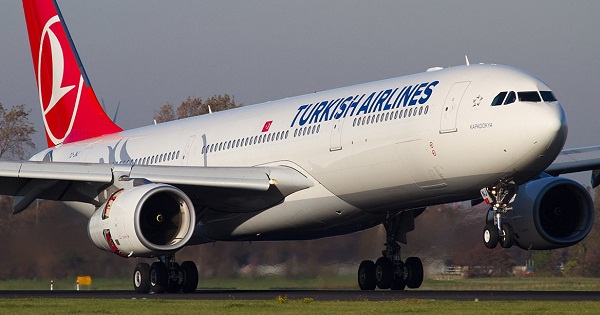
Operations of Turkish Airlines at Murtala Muhammed International Airport, Lagos, ground to a halt on Tuesday following a protest by aviation workers over the alleged unlawful dismissal of seven union members.

Turkish Airlines
Members of the National Union of Air Transport Employees (NUATE) picketed the airline’s counters at the international terminal, forcing hundreds of passengers to return home after check-in.
Protesters stormed the terminal with placards and solidarity songs, accusing Turkish Airlines management in Nigeria of violating labour laws, victimising union members, and ignoring a National Industrial Court ruling ordering payment and reinstatement of the sacked executives.
NUATE General Secretary Sikiru Waheed, in a March 9 circular, decried the airline’s “flagrant disobedience” of Nigeria’s Constitution and Labour Act despite efforts to resolve intimidation and harassment cases.
The affected workers, dismissed in 2020 for union activities, have not received terminal benefits years later, according to union claims captured in chaotic videos from the scene.
NUATE said the protest became inevitable to compel compliance with the court order and respect for workers’ rights to unionise.
The action stranded passengers mid-process, highlighting ongoing labour tensions that previously led the Nigeria Labour Congress to shut down the airline in 2024 over the same dispute.
Union leaders vowed continued protests until Turkish Airlines reinstates the workers and honours Nigerian labour laws.

Forty startups across the continent raised more than $272 million in funding last month through deals worth at least $100,000. The figure marks a clear rise from $174 million in January and is slightly above the $254 million monthly average recorded over the past year.

Despite the rebound, most of the money went to only a few companies. Six startups accounted for about 80 percent of the total funding raised in February, highlighting how capital in Africa’s tech sector remains concentrated in larger ventures.
Among the biggest deals was Spiro, a Benin-based electric mobility company, which secured $57 million in debt financing across two transactions. Egyptian online grocery platform Breadfast raised $50 million in a pre-Series C round, while ride-hailing platform GoCab in Côte d’Ivoire announced $45 million in combined debt and equity funding.
Other significant deals included Terra Industries in Nigeria, which added $22 million to a previously announced funding round, education group Enko Education in South Africa with $22 million in debt, and South African fintech lender Lula, which secured $21 million from Dutch development finance institution FMO.
Equity investments accounted for 54 percent of the capital raised in February, while debt financing made up about 45 percent, showing that startups are increasingly turning to alternative funding structures as venture capital remains cautious.
From a regional perspective, West Africa attracted the largest share of funding, bringing in 53 percent of the total, followed by North Africa with 24 percent and Southern Africa with 21 percent.
Egypt led the continent with $64 million in funding, followed by Benin with $57 million, Côte d’Ivoire with $45 million, and South Africa with $44 million.
One notable shift was the sharp drop in East Africa’s share of funding, which fell to just three percent in February. The region had previously dominated Africa’s startup ecosystem, accounting for 34 percent of total funding in 2025.
With February’s rebound, African startups have now raised more than $446 million in the first two months of 2026, slightly ahead of the $417 million recorded during the same period in 2025.
The figures suggest that while investor activity has stabilised after a slow January, the continent’s startup funding environment remains uneven and heavily dependent on a small number of large transactions.

How Africa Can Turn the AI Wave into Inclusive Growth

CBN Directs Banks to Activate Anti-Money Laundering Systems

FG to Connect Schools Nationwide to Internet – Education Minister

FG Moves to Strengthen Children’s Online Safety

WhatsApp Launches Parent-managed Accounts for Pre-teens Amid Safety Concerns

Dr. Cairo Ojougboh Foundation Bolsters Nigeria’s Education Drive with ₦2.7m Student Support

Kaspersky Brings more Transparency to Threat Detection with New Hunt Hub

Kaspersky Discovers New Phishing Campaign Exploiting Google Tasks Notifications to Steal Corporate Credentials

esentry 2025 Report Shows Healthcare, Financial Services and Telecoms as Staging Grounds for Increased Cyberattacks in Africa

AfDB, UNDP Launch $10Bn AI Initiative for Africa




 General News2 days ago
Zedvance Hits ₦96bn Lending Milestone, Eyes ₦250bn Target in 2026

 Broadcasting2 days ago
Madonna University Taps Tech Guru Adote for Strategic Board Role

 News2 days ago
Another Oil Boom: Will Nigeria’s Government Turn Windfall into Growth or Squander it?

 Telecom2 days ago
Education Priorities to Help Young People Shape Africa’s Future

 Telecom2 days ago
Starlink Rolls Out V2 Satellites for Direct 5G Connectivity to Smartphones, Eyes Nigeria’s Rural Gaps

 E-Financial2 days ago
First Asset Management Secures Ratings Upgrade

 Telecom1 day ago
US Court Dismisses All Claims Against Binance in Major Anti-Terrorism Lawsuit Victory

 Broadcasting2 days ago
Healthcare Under Attack: Why Cybersecurity is Now Critical Care