

E-Business
Twinpine Partners Afmobi, Offer Brands Premium Mobile Audiences

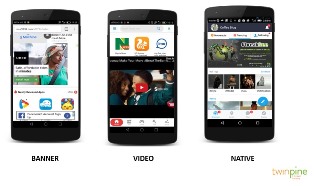
Twinpine, a Terragon Group Company, Africa’s pioneer and premium mobile marketing company, has recently partnered with Afmobi, a mobile internet business with one of the largest portfolio of products in Africa, to offer brands and agencies access to premium local inventory on the Tecno Mobile phones browser, Palm Play content store and the PalmChat Social.
The browser is pre-installed on 27 million devices that have over 700,000 unique users daily and 50,000,000 impressions monthly.
Palmchat is a social channel that reaches core marketing demographics {80% of its users aged 16-30} anywhere in Nigeria. Ad campaigns that run on the PalmPlay store are able to reach a wide audience of over 400,000 daily active users. These channels are accessible on both smart and feature phones.
“Afmobi is pleased to partner with one of Africa’s leading Mobile advertising company in delivering value to brands and agencies through its multiple-channel touch points. With access to over 50 million unique users in Africa with over 30% of those users in Nigeria, we know that our channels would offer tremendous engagement opportunities for brands” said Philicia Lai, AGM, Afmobi Africa.
Also commenting on the partnership, Oduntan Odubanjo, chief operation officer, Twinpine said the collaboration is another step to create more value for our customers by ensuring access to premium yet local inventory that helps brands target the right audience.
“For brands and advertisers, buying media across these platforms which are local yet premium ensures that issues like fluctuations in foreign exchange rates will not affect their campaign. At Twinpine, we will continue to present premium opportunities for brands to get value for money spent when running marketing campaigns on our platform. It’s important to note that the consumers’ experience with our ad formats will be as engaging as possible” he said.
Twinpine recently unveiled its new ad formats (Native Ads, 3D Ads, Brand Cast, Call-to-Action Ads) as well as its Mobile Intelligence Portal, Programmatic Platform and Adrenaline product at an event tagged: “An Evening of Innovation with Twinpine” which brought together a number of digital marketing agencies, brand owners, IT experts and media practitioners.
Twinpine, a Terragon Group Company, is Africa’s premium mobile advertising network reaching millions of Africans on mobile devices via the mobile web. Twinpine helps brands and publishers run and manage tailored mobile advertising campaigns, enabling them to connect with the right audience, increase conversion rates and ultimately, make the most of Mobile.
Twinpine works with several leading advertising agencies, brands and publishers locally and internationally connecting them with their African audience delivering exceptional results for them.
Twinpine has delivered campaigns in several African countries including Nigeria, Kenya, South Africa, Ghana, Uganda, Zimbabwe, Zambia, among others.



Meta, a multinational technology company, has informed advertisers that it will begin applying new location-based fees to certain advertisements delivered in six selected jurisdictions starting July 1, 2026, as the company moves to offset costs linked to digital services taxes and other regulatory charges.

In an email sent to advertisers, the company explained that the new charges will apply to ad impressions delivered to audiences in specific countries, regardless of where the advertiser’s business is based.
“Meta will soon apply new location fees to ads delivered in specific jurisdictions to cover digital service taxes (DST) and other location-based fees imposed on Meta in those jurisdictions,” the company said in the mail.
According to the notice, the fees will be applied to ads delivered in Austria (5%), France (3%), Italy (3%), Spain (3%), Türkiye (5%), and the United Kingdom (2%).
The company added that these rates and jurisdictions could change over time.
Meta described location fees as additional charges tied to where ads are delivered rather than where the advertiser operates.
“Location fees are additional charges that may apply to ads delivered in selected jurisdictions to cover part of the costs associated with doing business in those jurisdictions,” the company said.
The company noted that the charges will be calculated after ads are delivered and will not be deducted from campaign budgets.
Meta gave an example in the email: if an advertiser spends $100 on ads delivered in Italy, where the location fee is 3%, the final cost would be $103, excluding any applicable value-added tax.
Explaining the reason for the change, the company pointed to regulatory developments affecting technology platforms.
“The cost of delivering ads in specific jurisdictions is changing due to the evolving regulatory landscape, including digital services tax legislation. Until now, Meta has covered these additional costs,” the company said.
The company added that the move aligns with broader industry practices, noting that other digital platforms may introduce similar charges linked to digital service taxes.
Meta said the location fees will apply to all ad formats, including image and video ads, as well as campaigns such as WhatsApp click-to-message ads that are billed together with advertising.
The fees will appear on invoices with clear descriptions by jurisdiction, such as “Italy digital services,” the company said, adding that taxes like VAT will still be applied on top of the total amount.
Advertisers were advised to review the affected ad accounts and share the update with their finance, procurement and marketing teams to prepare for the changes.
Tizeti Network Limited, West African broadband provider, has launched an advertising-supported internet platform across its hotspot network in Nigeria and Ghana, allowing users to watch short video adverts in exchange for data access.

The system converts advertising engagement into internet connectivity, offering users the option to view a short video advertisement to unlock data without paying upfront.
Tizeti said the platform is now active across all its hotspot locations in the two countries, covering residential areas, campuses, commercial districts and other high-traffic urban locations.
The service runs on Google Ad Manager’s rewarded web advertising technology, which allows users to voluntarily watch advertisements and receive data rewards once the video is completed.
At a hotspot location, users connect to the network as usual but are given the option to watch a short advert in exchange for a defined amount of data. Those who choose to participate can repeat the process to earn additional internet access.
The company said the approach creates a value exchange between users, advertisers and network providers.
Users gain internet access without immediate payment, while advertisers reach audiences who have actively chosen to view their messages.
“Internet access is a fundamental driver of opportunity,” said Nsikak Asuquo, West Africa manager at Tizeti Network Limited.
“By rolling out reward-based internet access across Nigeria and Ghana, we are expanding connectivity without financial barriers while offering brands a high-engagement platform to reach more than 2.5 million active users,” he added.
Tizeti said participation in the advertising programme is voluntary and operates under its privacy policies, with data handled in compliance with the Nigeria Data Protection Act and Ghana’s Data Protection Act.
The launch comes as Africa’s digital advertising market expands rapidly. Industry projections suggest programmatic advertising spending could exceed $5 billion on the continent by 2028 as brands increasingly shift marketing budgets online.
By integrating Google’s advertising infrastructure directly into its hotspot network, Tizeti aims to turn public Wi-Fi locations into scalable digital advertising channels while widening access to the internet.
Advertisers will be able to buy ad placements through Google Ad Manager’s ecosystem, including open auctions, private deals and programmatic guaranteed campaigns.
Tizeti said its hotspot network serves more than 2.5 million active users across Nigeria and Ghana.
The company provides broadband services using a mix of fibre infrastructure and public Wi-Fi networks, targeting communities, schools and businesses across the region.


National Information Technology Development Agency (NITDA) is partnering with Nkenne AI, a local artificial intelligence (AI) company, to develop language translation technologies tailored to the country’s diverse linguistic landscape.

There are more than 500 languages spoken nationwide, however many digital systems in Nigeria still operate primarily in English, leaving millions underserved.
NITDA and Nkenne AI have partnered with the ambition to improve accessibility and inclusion across Nigeria’s digital economy.
Nkenne AI’s chief executive, Michael Odokara-Okigbo, said the company is building localised AI translation tools designed for critical sectors, including healthcare, financial services and public administration.
According to him, these tools should enable users to interact with digital platforms in indigenous languages, thus improving accessibility and trust.
It’s not just a Nigerian challenge however, language barriers remain one of the biggest obstacles to technology adoption across Africa.
Beyond translation, the partnership between NITDA and Nkenne AI also seeks to strengthen Nigeria’s startup ecosystem by promoting responsible data practices and supporting emerging AI ventures.

Meta to Charge Location Fees on Ads to Six Countries from July 1, 2026

Tizeti Tests Ad-Funded Internet Access Model in Nigeria and Ghana

Court Orders Final Forfeiture of N81.1m Sterling Bank Fraud Funds

NCC Orders Telcos to Report Cyberattacks Within 4 Hours from 2027

FG Mulls Age Restriction for Kids on Social Media

Dr. Cairo Ojougboh Foundation Bolsters Nigeria’s Education Drive with ₦2.7m Student Support

Kaspersky Brings more Transparency to Threat Detection with New Hunt Hub

Kaspersky Discovers New Phishing Campaign Exploiting Google Tasks Notifications to Steal Corporate Credentials

esentry 2025 Report Shows Healthcare, Financial Services and Telecoms as Staging Grounds for Increased Cyberattacks in Africa

AfDB, UNDP Launch $10Bn AI Initiative for Africa




 Telecom3 days ago
Dimension Data Nigeria Seals N20bn Bond Deal to Bridge Digital Infrastructure Gap

 Telecom3 days ago
First Batch of Nigerian Undergraduates Emerged in Airtel Africa Foundation Scholarships Programme

 General News2 days ago
Zedvance Hits ₦96bn Lending Milestone, Eyes ₦250bn Target in 2026

 E-Business3 days ago
CBN Affirms Alpha Morgan Bank’s Capitalisation

 Broadcasting2 days ago
Madonna University Taps Tech Guru Adote for Strategic Board Role

 E-Financial3 days ago
Polaris Bank Marks IWD2026 with Renewed Pledge to Women’s Empowerment

 General News3 days ago
Mojisola Sayo-Kazeem Reflects on Leadership, Opportunity, Women in Tech @ IWD

 News3 days ago
EFCC Seals Anti-Corruption Alliance with Anambra Security Chiefs, Traditional Rulers