

Broadcasting
UBA’s REDTV Premieres 3rd Season ofThe Men’s Club


The buzz was palpable as Africa’s highly anticipated online series, The Men’s Club (TMC), hit the screens for its third season on Wednesday.

The 13-episode smash series is powered by the United Bank for Africa’s Lifestyle and Entertainment channel, REDTV, producers of hit shows such as Our Best Friend’s Wedding, Inspector K, Assistant Madams, Red Hot Topics, Hotel Boutique and many more.
The blockbuster series, TMC, which has enjoyed a huge following since its first release in 2018, has taken viewers on a roller-coaster ride with Africa’s most eligible young men – Ayoola Ayoola, Efa Iwara, Daniel Etim and Baaj Adegbule, on their adventure filled with love, friendship, fear, betrayal and Romance.
The show also stars top female acts: Sharon Ooja, Mimi Chaka, Folu Storms and features some of Nollywood’s finest legends like Sola Sobowale and Shaffy Bello.
The new season which was premiered on REDTV’s Youtube channel on Wednesday was an instant hit as thousands of people from all over the world watched the 90-minute premiere event.
Bola Atta, executive producer of REDTV, who spoke shortly before TMC3 came on screen, noted that although there had been a slight delay in production of the hit series thirds season due to the lockdown occasioned by the Covid-19 Pandemic, there were efforts taken to ensure that this delay was not prolonged.
“TMC is one of our major hit series brought from the REDTV stables and powered by the United Bank for Africa(UBA). We worked really hard to ensure we were bringing the best this season despite all the delays. The TMC fans have been so loyal and we needed to give them what they wanted. The Covid -19 lockdown meant that we had to halt production right in the middle and this caused quite a bit of stress for us. However, the minute the lock down eased up, we put the very best measures in place for safety and security for cast and crew, limited the numbers and went back into production.
Atta emphasised UBA’s continued support for the creative industry to ensure that more youth are gainfully employed and presented with opportunities that showcase their talent, boosting economies across Africa.
She said “REDTV was birthed by the United Bank for Africa, to support the creative industry in Nigeria and across the African continent and for over four years now, we have been creating employment and honing creative talent through entertainment. The potential revenue that can be generated in this industry is often under-estimated and it is only in recent times that more people have had the courage to leave traditional professions and embrace the creatives.”
Also speaking about TMC3, Tola Odunsi, CEO Urban Vision and Director of The Men’s Club, expressed delight at the reception which the series has received over the years. He also praised UBA and REDTV for the continuous support towards ensuring that viewers are always provided with the best quality entertainment.
“We are extremely pleased to partner with UBA and REDTV to create top quality content and jobs. Working with UBA and REDTV has been amazing and with their support, more jobs continue to be created in the entertainment sector. On TMC 3 production we were able to hire a lot of people in different capacities and that ultimately equates to impacting many families, many lives. All thanks to UBA’s support,” Odunsi said.
REDTV is a fast-paced lifestyle channel that puts Africa on the global stage. Proudly powered by UBA, the network is here to entertain and inform with rich content that feature the very best of African entertainment, fashion, news, design, music, sport, movies and travel and so much more.
REDTV collaborates with the most talented visionaries and creative minds daring to believe in a New Africa.


Broadcasting
Youth Talent Takes Center Stage as T2 Ignites High-Octane Rap Battles @ Carnival Calabar


The energy at the Carnival Calabar Music Concert reached a new high as T2 introduced a first-ever rap battle platform, giving young Nigerians an electrifying stage to showcase their talent, creativity, and self-expression while competing for exciting prizes.

Held at the U.J. Esuene Stadium, the activation blended pulsating music, vibrant culture, and youthful energy into a dynamic celebration that kept thousands of carnival-goers fully engaged from start to finish.
Eight fearless contestants stepped into the spotlight, going bar for bar in an intense lyrical showdown. Rappers fused local languages, pidgin, and sharp punchlines, creatively weaving the T2 brand into their verses.
Anchored by the energetic hosting duo MC Double I and MC Princess, the rap battles thrilled over 16,000 attendees, including the Governor of Cross River State, Senator Bassey Otu, delivering an unforgettable showcase of youth talent and cultural expression.
With prizes including fridges, gas cookers, sound systems, and airtime top-ups, the competition remained fierce throughout the night. After two high-energy rounds narrowed the field to a five-man final duel, Emmanuel Eye emerged as the overall winner, taking home the grand prize — a fridge.
“I never expected this at all,” Emmanuel said. “I came to the concert like anyone else, and hearing about the T2 rap battle was a surprise. When I got the chance to perform, I just went for it. Being named the overall winner is amazing, and I’m grateful to T2 for creating this platform to showcase our talent.”
Beyond the stage performances, T2’s presence added a digital layer to the carnival experience. As part of its role as Digital Technology Partner of Carnival Calabar, the brand introduced the MyT2 App as a lifestyle companion, while also enabling line reactivations, airtime top-ups, and instant rewards for hundreds of attendees, blending technology seamlessly into the live celebration.
Commenting on the activation, Chinelo Manefo, Specialist, Events and Sponsorship at T2, said:
“The energy from both the rappers and the crowd was incredible. This platform reflects exactly what T2 aims to create — a celebration of youth, creativity, and culture, enhanced by technology that connects people and experiences. Seeing the audience so immersed shows how music and performance can empower the next generation.”
The Carnival Calabar Music Concert, headlined by Tiwa Savage, Timaya, and top local performers, was further energized by T2’s interactive rap battle platform. By blending music, culture, youth expression, and digital innovation, T2 reinforced its commitment to championing Nigeria’s next generation, giving young creatives a stage to shine while enriching how they experience the festival.
Broadcasting
Aig-Imoukhuede Foundation Wrapped Up 2025 with Real Change in Governance, Health, Media Across Africa

Aig-Imoukhuede Foundation has announced its 2025 achievements, marking a year of accelerated impact, systemic reforms and innovation in public leadership and service delivery across Africa.

Aig-Imoukhuede Foundation
A statement issued on Wednesday in Lagos said the foundation strengthened governance, improved primary healthcare, drove digital transformation and elevated media’s role in promoting public sector accountability.
It said the AIG Public Leaders Programme (PLP) trained 72 public sector leaders from Nigeria, Egypt, Tanzania, Cameroon, Zambia, Malawi and Kenya—its fastest growth to date—bringing the alumni network to 309.
These alumni are driving 237 reform projects to enhance public institutions, from faster decision-making to greater transparency, with nine promoted to higher roles for their contributions.
On civil service modernisation, the foundation accelerated digitalisation at the Office of the Head of the Civil Service of the Federation (OHCSF), streamlining 19 processes and achieving a 75 per cent increase in work speed through automated workflows.
It also trained over 400 officials from the Federal Ministry of Justice, Federal Civil Service Commission and Federal Ministry of Innovation, Trade and Investment in digital skills to support the FCCSIP 25 initiative and ongoing digital rollouts.
In healthcare, the Adopt-A-Healthcare-Facility Programme renovated four primary healthcare centres in Edo State, boosting antenatal visits by 73 per cent, immunisation coverage over 100-fold and fully vaccinating 554 children, while supporting 6,788 patients.
The foundation recognised 18 outstanding public servants with ₦500,000 each via the Emily Aig-Imoukhuede Endowment Awards and received a partnership award from the OHCSF for civil service reform efforts.
To empower media, it trained 50 journalists from top Nigerian media houses in impact storytelling, data analysis, visual and ethical reporting to better inform citizens on public sector changes.
Over five years (2021–2025), the foundation invested £2.6 million in PLP, saved ₦2.38 billion for the public sector through capacity building, trained 1,500+ civil servants, upskilled 660 digitally, trained 40 permanent secretaries and awarded 33 scholarships driving seven policy changes.
Other milestones include digitising 5,000 files, automating 333 processes, a 61 per cent efficiency gain, 60 per cent digital file creation at OHCSF, 128 excellence awards, 116 process reforms, 23 advocacy projects, 25 capacity initiatives, 18 podcasts, four healthcare articles, three policy papers, 23 adopted PHCs (four renovated) and 878+ fully immunised children aged 0–9 months.
Executive Vice Chair, Mr Aigboje Aig-Imoukhuede, said: “2025 was a year of real, measurable impact. From training hundreds of public servants to improving healthcare, helping ministries go digital, and equipping journalists to tell stories that matter, our work is making governments work better for citizens and communities across Africa.”
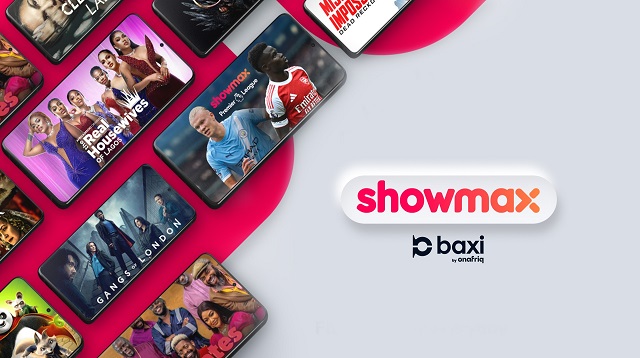
Showmax, Africa’s leading streaming service, has expanded its payment options in Nigeria through a partnership with Baxi by Onafriq, giving customers an easier and more convenient way to subscribe and stay connected to world-class streaming entertainment.

Started Monday, 22 December 2025, existing Showmax customers can log into the Baxi by Onafriq app, select and pay for any of Showmax plans including: Showmax Entertainment Mobile, Showmax Entertainment (All Devices), Showmax Premier League Mobile, Showmax Entertainment (All Devices) + Premier League Mobile, Showmax Entertainment Mobile + Premier League Mobile.
This update allows customers to complete their entire subscription process within the Baxi app, delivering a more efficient payment experience.
Alternatively, existing customers with verified mobile numbers can top up their Baxi by Onafriq app or through its Baxi POS agent device to load funds directly into their Showmax account. These funds can then be used to pay for a Showmax plan.
For new customers, subscribing is also seamless. After creating a Showmax account on their mobile device, they will receive an OTP via SMS or WhatsApp, which allows them to verify their mobile number and immediately return to the app to top up and activate their subscription.
Speaking on the announcement, Tope Oshunkeye, Executive Head of Marketing, West Africa, MultiChoice, said: “With these new payment options from Baxi by Onafriq, we are making streaming on Showmax more accessible, allowing our customers to pay quickly and securely through a trusted financial service provider. This is a significant step forward in our mission to deliver world-class streaming experiences for our customers”.
“This launch is about making entertainment access seamless,” said Mxolisi Msutwana, Managing Director, Anglophone West Africa, Onafriq. “By automating the renewal process, we are not only providing greater convenience for customers but also helping to drive the adoption of digital payments across Nigeria.”
With more people turning to digital services, Showmax is doubling down on its commitment to make it affordable and effortless for customers to access and stream the stories they love. By partnering with Baxi by Onafriq, a popular agent and digital payment network, Showmax is meeting subscribers where they already are.
Showmax, launched in 2015 and available in more than 40 markets across the continent, is a leading African streaming service. It offers a unique combination of original African content, first and exclusive international series, popular movies, premium documentaries and the best kids’ shows, plus a mobile-only product to watch the Premier League.
Onafriq is an omnichannel network of networks, making borders matter less by providing our partners with a single pathway to unlock the full power of cross-border and cross-platform payment solutions. With a network spanning 43 African markets, Onafriq connects over 1 billion mobile money wallets, 500 million bank accounts, and over 400,000 agents in Nigeria, enabling domestic and cross-border disbursements and collections, card issuing and processing, agency banking, and treasury services.
In Nigeria, Onafriq operates as a B2B payments enabler with an extensive agency banking network through its flagship product, Baxi. Baxi connects over 400,000 agents nationwide, offering essential financial services such as bill payments, airtime and data purchases, funds transfers, cash-in and cash-out transactions, and more, driving financial inclusion and providing seamless access to digital financial services for millions.

SERAP Sues INEC Over Alleged ₦55.9Bn Election Funds Diversion

NDIC Declares Second Liquidation Dividend for Heritage Bank Depositors

FG Inaugurates N40Bn CCTV Control Centre for Third Mainland Bridge

Ministry of Finance Leads FG-Backed Deal to Deliver Quality Homes and Boost Agriculture in Niger State

FG Plans to Invest $460m World Bank Loan in Fibre Infrastructure

Banks quietly move to enforce new ₦50 transfer levy from Jan. 1

FIRS says NIN, CAC Numbers to Serve as Tax IDs from 2026

Nigeria Takes the Lead in the Global WSIS+20 Digital Agenda

PalmPay Launches N400 Million World Travel Carnival, Rewarding Users with Free Global Trips

Check Point Reveals Nigeria as Second Most Targeted African Country for Cyberattacks in November




 E-Financial3 days ago
19 Nigerian Banks Meet CBN Recapitalization Targets Ahead of March Deadline

 E-Financial3 days ago
KPMG Identifies ‘Flaws, Inconsistencies, and Omission’ in New Tax Law

 Telecom3 days ago
Nigeria, Egypt to Lead Africa’s Data Center Boom

 General News3 days ago
FG to Empower Artisans for Global Value

 General News3 days ago
Bill Gates Pays Ex-Wife $8Bn Charity Payout in Divorce Settlement

 Telecom3 days ago
Court Dismisses N1Bn Suit against MTN, Awards N3m Costs

 General News3 days ago
CBN Projects Petrol to Hover around N905/Litre this Year

 General News3 days ago
FG Introduces Reusable Textbooks, Uniform School Calendar to Cut Education Costs