

News
UK Begins 3,000 Pounds Visa Bond in November

United Kingdom is pressing ahead with its controversial new visa policy requesting visitors from Nigeria and five other countries to deposit 3,000 pounds bond before entering the UK despite the huge public outcries that have greeted the scheme in the affected countries.
Financial Times at the weekend reported that : “Britain is pressing ahead with its trial of a scheme to make visitors from six countries pay a £3,000 bond, despite an international backlash and complaints from businesses. The government said it would begin a trial of the scheme in November to impose visa restrictions on six Commonwealth nations, including India and Nigeria, even though David Cameron poured cold water on the scheme in June after it provoked uproar in Delhi.”
The policy is to restrict some visitors from India, Nigeria, Kenya, Sri Lanka, Pakistan and Bangladesh.
They will have to pay the refundable cash in return for visitor visas that allow them to stay in the UK for up to six months.
The British government has reportedly decided to go ahead with it though the Home Office insisted that it was meant to target only “high-risk” applicants.
An official told the media that the scheme would be “highly selective,” targeting only “suspicious” applicants.
Under a “pilot” scheme to be introduced in November, first-time visitors from six non-white Commonwealth countries, including India, Pakistan and Bangladesh, will be required to deposit a cash bond of £3,000 for a British visa. According to the government, these six countries pose the “most significant risk of abuse” of visas by their citizens.
“In the long run, we are interested in a system of bonds that deters overstaying and recovers costs if a foreign national has used our public services,” the Home Office said.
The move comes barely weeks after Mr. Cameron and Nick Clegg, deputy Prime Minister were reported to have refused to clear the scheme in its present form, fearing that the backlash in India and Nigeria threatened to damage bilateral relations at a time Britain is desperately trying to woo Indian investors and tourists.
Cameron was reported as saying that he would “not sanction” any policy that was likely to undermine his push for investment.
The Financial Times said that the u-turn had provoked anger in Britain’s business circles, who described the plan as an “insulting deterrent” to wealthy tourists from countries like India and Nigeria.
“They are urging the government to drop the pilot, saying the restrictions will damage their business if Commonwealth tourists, particularly Nigerians, now the sixth biggest spenders on luxury goods in Britain, are put off,” it said.
In Nigeria the federal government described it as discriminatory and capable of undermining the spirit of the Commonwealth.


As Christians in Nigeria and around the world mark the birth of Jesus Christ, Globacom has extended warm Christmas greetings, describing the season as one of goodwill and togetherness.

Reflecting on the significance of Christmas in a message released on Tuesday, the technology company said the period offers an opportunity for renewal, calling on Christians to uphold the values embodied by Jesus Christ, including love, humility and compassion for humanity.
Globacom noted that the circumstances of Christ’s birth continue to offer timeless guidance for society. “The noble yet humble birth of Jesus teaches virtues such as obedience to God, humility, love for mankind and a strong commitment to the common good. We encourage Christians to consciously practise these virtues as true followers of Christ,” the company stated.
Against the backdrop of today’s social and economic challenges, the company emphasized the shared responsibility of people of goodwill to care for others and to give generously, pointing to Christ’s acts of compassion, including his feeding of multitudes as recorded in the Bible.
Beyond the celebrations, Globacom urged Nigerians to sustain the true spirit of Christmas by consistently demonstrating love, promoting peace and fostering harmony—values that defined Christ’s life and teachings.
The company also wished its customers and Nigerians at large a joyful Christmas, while reaffirming its commitment to delivering reliable, high-quality services throughout the festive period and beyond, urging customers to take advantage of its wide range of innovative products and services to stay connected and share the joy of the season with loved ones.

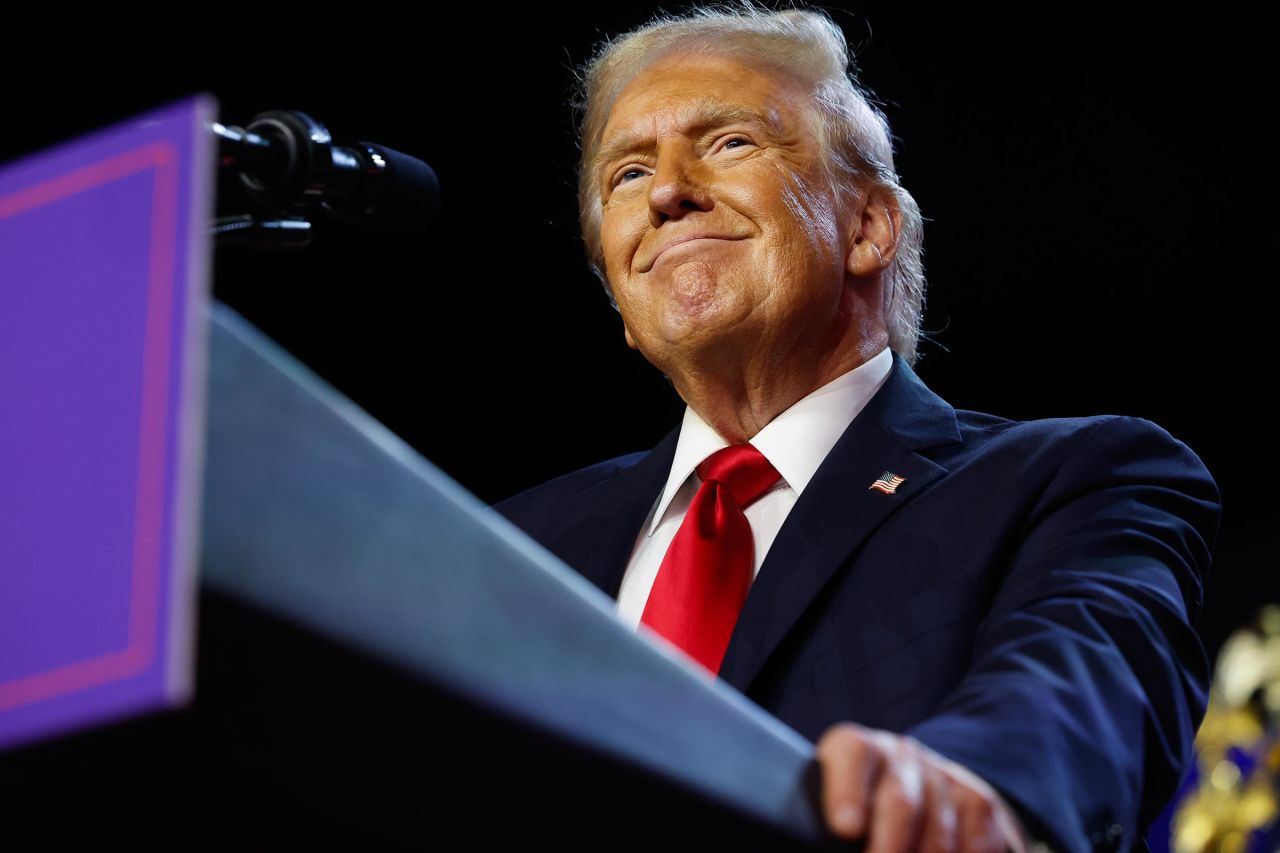
The United States has signed a five-year agreement with Nigeria to strengthen its health system, with a strong emphasis on promoting Christian faith-based health care providers.

The Department of State, in collaboration with Congress, will commit nearly $2.1 billion to expand essential preventative and curative services for HIV, TB, malaria, polio, and maternal and child health.
Under the bilateral agreement signed at the weekend, the Nigerian government will increase its domestic health expenditures by nearly $3 billion during the five-year term.
The Memorandum of Understanding is the largest co-investment any country has made to date under the America First Global Health Strategy, said Thomas Pigott, State Department spokesperson.
The MOU was negotiated within the context of Nigeria’s reforms to protect Christian populations from violence and includes significant dedicated funding to support Christian healthcare facilities.
The investments were approved to complement the efforts of Nigeria’s 900 faith-based clinics and hospitals, currently serving millions of people, and strengthen the country’s health infrastructure.
The U.S. government stressed that the President and Secretary of State retain the right to pause or terminate any programs which fails to align with the national interest.
“The Trump Administration expects Nigeria to continue to make progress ensuring that it combats extremist religious violence against vulnerable Christian populations,” Pigott added.
The MOU was signed despite the U.S. designation of Nigeria as a Country of Particular Concern and its recent inclusion in the travel ban list, which President Donald Trump premised on terrorism and visa overstay rate.
The America First Global Health Strategy, released in September 2025, covers dozens of countries. It shifts the focus of U.S. health aid to self-reliance, data security, HIV, TB, malaria, and maternal and child health services.

Socio-Economic Rights and Accountability Project (SERAP) has urged President Bola Tinubu to “urgently direct Mr Lateef Fagbemi, SAN, the Attorney General of the Federation and Minister of Justice to widely publish a certified true copy of the version of the tax bills received from the National Assembly and a certified true copy of the tax laws signed by you.”

SERAP
The documents requested by SERAP are the National Revenue Service (Establishment) Act, Joint Revenue Board of Nigeria (Establishment) Act, Nigeria Tax Administration Act; and Nigeria Tax Act.
SERAP urged Tinubu “to direct Mr Lateef Fagbemi to clarify whether the version of the tax bills received from the National Assembly are exactly the same contents as the bills that were signed into law by you and the version ultimately gazetted.”
The body made the demand of President Tinubu in a Freedom of Information request dated December 20, 2025.
It was signed by its Deputy Director, Kolawole Oluwadare.
The organisation said in the FOI request: “The law-making processes including the passing of any bills and signing them into laws, as well as gazetting the laws must meet the requirements of the Nigerian Constitution, the rule of law and separation of powers.
“This means that any passed bills and signed laws must be accessible, authentic, intelligible, clear, legitimate, and predictable so that people can know and comply with them.
“Clarifying whether the version of the tax bills received from the National Assembly are exactly the same contents as the bills that were signed into laws by the President and tax laws ultimately gazetted would promote transparency and accountability, and help to address any threats to Nigerians’ human rights.
“We would be grateful if the recommended measures are taken within 7 days of the receipt and/or publication of this letter. If we have not heard from you by then, SERAP shall take all appropriate legal actions to compel your government and the Attorney General to comply with our request in the public interest.
“Widely publishing the certified true copies of the tax bills passed by the National Assembly and the tax laws signed by the President and the gazetted versions would also allow Nigerians to identify if the provisions of the laws are consistent with their human rights, and seek effective remedies to challenge any infractions of the rights.
“Your government has the obligations under the Nigerian Constitution and the human rights treaties to which the country is a state party to promptly, independently, impartially, transparently and effectively investigate the alleged unlawful allegations of the tax laws and to ensure full accountability in this case.
“Our requests are brought in the public interest, and in keeping with the requirements of the Nigerian Constitution, the Freedom of Information Act, and the International Covenant on Civil and Political Rights and the African Charter on Human and Peoples’ Rights to Nigeria is a state party.
“According to our information, the National Assembly recently alleged that there are unlawful alterations and some material differences between the tax bills passed by the legislative body and the tax laws gazetted by the Federal Government.
“A Sokoto lawmaker, Abdussamad Dasuki, raised the issue under a matter of privilege, drawing the attention of the House to the alleged discrepancies between the harmonised versions of the tax bills passed by both chambers of the National Assembly and the copies gazetted by the Federal Government.
“The National Assembly said the alterations contained in the gazetted copies did not receive legislative approval. These alleged unlawful alterations raise questions over the legality and legitimacy of both the law-making processes and the versions of the tax laws currently being circulated by the Federal Ministry of Information.
“The National Assembly established that substantive provisions were inserted, deleted, or modified after passage by both chambers. Several oversight, accountability, and reporting mechanisms approved by parliament were reportedly removed in the final Acts. New coercive and fiscal powers (e.g., arrest powers, garnish without court order, compulsory USD computation, appeal security deposits) were also reportedly inserted in the final Acts without legislative approval.
“Section 39 of the Nigerian Constitution, article 9 of the African Charter on Human and Peoples’ Rights and article 19 of the International Covenant on Civil and Political Rights guarantee the right to seek, receive and impart information.
“The Nigerian Constitution, the African Charter on Human and Peoples’ Rights and the International Covenant on Civil and Political Rights impose duties on your government to ensure transparency and accountability in lawmaking processes.
“By the combined reading of the provisions of the Nigerian Constitution, the Freedom of Information Act, the International Covenant on Civil and Political Rights, and the African Charter on Human and Peoples’ Rights, there are transparency obligations imposed on your government to widely publish the certified true copies of the version of the tax bills received from the National Assembly and the tax laws signed by you.
“The Nigerian Constitution, Freedom of Information Act, and the human rights treaties rest on the principle that citizens should have access to information regarding their government’s activities.”

Glo Extends Christmas Greetings, Urges Unity and Care for Others

Naira Stability, Lower Borrowing Costs Expected in 2026 — CBN Survey

US Okays $2.1Bn for Christian Healthcare in Nigeria

Leo Stan Ekeh: A “Rare Avis”, an Unconquerable Entrepreneur

SERAP Asks Tinubu to Release CTC of Tax Bill

Nigeria Records Highest Weekly Cyberattacks in Africa — Report

Cyber Tsunami Hits Nigeria as Breaches Surge 1,047%, esentry Q3 Report Reveals

GenAI Adoption Among African workers Outpace Global Peers

Jumia’s Data Shows Nigerians Turning to Digital Retail to Navigate Inflation Pressures

Minister Claims Bandits Exploit Poor Network, Bounce Calls Off Multiple Towers




 General News1 day ago
The Mood Market to Light Up Lagos with a Rooftop Gifting, Food & Lifestyle Fair this Christmas
 News1 day ago
US Okays $2.1Bn for Christian Healthcare in Nigeria

 Broadcasting1 day ago
Tim Akano Recounts 20-Year Growth, Media Support at NITRA End-of-Year Meet
 News1 day ago
SERAP Asks Tinubu to Release CTC of Tax Bill

 E-Financial1 day ago
Sterling Bank, Water.org, Sterling One Foundation Partner on WASH Loan for Millions
 General News1 day ago
Leo Stan Ekeh: A “Rare Avis”, an Unconquerable Entrepreneur

 General News1 day ago
FCCPC Forces Ikeja Electric Into Compliance, Unseals Headquarters After Rights Breach

 General News1 day ago
NITDA Wins Triple SERVICOM Honours for Citizen-Centred Service Delivery