

General News
Umeh Urges FG to Further Explore Gas as Nigeria’s Future

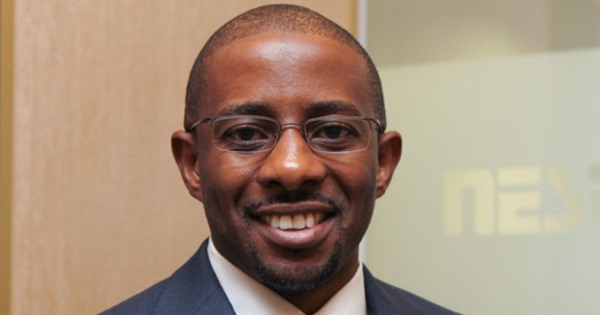
Following the recent global plunge in oil prices primarily as a result of the Covid-19 pandemic, the CEO of a power generating company, Century Power Generation Ltd, Dr. Chukwueloka Umeh says there is no better time than now for the Federal Government (FG) to take definitive and courageous steps towards diversifying Nigeria’s economy.

In the face of the cyclic oil prices, we must now see a Nigeria without oil and immediately start diversifying to agriculture and manufacturing. In order to do this successfully, the gas and power industries need to be unshackled and supported to encourage substantial private investments and growth.
Speaking during an online interactive session with the media, Dr. Umeh said that it is still unthinkable that despite the fact that Nigeria has the world’s ninth-largest deposit, it still grapples with power generation and distribution issues in spite of millions of dollars spent on foreign experts, countless committees, public-private stakeholder meetings, and so on.
“Nigeria should essentially be a gas-producing country that happens to produce some oil. It is time to do things differently. We should stop the endless committee meetings, conferences and engagements.
“Pick a set of regulations, such as the ones that birthed the only project-financed power plant in Nigeria to date, Azura power, respect contracts and the rule of law to give local and foreign investors comfort, and just get it done.
“We have all the expertise we need to make the industry work, so let’s stop searching for the perfect solution elsewhere. Take whatever we have, and just make it work.’’
He said investors are not ploughing the much-needed resources into gas and power projects for several reasons, including constantly changing regulations, difficulty in enforcing agreements, ease of doing business, and unrealistic tariffs.
The Federal Government needs to relax its regulations enough to allow a real gas and power sector to come into existence and actually grow in a measurable form, driven by the private sector in partnership with the FG. Market forces and competition should be allowed to drive gas and power tariffs rather than allowing the prices to be set by a regulator.
He argued that government’s role should be limited to providing appropriate regulations that will catalyze private entities to drive the much-needed diversification in the country.
He cited the example of several private estates in Lagos where steady, uninterrupted power is being supplied to as a result of the cost-reflective tariffs that the residents pay, which is far less than what they would have paid to operate fuel or diesel generators with the related health and safety hazards they come with.
This, according to him can be replicated on a larger scale across the country if the companies within the entire gas and power value chain are allowed to work under relaxed regulations as well as charge cost-reflective tariffs.
Speaking further on the issue, Dr Umeh praised the Federal Government’s efforts so far to deregulate the power sector but urged them to do more and do it with more urgency to help stem the alarming growth in the unemployment rate in the country.
Dr. Umeh argued that once the power industry is working and adequate power supply is guaranteed, investors will begin to see the country as an investment destination.
“We must, however, understand that the privatization of power does not guarantee immediate availability of power because it takes at least three years to build a power plant from groundbreaking to actual generation.
“Private companies should be encouraged and incentivized to build power plants as well as strengthen transmission and distribution networks knowing that their investments will eventually be recovered through cost-reflective tariffs.”
One of such projects is the Century Power Okija IPP, which is projected to generate about 1500 MW of power when its three phases are completed.
He pointed out that a lot of businesses have been disrupted due to the global pandemic and that money is in limited supply in Nigeria because of our over-dependence on oil for foreign exchange given this situation, diversification is urgently required to help the economy rebound in a sustainable manner.
“If we go back to basics by thinking of a Nigeria without oil, we can begin to look at developing other sectors such as gas, manufacturing, agriculture, just to name a few.


Economic and Financial Crimes Commission (EFCC) has partnered with the National Space Research and Development Agency (NASRDA) to deploy advanced space and geospatial technologies in investigations and asset management.

Ola Olukoyede, executive chairman of the EFCC,
The move is expected to deepen transparency, strengthen asset recovery and curb economic sabotage according to a statement by Dele Oyewale, head, Media and Publicity, EFCC.
He said that the partnership was formalised through the signing of a Memorandum of Understanding (MoU) on Thursday in Abuja
The agreement is aimed at strengthening inter-agency collaboration, particularly in the areas of investigations, asset tracking and fraud risk assessment, marking a new phase of cooperation between the anti-graft agency and Nigeria’s space research and regulatory authority.
Speaking at the signing ceremony, Ola Olukoyede, executive chairman of the EFCC, described the agreement as a practical demonstration of the power of collaboration among government agencies.
He noted that closer cooperation would make it easier for institutions to effectively deliver on their statutory mandates.
According to Olukoyede, the MoU clearly defines the responsibilities of both agencies and establishes a framework for sustained cooperation.
He disclosed that a special monitoring and implementation team would be constituted to ensure the effective operationalisation of the agreement and to periodically review its impact.
“We will put a team together that will monitor the operationalisation of this MoU and also review the effectiveness of the platform from time to time.
“When agencies work together in the spirit of collaboration, it not only enhances efficiency but also encourages other ministries, departments and agencies to explore similar partnerships in the overall interest of national development”, he said.
Explaining the specifics of the partnership, the EFCC chairman said NASRDA would provide advanced technological tools to boost the Commission’s investigative capacity and asset tracking, while the EFCC would deploy its expertise to support the agency in fraud risk assessment.
“We will support you in the area of fraud risk assessment, and you will support us in promoting our investigative capacity.
“Where our eyes cannot get to, with the aid of your technology, we will be able to get there”, Olukoyede said.
He noted that the collaboration would be particularly beneficial to investigations into illegal mining activities, which have been linked to economic sabotage and rising insecurity in parts of the country.
“With the technology you are going to support us with, we will be able to identify some of these areas,” he added.
Olukoyede further expressed optimism that the partnership would significantly enhance the EFCC’s asset management processes, stressing that asset recovery remains one of the core pillars of the Commission’s mandate.
He explained that recovered assets are scattered across the country and exist under different legal statuses, including interim and final forfeiture.
“In some of these places, we may not have enough personnel to physically secure the assets. But with your support, we will be able to deploy geospatial technology and asset tagging devices to monitor both movable and immovable assets in a transparent and accountable manner”, he said
In his remarks, Matthew Adepoju, director-general and chief executive officer of NASRDA, welcomed the partnership, describing the MoU as a major milestone in the pursuit of justice and regulatory compliance within Nigeria’s space ecosystem.
Adepoju stressed that space-related activities are strictly regulated in developed economies and should be treated with similar seriousness in Nigeria, particularly in view of the potential misuse of satellite assets.
“You cannot go anywhere in Europe, continental America or the Far East and be doing business in the space ecosystem without the country ensuring that you are doing the right thing.
“We know for a fact that some satellite assets are being used negatively in driving insecurity in the country”, he said.
He also raised concerns over the use of satellite-mapped data on Nigeria’s natural resources to aid illegal activities, especially illegal mining, which he identified as one of the drivers of insecurity.
DalaHill Law Practice and the Bank of Agriculture (BoA) have signed a Mutual Accountability Framework (MAF), marking a milestone in the launch of a climate finance initiative funded by the African Climate Foundation (ACF) and valued at US$100,000.

According to a statement by the firm, the signing took place during a kickoff ceremony at the BoA headquarters in Abuja and formalised the roles, responsibilities and shared commitments of both institutions in delivering the project. The framework was signed by Ayo Sotinrin, BoA Managing Director, and Mohammed Hamza, Managing Associate at DalaHill.
The ACF-funded initiative is designed to support BoA’s institutional transition towards climate-aligned agricultural finance. Central to the programme is the establishment of a Clean Energy Delivery and Innovation Unit (CEDIU), a dedicated function that will integrate climate risk considerations, environmental data and sustainability principles into the bank’s strategy, operations and investment decision-making.
Under the initiative, BoA will also be supported to develop Clean Energy Access Systems and Climate Finance Development Frameworks, alongside a pipeline of bankable, climate-aligned agricultural projects.
These projects are expected to attract domestic and international capital into the sector, contributing to efforts to bridge Nigeria’s estimated $247.3 billion financing gap for its green energy transition.
Speaking on behalf of DalaHill, Mohammed Hamza described the initiative as a pivotal intervention in Nigeria’s agricultural and climate finance landscape. He said the firm is acting as a trusted adviser, working with institutions to deliver catalytic and transformative solutions.
According to him, DalaHill is deploying a multidisciplinary technical team to support BoA’s transition into a climate-aligned institution capable of attracting finance for scalable, investment-ready agricultural projects.
He highlighted the strategic importance of the project, noting that while ACF has traditionally focused on renewable energy, climate alignment within the agricultural sector is critical to driving Nigeria’s broader energy transition. He added that the initiative represents ACF’s first climate finance grant promoting agriculture in Nigeria.
In his remarks, Sotinrin expressed appreciation to the project partners and acknowledged longstanding gaps within Nigeria’s agricultural finance ecosystem. He reaffirmed BoA’s commitment to driving systemic change by attracting climate-aligned expertise, strategic funding and increased national and international attention to the sector.
Sotinrin also noted that the initiative aligns with the Federal Government’s climate and sustainability agenda, referencing Nigeria’s participation at an ongoing global climate sustainability conference in Abu Dhabi.
He further highlighted strong government backing for BoA’s transformation, including presidential approval in October 2024 of a US$1 billion recapitalisation plan aimed at strengthening the bank’s capacity to support national development.
DalaHill Law Practice is a full-service commercial law firm headquartered in Abuja, with a strong track record in advising on economically catalytic projects across sectors including energy, infrastructure, finance, trade and emerging markets.
The firm is known for structuring complex transactions, managing regulatory risk and supporting projects that promote sustainable growth and long-term economic impact in Nigeria and beyond.

Kaspersky’s new global research reveals that 65% of online shoppers believe they can detect fraud on their own, while only 42% actually use security software to protect their payments and block malicious links.

Experts consider this a major risk for online buyers. Over the past year Kaspersky identified nearly 6.7 million phishing attacks globally impersonating online stores, payment systems, and banks, with 55.6% targeting online shoppers.
As the post-holiday and summer sales season kicks off, Kaspersky conducted a survey to examine consumer cybersecurity practices employed during online shopping. The findings show that 97% of respondents demonstrate a substantial level of awareness of online security risks and implement at least some measures to safeguard their digital transactions.
However, the survey found that fewer than half the participants use dedicated security software to block phishing attempts and protect payment transactions. This concerning trend is particularly pronounced among the 55+ year old generation, with only 32% of respondents in this age group actually using security software when making online purchases.
The most commonly adopted security protocols include being vigilant about potential warning signs, such as suspicious hyperlinks or unusual website design (65%) and verifying seller authenticity (62%).
Kaspersky experts emphasise that while these practices are essential protective measures for online shopping, they constitute only foundational protection strategies rather than the comprehensive fraud prevention provided by a security solution.
Other steps that could protect online shoppers, like using a separate credit card for digital purchases or using a separate email address to register with unfamiliar online shops, were chosen by 33% and 26% of survey participants, respectively.
Meanwhile, 30% claimed to consult with friends and relatives before making a purchase. Interestingly, this option is highly popular among the younger generation, with 37% opting for it, while it is less common among older people (21%).
“Throughout the year, we’ve observed that online shoppers have consistently been one of the most desirable targets for scammers. During sales periods, their scams can become even more pervasive. Staying vigilant is crucial, but protecting yourself requires more than just awareness.
It is particularly concerning how scammers are now using AI to craft more sophisticated, targeted phishing attempts that are increasingly difficult for regular users to recognise,” comments Olga Altukhova, Senior Web Content Analyst at Kaspersky.
Sales seasons are peak times for scammers. To protect yourself against emerging threats, implement the following security practices:
– Don’t save your full credit card details on websites unless absolutely necessary.
– Consider using a separate debit card specifically for online purchases and set up transaction alerts on your bank and credit card accounts.
– Be extra cautious of “flash sales” that seem too good to be true. Watch out for websites that pressure you into making quick decisions, and be wary of sellers who refuse returns or exchanges.
– Use different passwords for each online account and enable two-factor authentication wherever possible.
– Apply a security solution with a strong anti-phishing component. For instance, Kaspersky Premium received the annual ‘Approved’ certification from the leading testing lab AV-Comparatives in 2025 for detecting 93% of phishing URLs, demonstrating outstanding anti-phishing capabilities, powered by AI technology.
– Scammers constantly evolve their methods, so staying informed about new phishing techniques can help you recognise and avoid them. The Kaspersky Security blog will help you keep your finger on the pulse of emerging cyberthreats.
The study was conducted by Kaspersky’s market research center in November 2025. A total of 3000 respondents from 15 countries (Argentina, Chile, China, Germany, India, Indonesia, Italy, Malaysia, Mexico, Saudi Arabia, South Africa, Spain, Turkey, the United Kingdom, and the United Arab Emirates) took part in the survey.

SEC Hikes Minimum Capital Requirements for Market Operators After a Decade

Study Shows Blocks in Telegram are Pushing the Underground Out

Galaxy Backbone Marks Two Decades of Powering Nigeria’s Digital Evolution

NGX Unveils Net-Zero Plan for Greener Capital Market

Galaxy Backbone Marks 20 Years, Tops FG Website Scorecard

Banks quietly move to enforce new ₦50 transfer levy from Jan. 1

FIRS says NIN, CAC Numbers to Serve as Tax IDs from 2026

FIRS Declares NIN, CAC Numbers as Tax IDs from 2026

US Begins Partial Visa Ban on Nigerians January 1

Galaxy Backbone Tops FG’s Website Performance Ranking




 E-Financial2 days ago
Paystack Expands Beyond Payments into Banking

 E-Financial2 days ago
SEC Partners Police in Nationwide Crackdown on Ponzi Schemes, Crypto Frauds

 E-Business2 days ago
Nigeria Targeted with 4,622 Cyber-attacks Per Week in December 2025

 General News2 days ago
EFCC to Use Space Technology to Boost Asset Tracking, Investigations

 E-Financial2 days ago
FG Halts Tax Guidelines Amid Uncertainty Over Final Laws – Oyedele

 E-Financial2 days ago
Paystack Buys Microfinance Bank, Enters Nigeria Banking Arena

 News2 days ago
FG Directs Banks, Fintechs to Remit VAT on Service Fees

 General News2 days ago
How to Stay Safe Online During Sales Periods