

Telecom
Uncertainty over SIM-NIN Linkage as Deadline Nears

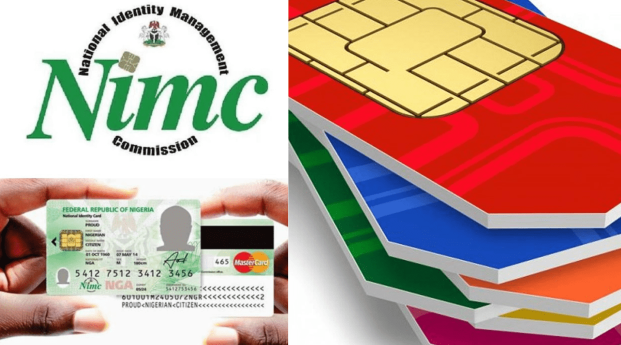
The fate of many telecommunication subscribers hangs in the balance following a court ruling restraining telecom providers from implementing a directive by the Nigerian Communications Commission (NCC) that mandated them to bar telephone lines without National Identity Numbers (NIN) on or before February 28.

BusinessDay reported that iIn the ruling by Justice Ambrose Lewis-Allagoa of the Federal High Court in Lagos, telecom operators were restrained from deactivating or barring any line or SIM not linked to their NINs following an application filed by Olukoya Ogungbeje, a Lagos-based lawyer.
Ogungbeje filed a suit against MTN Nigeria when his SIMs were barred in April 2022, and the court, at the time, dismissed his suit for lack of merit. He later filed an appeal, pending at the court of appeal.
Ogungbeje has now asked the court for an injunction pending his appeal to restrain all the respondents (Federal Government of Nigeria, the Attorney General of the Federation and Minister of Justice; MTN Nigeria Communications Plc and Airtel Networks Nigeria Limited) from further outright barring, deactivating and or restricting any SIM cards or phone lines on Feb. 28, 2024, or any other scheduled date, pending the hearing and determination of his appeal at the Court of Appeal of Nigeria.
Justice Ambrose Lewis-Allagoa granted the lawyer’s request and restrained the telecommunications companies (telcos). The justice also ruled that his order subsists till the hearing and determination of the appeal filed by the lawyer.
This ruling has cast a shadow over the NCC’s directive, particularly for MTN and Airtel subscribers. The NCC, in a December 2023 notice, asked telcos to bar SIMs that have not submitted their NINs by February 28, 2024, bar those whose NINs have been submitted but not verified by March 29, 2024, and bar those who have less than five lines linked to an unverified NIN by April 15, 2024.
According to Reuben Mouka, director of public affairs at NCC, the commission is not one of the parties to the case.
He also noted that once the court has restrained an operator, there is nothing the regulator can do.
“Nonetheless, if a law court restrains an operator, what can we do…There may be an official position from us soon. Our management will look at this, and we may say something,” he said.
Sources in MTN and Airtel said the telcos would obey the court order. O
ne source, however, said the ruling does not cover every subscriber, as some might still get blocked. On Monday, telecom subscribers asked the Federal Government for an extension for SIM-NIN linkage.
Adeolu Ogunbanjo, president of the National Association of Telecoms Subscribers, disclosed to BusinessDay that a one-month extension will ensure more people can get their NINs and link their SIMs before the deadline.
“We want them to extend the deadline to March 31. There are still queues at NIMC centres. These centres are trying, but they can’t attend to everyone,” he said.
If the deadline stands, millions of subscribers will be affected.
The NCC’s directive to restrict outgoing calls in April 2022 affected over 72.77 million active mobile subscriptions. About 125 million lines had been linked to NINs out of a total of 197.77 million active lines. Also, there were over 78 million unique NINs then.
Since then, the National Identity Management Commission has not updated the number of SIMs linked to a NIN. The number of unique NINs grew to over 104 million as of December 2023, and total active lines rose to 224.41 million as of the same period.


Kenya’s High Court has ruled that mobile phone numbers are not disposable assets, but constitutionally protected digital identifiers, striking at the core of a long-standing industry practice of arbitrarily reassigning inactive SIM cards without the owners’ consent.

In a landmark decision that could reshape telecom regulation and digital identity frameworks across Africa, sitting at Milimani Law Courts in Nairobi, Justice Lawrence Mugambi declared that reassigning a phone number without the original owner’s consent violates the right to privacy.
The ruling effectively elevates a SIM card into the same legal category as personal data tied to an individual’s private life.
At the heart of the ruling is Article 31 of the Constitution, which safeguards citizens from unnecessary disclosure of private information and interference with communications.
The court found that in today’s digital economy, a registered mobile number functions as a critical gateway to sensitive personal data, linking users to mobile money platforms like M-PESA, banking systems, email accounts, and social media profiles.
“When mobile digital identity is lost through reallocation or recycling without interrogating the reasons behind inactivity, it creates an avenue for unauthorised disclosure of delicate information,” the judgment stated.
The case, brought by Erastus Ngura Odhiambo, petitioner and former prisoner, challenged the routine telecoms practice of deactivating SIM cards after prolonged inactivity and reassigning them to new users.
Odhiambo lost access to his mobile phone number due to inactivity while serving his lengthy sentence.
He argued that the practice exposes individuals to serious risks, including misdirected financial transactions, intercepted one-time passwords, and unintended access to private communications.
The court agreed, highlighting how recycled numbers can result in strangers receiving confidential messages, authentication codes, and even being added to private messaging groups, effectively inheriting fragments of another person’s digital life.
Justice Mugambi also criticised the rigidity of SIM deactivation policies, calling them “arbitrary” for failing to consider legitimate reasons for inactivity such as incarceration, studying in restricted environments, or living abroad.
“Incarceration does not strip an individual of their constitutional rights to privacy and identity,” he noted.
For telecom operators, including Safaricom, the ruling introduces a significant compliance burden. The court outlined three strict conditions before any number can be reassigned.
Telcos must obtain informed and verifiable consent from the original owner, issue a public notice and conduct traceability efforts over a reasonable period.
More importantly, the court further directed that telecoms firms must implement technical safeguards to prevent data exposure to the new user.
The Office of the Attorney General has been given six months to translate these directives into enforceable regulations.


Binance Earn offers cryptocurrency users an accessible way to generate rewards on idle digital assets without active trading or constant market monitoring.

Binance Earn
As the crypto market matures, more holders seek productive uses for their assets rather than leaving them dormant in wallets. Binance addresses this through Binance Earn, where users allocate supported cryptocurrencies to various reward products for automatic yield generation.
The platform emphasises simplicity with a “set-and-forget” model: users select assets, pick a product, and rewards accrue passively in the background. This appeals especially to long-term holders aiming to enhance portfolio value over time without day-to-day involvement.
Binance Earn provides flexible options for instant liquidity access alongside fixed-term products for defined commitments, catering to diverse strategies and risk appetites.
“We’re seeing growing interest across Africa in ways to make crypto holdings more productive without active trading,” said Larry Cooke, Africa Head of Legal at Binance. “Simple, ‘set-and-forget’ solutions are becoming increasingly relevant as more users take a longer-term approach to digital assets.”
The feature reflects shifting user behaviour towards holding and gradual growth amid volatile markets, where reward rates fluctuate based on conditions, liquidity, and structures.
Users must assess risks and alignment with personal goals, as crypto remains volatile. Binance Earn positions itself as a key tool in Africa’s rising digital asset adoption, enabling hands-off participation in the ecosystem.

Cybersecurity researchers at Malwarebytes Labs have exposed a sophisticated new Gmail scam where fraudsters send fake Google security alerts via phishing emails, texts, and pop-ups, tricking users into a deceptive four-step verification process that harvests login credentials, GPS locations, contacts, and other sensitive data for account takeovers.

Gmail
Disguised as routine checkups, these alerts mimic Google’s official pages to create urgency, prompting victims to install malicious “security tools” that grant hackers real-time access to Gmail and linked services—Corey Donovan, president of Alta Technologies, warns legitimate checks never come unsolicited or demand downloads, urging users to close suspicious prompts immediately and verify via official Google account pages instead.
The scam’s rise amplifies risks during travel, where public Wi-Fi hotspots—especially “evil twin” fakes like slight misspellings of “Airport_Free_WiFi”—enable interception of banking details, emails, and malware installs; Donovan advises disabling auto-connect, using VPNs for HTTPS sites only, avoiding logins altogether, and crafting strong passwords with mixed characters plus two-factor authentication.
Shoulder surfing on public transport and outdated devices compound threats, as fraudsters glimpse screens or exploit unpatched vulnerabilities—keeping phones updated with post-update privacy reviews limits app access to location or commutes, while skipping work emails in view maintains confidentiality on the go.
Nigeria’s heavy reliance on digital banking and crypto heightens vulnerability, as scammers exploit rushed travellers; Donovan stresses: “Cybercriminals target busy airports and stations knowing guards drop—stay cautious, update devices, lock privacy, and never rush links to protect against these advanced breaches.”

Court Jails ‘Colonel’, ‘Major’ of Global Money-Laundering Ring

Court Bans Kenyan Telcos from Recycling SIM Cards

Providus Bank Fully Meets CBN Capital Requirement, Sets Record Straight

African Tech Start-ups to Receive $46m of Speedinvest Africa Fund

U.S. Charges Three in $2.5 Billion Plot to Smuggle Nvidia AI Chips to China

Kaspersky Discovers New Phishing Campaign Exploiting Google Tasks Notifications to Steal Corporate Credentials

esentry 2025 Report Shows Healthcare, Financial Services and Telecoms as Staging Grounds for Increased Cyberattacks in Africa

AfDB, UNDP Launch $10Bn AI Initiative for Africa

Mutual Benefits Assurance Settles ₦5.9bn Claims in January 2026

MultiChoice Suspends Yearly DStv Price Hike as Canal+ Pushes Growth




 E-Financial2 days ago
CBN Introduces Stricter BVN Rules to Curb Fraudulent Transactions

 E-Financial2 days ago
Binance is Missing from Ghana’s Crypto Sandbox

 News2 days ago
Nigeria, UK Sign £746M Landmark Ports Deal

 E-Financial2 days ago
World Bank Debars 3 PwC Subsidiaries for 21 Months over Alleged Project Fraud

 E-Financial2 days ago
Quest Merchant Bank Named Transaction Advisor for Nigeria’s Landmark Project BRIDGE Digital Infrastructure Initiative

 Broadcasting2 days ago
Canal+ to Cut Jobs as Part Sweeping Restructuring
 Telecom1 day ago
Court Bans Kenyan Telcos from Recycling SIM Cards
 News1 day ago
African Tech Start-ups to Receive $46m of Speedinvest Africa Fund