

E-Financial
Undergraduate, Okadaman in Court for Hacking Into Bank Accounts


A final year student of the Nmandi Azikiwe University (NAU) Akwa is facing charges of forgery, stealing and fraud after he was arrested alongside a tricycle rider for allegedly hacking bank accounts of big companies and diverting millions of naira into personal accounts.
According to the police, the accused belong to a 3-man syndicate allegedly led by a 400 level Environmental Science undergraduate student of NAU identified as Patrick Nwafor who is on the run.
However, before the gang was exposed, they had succeeded in hacking into a law firm’s account with an old generation bank and diverted N8million.
The police arrested the undergraduate identified as Ebuka Orumba a 400 level Computer Engineering part -time student and his accomplice, a tricycle rider one Ator Kalu after the gang had diverted the said amount and attempted to withdraw the money.
The suspects who were charged at an Ikeja Magistrate court by policemen attached to the Special Anti -Robbery Squad Ikeja on a five count charge bordering on forgery, stealing and fraud however said they were lured into the crime by Nwofor.
Narrating their roles in the gang, Orumba in his confessional statement to the police said “Nwofor and I are friends in school. Nwofor sold the idea to me and he told me to recruit Ator. Nwofor is the brain behind the hacking. I acted as a facilitator. I don’t know much about the hacking stuff”
Narrating his role in the gang, the tricycle rider, Kalu, said “I know Orumba from Anambra. We are childhood friends from the same village. One fateful day, I had issues with my tricycle and I needed money to fix it.
I went to Orumba to help me with money but he told me that he can give me a job to help me with my problem.
Orumba took me to the licensing office at Ojodu Berger Office where he helped me to obtain a fake driver’s licence with the name Engineer Asukwo John Okoro. He gave me N2, 500 to open an account 2O86943174 with Zenith Bank.
Orumba told me that Nwofor will be paying some money into the account. After a while, Orumba told me to go to the bank and check that some money has been deposited in the account.
I went to the bank at Mushin to check but when I asked the branch manager, he told me that N3million was in the account.
I screamed as I had never expected such huge amount. I was trying to inform Orumba about the money but the bank manager told me that network was slow and I could not withdraw the money.
He told me to wait a while but to my shock, the branch manager was suspicious and he handed me over to the security in the bank. I was arrested and our gang was exposed”
According to police investigation, the gang allegedly hacked into the account of the law firm Simmons Cooper Partners and diverted N8million which they moved into three different accounts with fake identities and documents.
The police investigations further shows that the gang opened the accounts with the name Chief Ndumanya Raphael where they diverted N3million into an Access Bank account number 0047148640.
They allegedly diverted N2million into a GTBank account number 0164661104 with the false name Barrister Tochukwu Gospel Okika and another N3million was diverted into a Zenith Bank account 2086943174 with the name Bar. Asoquo John Okoro.
The charge sheet read, Count one reads “That you Ator Kalu,Ebuka Orumba and others at large on the 7th day of July,2015 at about 11.30hrs at Zenith Bank Plc Mushin branch Lagos in the Lagos Magisterial district did conspire together to commit felony to wit forgery and thereby committed an offence punishable under section 409 of the Criminal Law of Lagos State 2011.
Count two reads: That you Ator Kalu, Ebuka Orumba and others at large on the same date,time and place in the Lagos Magisterial district did forge payment instruction mail in the name of Bidemi Oseni of Simmons Cooper Partners, addressed to the head Customer Service Unit UBA plc for the sum of Eight Million naira (N8million) and thereby committed an offence punishable under section 363(3)(h) of the criminal law of Lagos State 2011.
Count three reads: that you Artor Kalu, Ebuka Orumba and others at large on the same date, time and place in the aforesaid magisterial district did steal the sum of three million naira (N3,000,000.00) by causing the said amount to be fraudulently transferred from the account of Simmonscooper partners in a Zenith Bank account No. 2086943174 with false name Engr. Asukwo Okoro John and thereby committed an offence punishable under Section 285 of the Criminal Law of Lagos State 2011.
Count four read: that you Artor Kalu, Orumba and others now at large in the month of May 2015 at Ogba Lagos in the afore said Magisterial District did forge Nigeria Drivers license bearing the name of Asukwu John Okoro but with the photograph of Ator Kalu and thereby committed an offence punishable under section 363(2)(b) of the criminal Law of Lagos State 2011.
Count five reads: that you Artor Kalu sometime in the month of May,2015 at Zenith Bank Plc Mushin Branch Lagos in the aforesaid Magisterial District with intent to defraud did open an account with number 2086943174 with false documents bearing the name of Engr. Asukwo Okoro John and thereby committed an offence punishable under Section 363 of the criminal law of Lagos State 2011.
The accused who were arraigned on September 2nd however pleaded not guilty to all the charges.
The magistrate Mrs. O.O Olanipekun granted the accused bail in the sum of N250,000 each and remanded them in prison custody.


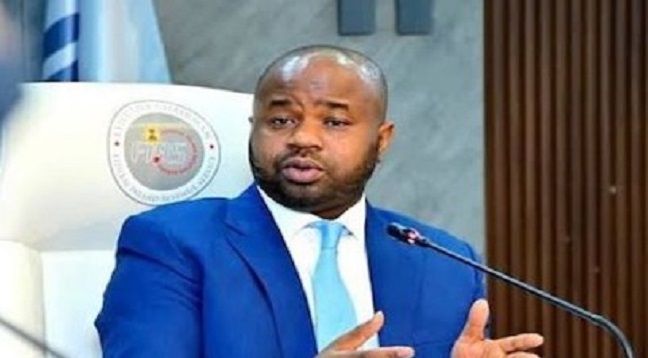
Zacch Adedeji, the Executive Chairman of the Nigerian Revenue Service (NRS), has described technology as a crucial factor in the implementation of the new tax laws.

Adedeji stated this while delivering the maiden convocation lecture of the Federal Polytechnic, Ayede, Oyo state.
In a statement by his Technical Assistant on Print Media, Sikiru Akinola, Adedeji listed some of the most fundamental challenges confronting taxation to include infrastructure, skills, trust and resistance.
In the lecture titled, ‘The Role of Technology in Implementing Nigeria’s New Tax Laws: Challenges, Prospects, and Implications for National Development,’ the NRS chairman said each of the challenges would be addressed with the imminent upgrading of the country’s tax system for a digital environment.
He said: “Nigeria has recently enacted a new set of tax laws, representing the most significant restructuring of our nation’s fiscal legislation in 50 years. While public conversation often frames these changes as legal reforms, and that is true, it is also an incomplete picture.
“These laws are not merely changing rates, definitions, or administrative powers. They are quietly redefining how authority operates within the tax system. This is a complete structural overhaul, signalling the end of tax collection as a manual task and the beginning of tax intelligence.
“If you read the new laws carefully, you will notice a subtle but profound assumption woven throughout their fabric. They presuppose the existence of reliable taxpayer identification, integrated data across institutions, traceable transactions, automated processes, and scalable enforcement.
“In other words, these laws are built for a digital environment. They cannot function properly in a manual, fragmented, paper-based system. The implication is clear: without technology, the laws remain aspirational. With technology, they become operational.
“This transition is central to the mandate of the Nigeria Revenue Service as we implement this new legal framework. Historically, tax administration relied heavily on human discretion over who is registered, who is assessed, who is audited and who is penalised.”
The Speaker of the House of Representatives, Tajudeen Abass, encouraged the graduating students to be good ambassadors of the institution.
Represented by AbdulFatai Buhari, the senator representing Oyo North, Abass charged the youths not to relent in their bid to acquire more knowledge.
He also commended the tax boss for leading the change in tax administration in the country.

By Blaise Udunze
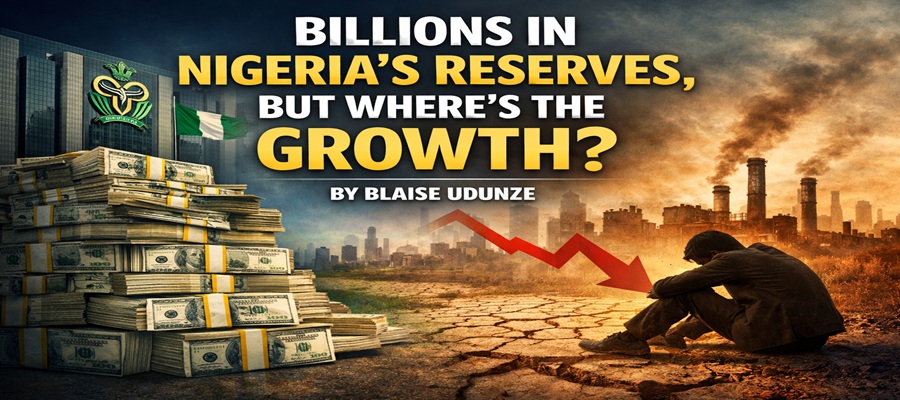
The moment the Governor of the Central Bank of Nigeria (CBN), Olayemi Cardoso, recently announced that Nigeria’s foreign reserves had inched to $49 billion as of February 5, 2026, the news was received with understandable enthusiasm.

He described the development as “a very important statistic” when speaking at the 2nd National Economic Council (NEC) Conference in Abuja, while noting a 4.93 per cent increase and emphasising that Nigeria had moved from being a net seller to a net buyer of foreign exchange. He cited improved remittance inflows, a narrowing gap between official and parallel market exchange rates, and greater confidence in the naira as evidence that reforms were working.
On the surface, the numbers are reassuring. The premium between official and parallel market rates has reportedly fallen to under 2 percent. Remittances have improved following deliberate engagement with the diaspora. Nigerians can increasingly rely on naira cards for international transactions. It can be said that investors are earning positive real returns, banks are recapitalising, equity markets are recovering, and macroeconomic indicators such as GDP growth of 3.98 per cent, a current account surplus of $3.42 billion in the third quarter of 2025, and a reported moderation in inflation to 15.15 percent are presented as signs of stabilisation.
So far, beyond the celebratory headlines lies a deeper and more consequential question, in the form of, what does the fixation on foreign reserves really tell us about the underlying strength of the Nigerian economy?
History and economic logic suggest that when a central bank repeatedly elevates foreign reserves as a central achievement, it often signals that the true engines of growth are either weak or underdeveloped. Strong reserves are not built through declarations, press conferences, or defensive monetary manoeuvres. They are built through systems that generate value, exports, productivity, and trust. Countries with durable reserve positions did not chase reserves; they built economies that produced them naturally.
This distinction matters greatly for Nigeria.
Foreign reserves are important, but they are not a development strategy. They are a buffer, not a foundation. They are an outcome of economic vitality, not a substitute for it. When reserves become the centrepiece of economic storytelling, there is a risk that policymakers mistake statistical comfort for structural strength.
Even Nigeria’s celebrated $49 billion reserve figure requires closer scrutiny, which appears to be more of sexing up the figures. Gross reserves make headlines, but net usable reserves are what protect a currency in moments of stress. A significant portion of reported reserves is often tied up in swaps, forward commitments, and external obligations. When these are stripped out, the net buffer available to defend the naira is far smaller than the headline figure suggests. The gap between gross and net reserves is too large to justify unqualified confidence about currency stability, especially in an economy that remains import-dependent and structurally fragile.
The danger of over-fixating on reserves is not unique to Nigeria, but it is particularly acute here because of the economy’s narrow production base, which subliminally calls for sexing up the figures. Despite decision-makers prematurely applauding the reserves’ growth, the apex bank must rethink its approach. The reserves are not generated through production-based or stronger export means but rather largely from borrowing (sales of Eurobonds) or through government loans, which come in as dollars to the CBN that temporarily boost dollar inflows. This points to the fact that Nigeria still exports little beyond crude oil, imports most manufactured goods, and relies heavily on volatile capital inflows. In such a context, reserves require constant defence rather than organic replenishment. Tight monetary policy, FX restrictions, and moral persuasion may buy time, but they do not solve the underlying problem of insufficient foreign exchange generation.
By contrast, countries with strong reserve positions followed a very different path. Unlike Nigeria, countries like Saudi Arabia, with foreign reserves of about $410 billion, paired subsidy reforms with visible reinvestment in infrastructure, social welfare, and alternative energy systems. Indonesia, with reserves of roughly $153 billion, combined fiscal reforms with expanded social assistance and a shift toward targeted household support, ensuring that reform pain was offset by tangible benefits. Reserves are mainly meant to grow from productive economic activities like Singapore, whose reserves stood at approximately $397 billion at the end of 2025, as it built its position through decades of disciplined industrial policy, export competitiveness, domestic savings, and institutional credibility. In all these cases, reserves were not the objective; they were the by-product of deliberate economic architecture.
In most successful developmental states, public expenditure plays a catalytic role in growth. Unlike Nigeria’s, most countries’ expenditures It crowds in private investment, expand infrastructure, lower transaction costs, and build productive capacity. Over time, this deepens domestic capital formation, drives industrial productivity, supports export diversification, and strengthens external balances. Nigeria’s recent experience, however, appears to diverge from this model.
Rather than deploying fiscal policy aggressively to stimulate productive capacity, government financing has increasingly leaned on the domestic capital market. While this approach has attracted foreign capital inflows, much of this capital has been short-term portfolio investment into treasury bills, government bonds, and money market instruments. A fact that is well established is that these inflows can temporarily stabilise liquidity and support the exchange rate, but their multiplier effects on the real economy are minimal. In the absence of strong productive investment for a country like Nigeria, the giant of Africa, this pattern resembles constructing a skyscraper on weak foundations, which is impressive in appearance, but structurally fragile.
This fragility is evident in the broader economy. Especially this kind of growth is associated with Nigeria in 2025, which portrays a country that is increasingly survival-led rather than productivity-driven. The underlying challenge today is that households, small businesses and even industrial firms are left with no option but to adapt to rising costs and shrinking real incomes by expanding low-productivity activities. Industrial depth remains shallow. Domestic capital accumulation is weak. Export capability outside oil is limited. Labour productivity continues to lag. These are not the conditions under which reserves become self-sustaining.
This is why the central bank’s strategic focus must extend far beyond reserve accumulation. If the CBN genuinely seeks to grow the economy and build reserves sustainably, it must prioritise the mechanisms that generate foreign exchange organically. The most important of these is productive credit expansion. Central banks around the world are expected to shape economies not only through interest rates but through the direction of credit. Prolonged monetary tightness may suppress inflation at the margins, but it also suppresses investment, output, and employment, as is the case in Nigeria. Contrary to Nigeria’s lived experience, countries that successfully built reserves deliberately channeled affordable, long-term credit to manufacturing, agro-processing, and export-oriented sectors, but the same cannot be said of Nigeria. Nigeria cannot tighten its way into prosperity.
Closely linked to this is the need for a serious export-led industrial strategy. Nigeria’s trade challenge is often framed as an import problem, but it is fundamentally an export deficiency. Banning imports or rationing foreign exchange does not create competitiveness. Export growth does. Sustainable reserves come from selling more to the world than one buys, particularly in manufactured goods and tradable services. Oil exports may still matter, but they are volatile and finite. Value-added exports are repeatable, scalable, and employment-intensive.
Exchange rate stability, too, must be approached through supply rather than fear. Currency pressure reflects insufficient FX supply more than excessive demand. Strengthening real economic fundamentals, which calls for expanding non-oil exports, formalising remittance channels, and attracting long-term productive capital, will do more to stabilise the naira than administrative controls mixed with sexing up figures. Predictability matters, and for this reason, investors may tolerate risk, but they may be forced to withdraw when policies are inconsistent.
Infrastructure financing is another critical missing link. No economy exports competitively without reliable power, efficient transport, and functional logistics. While infrastructure is often treated as a purely fiscal responsibility, central banks in many emerging economies have played catalytic roles in financing industrial infrastructure. Supporting industrial parks, logistics hubs, processing zones, and energy projects would address one of the root causes of Nigeria’s weak export performance and fragile reserves.
Equally important is the mobilisation of domestic savings. Strong reserves are easier to build when a country funds its development internally. One of its domestic savings that has been lying fallow is that Nigeria’s pension and insurance funds remain under-deployed in productive sectors. For a country that is truly angling for growth and with the right regulatory frameworks, these long-term pools of capital can support infrastructure, manufacturing, and export industries, reducing dependence on volatile foreign inflows.
Inflation control must also be re-examined. This is one grey area with Nigeria’s system as its inflation is largely cost-driven, fueled by energy costs, logistics bottlenecks, FX shortages and insecurity. It must be understood that addressing it solely through interest rate hikes risks shrinking output in terms of economic production and growth while prices remain elevated, as is the case today. The policy-makers in Nigeria must understand that supply-side interventions that reduce production costs and stabilise input availability are more likely to deliver durable price stability and stronger reserves than monetary tightening, especially in the case of raising interest rates alone.
The CBN has projected that GDP growth could reach 4.49 percent, inflation could moderate to 12.9 percent, and reserves could exceed $50 billion. These projections are presented as evidence of consolidation. Yet many economists caution that macroeconomic stability, while necessary, is not synonymous with sustainable growth. Even if the provided official statistics may suggest that the economy is improving, the reality is that the majority of the populace are not experiencing the benefits, as is the case in Nigeria, where the unemployment rate is high, wages aren’t keeping up with costs and many households are barely making ends meet.
To further drive the point, Gbenga Olawepo-Hashim has argued that the true measure of economic performance is not headline figures but the living conditions of citizens. This is to say that economic growth is meaningless if it doesn’t create jobs, purchasing power, and opportunity, cannot sustain political or social stability, nor can foreign reserves grow sustainably.
Going forward, it is advisable that the foreign reserves, therefore, should be read for what they are, as a reflection of deeper economic health. When production expands, exports diversify, infrastructure improves, capital deepens, and trust is restored, reserves grow quietly and sustainably. When these foundations are weak, reserves require constant defense and loud celebration.
Today, Nigeria is at a critical point where it must make a major decision, either the choice is between managing reserves endlessly or building an economy that earns them effortlessly. The former offers headlines and is unsustainable. The latter offers prosperity, and it is sustainable in the long term.
Blaise, a journalist and PR professional, writes from Lagos and can be reached via: [email protected]

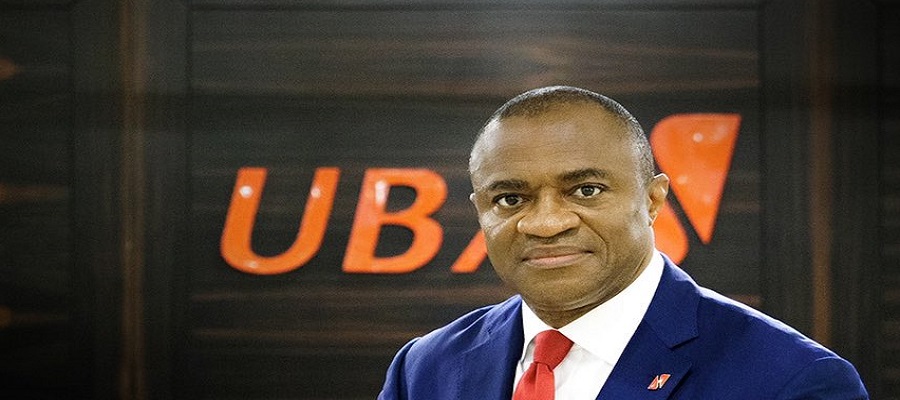
United Bank for Africa (UBA) Plc has launched a new Aggregator Sales Structure for its RedPay POS and Agency Banking Network, as part of efforts targeted towards the advancement of its mission to deepen relationship with its network and most importantly, expand financial inclusion across Nigeria.

Oliver Alawuba. Group Managing Director/CEO, UBA
The newly launched multi benefit structure which offers partners a comprehensive value proposition, was unveiled at the inaugural UBA Aggregator Engagement Session, held at the Bank’s Head Office in Lagos on Tuesday.
The session themed, “POS-itive Impact: Connecting Agents, Merchants, and Customers,” served as a collaborative platform to align strategies for scaling the UBAMONI Agency Banking ecosystem and bringing together key industry aggregators, Point-of-Sale (POS) partners, and network managers,
Emmanuel Lamptey, executive director Designate, Digital Banking, who spoke at the event, emphasised the critical role partnerships play in achieving national financial inclusion objectives.
“Today’s session marks a pivotal step in our collective journey to democratise financial access in Nigeria. By bringing together our valued aggregators and partners, we are strengthening the ecosystem that connects UBA directly to communities and ensuring that reliable financial services is within everyone’s reach,” he stated.
Emphasising the need for partnerships, Shamsideen Fashola, head, Digital Banking, UBA, who presented the keynote address, outlined the strategic imperative behind the new structure.
“Our aggregators are fundamental to realising our ambition of building Africa’s most impactful digital collections network. This structured framework is designed to be scalable, transparent, and mutually rewarding, empowering our partners with the technology and support needed to drive agent productivity as well as serve under-served communities effectively,” Fashola noted.
The platform delivers comprehensive value to agents and aggregators alike, featuring instant settlement, reliable transaction processing, real-time dashboard reporting, and a full suite of services including dispute and terminal management, analytics, card withdrawals, bill payments, and pay-with-transfer.
For aggregators specifically, the model provides a structured opportunity to on board and manage agents within UBA’s network…
access attractive incentives and commissions, as well as leverage a dedicated Aggregator Admin Portal for real-time visibility into agent performance and transactions
Adetunji Iyiola, head, Agency Banking, UBA, who noted the customer-centric focus of the initiative, emphasized that the structure fundamentally strengthens the collaboration between UBA, merchants, and agent
“This rollout is about creating superior value for every stakeholder, and enabling better service delivery to customers while ensuring our partners have the tools and incentives to thrive. It reinforces our promise to deliver essential banking services exactly where they are needed most”. he said.
With the introduction of the aggregator framework, UBA further cements its leadership in pioneering innovative digital financial solutions that bridge the inclusion gap and drive economic empowerment across the African continent.
United Bank for Africa is one of the largest employers in the financial sector on the African continent, with 25,000 employees group-wide and serving over 45 million customers globally.
Operating in twenty African countries, the United Kingdom, the United States of America, France and the United Arab Emirates, UBA provides retail, commercial and institutional banking services, leading financial inclusion and implementing cutting-edge technology.

Identy.io Targets Nigeria, Kenya in Its Africa Expansion Strategy

NDIC Moves to Boost Customers’ Confidence in Nigerian Banks

Adedeji, NRS Boss says Technology is Crucial to Tax Reform’s Success

Kaspersky Reports 15% Growth in Malicious email Attacks in 2025

Billions in Nigeria’s Reserves, But Where is the Growth?
Firm Detected a Fivefold Surge in QR Code Phishing Attacks in the Second Half of 2025

Nigeria Targeted with 4,622 Cyber-attacks Per Week in December 2025

Firm Detected a Scam Exploiting OpenAI’s Teamwork Features
Nigeria’s 9 Top FinTech Firms Valued at $10.6Bn in January 2026

DG NCC Tasks University Dons on Research Commercialization, IP Management to Build Global Competitive Ecosystems




 Telecom2 days ago
Inside Nigeria’s Telecom Exploitation Crisis Draining Household Budgets

 News2 days ago
NITDA Supports CAC AI Driven Transformation

 Telecom2 days ago
Sophos Expands AI Capabilities with Arco Cyber Acquisition

 News2 days ago
CAC Pushes Single National Register to Curb Corruption Loopholes

 News2 days ago
U.S. Slams Nigerians: Overstays Jeopardize All Visas

 News2 days ago
NAFDAC Seizes N3Bn Fake Malaria Drugs, Cosmetics in Lagos Raid

 E-Business2 days ago
Kaspersky Gives Advice on How to Make AI for Children Safer @ Safer Internet Day
 E-Financial1 day ago
NDIC Intensifies Failed Banks Debt Recovery to Accelerate Depositors Payout