

News
UNICEF, Philips Foundation Launch Newborn Health Innovations Project


UNICEF and The Philips Foundation, together with Concern Worldwide, Maker and Gearbox, have launched the Maternal and Newborn Health Innovations Project, to help save lives and improve the health of pregnant women and children in Kenya.
Under the leadership of the Government of Kenya and the Project’s Steering Committee at the Ministry of Health, UNICEF and The Philips Foundation will facilitate the development of innovative health technology and solutions in the field of maternal, newborn and child health.
This cooperation will help catalyse novel health interventions for the benefit of the most vulnerable mothers and children, and contribute to reducing the number of deaths of pregnant women and their newborn babies.
This investment is in keeping with the Government of Kenya’s commitment to investing in innovative, home-grown solutions for maternal and newborn health care.
In developing countries such as Kenya, maternal, newborn and child mortality rates remain unacceptably high.
Kenya has reduced under-five child deaths per 1,000 lives from 90 in 2003 to 52 in 2014, but this still falls short of the Millennium Development Goal 4 target of 33 by the end of 2015.
Neonatal mortality is also too high at 22 deaths per 1,000 live births. One significant cause of these deaths is the lack of medical equipment and technology to support even the most basic interventions for pregnant women and their newborns, especially in remote areas where health care workers lack essential medical resources.
By 2018, UNICEF and The Philips Foundation, together with partner organizations and local innovation hubs with guidance from the Government of Kenya, aim to develop and scale up innovative, low-cost and locally designed health care devices.
These will contribute to improved and more equitable access to life-saving quality care for women and children across Kenya.
“For 1 million babies worldwide every year, their day of birth is also their day of death,” said Sharad Sapra, UNICEF Director of the UNICEF Global Innovation Centre. “But with strengthened health systems and innovative solutions for both mothers and children, the chance for survival is greatly increased.”
The Maternal and Newborn Health Innovations Project is financed by The Philips Foundation and uses the local expertise of Philips Research Africa in Nairobi to mentor social entrepreneurs and facilitate the transfer of health care technology know-how in Kenya.
“At The Philips Foundation, it is our belief that programmes that combine innovation, partnerships and empowering people will make a lasting and meaningful difference in communities,” said Katy Hartley, Head of The Philips Foundation. “In the case of the Maternal and Newborn Health Innovations Project, we are doing just that, as Royal Philips can offer expertise and support from its Philips Research Africa, together with UNICEF and our implementation partners, to enable social entrepreneurs to improve health outcomes for their own communities.”
“Royal Philips and The Philips Foundation share the same mission and vision: we want to improve people’s lives and we strive to make the world healthier and more sustainable through innovation,” Hartley concluded. “The Maternal and Newborn Health Innovations Project, with its focus on strengthening local health care systems, is a clear illustration for us of how private sector companies, together with governments and NGOs, can drive the implementation of the Sustainable Development Goals, especially the aim of Goal 3 to ensure healthy lives and promote well-being for all at all ages.”
The project was launched ahead of the September 25-27 United Nations Summit for the Adoption of the Post-2015 Development Agenda, where UNICEF is promoting greater involvement of the private sector in improving children’s lives.
The Millennium Development Goals expire at the end of 2015 and are being replaced by the Sustainable Development Goals (SDGs) that represent a new set of targets for international development.
The Philips Foundation and UNICEF will promote innovation and technology as a key strategy to realize the new SDGs and improve the lives of women and children where most needed.
With the global presence of both organizations, worldwide engagement and scale is at the centre of the partnership.


The United States Department of Homeland Security (DHS) on Monday, said that it will deport no fewer than 79 convicted Nigerians listed on its ‘worst-of-the-worst’ criminal list.

President Trump
According to the DHS website, 79 Nigerians were convicted of offences bordering on fraud, drug peddling, assault, manslaughter and robbery, among others.
An accompanying note showed that the convicts were arrested as part of the United States’ crackdown on criminal immigrants.
The note read, “The U.S. Department of Homeland Security is highlighting the worst of the worst criminal aliens arrested by the U.S. Immigration and Customs Enforcement.
“Under Secretary Noem’s leadership, the hardworking men and women of DHS and ICE are fulfilling President Trump’s promise and carrying out mass deportations, starting with the worst of the worst, including the illegal aliens you see here.”
The list showed that the convicted Nigerians include Boluwaji Akingunsoye, Ejike Asiegbunam, Emmanuel Mayegun Adeola, Bamidele Bolatiwa, Ifeanyi Nwaozomudoh, Aderemi Akefe, Solomon Wilfred, Chibundu Anuebunwa, Joshua Ineh, Usman Momoh, Oluwole Odunowo, Bolarinwa Salau, and Oriyomi Aloba.
Others are Oludayo Adeagbo, Olaniyi Akintuyi, Talatu Dada, Olatunde Oladinni, Jelili Qudus, Abayomi Daramola, Toluwani Adebakin, Olamide Jolayemi, Isaiah Okere, Benji Macaulay and Joseph Ogbara.
Also listed are Olusegun Martins, Kingsley Ariegwe, Olugbenga Abass, Oyewole Balogun, Adeyinka Ademokunla, Christian Ogunghide, Christopher Ojuma, Olamide Adedipe, Patrick Onogwu, Olajide Olateru-Olagbegi, and Omotayo Akinto.
Others include Kenneth Unanka, Jeremiah Ehis, Oluwafemi Orimolade, Ayibatonyе Bienzigha, Uche Diuno, Akinwale Adaramaja, Boluwatife Afolabi, Chinonso Ochie, Olayinka A. Jones, Theophilus Anwana, Aishatu Umaru, and Henry Idiagbonya.
Further names on the list are Okechukwu Okoronkwo, Daro Kosin, Sakiru Ambali, Kamaludeen Giwa, Cyril Odogwu, Ifeanyi Echigeme, Kingsley Ibhadore, Suraj Tairu, Peter Equere, Dasola Abdulraheem, Adewale Aladekoba, and Akeem Adeleke.
Also included are Bernard Ogie Oretekor, Abiemwense Obanor, Olufemi Olufisayo Olutiola, Chukwuemeka Okorie, Abimbola Esan, Elizabeth Miller, Chima Orji, Adetunji Olofinlade, Abdul Akinsanya, Elizabeth Adeshewo, Dennis Ofuoma, and Boluwaji Akingunsoye.
Others are Quazeem Adeyinka, Ifeanyi Okoro, Oluwaseun Kassim, Olumide Bankole Morakinyo, Abraham Ola Osoko, Oluchi Jennifer and Chibuzo Nwaonu.
Trump’s administration has continued to crackdown on criminal and illegal immigrants across the US with many Nigerians in the country affected by the policy.

Interview
How did your 26+ years across multiple sectors shape your position on AI Governance and Enterprise Risk Authority
My positioning was shaped by working in sectors where failure has immediate, visible consequences — telecommunications outages that disrupt national connectivity, banking system failures that freeze customer access to funds, construction and manufacturing breakdowns that compromise safety and delivery timelines, government systems that affect citizens’ rights, and healthcare platforms where errors can affect human life.

Across these sectors, I observed a consistent pattern: when systems fail, the public does not ask which technology failed — they ask who was responsible. That reality forced me to think beyond delivery and into governance, accountability, and decision ownership.
For instance, a nationwide network upgrade improves capacity but introduces intermittent service disruptions. Engineers troubleshoot, but regulators, customers, and the media want to know: Who approved the change? What safeguards were in place? Why was the impact not anticipated? That moment is not technical — it is governance. Over time, these experiences shaped a governance-first approach: technology must serve institutions, and institutions must remain accountable for outcomes.
What are the key roles AI play in reshaping organisational decisions?
AI is reshaping organisational decision-making not by replacing leadership, but by changing the quality, speed, and defensibility of decisions. In Nigeria’s operating environment—characterised by market volatility, infrastructure constraints, regulatory scrutiny, and fraud risk—AI plays five critical roles. Signal extraction from complexity.
Most organisations already have data; the problem is meaning, not volume. AI identifies patterns, correlations, and anomalies across transactions, networks, operations, and customer behaviour that humans cannot see at scale. Early warning and predictive insight AI shifts decision-making from reactive to anticipatory—forecasting failures, fraud surges, demand shocks, or operational stress before they crystallise into losses.
Decision consistency at scale, AI enables repeatable decision logic in high-volume environments (transactions, alerts, service incidents), reducing arbitrary or emotionally driven actions. Trade-off visibility good decisions are not about “best answers” but explicit trade-offs—speed vs control, growth vs risk, automation vs fairness. AI helps model options, but humans must decide which trade-off to accept.
Evidence creation for accountability as scrutiny increases, organisations must prove why a decision was taken. AI-assisted decisions require governance—clear records of data used, assumptions accepted, and human approval.
Let’s look at the critical roles AI plays in different sectors of our economic endeavours. In the telecom space AI analyses network telemetry and predicts congestion risk before public holidays; executives approve pre-emptive capacity reallocation, avoiding mass service complaints.
AI flags repeated micro-failures across base stations linked to power instability; maintenance is scheduled before a nationwide outage occurs.
In the Banking and Financial Services AI detects early fraud patterns across mobile transfers before losses spike; management escalates thresholds with documented approval AI identifies abnormal transaction velocity tied to mule accounts; human investigators intervene selectively, reducing false positives.
In manufacturing AI predicts bearing failure on critical equipment, preventing unplanned downtime that could halt production for days. AI spots rising defect patterns early in a batch process, allowing corrective action before large-scale scrap occurs.
In the Construction, AI detects schedule slippage patterns across subcontractors; project leadership intervenes before cost overruns compound.AI flags safety-risk indicators (weather, fatigue, workforce changes), prompting preventive safety controls.
In Healthcare AI predicts patient deterioration risks; clinicians intervene earlier, improving outcomes without surrendering clinical authority. AI highlights medication error risk patterns, triggering process reviews. In Government procurements, AI identifies procurement bid-rigging signals; officials initiate investigations with documented decision trails AI forecasts service delivery bottlenecks ahead of elections, allowing proactive planning.
How does AI Influence Governance, Especially at board level?
AI fundamentally alters governance because it introduces scalable decision influence. A single algorithmic change can affect millions of customers or citizens instantly. This elevates AI from an IT issue to a board-level governance issue.
Boards must govern AI across four dimensions: Accountability AI cannot be accountable. Boards must ensure named executives remain responsible for decisions influenced by AI. Auditability, boards must demand traceability: what data informed the recommendation, what assumptions were accepted, and who approved the final decision.
Risk oversight AI introduces new risks model drift, bias, cyber manipulation, data integrity failures. These are enterprise risks, not technical issues. Decision rights Boards must define thresholds—what AI can assist operationally, what requires executive sign-off, and what requires board visibility. Real-world governance lessons.
Globally, multiple public-sector AI systems have been suspended or challenged because automated decisions lacked transparency and human oversight. These cases demonstrate that ungoverned AI erodes trust faster than it creates efficiency.
For instance, in the telecoms sector the board requires executive sign-off for AI-recommended nationwide parameter changes.AI optimisation proposals are reviewed against customer-impact risk thresholds. In banking Board mandates that AI-flagged account freezes above a threshold require senior approval.AI credit decisions must produce explainable outputs for audit. Manufacturing the board oversees AI-driven quality controls affecting regulatory compliance. AI-recommended supplier changes are reviewed for ESG risk.
In Construction AI cost-forecasting models are governed under capital-approval frameworks. Safety-risk AI outputs trigger mandatory management escalation. In the Healthcare sector one of the most sensitive sector, globally its considered the wealth of every nation The board ensures AI diagnostic support tools are advisory only. Audit committees review AI-assisted clinical incidents. The government must take an AI welfare screening decisions that will have appeal mechanisms. Set up policy committees oversee to AI-based citizen risk scoring.
With the current high rate of financial crimes in Nigeria, how can AI help mitigate this trend?
Nigeria’s financial crime challenge is structural and systemic. Reports show fraud losses exceeding ₦13 billion annually, with cybercrime costing the economy hundreds of billions of naira over time. AI is essential—but only if governed properly.
How AI helps (when governed) Advanced pattern detection – AI identifies fraud patterns humans miss: mule networks, synthetic identities, insider-enabled schemes. Real-time intervention – Transactions are assessed in milliseconds, reducing loss windows. Alert prioritisation – AI reduces false positives, allowing teams to focus on high-risk cases.
Regulatory defensibility Documented AI-assisted decisions protect institutions during audits and investigations. One of the key factors is ignoring the key governance warning, many fraud losses occur not because AI failed—but because alerts were ignored, thresholds overridden, or accountability was unclear.
For instance, lets situate them sectorally: Banking, AI detects coordinated mule activity; bank escalates under a documented fraud-decision framework.
AI identifies abnormal FX transaction behaviour; senior risk officers approve intervention. Telecoms, AI flags SIM-swap patterns linked to fraud rings; telco collaborates with banks and law enforcement. AI predicts SMS-based phishing surges; preventative customer warnings are issued. E-commerce, AI detects account-takeover attempts during sales campaigns. AI blocks coordinated refund abuse with human review. In government AI flags revenue leakage patterns; audit teams investigate AI identifies abnormal benefit claims linked to organised fraud.
How can AI help in swift profiling of online transactions to stop fraudulent e-business activity?
AI enables real-time, risk-based decisioning, replacing static rules that criminals easily bypass. for instance core capabilities, behavioural profiling (how users act, not just who they claim to be) Device and network fingerprinting, transaction velocity analysis Fraud-ring detection via network analysis.
Critical governance point, automated blocking without explanation creates legal and reputational risk. AI must support escalation and review, not silent exclusion. In Banking and Fintech AI blocks suspicious transfers’ mid-flow pending review.AI scores merchant risk dynamically during on boarding. In retail and e-commerce ,AI detects bot-driven checkout abuse. AI flags chargeback-prone customers. In government portals, AI identifies abnormal tax filing behaviour.AI detects fake service-access patterns.
In the telecoms space, how can AI help troubleshoot network problems before they occur?
Telecom networks generate vast operational data. AI converts this into predictive resilience. key applications, predictive maintenance – Identifying equipment failure risks early. Anomaly detection – Spotting unusual traffic, latency, or signalling behaviour. Root-cause acceleration – Correlating faults across network layers. Customer-impact forecasting – Prioritising fixes based on service exposures.
Studies in network operations show predictive maintenance can reduce downtime by 30–50% and cut operational costs significantly. For instance, in Telecoms operation AI predicts power-related base-station failures ahead of storms.AI forecasts congestion from major events and recommends pre-emptive optimisation. Emergency services AI ensures network resilience for emergency communications.AI prioritises infrastructure protection during national events.
Why do AI and digital transformation failures in Nigeria usually reflect governance breakdowns rather than technology limitations?
Because Nigerian organisations operate in high-pressure environments — unstable infrastructure, evolving regulation, security risks, and intense competition — governance must be stronger, not weaker. Failures typically arise from: unclear accountability, weak oversight, no assurance testing, no escalation triggers, poor documentation.
For example, a digital identity or benefits platform automates approvals. Citizens are denied services without explanation. Public backlash follows. The issue is not software accuracy — it is the absence of: appeal mechanisms, accountable owners, audit trails, governance oversight. Technology executes decisions; governance determines whether those decisions are defensible.
What delivery mistakes do Nigerian executives repeatedly underestimate when deploying AI and digital systems?
Common mistakes across sectors include: Poor data governance, Over-reliance on vendors, Lack of operational readiness, No monitoring for drift, Weak cybersecurity integration. For instance a construction firm deploys digital project controls and automation. Data is inconsistent across sites, leading to wrong forecasts and delays. The issue isn’t the software — it’s lack of governance over data quality, accountability, and change control. Delivery succeeds only when governance supports execution.
What risks arise when AI systems are outsourced or imported into Nigeria?
These risks are imminent, because our Nigeria environmental and behavioural realities were not considered, these are the key risks, opaque decision logic, data sovereignty issues, cultural and contextual bias, delayed incident response, accountability gaps. For example, a fintech imports a foreign AI credit model. It performs poorly on local customer profiles, excluding legitimate borrowers. When challenged, the firm cannot explain decisions. Regulators hold the institution accountable — not the vendor. Because outsourcing does not outsource responsibility.
How will your doctoral research areas inform governance of real-time AI decisions?
My work emphasizes that systems operating in real time must be governed for: robustness under stress, adaptability without losing control, accountability for outcomes, auditability after the fact. For instance, in Healthcare and Banking sector. An AI blocks transactions or prioritises patients automatically. Governance must define: acceptable error thresholds, escalation rules, remediation timelines, evidence retention. This is how research becomes governance capability.
What must Nigerian boards and executives do now to ensure AI strengthens long-term value?
Three actions: Establish board-level AI governance. Integrate AI into enterprise risk management. Make defensibility a condition for scale. For example; let’s take Manufacturing versus Banking: Two firms deploy AI. One prioritises speed and cost only; it faces public backlash and regulatory scrutiny. The other builds governance, assurance, and accountability; it earns trust and long-term advantage. In Nigeria, sustainable value belongs to institutions that govern AI as a fiduciary responsibility, not as a technical project.
How will your multi-AI agent systems help act as a “Digital Sentry” against cyber telecom threats and attackers?
A modern telecom environment is one of the most attacked ecosystems in any country because it sits at the centre of identity, payments, communications, critical infrastructure, and national security. Attackers target telcos for mass data exposure, SIM-swap enablement, signalling abuse, DDoS, ransomware, supply-chain compromise, and insider misuse. The role of a multi-AI agent system is not to “chase criminals online,” but to operate as a continuous, coordinated defence layer that: Detects weak signals early (before incidents become outages or breaches, Correlates across silos (network + IT + apps + identity + fraud + SOC)Automates triage and containment (SOAR actions with human approval gates)Produces an audit-ready decision trail (defensible to regulators, auditors, and boards)Continuously learns (model drift monitoring + controlled updates)Why this is urgent (telecom threat reality)Industry reporting highlights that DDoS and ransomware remain among the most reported/high-impact forms of attack affecting telecom and critical infrastructure. GSMA+1 GSMA’s Mobile Telecommunications Security Landscape reports recurring telecom threats tracked across the sector and emphasises the industry’s need for stronger security posture and governance. GSMA+1 Telecom breaches and cyber incidents have continued to surface globally; in Africa, for example, major South African telecom incidents have involved alleged data exposure/leakage.
The Record from Recorded Future. What the multi-agent system actually does (in plain terms) Think of it as specialised AI agents working like a disciplined security team: Threat Signal Collector, Pulls signals from: SIEM logs, firewall/IDS, endpoint telecom network telemetry (RAN/core/performance)IAM events, privileged access fraud systems (SIM swap indicators, unusual KYC changes)OSINT/dark web mentions (brand/domain impersonation) Correlation & Pattern Agent, Links “small” indicators into one story: suspicious logins + config changes + abnormal traffic spikes, SIM swap activity + unusual mobile money transfers + device fingerprint mismatch repeated failed auth + new admin account + sudden outbound data flows and many more that will be too technical for our readers. But your system must operate under these rules: Purpose limitation: defend systems, not “hunt people.” Human accountability: high-impact actions require named approval. Auditability: every recommendation/action is logged with rationale. Privacy controls: minimisation, retention limits, role-based access. Model governance: drift monitoring, controlled updates, periodic review.
Practical KPIs for robust, adaptable and resilient AI system: Mean Time to Detect (MTTD), Mean Time to Respond (MTTR),% incidents auto-triaged vs escalated. False positive reduction rate Availability protected (minutes of downtime avoided) Fraud-loss reduction attributable to early containment Compliance readiness score (completeness of decision dossiers
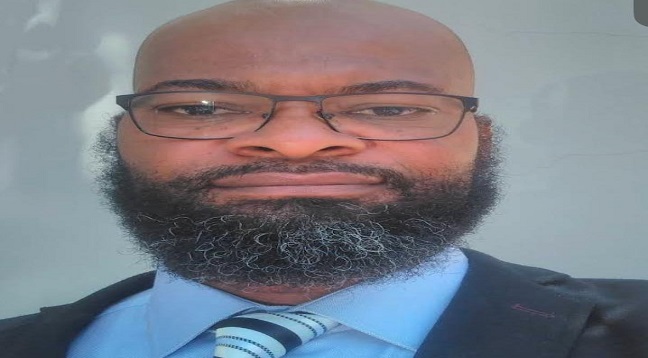
Dr. Henry Naiho, a Doctor of Philosophy (PhD) in Data & Cybersecurity, Doctor of Business Administration (DBA) in Executive Leadership and global certified Artificial Intelligence Scientist is an authority in AI Governance and Enterprise Risk with over 26 years of executive and advisory experience spanning telecommunications, enterprise systems, cybersecurity, and large-scale digital transformation across Africa and global markets. He works with boards of directors, executive leadership, and regulators at moments when decisions carry strategic, regulatory, and reputational consequences, helping institutions govern AI and complex digital systems with clear accountability, and defensible oversight.

The Wife of the President, Senator Oluremi Tinubu, has commissioned the Senator Oluremi Tinubu Dream Centre at Obafemi Awolowo University, IleIfe, where she was joined by the Ooni of Ife, Oba Enitan Adeyeye Ogunwusi, wives of the some states’ governors, the Director General, National Information Technology Development Agency, NITDA, Kashifu Inuwa, CCIE, the University Vice Chancellor, Prof Professor Adebayo Simeon Bamire, royal fathers, university officials and students to inaugurate a facility created to inspire young people to pursue their dreams with purpose and patience.

The event, held at the university campus, marked the formal handing over of the centre designed to motivate students through storytelling, mentorship and reflection, capturing why it was built, who it was built for, and how it is expected to influence students’ development.
The First Lady expressed delight that her life story shaped by faith, service and determination had been preserved within a space intentionally created to strengthen the confidence of young Nigerians.
She noted that the centre was established to remind students not to covet the dreams of others but to walk patiently with their own, affirming that the journey toward achievement requires discipline and consistency.
Senator Tinubu, warmly received by students, emphasized that the Dream Centre was created for both boys and girls, reflecting her belief that every young person deserves equal encouragement to aspire and grow.
She explained that the centre houses inspirational books, including her fourpart work titled The Journey of Grace, written to show how God’s guidance shaped her path and to offer students a resource for motivation and direction.
The First Lady further recalled that she had originally proposed a modest pavilion but later renamed and expanded the vision into the Dream Centre because she wanted something that would outlive her and serve as a lasting legacy for students.
She expressed joy that the centre had finally become a reality, especially in a university known for producing influential personalities across the nation.
In his remarks, the Ooni of Ife recalled the history of the project, explaining that the idea originated in 2019 when he approached the then Vice Chancellor, Professor Ogumbore, and Dr. Akio Adijuwa, to request a space within the university to honour Senator Tinubu. He noted that the university senate initially resisted the proposal due to its tradition of reserving such recognition for the institution’s founding fathers.
The monarch explained that after long deliberations, approval was eventually granted for a three kilometre road to be named Senator Oluremi Tinubu Way, marking a significant breakthrough that set the stage for the Dream Centre.
According to him, the project, however, experienced delays during the COVID19 pandemic in 2020 before being revived when Senator Tinubu became First Lady—a development he described as divine timing.
He praised “Mama,” as he fondly called her, describing her as a woman whose endeavours flourish and whose service to the nation continues to inspire.
He said, “the Dream Centre was not built for girls alone but for all students,” reiterating the importance of equal opportunity and shared access to mentorship.
While expressing satisfaction that the project had finally come to fruition despite earlier resistance, the monarch noted that the Dream Centre symbolises “perseverance, recognition and collective commitment to supporting young Nigerians.”
Also in his remarks, the NITDA Director General, Inuwa, noted that the Dream Centre serves as a place where storytelling, learning and reflection can come together to help students understand the value of resilience, leadership and vision.
He emphasised that the centre allows young people to engage with Senator Tinubu’s life story in a structured environment designed to motivate them and reinforce the belief that dreams can be achieved through steady effort.
Inuwa highlighted the importance of providing young people with spaces that encourage them to visualise their goals clearly and to grow through guidance grounded in real-life experiences.
He described the Dream Centre as a “space where students can explore narratives that challenge them to develop patience, strength and confidence in their capabilities”.
The Vice Chancellor, in his welcome address described the commissioning as a milestone for the institution, noting that the Dream Centre stands beside the hostel as a space dedicated to inspiring students to dream higher and achieve excellence.
He said, “this centre is part of broader interventions that support academic and community life on campus”.
According to him, the centre would continue to serve as a source of motivation, creativity and mentorship for students, ensuring that the life and story of Senator Oluremi Tinubu remain accessible for generations. He added that the project aligns with the university’s commitment to nurturing leaders, innovators and dreamers whose aspirations can shape the nation.
He noted that the Dream Centre was designed to help students embrace storytelling as a tool for inspiration, reminding them that progress often requires resilience and a willingness to learn from those who have walked the path before.
He further added that the centre’s establishment reflects the university’s dedication to providing students with resources that strengthen their academic, moral and emotional growth, describing the centre as a “gift for the future—a place where dreams can take shape”.
The Oluremi Tinubu Dream Centre building was conceptualised and donated to the University by Ooni of Ife while NITDA supplied the ITenabled devices used in the facility, demonstrating the combined commitment that brought the centre to life.
As the event climaxed, the crop of various stakeholders were led to tour the facility, exploring the materials available and reflecting on the messages shared during the commissioning. Their excitement reflected the belief that the Dream Centre had arrived at a critical moment in their academic journey.
Guests were left with the impression that the Senator Oluremi Tinubu Dream Centre would remain an enduring reminder that dreams become possible when commitment meets opportunity, and when institutions invest in the minds and aspirations of young people.
The commissioning ended with the shared conviction that the centre represents not just a structure, but a vision realised—one that will influence how students think, grow and pursue excellence for years to come.

Accidental Billionaire Opts for Jail Instead of Returning Money Credited Him by Mistake

US Set to Deport 79 Nigerians on Criminal List

SEC Warns of Potential Ponzi-style Risks in AURUM BOT, ModMount

Airtel Nigeria Commits to Boosting Nigeria’s Digital Infrastructure

Ungoverned AI is Quietly Scaling Risk in Nigeria – Dr. Naiho

19 Nigerian Banks Meet CBN Recapitalization Targets Ahead of March Deadline

Youth Talent Takes Center Stage as T2 Ignites High-Octane Rap Battles @ Carnival Calabar

Aig-Imoukhuede Foundation Wrapped Up 2025 with Real Change in Governance, Health, Media Across Africa

Showmax Unlocks Easier Payments for Nigerian Subscribers via Baxi

Nigerian Terra Industries Secures $11.8m for Expansion




 Telecom2 days ago
Telecom Operators Invest Over $1Bn on 2,850 New Sites in 2025 – NCC

 E-Financial2 days ago
If Capital is the Answer, What Exactly is the Problem with First Holdco

 E-Financial2 days ago
Amaanah Finance to Unveils Non-Interest Banking Services Today

 General News2 days ago
First Trustees to Host 8th Islamic Estate Planning Clinic in Abuja

 News2 days ago
NSCDC Hands over Fake Crypto Currency Trader to EFCC

 News2 days ago
Alakija’s Flourish Africa Provides N300m Grants for Women Entrepreneurs

 General News2 days ago
Security Forces Probe Use of Drones by Terrorists

 Broadcasting2 days ago
New Horizons Nigeria Breaks Ground: First to Fuse Mandarin into ICT Curriculum