

E-Business
UNN Adopts eBoards for Teaching

Nsukka, August 2, 2010: Electronic boards are set to replace the traditional blackboards in classrooms and laboratories at the University of Nigeria, as the institution prepares for full implementation of its information and communication technology infrastructure.
Prof Bartho Okolo, UNN vice chancellor who disclosed at a press conference to herald the 39th Convocation of the institution said the institution has already commenced the shift by training staff on the new equipment and processes. According to him, “Hitachi has completed training in the University on the use of E-boards such as smart white boards for electronic-teaching and student learning in our classrooms and teaching laboratories. In addition, Google Inc has finalized plans to train 2000 faculty and academic leadership on using Google applications and Module to enhance administrative efficiency, teaching, learning and research”.
Okolo said UNN was developing “productive collaborations” with various organisations, institutions and corporate bodies in pursuit of the vision of restructuring the school and turning it into a global centre of learning. Notable recent successes include construction of a wireless network infrastructure project to deliver 50mbps of lnternet bandwidth by a consortium led by Google Inc at a cost of about N3b; commitment to the construction and equipping of a Centre for Environmental Management and Control by The Shell Petroleum Development Company and admission of UNN into the New York Academy of Sciences.
Prof Okolo stated, “I want to assure you that the University of Nigeria will in the next few years be transformed to what is obtainable in the best universities in Europe and North America. My leadership team is dedicated to the vision of a 21st century learning institution and we are determined to demonstrate that Africa can house one of the best universities in the world.”
UNN will confer first, higher and honorary degrees to 6, 673 persons at the 39th Convocation of the University on Friday August 6 and Saturday August 7. The Vice Chancellor was excited at the increased production of doctorate degree holders, as the number of Ph.D graduands increased to 167 from the 127 of last year. The University will issue first degrees to 5,204 persons and higher degrees to 1,469 recipients.
Governor Godswill Akpabio of Akwa Ibom State and Ahaji Mohammed Danjuma Goje of Gombe State will get honorary degrees of the institution.
Prof. Dora Akunyili, Information and Culture minister, herself an alumnus, headlined a key activity as she delivered the convocation lecture on the topic “Rebranding Nigerian Universities” last week


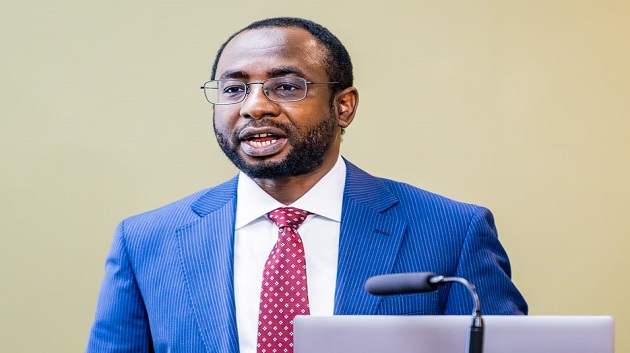
The Federal Government of Nigeria has reaffirmed its commitment to building a responsible, inclusive, and sovereign artificial intelligence ecosystem to enable Nigeria to transition from being a passive consumer of AI technologies to an architect and builder of indigenous AI systems.

This was said by the Director General of the National Information Technology Development Agency (NITDA), Kashifu Inuwa Abdullahi CCIE, while delivering a virtual address at the InnovateAI Conference held in Lagos.
The conference brought together policymakers, technology leaders, innovators, and stakeholders to discuss the future of artificial intelligence and its role in driving Nigeria’s digital economy and national development agenda.
Inuwa outlined Nigeria’s ambition to transition from being a consumer of artificial intelligence technologies to becoming a builder and owner of AI systems that reflect national values and priorities, in line with the National AI Strategy.
“Our goal is not just to use AI, but to architect and build our own AI systems in Nigeria,” he said, stressing that the country must take ownership of its AI future.
He noted that Nigeria’s approach to artificial intelligence extends beyond innovation to include governance, infrastructure, data sovereignty, and policy evolution.
According to him, “Responsible AI is never a finished job; it is an iterative journey. Our policies must evolve as the technology evolves, and we must avoid frozen laws by adopting living policies that adapt over time.”
He cited the implementation of the Digital Economy and E-Governance Bill as a key mechanism for generating insights that will help refine AI regulations and governance frameworks.
Inuwa also highlighted the challenge of data representation in global AI systems, noting that most models are trained on non-African datasets, which often results in bias against local dialects, cultures, and demographics.
“If a model shows bias against a local dialect or demographic, we cannot just patch it. We must reinvest in infrastructure to retrain it with inclusive and representative local datasets,” he stated.
He added that building national AI infrastructure is critical to achieving data sovereignty and ensuring that Nigeria is not merely an end user of foreign AI systems.
He further called for strategic partnerships with global technology companies and hyperscalers to build AI infrastructure in Nigeria while aligning with local values and national priorities.
“The world today is a global village. We need to work with global players, but they must understand our local nuances and help us build the infrastructure to retrain and develop AI models that reflect our context,” he said.
The NITDA Director General explained that adopting a comprehensive AI lifecycle approach, from responsible data collection and governance to deployment and continuous feedback, will enable Nigeria to move from reacting to AI developments to proactively designing indigenous AI systems.
“Without understanding how AI models are trained, how decisions are made, and how models are retrained, it will be difficult to build a responsible and trustworthy AI system,” he warned.
He reaffirmed that the Federal Government is intentional about promoting responsible AI and is working closely with the technology ecosystem to co-design national AI guardrails. He described platforms such as the InnovateAI Conference and other national AI dialogues as critical to shaping Nigeria’s AI future.


Mutual Benefits Assurance, a leading Nigerian insurance company, has paid a total of ₦5,937,665,353.57 in claims to policyholders in January 2026 alone, underlining its strong financial capacity and unwavering commitment to prompt claims settlement.

Mutual Benefits Assurance
A breakdown of the figures shows that ₦3,426,602,834.28 was paid under its General (Non-Life) Insurance portfolio, while ₦2,511,062,519.29 was paid across its Life businesses, including Group Life and Retail Life policies.
The significant payout within a single month reinforces Mutual Benefits’ reputation as a dependable insurer that honors its obligations swiftly and responsibly.
Commenting on the development, Olufemi Asenuga, Managing Director, Mutual Benefits Assurance Plc stated that claims settlement remains the core promise of insurance and the ultimate test of an insurer’s credibility.
“Insurance is built on trust. Our ability to settle over ₦5.9 billion in claims in one month demonstrates not only our financial strength, but also our deep commitment to our policyholders. At Mutual Benefits, we do not just sell policies. We stand by our promises,” he said.
With over three decades of operations, Mutual Benefits has consistently positioned itself as a strong and well-capitalised insurer.
The company operates both Life and General Insurance businesses and remains fully compliant with regulatory capital requirements as stipulated by the National Insurance Commission (NAICOM).
The January payout reflects Mutual Benefit’s robust underwriting standards, prudent risk management practices and efficient claims administration framework.
It also aligns with the company’s broader record of substantial claims settlement in recent years, reinforcing its standing as a trusted brand in the Nigerian insurance industry.
Mutual Benefits employs over 5,000 staff, managed by seasoned management team and an experienced Board of Directors. Industry observers note that prompt claims payment remains one of the most critical differentiators in Nigeria’s competitive insurance landscape.
By consistently settling valid claims without delay, Mutual Benefits continues to strengthen customer confidence, deepen market trust and expand its footprint across retail and corporate segments.
As the company begins 2026 on a strong footing, it reiterates its commitment to innovation, service excellence and delivering value to policyholders and stakeholders alike. Mutual Benefits Assurance focused on its mission to provide reliable risk protection solutions while maintaining the highest standards of professionalism and integrity.


National Information Technology Development Agency (NITDA) has issued an urgent cybersecurity warning about a serious Microsoft Office vulnerability (CVE-2026-21509) that attackers are actively exploiting.

This advisory, shared through Nigeria’s Computer Emergency Response Team (CERRT.NG), highlights the risks of this flaw and recommends immediate action to protect systems.
Microsoft has released quick security updates to fix this vulnerability, which has a severity score of 7.8, showing it is a serious risk. Attackers have already used it in targeted attacks.
CVE-2026-21509 affects multiple versions of Microsoft Office, including Office 2016, Office 2019, Microsoft 365 Apps, Office 2021, and later versions.
This flaw allows attackers to bypass security features meant to stop harmful Object Linking and Embedding (OLE) controls. OLE is an older Microsoft technology that can be used to embed links or content, but it has often been exploited by malware.
By exploiting this flaw, attackers can create specially designed Office documents.
When a user opens these documents, they can run malicious code or gain further access to the system.
Exploitation requires user interaction, meaning attackers often trick people into opening harmful Word, Excel, or other Office documents. Common methods include using email attachments or files from untrusted sources.
Because Microsoft confirmed that the vulnerability is being actively exploited, they have made emergency security updates available outside their usual schedule. Users and organisations should:
- Install the latest Microsoft Office security updates for all affected versions.
- Restart Office applications for Office 2021 and later to ensure that the updates take effect.
- Use registry-based settings for protection if updates can’t be applied right away.
- Follow good cybersecurity practices, like using endpoint protection and filtering emails.
Microsoft’s updates for Office 2021 and newer versions are automatically applied, but need a restart of the applications to be active.

ABoICT Lecture 2026 to Focus on Impact of AI, IoT on Business Operational Efficiency

Leo Stan @ 70: Blessed and Bruised by Country, Eyes Next Disruption

IXPN Positions as the Regional Internet Exchange Hub for West Africa

Pheelz Shares His Journey on Glo-Sponsored African Voices

AI-Driven Memory Chip Fuels Global Phone Price Surge
Nigeria’s 9 Top FinTech Firms Valued at $10.6Bn in January 2026

Firm Detected a Fivefold Surge in QR Code Phishing Attacks in the Second Half of 2025

Kaspersky Launches OT Calculator to Align Cybersecurity Investments with Business Goals

CBN Upgrades Licences of Opay, Moniepoint, Kuda, Palmpay, Paga to National Status

NITDA, NBC Explore Strategic Collaboration on Digital Transformation, Media Regulation




 Telecom2 days ago
Banks, Telcos Settle Four-Year Dispute over N300Bn USSD Debt

 E-Financial2 days ago
ACAMB Educates Content Creator to Curb Misinformation on Bank Recapitalisation

 General News2 days ago
PalmPay Unveils First Batch of Winners in #LoveWithPalmPay Campaign

 General News1 day ago
How JustMarkets Is Empowering African Traders with Global Market Access

 E-Financial2 days ago
FirstCap MD says Payment Security Remains Biggest Barrier to Bankable Gas and Power Projects

 Telecom1 day ago
Group Condemns Gabon’s Social Media Shutdown Amid Protests

 General News2 days ago
Court Freezes MCSN Copyright Levies amid Record Label Legal Battle

 E-Business1 day ago
Mutual Benefits Assurance Settles ₦5.9bn Claims in January 2026