

News
US Accuses Onyema, Air Peace Boss of $20m Fraud

United States Attorney’s Office for the Northern District of Georgia, said it has charged Allen Ifechukwu Athan Onyema, chairman, CEO, and founder of Air Peace, with bank fraud and money laundering for moving more than $20 million from Nigeria through United States bank accounts in a scheme involving false documents based on the purchase of airplanes.
Ejiroghene Eghagha, the airline’s chief of Administration and Finance, has also been charged with bank fraud and committing aggravated identity theft in connection with the scheme.
“Onyema allegedly leveraged his status as a prominent business leader and airline executive while using falsified documents to commit fraud,” said U.S. Attorney Byung J. “BJay” Pak.
“We will diligently protect the integrity our banking system from being corrupted by criminals, even when they disguise themselves in a cloak of international business.”
Robert J. Murphy, special agent in Charge of the DEA Atlanta Field Division commented on the indictment, “Allen Onyema’s status as a wealthy businessman turned out to be a fraud. He corrupted the U.S. banking system, but his trail of deceit and trickery came to a skidding halt. DEA would like to thank the many law enforcement partners and the subsequent prosecution by the U.S. Attorney’s Office who aided in making this investigation a success.”
“This case is a prime example of why IRS-CI seeks to partner and leverage its expertise in an effort to thwart those seeking to exploit our nation’s financial system,” said Thomas J. Holloman, IRS-Criminal Investigation Special Agent in Charge of the Atlanta Field Office.
“With the importance of our banking system to the movement of money around the world, those attempting to use intricate schemes to commit bank fraud through the use of falsified documents and other means should know that the odds are now heavily stacked against them as law enforcement is combining its talents to protect the sanctity and integrity of the nation’s financial system.”
“Onyema setup various innocent sounding multi-million dollar asset purchases which were nothing more than alleged fronts for his scam,” said acting Special Agent in Charge Robert Hammer, who oversees HSI operations in Georgia and Alabama.
“I’m proud to be part of a team of law enforcement agencies that come together to identify and attack criminals that attempt to profit from the exploitation of our nation’s financial systems.”
According to U.S. Attorney Pak, the indictment, and other information presented in court: Onyema, a Nigerian citizen and businessman, is the founder and Chairman of several organizations that purport to promote peace across Nigeria, including the Foundation for Ethnic Harmony, International Center for Non-Violence and Peace Development, and All-Time Peace Media Communications Limited.
Beginning in 2010, Onyema began travelling frequently to Atlanta, where he opened several personal and business bank accounts. Between 2010 and 2018, over $44.9 million was allegedly transferred into his Atlanta-based accounts from foreign sources.
Onyema is also the CEO and Chairman of Nigerian airline Air Peace, which he founded in 2013. In years following the founding of Air Peace, he traveled to the United States and purchased multiple airplanes for the airline.
However, over $3 million of the funds used to purchase the aircraft allegedly came from bank accounts for Foundation for Ethnic Harmony, International Center for Non-Violence and Peace Development, All-Time Peace Media Communications Limited, and Every Child Limited.
Beginning in approximately May 2016, Onyema, together with Eghagha, allegedly used a series of export letters of credit to cause banks to transfer more than $20 million into Atlanta-based bank accounts controlled by Onyema.
The letters of credit were purportedly to fund the purchase of five separate Boeing 737 passenger planes by Air Peace. The letters were supported by documents such as purchase agreements, bills of sale, and appraisals proving that Air Peace was purchasing the aircraft from Springfield Aviation Company LLC, a business registered in Georgia.
However, the supporting documents were fake — Springfield Aviation Company LLC, which is owned by Onyema and managed by a person with no connection to the aviation business, never owned the aircraft, and the company that allegedly drafted the appraisals did not exist.
Eghagha allegedly participated in this scheme as well, directing the Springfield Aviation manager to sign and send false documents to banks and even using the manager’s identity to further the fraud. After Onyema received the money in the United States, he allegedly laundered over $16 million of the proceeds of the fraud by transferring it to other accounts.
Allen Ifechukwu Athan Onyema, 56, of Lagos, Nigeria, and Ejiroghene Eghagha, 37, of Lagos, Nigeria, were indicted on November 19, 2019, on one count of conspiracy to commit bank fraud, three counts of bank fraud, one count of conspiracy to commit credit application fraud, and three counts of credit application fraud.
Additionally, Onyema was charged with 27 counts of money laundering, and Eghagha was charged with one count of aggravated identity theft.
Members of the public are reminded that the indictment only contains charges. The defendants are presumed innocent of the charges and it will be the government’s burden to prove the defendant’s guilt beyond a reasonable doubt at trial.
The Drug Enforcement Administration, Internal Revenue Service Criminal Investigation, U.S. Immigration and Customs Enforcement’s Homeland Security Investigations, Federal Aviation Administration, Department of Commerce, and Department of Treasury are investigating this case.
Assistant U.S. Attorneys Garrett L. Bradford, Deputy Chief of the Narcotics and Dangerous Drugs Section and Lead Strike Force Attorney, Irina K. Dutcher, and Christopher J. Huber, Deputy Chief of the Complex Frauds Section, are prosecuting the case, with assistance from the Department of Justice’s Money Laundering and Asset Recovery Section and Office of International Affairs.
This prosecution was brought as a part of the Department of Justice’s Organized Crime Drug Enforcement Task Forces (OCDETF) Co-located Strike Forces Initiative, which enables agents from different agencies to collaborate on intelligence-driven, multi-jurisdictional operations against a continuum of priority targets and their affiliate illicit financial networks.
These prosecutor-led co-located Strike Forces capitalize on the synergy created through the long-term relationships that can be forged by agents, analysts, and prosecutors who remain together over time, and they epitomize the model that has proven most effective in combating organized crime.
The specific mission of the Atlanta Strike Force is to disrupt and dismantle the most significant drug trafficking and money laundering organizations designated as Consolidated Priority Organization Targets or Regional Priority Organization Targets and their affiliates impacting the Atlanta metropolitan area and the Northern District of Georgia.



AfricAI and Micropolis Robotics have signed a multi-year exclusive distribution and deployment agreement, which marks one of the continent’s most significant robotics market entries.

Micropolis AI Robotics is a United Arab Emirates-based robotics manufacturer operating in autonomous systems, while AfricAI is a company building practical, revenue-driven artificial intelligence (AI) systems for African businesses, governments, and global partners operating in emerging markets.
According to the agreement, Micropolis Robotics named AfricAI as its exclusive continental partner, prohibiting direct sales, alternative distributors, and third-party agents from operating in the territory.
The partnership establishes AfricAI as the primary execution, localisation, and go-to-market platform for intelligent robotics in Africa’s industrial, security, logistics, and infrastructure sectors.
AfricAI said this exclusive mandate positions the company as the gateway for advanced autonomous systems entering African markets, ensuring regulatory compliance, local capacity building, and sovereign control over deployment frameworks.
The partnership, according to the two parties, moves beyond software- based AI into the realm of physical AI — intelligent machines capable of operating in complex, real-world African environments.
“This is not a collaboration, it is a market-shaping mandate,” said Fareed Aljawhari, CEO of Micropolis Robotics. “AfricAI now represents the exclusive gateway through which Micropolis technologies enter Africa. Their sovereign AI vision, operational reach, and regulatory fluency make them the only partner capable of executing at a continental scale.
Furthermore, the agreement enables AfricAI to integrate Micropolis’ autonomous robotics systems with AfricAI’s sovereign AI stack, resulting in AI-powered security and surveillance platforms, robotics-enabled logistics and port operations, industrial automation, smart infrastructure, and municipal robotics tailored to African operating conditions.
Initial deployments will commence in security, smart infrastructure, and logistics, with phased expansion across multiple African states as part of AfricAI’s broader continental AI, data, and intelligent infrastructure strategy.
The agreement also includes long-term performance-linked expansion rights, automatic renewals, and a defined localisation framework to support robotics deployment, workforce training, and skills transfer across Africa.
Prince Malik Ado-Ibrahim, executive chairman of AfricAI, said: “Africa does not need imported automation — it needs sovereign, context-aware intelligent systems. This exclusive mandate allows AfricAI to industrialise robotics deployment at scale while retaining control, compliance, and value creation on the continent.”

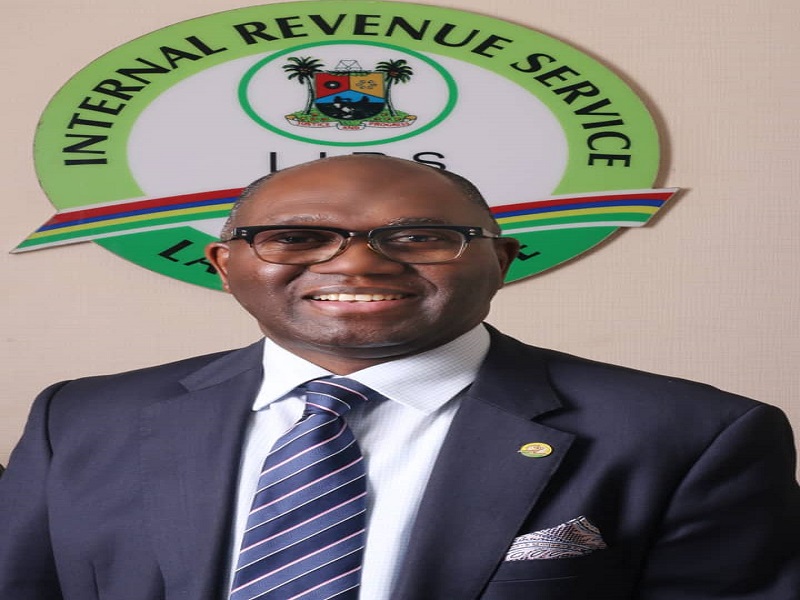
Lagos State Internal Revenue Service Executive Chairman Ayodele Subair Tuesday demolished online panic over alleged bank account raids, insisting the agency’s “Power of Substitution” targets only hardcore tax dodgers who have exhausted every appeal from tribunals to the Supreme Court over half a decade of disputes.

Ayodele Subair
Subair, speaking on Arise TV, shredded viral fears that LIRS would swoop on residents’ savings without warning, clarifying the mechanism under Section 60 of the Nigeria Tax Administration Act 2025 kicks in solely after assessments spark objections, reconciliations, demand notices, and a gruelling courtroom odyssey through High Court, Court of Appeal, and apex rulings.
The LIRS weekend notice had ignited fury by announcing enforcement via third parties – banks, employers, tenants, debtors – to claw back unpaid Personal Income Tax, Capital Gains Tax, Stamp Duties, and Withholding Tax from chronic defaulters holding funds or owing money to them, whether due now or accruing later.
Subair likened the process to a “long timeframe, not less than five years,” where recalcitrant bigwigs who stonewall every step become fair game, with LIRS directing agents like customers or partners to divert payments straight to the taxman in lawful settlement.
Far from arbitrary grabs, the chairman stressed it’s a final resort for “entirely recalcitrant” holdouts who ignore Notice of Refusal to Amend (NORA) and every olive branch, ensuring Lagos coffers snag rightful revenue fuelling the state’s bulging budget without shotgun raids on compliant payers.
As social media buzzes with defiance – “They can’t touch my account!” – Subair’s blueprint spotlights Nigeria’s tax evasion scourge starving subnationals of trillions yearly, with Lagos alone chasing billions in arrears amid federal revenue wars and economic headwinds squeezing the commercial capital’s 25 million souls.
Industry voices nod to the legality but plead for digital dashboards tracking disputes transparently, warning overzealous recovery could spook investors in Africa’s fintech and startup mecca already reeling from naira nosedives and grid glitches.
With LIRS poised to unleash the hammer on vetted violators, Subair’s clarion call aims to separate myth from muscle, bolstering Lagos’ IGR juggernaut that hit N815 billion last year while daring defaulters to test the full judicial gauntlet before crying foul.

Nigerian Communications Satellite (NIGCOMSAT) Ltd, in a strategic move to modernise its operations and foster a results-oriented workforce, has officially adopted the Federal Government’s Performance Management System (PMS).

The initiative, aimed at driving efficiency and institutionalising accountability, was marked by an intensive staff training program designed to align the agency’s operations with national performance goals and the Presidency’s vision for a digital-first public sector.
According to a statement from Stephen Kwande, the Agency’s acting head of Corporate Affairs, “the transition to PMS is a departure from historical evaluation methods. The new system is designed to provide real-time performance tracking and instill a stronger work ethic across all directorates”.
Welcoming participants, Mrs. Jane Nkechi Egerton-Idehen, managing director/CEO of NIGCOMSAT, represented by Abiodun Attah, executive diirector, Technical Services, described the adoption as “long overdue.”
She emphasised that the system is critical for ensuring that NIGCOMSAT contributes effectively to Nigeria’s broader digital economy targets.
In her opening remarks, Mrs. Chinwe Udogu, general manager, Human Resources Management, expressed NIGCOMSAT’s enthusiasm for the program, urging staff to dedicate themselves fully to the three-day training.
She noted that the exercise was pivotal in repositioning the company to achieve its highest aspirations.
The training consultant, Mrs. Njoku Chioma, said the program is expected to drive culture change, automate work processes, and strengthen institutional performance.
The three-day training, jointly organised by the Office of the Head of Service of the Federation and NIGCOMSAT Management, covers key themes including:
• Overview of the FCSSI25 as an institutional performance-driven Federal Civil/Public Service
• Service culture and workplace attitude in the Nigerian public sector
• Implementation of the Performance Management System in NIGCOMSAT
• Application of Artificial Intelligence tools to enhance performance in the Nigerian public sector
The move comes at a time when NIGCOMSAT is expanding its footprint, with recent initiatives like the 2026 SpaceTech Accelerator Programme and partnerships for grassroots digital skills training.
By strengthening its internal management framework, the agency aims to ensure that its technical advancements in satellite technology are matched by an equally efficient administrative engine.

Moniepoint Marks 10 Years of Transforming Nigerian Businesses

MTN Group Names Shoyinka Shodunke IT Core Design Executive Ahead of March 2026

QNET’s Ethical Pivot: Reshaping Direct Selling for Nigeria’s 2026 Surge

Firms Commit to Boost African Robotics Market

Kaspersky Reveals How Digitalisation is Influencing Family Life

19 Nigerian Banks Meet CBN Recapitalization Targets Ahead of March Deadline

Jumia CEO says Black Friday Signals Nigeria’s E-Commerce Maturity

Galaxy Backbone Celebrates the Federal Government’s Paperless Civil Service Milestone

DStv Offers Instant Package Upgrade for Customers from January to February

Banks to Impose N50 Stamp Duty on Transfers of N10,000 and Above from January 1




 E-Financial2 days ago
PayPal Goes Live in Nigeria through Paga

 Broadcasting2 days ago
NITDA, NBC Explore Strategic Collaboration on Digital Transformation, Media Regulation

 Telecom1 day ago
Police Bust ₦7.7bn Telecom Hack Gang, Seize 400 Laptops in Massive Fraud Swoop

 E-Business2 days ago
Gold Hits Record $5,110/Ounce Amid Trump Tariff Threats, Geopolitical Fears

 General News1 day ago
Naira Smashes Through ₦1,400 Barrier in Official FX Rally

 General News2 days ago
Facebook Powers Connection, Creativity at African Creators Summit 2026

 Telecom2 days ago
TikTok, Instagram Blamed in US Youth Suicide Lawsuit

 Telecom2 days ago
Meta Tests Paid Subscriptions Across Instagram, Facebook, WhatsApp