

E-Financial
Ventures Platform Secures First Close of US$40mn Pan-African Fund


Ventures Platform, the early-stage “discovery” venture capital fund championing the next generation of African entrepreneurs, has announced the first close of its new US$40m Pan-African, early-stage fund to invest in market-creating innovations.

With this close led by the Nigeria Sovereign Investment Authority (NSIA), the new fund features participation from existing investors and some new leading names across Africa’s corporate and tech ecosystems, including UAC Nigeria, VFD Group, Gbenga Oyebode, Shola Akinlade (Paystack), and global investors like; Michael Seibel (Y Combinator) and Adam Draper. A second close of the fund is due to take place in early 2022 and will feature investment from select global Institutional Investors and DFI’s.
Building upon its stellar reputation as one of the most active early-stage investors in African tech, Ventures Platform will significantly deepen its long-standing presence in Nigeria and West Africa while also investing in select opportunities in East, North & Francophone Africa – that have the potential to expand into West Africa’s key markets.
The fund’s latest capital injection also firmly positions it to double down on existing investments in its category-leading portfolio via subsequent rounds.
Since its launch in 2016, Ventures Platform has acted as a key partner and conduit for international funds and stakeholders seeking a reliable and experienced partner to do business in Africa.
With on the ground presence on the continent and its experience with corporate partnerships, talent, growth, regulation and operations – this new fund introduces the benefit of strong local LP participation and strengthens Ventures Platform’s ability to institutionalise its track record of collaborating with LPs and investors from North America, Europe and Asia, who need a reliable partner to work alongside when investing in the African technology space.
As part of a move to further deepen its expertise, Ventures Platform has also onboarded leading figures across African tech as Venture Partners, including; Seni Sulyman (ex-VP at Andela, ex-COO at Bellhop, Founder at Black Ops.)
Kola Aina, Founder and General Partner at Ventures Platform, says, “Over the last six years, we’ve backed close to 70 of Africa’s most compelling tech companies, building a robust portfolio which has featured one of the largest exits our sector witnessed to date through Paystack last year.
“As the incredible momentum in African tech continues to build, it’s attracting unprecedented attention globally amongst traditional and institutional investors, and we’re delighted to welcome aboard some world-class, strategic stakeholders to our fund.”
“As operators ourselves, we know what it takes to build a successful business on the continent, and we’ve spent years partnering with visionary founders effectively tackling some of Africa’s hardest problems – now is the time to go even further.
“We’re fully maximising our deep expertise navigating the nuances of the African market, and as we move ahead, we’re developing a global network of LPs in more established markets like Europe, the USA and Asia, many of whom partner with us due to our track record of backing winners, and they appreciate our on-the-ground experience and access to opportunities, which is vital for generating returns.”
With a ticket size up to $1m+ Ventures Platform is now positioned to fund follow-on rounds of successful startups building market-creating innovations across pre-seed, seed and Series A stages in sectors including Fintech, healthtech, enterprise SAAS, digital infrastructure and more.
Amassing a total of 28 investments to date in 2021 alone, the platform’s portfolio of 69 startups is one of the most elite in African tech with high-profile names including Seamless HR, Piggy Vest, Mono and Paystack – which Stripe acquired in October 2020 for $200m+.
Speaking about the fund, Mr. Uche Orji, MD & CEO, NSIA, said “Participation in this fund hits at the very core of the Authority’s objectives: stimulating growth by enabling new and innovative intramural technology to empower the continent.
To harness and unleash Nigeria and Africa’s potential, we are of the opinion that investment in ventures in the innovation and technology space is essential. In this regard, the Authority is proud to play a role in facilitating what it expects will lead to the rise of Africa”.
To date, Ventures Platform’s portfolio has raised over $500mn in follow-on rounds, and as the investor moves to consolidate its leading market position, this marks its first official institutional fund with previous capital resulting from syndicate and proprietary capital funds.


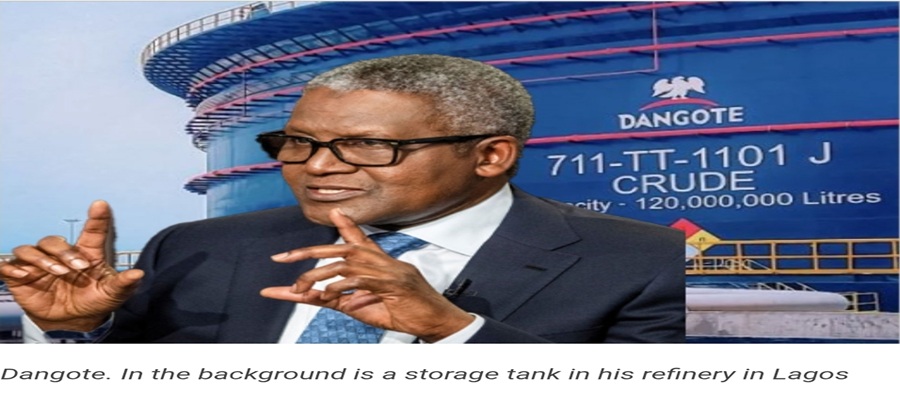
Securities and Exchange Commission (SEC) has banned the marketing and promotion of a purported initial public offering (IPO) by Dangote Petroleum Refinery & Petrochemicals FZE,.

It further warned that no application for such offer has been filed with or approved by the regulator.
In a public notice issued on Tuesday, the Commission said it had become aware of advertisements, flyers, digital banners and targeted electronic mails circulating on social media platforms and investment channels concerning a supposed securities offering by the refinery.
The SEC expressed concern over the involvement of some Registered Capital Market Operators (CMOs) in what it described as an “unwholesome and manipulative exercise” of actively soliciting advance subscriptions for an offering that has not been presented to the Commission.
According to the regulator, “No application for the registration of an IPO or public offer of shares of the Refinery has been filed with or approved by the Commission.”
The Commission added that the ongoing pre-marketing activities were “capable of misleading investors, distorting market expectations, creating information asymmetry and generally undermining the integrity of the capital market.”
It further stated that the marketing campaign and invitations to “create accounts”, “pre-fund,” or “secure guaranteed allocations” amounted to market manipulation and constituted “serious violation of the Investments and Securities Act.”
Consequently, the Commission directed all Registered Capital Market Operators, particularly stockbrokers and digital platform promoters, to immediately stop all promotional activities.
The SEC ordered them to “cease with immediate effect from publishing, reposting, or distributing any promotional material, flyer, or commentary relating to the acquisition or allocation of shares in the Refinery.”
It also directed operators to “remove or take down all such unauthorized marketing materials from websites, social media handles (including X, LinkedIn, Instagram, Facebook etc.), and messaging groups within twenty-four (24) hours of this notice.”
The regulator further instructed operators to desist from accepting deposits, commitments, account openings or expressions of interest from investors for the purported public offering and to “reverse and refund all funds already collected in connection with this purported offering to clients within twenty-four (24) hours of this notice.”
The Commission warned that defaulters would face sanctions as non-compliance would attract penalties under the Investments and Securities Act, 2025 and the SEC Rules and Regulations.
Advising investors to exercise caution, the SEC said members of the public should “rely only on formal, official pronouncements issued directly by the Commission through its official channels.”
It warned that “all such high-pressure marketing tactics, or transfer of funds to any operator for ‘pre-IPO’ placement should be ignored as they did not receive the Commission’s approval.”
The Commission assured that if it eventually receives and clears an application for a public offering by the refinery, an approved prospectus would be made available to investors in line with the provisions of the Investments and Securities Act, 2025.

Fidelity Bank Plc has reaffirmed its commitment to supporting Nigeria’s economic diversification agenda through capacity building and export development, as it hosted the 19th edition of its Export Management Programme (EMP) at the Lagos Business School (LBS), Ajah, Lagos recently.

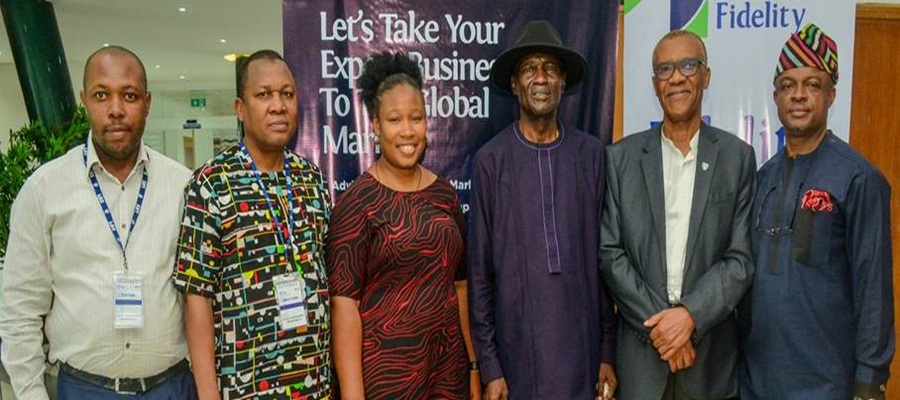
L-R: Relationship Manager, Fidelity Bank Plc, Murtala Muhammed Road Branch, Kano, Victor Ngwu; Export Management Programme (EMP 19) participant, Abayomi Adewuyi; Facilitator, Gemma Ejiofor; Senior Fellow and Head, Department of Organisational Behaviour and Human Resources Mgt., Lagos Business School (LBS), Dr. Uche Attoh; Director, Export Management Programme, LBS, Prof. Frank Ojadi; and Team Lead, Export & Agriculture, Fidelity Bank Plc, Emmanuel Nwalor, during the closing ceremony of the 19th edition of the Fidelity Bank Export Management Programme (EMP 19) held recently at Lagos Business School, Lagos.
Tagged EMP 19, the programme is an intense hands-on export management workshop, organized as a partnership between Fidelity Bank, Lagos Business School and Nigerian Export Promotion Council, brought together entrepreneurs, professionals, regulators and aspiring exporters for intensive training designed to equip participants with the knowledge, skills and networks required to compete successfully in international markets.
Speaking at the closing ceremony, Divisional Head, Export and Agriculture, Fidelity Bank Plc, Isaiah Ndukwe, said the bank remains focused on empowering Nigerian businesses to leverage emerging opportunities under the African Continental Free Trade Area (AfCFTA) and expand the country’s non-oil export base.
“At Fidelity Bank, we recognize that capacity building is critical to unlocking Nigeria’s export potential. Through the Export Management Programme, we are equipping businesses with practical knowledge, market intelligence and strategic insights required to compete successfully in regional and global markets,” Ndukwe said.
“As AfCFTA continues to open new frontiers for trade across Africa, our goal is to ensure that Nigerian exporters are adequately prepared to seize these opportunities and contribute meaningfully to the country’s economic diversification agenda,” he added.
Nwalor further noted that the bank remains committed to providing exporters with the financial solutions, advisory support and strategic partnerships necessary to expand their businesses beyond Nigeria’s borders.
Also speaking, Director of the Export Management Programme at Lagos Business School, Professor Frank Ojadi, highlighted the need for continuous capacity development as international trade continues to evolve.
“The export market is always evolving. There are changes in policies, improvements in processes and increasing interest from businesses. These developments make it necessary to build the capabilities of our people to compete effectively in export markets,” Ojadi said.
According to him, this year’s programme placed significant emphasis on AfCFTA, exposing participants to both the fundamentals and practical aspects of leveraging the continental trade agreement for business growth.
“Many businesses are still learning how to take advantage of AfCFTA. Through this programme, participants gained practical insights that will help them navigate opportunities across African markets and beyond,” he added.
In his remarks, Senior Fellow and Head of the Department of Organisational Behaviour and Human Resources Management at Lagos Business School, Dr. Uche Attoh, emphasized the importance of negotiation and dispute resolution skills in international trade.
“It is negotiation that enables businesses to establish deals, while arbitration helps resolve disputes when they arise. Once participants understand the principles, they can apply them in any business environment, whether in Africa, Europe or America,” Attoh said.
Participants described the programme as impactful and transformative. Assistant Director at the Nigerian Shippers’ Council, Obinna Oforum, said the training strengthened his resolve to become an “export champion”.
Similarly, Chief Superintendent of Customs, Orji Samuel, praised Fidelity Bank and Lagos Business School for subsidizing the programme and creating an enabling platform for practical learning, noting that the knowledge gained would help participants navigate export challenges and unlock new business opportunities.
The Export Management Programme is Fidelity Bank’s flagship capacity-building initiative aimed at developing export-ready businesses and professionals capable of driving Nigeria’s non-oil export growth. Through strategic partnerships and targeted interventions, the Bank continues to play a leading role in supporting businesses, facilitating trade and creating pathways for sustainable economic development.
Ranked among the best banks in Nigeria, Fidelity Bank Plc is a full-fledged Commercial Deposit Money Bank serving more than 10 million customers through digital banking channels, its 255 business offices in Nigeria and United Kingdom subsidiary, FidBank UK Limited.
The Bank is a recipient of multiple local and international awards, including the 2025 Development Bank of Nigeria (DBN) Innovation Award for MSME support; Best Retail and SME Bank Award from Independent Newspapers; Best Bank for Export & Trade Finance and Most Innovative Bank of the Year at the 2025 BusinessDay Banks and Financial Institutions (BAFI) Awards; and Nigeria’s Best Private Bank at the 2025 Euromoney Awards. The Bank also received the inaugural Most Improved Commercial Bank of the Year award by Nairametrics, the SME Bank of the Year award by NewsDirect, and the Straight-Through Processing (STP) Excellence Award by Citi Group, in addition to recognition by Global Brands Magazine for Excellence in Community Empowerment.
Federal government has engaged the banking community in Abuja to deepen understanding of the Revenue Optimisation Assurance Platform (RevOp), a digital platform designed to improve revenue generation, reduce leakages, and enhance public sector accountability.

Mr Taiwo Oyedele, minister of Finance and coordinating minister of the Economy, told RevOp sensitisation workshop, organised by the Office of the Accountant General of the Federation (OAGF) in Abuja, that RevOp is a centralised digital revenue collection and monitoring system designed to modernise Nigeria’s public finance operations.
Oyedele, who was represented by Mr Mohammed Danjuma, permanent secretary, Special Duties, explained that the platform provides a real-time, automated framework for all federal agencies to raise, collect, and report revenues, replacing fragmented manual processes that have plagued revenue collection for decades.
He reiterated the government’s commitment to improving revenue generation, enhancing transparency, strengthening accountability, and leveraging technology to drive efficiency across public financial management processes.
“RevOp serves as a critical tool in the government’s drive to improve revenue administration, reduce leakages, and enhance public sector accountability,” he said.
According to him, a lot had been achieved since the inception and implementation of the platform and that the successes were not without challenges.
He identified one of the challenges as limited awareness among some banking channels and frontline officers.
The minister explained that some banking channels are not familiar with RevOp, its purpose, or the procedural requirements to support transaction processes through the platform.
“These challenges, though operational in nature, have significant impacts on the overall customer experience and effectiveness of the initiative. This is precisely why we are here today,” he said.
The minister said that the success of RevOp would not be achieved by government alone, adding that it required strong collaboration among all stakeholders, particularly banking institutions, which serve as critical collection and service channels.
He explained that the banking institutions’ role extends beyond merely collecting or processing payments to ensuring that government revenue collection processes are efficient and user-friendly.
“Today’s sensitisation session has, therefore, been organised to deepen understanding of the platform, clarify operational processes, address concerns, and establish stronger communication channels between the project team and participating financial institutions.
“We expect that the knowledge shared here will cascade throughout your respective organisations, especially to branch operations, customer service personnel, and tellers who interact directly with customers on a daily basis,” he said.
Oyedele said the ministry remained committed to working closely with all stakeholders to address identified challenges and continuously improve the platform.
In his speech, Dr. Shamseldeen Ogunjimi, accountant general of the Federation, said that the revenue optimisation portal had been adopted as a strategic platform for improving revenue collection, reconciliation, monitoring, and reporting.
Ogunjimi, represented by Mr Felix Ogundairo, his chief of staff, explained that the platform was designed to provide greater visibility into government revenue, eliminate leakages, improve compliance, and support informed decision-making through real-time data and analytics.
“This engagement, therefore, provides an opportunity for us to discuss implementation challenges, align expectations, clarify operational issues, and strengthen the partnership necessary for the success of the application,” he said.
In his remarks, Mr. Idris Dosunmu, RevOp Product Manager, explained that the platform unifies billing, payment and settlement under one platform and that every transaction passes through secure connections, ensuring complete transparency from bill creation to treasury receipt.
“This will ensure that every penny due to the federal government goes into the coffers of the government,” Dosunmu said.

Privacy Crisis May Undermine Local Hosting of Data by Banks, Fintechs

AI-Powered Scams are Biggest Payment Fraud Threat -Visa Report

How to Build a Safer Cyberworld for People, Business, and Society

Nestlé Commits to Boosting West Africa Solar Rollout Through Partnership

Airtel Africa Foundation Launches Airtel Green Schools to Promote Sustainability Education in Nigeria

CBN Extends PoS Geo-Fencing Enforcement Deadline to August 2026

London Strengthens Global Investment Ties with Africa @ First Ever London-Africa Business Summit

FG Targets Alleged N3tn Capital Flight, Opens Airtime Credit Market to Nigerian Fintechs

Mobile Internet Gender Gap Widest in Africa – GSMA

Japan, UNESCO Boost Digital Learning in 15 CoEs with Donation of ICT Equipment




 E-Business3 days ago
Kaspersky Discovered a Malware Campaign Targeting Steam Users Through Infected Wallpaper

 Broadcasting3 days ago
CANAL+ Partners Samsung to Pre-Load DStv Stream on New Samsung TVs In Nigeria, Other African Countries

 Telecom3 days ago
Big Tech Shake-Up: Zuckerberg Announces Sudden WhatsApp Leadership Change

 General News3 days ago
Fiona Ahimie Launches LEADHER Mentorship Session to Inspire the Next Generation of Female Leaders

 News3 days ago
NESREA Defends Plastic Waste Rules, Says Policy Targets Pollution

 E-Financial3 days ago
FG Engages Banks on RevOp, New Digital Platform for Revenue Generation

 News3 days ago
CredibleVoteNG Opens Free Access to all Polling Units in Nigeria after INEC Demanded N1.Bn for Register

 News3 days ago
Arridex Floats West Africa’s First Multi-tech 3D Industrial Omnifactory in Lagos