

General News
We Don’t Need Foreign Software to Drive IM – Fambegbe


Folarin Fambegbe, director, Golden Scepter, a company dedicated to become a one-stop shop in records and archives management, is a civil engineer turned banker.
He worked in the defunct City Bank for 17 years.
Fambegbe believes that ICT is a critical force that can help meet the records management demand anchored on providing market-leading levels of trust, security and reliability. He spoke to peter ugwu.
Overview
Golden Scepter is a product of vision. In the course of my working in the bank, records management formed part of my duties.
I discovered that most of the banks in the country do not have good records keeping system; therefore retrieval of documents poses great challenge.
There are cases where directors were been chased by the economic and financial crimes commission (EFCC), not because they do not have the documents, but they could not present documents required during one investigation or the other hence the main problem is that the processes of management of those documents were haphazard in nature.
So, you see managing directors of banks and insurance companies running out of the country. Meanwhile, I and my partner saw that is a problem that must be addressed. So, the starting point for Golden Scepter was when we left the bank in 2003; they later invited us to come and help them out in organizing their archives management system.
However, after the bank capitalization we discovered that other banks have similar problems too. We thought it wise to set up a platform that will serve as a model in organizing institutions’ records management system.
Consequently, other banks expressed interest in us ensuring that their records keeping systems are in other.
GS Phenomenal Growth
The point is that there is a vision and there is a need. Institutions are really concerned on how to keep adequate records management system.
And we as service providers leveraged on that to come into the system.
Even when heads of different companies meet they discuss this among themselves and some of them would always want to maintain proper records keeping knowing the importance.
Today, we have helped a number of banks maintain their records department, bringing them to contemporary practices.
Industry’s Viability
Yes, the industry is viable, but Nigerians orientation towards records management is very low. Some companies would ask you the immediate gains they will generate from such project that is maintaining an updated archive.
The truth remains that when you have adequate document, it will be difficult for anybody to lay false claims, defraud you or take things for granted.
We should ask ourselves what constitutes the bottom-line: when you have increased revenue or decreased expenses then you have bigger profit.
Now, when you have even bigger profit with leakages through outrageous payments due to the fact that you cannot substantiate certain claims or through the injunctions of the law courts following your inability to present certain document(s), the somewhat a big revenue will start to depreciate. What you need to do is to block such leakages.
And it will ensure efficiency in service delivery. Helps in achieving company’s goals, and customer services are better met when you have every bite of information available for use.
How about job creation?
Today we have over 30 staff. So, this is an industry waiting to be explored. With more companies coming on board, definitely we should be expecting that records management industry will add value to the Nigeria’s Economy.
This is just an aspect of the industry, when you talk of document control; it is a very large setting traversing areas like construction, oil and gas, government institutions, etc. is such large because we are referring to documents that are still in use; where you have different strokes of projects going on almost at the same time and in the chain all the parties have to be involved.
Lack of Professionals
The first step is awareness creation. That is why a non-governmental body – Records and Information Management Awareness Foundation (Rima) is doing a great job.
But on our part we train people. We have trained personnel of 44 companies including schools, all within our four years of existence.
Interestingly, the more people are becoming aware of the profession, more companies are willing to absorb, all points to the fact that Nigeria is not an Ireland on its own.
We must embrace the opportunities exiting in this area by encouraging our young ones to embrace the discipline.
The Place of Records Management in Data Security
We highlight the importance of security that is why when we help companies in setting up their archives we advise them to train their staff alongside.
In setting up an archive is not just about the papers, you have to consider the security control measures.
More so, we advise institutions to have documents management policies.
The essence is to stipulate who handles what. There have been cases where companies lose valuable documents due to porous means by which its document bank is handled.
Fight against Corruption
Corruptions are not done from heaven. They are done with documents. So, document control or records management is quite apt in checkmating corruption because if you can trace the document, it serves a large purpose in tracing perpetrators of certain acts.
And in court system, they don’t deal with stories; rather the substantive facts and figures give you an edge over your opponents as the case may be. So, one way to fight corruption is my ensuring that records are kept, well controlled and it can be retrieved when needed; anything short of that is a mirage.
In other words, it will help see justice is neither delayed nor denied.
Government’s Support to the Industry
In the developed countries, the industrial standards are set by the government, thus other have to follow suit.
Apart from that, government needs to intervene by upgrading existing infrastructure in her centers like the National Archives of Nigeria (Nan) just like the Lagos State Government is doing by creating the Records and Archives Bureau.
When the infrastructures are in place, they will motivate our people to study this discipline. At a time we thought of collaborating with different state governments, but we discovered that most of them are not ready to embrace the change and we are also not interesting in becoming part of the corrupt systems; even the government that decry unavailability of employment opportunities for the teeming youths. Why can’t they leverage on this platform to do so?
Now that we are looking at revisiting the 1999 constitution, there is a need to repeal the National Archives Act, for instance, to reflect contemporary practice; come up with something that can assist economy of the country.
Pending that, because government things are very slow, institutions can set up their framework or policies. Once that is done, it will be easier to register Nigeria’s presence in the comity of proper records keeping nations.
Is ICT’s a threat to Archives Management?
No! When people say that the evolution of information communications technology spells doom for the archives management, I would say, we are limiting the scope of the profession.
Although it is not just about filing physical papers or documents, then the electronic documents show that ICT is a complement and can never.
Currently, we are going beyond physical archiving system; therefore, users can seat anywhere and have access to certain document, because information transmission nowadays runs on a speed of light.
If you want to be relevant then have the relevant document that can be accessed 24 hours. ICT has made Archiving become cheaper.
Hence the software is there, there is nothing to fear about, because security can be assured as well.
However, in Golden Scepter we hold the view that records digitization is not a direct substitute to a well organized physical archive.
Remember everybody needs information as contained in a document to operate, but not everybody is connected to the ICT yet, which makes the relevance of physical archives paramount in our day to day activities.
People make a mistake by thinking that electronic records management means there is no paper. What ICT does is to reduce the paper, thereby helping the eco-system.
Today, in Nigeria, what does the court accept as written evidence if not physical documents, like bank statements which is different from original documents that is scanned.
Protection of Physical Archives
When you are talking about physical archives management, there are a lot of things that must be in place for security purpose.
Fire extinguishers are very important. Perhaps, you are not going to sleep in the archives; how do you secure the place from fire? So, there is need to install self-triggered apparatus that will ‘fight’ the fire even with no body present.
The sensitivity of archives demands that you fix CCTVs as well, to monitor movements, which is still IT complementary role.
These are part of the key safety measure that will complete efforts of skilled manpower to ensure the place works optimally.
We have a mechanism to dry wet or flooded documents. For instance, after the July 10, 2011 flood disaster in Lagos, many government and private companies’ documents were drenched. Those who contacted us have better stories to tell.
Professionalism
When we talk of International Standard Organisation (ISO) set standards it depends on the organization that engages in the practice.
Meanwhile, some companies parading themselves as ISO certified are not real. They are certified on papers, but in practice they are below every reasonable standard.
It is in every profession, people cutting corners.
Is not about the certification, but what is behind. Having said that, it is important to embrace the stands; by doing that companies can save cost and protect sensitive projects during executions.
Career
I support the school of thought that our educational curriculum should be revisited to include records and information management.
I have come to understand that not all who studied Library Science can easily practice this. There is still a divide.
You find out that people don’t actually have confidence in their discipline. In developed countries like in US and UK, people are making input to the economy and academic through courses like this.
We can follow suit. Recently, a particular university invited us to come and address that problem for them to cue-in to the modern practice.
Software
Ostensibly, there is no need we looking outward to purchase software for our applications, because what we are looking for are here in Nigeria.
We are now part of the global village.
Meanwhile, when you go to other place, South Africa, United Kingdom, etc, there is a way they keep their records, we should have our template.
Therefore, we can’t fuse their model into our system. So, we are trying to build our standard here, bring it up to meet international standards.



Okpi Bernard Adaafu, a legal practitioner, has dragged the federal government of Nigeria before the Federal High Court in Abuja, challenging the legality of a controversial health data sharing agreement between Nigeria and the United States of America.

The suit names the President of Nigeria, the Attorney-General of the Federation and Minister of Justice, the Federal Ministry of Health and Social Welfare, the Senate President of Nigeria, and the Speaker of the Nigerian House of Representatives as defendants.
In the originating summons filed before the court, Adaafu is asking the court to determine whether the bilateral health cooperation Memorandum of Understanding signed between Nigeria and the United States violates the constitutional rights of Nigerian citizens, particularly their rights to privacy and protection of personal data.
According to court documents, the agreement, signed on December 19, 2025, permits the collection and transfer of sensitive health information of Nigerians to the United States.
The data reportedly includes medical records, blood samples, pathogen testing information, and DNA or genetic sequencing data.
The plaintiff argued that while only a summarized version of the agreement has been made public, a related Specimen Sharing Agreement allegedly obliges Nigeria to provide biological samples and related data to the United States within five days of request and could remain in force for up to 25 years.
He contended that such an arrangement, if implemented, would violate the National Health Act 2014, which guarantees the confidentiality of patients’ medical records, as well as the Nigeria Data Protection Act 2023, regulating the processing and cross-border transfer of personal data.
The suit further argued that the agreement breaches Section 37 of the Constitution of the Federal Republic of Nigeria 1999, which guarantees the privacy of citizens.
Adaafu also raised concerns about statements suggesting that the programme would provide substantial support to Christian faith-based healthcare institutions.
According to him, the inclusion or perceived emphasis on religious affiliation within a national healthcare framework is unnecessary, constitutionally questionable, and capable of triggering avoidable social tension in a multi-faith society such as Nigeria.
He argued that healthcare interventions funded through international cooperation must remain neutral, inclusive, and accessible to all Nigerians regardless of religion, ethnicity, or social background.
Another issue raised in the suit is the alleged exclusion of the National Assembly of Nigeria from the process.
The plaintiff maintained that international agreements with significant national implications must undergo legislative scrutiny and approval before implementation.
Among the reliefs sought, Adaafu asked the court to issue an order prohibiting discriminatory agreements based on religion, ethnicity, or other protected characteristics.
He also requested a declaration that the agreement violates both the National Health Act 2014 and the Nigeria Data Protection Act 2023.
In addition, the plaintiff is seeking an order suspending the implementation of the agreement, which is scheduled to commence on April 1, 2026.
Explaining the reason for filing the suit, Adaafu said he decided to approach the court because of the potential implications of the agreement on the privacy, sovereignty, and constitutional rights of more than 200 million Nigerians.
He noted that the issues raised in the suit deserve public awareness and national discourse, stressing that transparency and accountability are necessary in matters involving citizens’ sensitive medical and genetic information.


Nigeria’s leading instant noodle brand, Indomie, is backing a cross-country cycling journey by 15-year-old autism advocate Kanyeyachukwu Tagbo, who is embarking on a Guinness World Record-bound ride from Enugu to Lagos to raise awarenessabout autism and promote inclusion.

Tagged “Journey of Possibility, #RideWithKanye,” the expedition will see the young cyclist travel across several Nigerian cities as he advocates for greater understanding and support for individuals living with Autism Spectrum Disorder and their families.
The initiative represents an official attempt to set a milestone with Guinness World Records as the youngest autistic individual to complete a cross-country cycling journey.
The ride is scheduled to conclude in Lagos on World Autism Awareness Day, reinforcing the global call for empathy, acceptance, and opportunity for people on the autism spectrum.
Speaking on the brand’s involvement, Temitope Ashiwaju, Group Corporate Communications and Events Manager, said the initiative reflects Indomie’s enduring commitment to celebrating courageous Nigerian children and amplifying stories that inspire hope.
“At Indomie, we believe every child deserves the opportunity to dream boldly and achieve extraordinary things,” he said. “Kanyeyachukwu’s journey is a powerful reminder that determination and talent can transcend limitations. We are proud to support his mission to inspire understanding, acceptance, and hope for individuals living with autism.”
Kanyeyachukwu first captured national attention when he was recognised at the Indomie Heroes Awards, an initiative by Indomie that celebrates courageous Nigerian children who have demonstrated exceptional bravery, resilience, and impact in their communities.
Since receiving the recognition, he has continued to use advocacy, creativity, and public engagement to reshape perceptions about autism and inspire conversations around inclusion.
Through the “Journey of Possibility,” Kanyeyachukwu hopes to demonstrate that individuals on the autism spectrum possess extraordinary potential when given the opportunity and support to thrive.
As a key supporter of the initiative, Indomie will provide branded cycling kits and support materials for cyclists accompanying him throughout the route, alongside financial support and brand activations at designated stops along the journey.
These engagements will include community interactions aimed at educating the public, encouraging dialogue, and fostering broader participation in autism advocacy.
To ensure the young cyclist’s safety and well-being throughout the expedition, a dedicated safety, medical, and logistics team will accompany the ride.
Host communities along the route are also expected to organise welcome receptions and awareness activities as the team passes through their cities.
The journey will culminate in a celebratory reception in Lagos, bringing together supporters, advocates, community leaders, and partners to mark the completion of the ride and reinforce the call for greater awareness and inclusion for people on the autism spectrum.
Through initiatives like the Indomie Heroes Awards and its support for the “Journey of Possibility, #RideWithKanye,” Indomie continues to champion young Nigerians whose courage, determination, and achievements demonstrate the limitless possibilities that emerge when children are empowered to pursue their dreams.

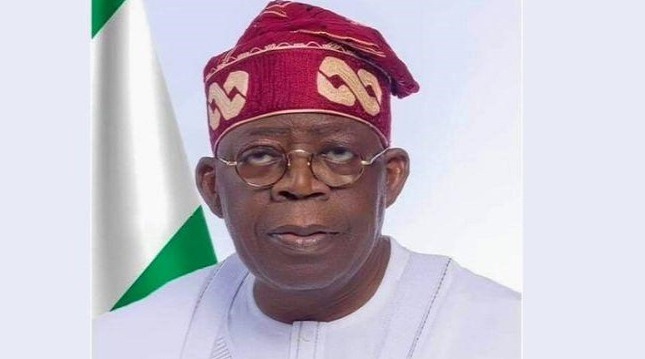
President Bola Ahmed Tinubu has vowed government backing for the Nigerian media’s evidence-led push against Big Tech’s anti-competitive practices, content scraping for AI, and economic pressures like high tariffs threatening press survival.

Tinubu
Speaking at an interfaith dinner with the Nigerian Press Organisation (NPO) delegation at the State House on Friday, Tinubu called the press an “indispensable partner” in fostering economic stability, press freedom, and social cohesion.
He promised to tackle “digital cannibalisation” and review the tariff exemption list to zero-rate media essentials like newsprint, plates, chemicals, and broadcast equipment—currently hit with 5-10% duties—mirroring exemptions for educational materials.
“You have the government’s full support, because we know how important your work is to the sustenance of democracy,” Tinubu assured leaders including NPO President Lady Maiden Alex-Ibru, Aremo Olusegun Osoba (Vanguard), Sam Amuka (THISDAY/ARISE), Prince Nduka Obaigbena, Dr John Momoh (Channels TV), and heads of NPAN, NGE, GOCOP, NUJ, and NTA.
NPAN Deputy President Frank Aigbogun, speaking for NPO, accused Big Tech firms like Meta and Google of breaching paywalls to train AI models, costing local media 70% of revenue—hundreds of millions of dollars—plus jobs. He urged directing the FCCPC to probe these issues.
Information Minister Mohammed Idris noted ongoing government engagement with Big Tech: “We will not allow anybody to come here, reap from our economy, and go away without giving back.” Vice President Kashim Shettima and senior aides attended.
The pledge follows NPO’s January letter highlighting existential threats from Big Tech to Nigerian media.

Crypto Transactions Hit $96Bn in Nigeria -SEC

PwC Warns Nigeria Telcos of AI Fraud Risks

Lawyer Drags FG Court over Controversial Health Data Sharing Agreement with US

Elumelu Tags Elon Musk, Disowns AI-Generated Scam Video

FG Determined to Protect Rights, Privacy Online- NITDA

Kaspersky Discovers New Phishing Campaign Exploiting Google Tasks Notifications to Steal Corporate Credentials

esentry 2025 Report Shows Healthcare, Financial Services and Telecoms as Staging Grounds for Increased Cyberattacks in Africa

AfDB, UNDP Launch $10Bn AI Initiative for Africa

Mutual Benefits Assurance Settles ₦5.9bn Claims in January 2026

MultiChoice Suspends Yearly DStv Price Hike as Canal+ Pushes Growth




 Telecom3 days ago
VDT Communications Achieves Two Prestigious Certifications ISO /IEC 27001:2022, ISO/IEC 27032:2023 Reinforcing its Leadership in Broadband Service Provision

 E-Financial2 days ago
CBN Rolls Out New Rules for Safer Instant Payments, More Customer Control

 News2 days ago
NIMMME Inaugurates Engr. Michael Orekyeh as 13th National Chairman in Abuja

 Telecom2 days ago
MTN Nigeria Races Ahead in Fibre Broadband Market

 E-Financial2 days ago
CBN Tightens BVN Rules to Curb Fraudulent Banking Transactions

 E-Financial2 days ago
Nova Bank Appoints Jude Anele as Managing Director/CEO

 E-Business2 days ago
Tech Expert Unveils BAT-BOT AI App to Curb Fake News ahead of 2027 Elections

 Broadcasting14 hours ago
Spotify’s Loud & Clear Report Reveals Over ₦60Bn Revenue for Nigerian Artists in 2025