

Broadcasting
We Need to Calm the Chaos that Domestic Workers Endure

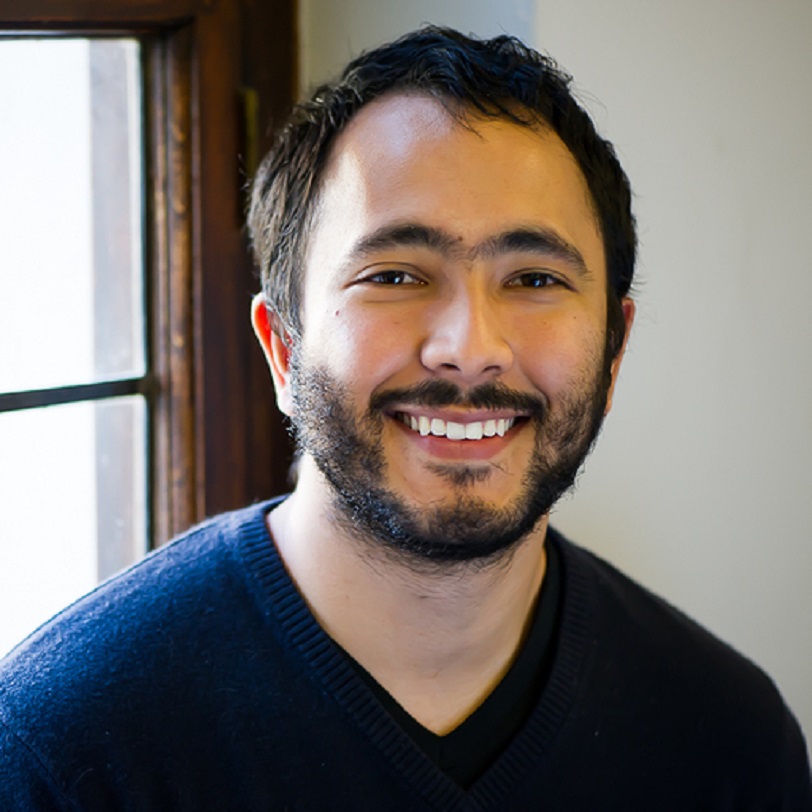
Luke Kannemeyer, SweepSouth Interim Managing Director
Life feels like a high-wire act these days. Chances are that you and everyone you know has been dealing with a heightened sense of anxiety. The world is being shaken by a slew of climate disasters, rocketing inflation, energy crises, and supply shortages. Most of us didn’t think we’d be talking about ‘the war’ in the present tense, but here we are.

Nigerians have also endured terrorism, banditry, kidnapping, unemployment, and inadequate power supply. Whether you’re completely strung out or noticing a persistent buzz of worry, these events have taken their toll. Good mental health comes partly from having a fundamental support structure to rely on, but sometimes we don’t even know if the lights will be on for supper.
If you’re lucky, you have access to safety nets: loved ones to support you, savings in the bank, a religious community to connect with. The world might be imploding, but at least you know what the next few days and weeks in your life are going to look like.
Domestic workers often don’t.
One of the most jarring things that comes across in our latest Report on Pay and Working Conditions for Domestic Workers Across Africa is how this profession is characterised by uncertainty and instability. Domestic workers do essential work in society and yet they are often among the first to lose their jobs in a tough economy. We’re all struggling, but for them, the situation is even more precarious.
In a ‘regular’ job, you’re protected by a contract and labour laws. You and your employer have certain obligations towards each other, and our social and legal structures keep you both in check. And while there are laws that are supposed to protect domestic workers too, domestic work happens in a private space, and so is difficult to regulate.
Earnings are a particular pain point. People are often unsure what to pay domestic workers and typically ask friends and family what they’re paying without necessarily considering any differences in the size of their home or the number of people and pets living there. The result is a flat rate regardless of the hours worked.
In addition, domestic work is notoriously undervalued, whether it’s done by a professional or by family members. Allowing individuals to decide what it’s worth based on their personal impressions means that wages are wildly subjective.
What domestic workers earn is barely enough to survive. At SweepSouth we found that, in terms of average pay, only those currently on our platform are earning above the minimum wage. We want domestic workers to earn a living wage, not just the minimum wage. Do you know what the minimum wage is? It’s ₦30,000 a month. That’s all. Most workers are earning less than that, and on average they’re stretching those incomes to support three or four dependants.
Nor is this income steady. Domestic workers are engaged in a constant hustle to get work from multiple clients. Additionally, simply travelling to work is a challenge. Public transport systems are often crime-ridden, unreliable and particularly unsafe for women, who face the prospect of sexual harassment, assault, or robbery on a daily basis. The multiple dangers of the daily commute means domestic workers are travelling in a state of hypervigilance, causing them distress before their workday even begins.
SA
While there are too many problems here for any one person or company to solve, we can all provide something. SweepSouth offers a modicum of structure for professional domestic work, with our app giving access to regular employment opportunities.
The screening processes and rating system offer assurance to employers and enable workers to build a professional reputation in an industry where references might be hard to come by.
SweepStars aren’t obliged to only work via the app, but it’s become a go-to platform that they can fall back on when they lose jobs.
The pricing structure also helps regulate payments while educating workers and customers on what constitutes a fair wage. This is of particular importance as it means payment is not purely at the whim of homeowners, who in turn are able to think beyond the flat rates quoted by friends and family.
Be mindful of the uncertainty domestic workers are dealing with and try to mitigate that with whatever form of dependability you can provide: timely communication with workers, a nutritious meal, or access to safe and reliable transport.
Having one less thing to worry about can go a long way in improving quality of life. Not knowing what the next day will bring might sound exciting when you want an adventure, but it’s frightening when what you need is a job. The people who support us in our daily lives deserve the same sense of security that we need to thrive.


Broadcasting
Why We’re Partnering With NIHOTOUR To Bring Nigerians In South Africa Home – Steve Babaeko

When Nigerians began arriving back home on emergency flights following an ultimatum from anti-migrant groups in South Africa, Steve Babaeko, alongside The Nigerian Institute of Hospitality and Tourism (NIHOTOUR), saw an opportunity to step up for his fellow citizens.

Steve Babaeko
The CEO of X3M Ideas explains that he saw a deep obligation, one that had nothing to do with advertising and everything to do with hospitality. For Babaeko, it was a reminder that an agency owes a duty of care to the community it exists within.
That conviction shaped the creative agency’s partnership with the Nigerian Institute of Hospitality and Tourism (NIHOTOUR) for the newly launched ‘Welcome Home’ pilot programme at Murtala Muhammed International Airport (MMIA) in Lagos. Rather than simply crafting a messaging campaign around the crisis, X3M Ideas helped design a tangible, physical system.
“This wasn’t built as a campaign about a crisis,” Babaeko said. “It was a hospitality agency deciding what it owes its own citizens the moment they land.”
For Babaeko, what X3M has built is infrastructure, something returnees can physically walk through, use, and benefit from the instant they clear the arrival gate.
With the MMIA pilot now officially running, NIHOTOUR directs returnees to immediate support services and issues them a Returnee Card. This card grants individuals a free first night at partner hotels, immediate transport assistance from the airport, and fast-tracked business registration support.
Furthermore, the initiative features a dedicated Restart Desk to assist returnee entrepreneurs and tradespeople with job placement referrals and business registration. This operates alongside a public Homecoming counter that tracks the cumulative number of returnees welcomed, businesses restarted, and jobs facilitated.

Spotify has announced a partnership with Afro Nation Portugal as the festival’s official sponsor and exclusive streaming partner for the 2026 edition, in a move aimed at bringing African music and festival experiences to a wider global audience.

The collaboration will provide fans with a dedicated Afro Nation destination on Spotify, featuring official festival playlists, participating artists and selected performance videos after the event.
The 2026 edition of Afro Nation Portugal is scheduled to hold from July 3 to July 5 in Portimão, Portugal.
Spotify said the partnership would enable fans to engage with the festival before, during and after the live event, regardless of their location.
The streaming platform noted that the initiative aligns with its continued investment in promoting African music and supporting its growing international audience.
Speaking on the partnership, Spotify’s Content Marketing Manager for Sub-Saharan Africa, Mr Rifumo Mdaka, described Afro Nation as a global showcase for African music and culture.
“Afro Nation is more than a festival; it is a global expression of African music, fan culture and creative influence.
“Our partnership is about helping that moment travel further through our first collaboration with Afro Nation of this nature.
“By bringing the festival to Spotify, we are giving fans a place to connect with the artists, performances and stories that define the festival long after the final set,” he said.
According to Spotify, the collaboration will also include exclusive festival content, artist discovery features, curated playlists and fan-focused storytelling.
The company said it would document the journey of a selected fan travelling to the festival as part of efforts to showcase the growing global appeal of African music.
Also speaking, Director of Global Partnerships at The Malachite Group and Afro Nation, Ms Clémence Blum, said the partnership represented a major step in expanding the festival’s global reach.
“Afro Nation has always been more than a festival. It is a platform built to celebrate African music, support artist breakthroughs and connect a global community through culture.
“Our partnership with Spotify reflects the shared role we both play in helping artists reach new audiences and giving fans deeper ways to engage with the music they love,” she said.
Spotify said selected live performances from the festival would be made available on the platform after the event, allowing fans around the world to relive the performances on demand.
The company added that the partnership reinforces its commitment to promoting African music, supporting artists and strengthening connections between creators and audiences across the globe.

Lebara Nigeria has announced the launch of Lebara Play, described as Africa’s first telecoms-owned micro-drama platform aimed at expanding opportunities for African storytellers and distributing local content to global audiences.

The company said the platform is designed to support creators by providing a new distribution channel for African narratives while making content accessible to both subscribers and non-subscribers worldwide.
Lebara Nigeria added that the platform will debut with an original production titled Imported Bahu, produced by Forever 7 and starring Osas Ighodaro.
The project is directed by Hamisha Daryani Ahuja, known for her work on Namaste Wahala, and is positioned as the first in a series of original content offerings.
According to the company, Lebara Play is built to serve both creators and audiences, with a focus on showcasing African stories to a global market and strengthening the continent’s growing digital entertainment ecosystem.
Speaking on the company’s vision at the launch, Teniola Stuffman, chief executive officer, Lebara Nigeria, said the organisation was focused on building a telecommunications ecosystem that combined innovation, connectivity, and customer-centric digital experiences.
Stuffman said, “This platform represents an important step in our vision of building a telecommunications brand that delivers more than connectivity. We are creating an ecosystem where technology, innovation, and entertainment come together to provide meaningful experiences for customers while unlocking new opportunities for creative talent and content development across Africa.”
Beyond entertainment, she said, industry stakeholders believed the initiative demonstrated how global telecommunications expertise could be adapted to local market realities.
“Drawing from decades of experience across multiple international markets, Lebara is expected to introduce additional innovative services aimed at enhancing convenience, engagement, and value for Nigerian consumers,” she said.
Stuffman added that the company’s strategy reflected growing recognition that today’s telecom customers demanded more than network access, pointing out that consumers increasingly seek brands that offer seamless digital experiences, personalised services, and access to content that enriches everyday life.
Stuffman stated that LebaraPlay also aligned with the company’s commitment to supporting Africa’s creative economy by creating new distribution channels for content creators, producers, and digital storytellers.
“Through a combination of original productions and strategic partnerships, the platform seeks to create opportunities for talent while delivering quality entertainment to audiences,” she said.
Hamisha Daryani, founder of Forever7 Entertainment, expressed excitement over the partnership with Lebara Nigeria and the premiere of her latest micro-drama series on the LebaraPlay platform.
She stated that Lebara’s customer-centric vision aligns closely with the values of Forever7 Entertainment, making the collaboration a natural fit for both organisations.
Daryani revealed that the new microdrama featured a star-studded cast drawn from both Bollywood and Nollywood, in a compelling romantic story designed specifically for mobile audiences.
According to her, the production is developed with mobile-first consumers in mind, delivering premium entertainment in short, engaging formats at an affordable cost.
“Microdrama, which typically consists of short episodes of about three minutes, is redefining how audiences consume entertainment. It offers a convenient, immersive, and affordable viewing experience for people who increasingly access content through their mobile devices,” she said.
She added that the platform was created to support seamless creative expression while providing new opportunities for content creators across the continent.
Daryani further explained that the microdrama format has already achieved significant success in Asia and the Americas and is now gaining traction across Africa.
She said the initiative would create opportunities for emerging creatives through knowledge sharing, skills development, content curation, and industry collaboration, with the Nigerian rollout of the featured series expected to commence in July.

World Bank Okays New $1.25Bn Loan for Nigeria

Xenophobia: MTN Nigeria Belongs to Nigerians, Not Only South Africans — Toriola

SEC Grants Approval to Luno, Other Crypto Firms under Regulatory Sandbox

MTN Nigeria Celebrates Volunteers at Y’ello Care Impact Showcase

Listicle: 10 Essential Meta Safety Tools Every Parent and Teen Should Know

Mobile Internet Gender Gap Widest in Africa – GSMA

FG Targets Alleged N3tn Capital Flight, Opens Airtime Credit Market to Nigerian Fintechs

Nigeria Launches FreeTV Nationwide

UK, Nigeria Launch £15m Growth Programme to Accelerate Economic Transformation

NASENI Moves to Digitize CCB’s 5m Assets Declaration and Operations




 E-Financial3 days ago
IMF Raises Concerns over N8.83 Trillion Unreported Spending in Nigeria’s Budgets

 News3 days ago
Court Declares Keystone Bank Staff Wanted over Alleged N35m Fraud

 Broadcasting2 days ago
Why We’re Partnering With NIHOTOUR To Bring Nigerians In South Africa Home – Steve Babaeko

 News2 days ago
FG Clears N39Bn Pension Arrears for NITEL, PHCN, Other Retirees

 Telecom3 days ago
OpenAI in Talks to Offer U.S. Government 5% Stake Amid AI Scrutiny

 E-Business3 days ago
Kaspersky Warns of a Large-scale Campaign using Fake Free Software to Deploy a RAT via ScreenConnect

 News2 days ago
How Fraudsters Emptied a Judge’s Account of N7.2 Million in Midnight Attack

 E-Business3 days ago
NOTAP to Commercialise University Research, Expands Patent Drive