

E-Business
West Africa Needs Advanced Mobile Infrastructure, says IBM Nigeria Boss

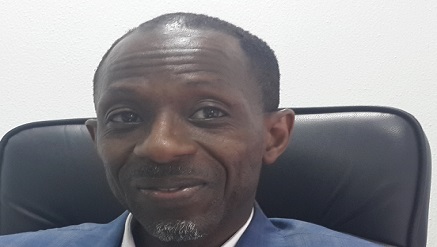
Increased investments in relevant new technologies like mobile, cloud and big data analytics that offer advanced solutions and services are essential for West Africa’s socio-economic development.
In practically all sectors of the regional economy, these advanced technologies allow economies and companies to ensure the integrity of their data assets, providing them with hitherto unseen levels of data mining capabilities which allows them to derive fresh insights and business intelligence from these data.”
These salient points were made recently by Taiwo Otiti, country general manager for IBM West Africa, on the sidelines of the HR Leaders Africa Summit held recently in Lagos.
Adoption of mobile and other technologies is one area public and private sector organizations need to look at with a view to injecting efficiency and new performance levels in their operations, Otiti said. “For African countries, new technologies allow the continent’s businesses and people to leapfrog through development stages/phases.”
He buttressed this particular point by referring to Nigeria’s adoption of mobile technology over the last 12 years which has become a showcase of how well technology can help transform economies. The Nigerian environment struggled with barely 500,000 telephone lines as at the end of 2001.
Today, thanks its fast adoption of modern cellular and other wireless technologies, the country boasts the largest online market for apparel and footwear in Africa, which is expected to grow from US$104 million in 2014 to $1billion in 2019, according to Euromonitor International Data.
Only last week, Nigeria’s National Bureau of Statistics has put the subscriber base of the mobile telecommunications sector at 143.05 million as of the end of the first quarter of 2015.
As the leading regional economy, the continuous advancement of enterprises in the nation’s public and private sector was crucial for growth, he said.
He explained that IBM is helping African businesses, governments, NGOs and innovators recognize the power of big data and the unique opportunities before them to leap-frog their counterparts from more developed nations.
In Ghana, the mobile market also continues to witness gradual progression notwithstanding the slow pace of macroeconomic growth.
A recent study, “The Mobile Africa 2015” report, conducted by mobile surveying company GeoPoll and World Wide Worx, has shown that 51% of Ghanaians with mobile phones now use them to access the internet.
Otiti says that mobile technology has been adjudged to be the most powerful communications platform throughout the Middle East and Africa region, with the power to transform the delivery of services across all sectors of the economy, including healthcare (mHealthcare, Telemedicine), education (e-Education) and municipal services like traffic and waste management.
A recent report by PricewaterhouseCoopers (PwC) notes that emerging mobile health solutions are already saving lives – an estimated million lives by 2017.
This positive trend is being driven by some of the fastest mobile subscriber growth in the world, cheaper mobile devices, and continued innovation.
“Together with IBM, African innovators and entrepreneurs along with the broader African ecosystem are ideally placed to focus on some of Africa’s (and the world’s) most important challenges and leapfrog, delivering new solutions, tools and applications to harness the power of mobile data and analytics,” Otiti said
He stated that it was important for business and technology leaders to understand that the so called ‘big data’ when harnessed from the growing proliferation of mobile phones and tablets will enable them to transform
“African societies through the creation of industry specific blueprints designed to see data patterns that help them anticipate needs and deliver improved services to become more competitive on the regional and global stage”.
Questioned on what was holding back technology adoption by organizations, Otiti stated that one key factor responsible for the slow rate of technology adoption in many African countries was cost or budgetary considerations. He however counseled that cost was not the only hindrance.
“The first barrier in the business environment is the poor information or misinformation about ICT services, solutions and products available in the market place,” he said.
“The second headache is institutional inertia and red tape. Knowledge is not really power anymore, it is the right application of knowledge that is powerful and delivers the right impact.”
“Technology can positively influence business and public administration. Business Strategy and new Public Policy formulation and administration can be relevant and eventually effective if it takes cognizance of the evolving impact of technology on Society and the new Social way that customers, companies and citizens now communicate and engage with themselves, their target audiences and members of the public.”
IBM has established the world’s deepest portfolio of big data technologies and solutions, spanning services, software, research and hardware.
Otiti said that the leading global technology company has so far committed more than $100 million in Research and Development on new Big Data technologies and garnered more than 500 analytics-related patents.
Last year, IBM partnered with Apple to launch IBM MobileFirst for iOS solutions, introducing a fresh wave of apps for the enterprise market sector. The partnership brings IBM’s unmatched industry and analytics capabilities to iOS devices.
IBM official statements note that the partnership seeks to transform enterprise mobility, reconstructing the way businesses and employees work, and enabling new levels of efficiency, effectiveness and customer satisfaction across a range of professions and industries, such as personnel management, retail, healthcare, banking, travel and transportation, telecommunications and insurance.
#



Okitipi Samuel, a Nigerian man, has been taken into custody by the Nigeria Police Force for his alleged role in a global cyberattack on Microsoft 365 users.

Benjamin Hundeyin, Force public relations officer, disclosed this on Thursday in Abuja while briefing journalists on the outcome of investigations carried out by the National Cybercrime Centre of the Nigeria Police Force.
Hundeyin said the centre, under the leadership of Ifeanyi Uche, its director and Commissioner of Police, commenced investigations in collaboration with Microsoft, the Federal Bureau of Investigation, the United States Secret Service, and the United Kingdom’s National Crime Agency.
According to him, investigations revealed that a phishing toolkit known as “Raccoon 0365” was used to create fake Microsoft login portals to harvest user credentials and unlawfully access email accounts belonging to corporate organisations, financial institutions, and educational institutions in several countries.
“This investigation commenced following credible intelligence received from Microsoft USA through the FBI, indicating that a malicious phishing toolkit known as Raccoon0365 was being used to create fake Microsoft login portals, harvest user credentials, and unlawfully access the email accounts of corporate organisations, financial institutions, and educational establishments,” Hundeyin said.
He added that between January and September 2025, several reports of unauthorised access to Microsoft 365 accounts were traced to phishing emails designed to mimic legitimate Microsoft login pages, enabling business email compromise, internal phishing, data breaches, and other cyber-enabled fraud.
Hundeyin said digital forensic analysis and cryptocurrency tracing identified wallets connected to the illegal operation.
He noted that operatives were deployed to Lagos and Edo states, leading to the arrest of three suspects identified as Joshua, James, and Okitipi Samuel between September 20 and October 4, 2025.
“Following extensive digital forensic and technical intelligence analysis, the centre conducted cryptocurrency tracing that identified suspicious wallets connected to cash-out schemes.
“Acting on actionable intelligence, operational teams were deployed to Lagos and Edo states, resulting in the arrest of Joshua, James, and Okitipi Samuel. Searches at their residences led to the recovery of mobile devices, laptops, and other digital exhibits linked to the fraudulent scheme,” he said.
Hundeyin identified Okitipi Samuel, also known as “0365” and Moses Felix as the principal suspect and developer of the phishing infrastructure.
He added that investigations confirmed Samuel unlawfully used the email details of one of the arrested individuals without consent to register some of the accounts used in the operation.
The police spokesperson said further investigations revealed that the identities of Joshua and James were used without their consent.
“There was no evidence linking them to the creation or operation of the phishing scheme. They were victims of identity theft,” Hundeyin said.
He said a prima facie case had been established against Samuel for identity theft, unlawful access to computer systems, creation and distribution of malicious software, unauthorised interference with network data, and aiding and abetting fraud.
Hundeyin added that the suspect would be charged under relevant provisions of the Cybercrimes (Prohibition, Prevention, etc.) Act, 2024.
He said the suspect would be prosecuted in Nigeria, noting that the country has the capacity to enforce its cybercrime laws, although extradition could be considered if formally requested through due process.
Hundeyin assured Nigerians that the police, under the leadership of Kayode Egbetokun, inspector-general of Police, would continue to protect the country’s digital ecosystem and urged citizens to practise good cyber hygiene by being cautious when clicking links and sharing personal information online.
Speaking separately, Ifeanyi Uche, director of the National Cybercrime Centre, urged Nigerians to exercise caution online.
Uche advised members of the public to avoid clicking on links from unknown or unexpected sources, noting that such links often contain malware or phishing tools designed to compromise devices and personal data.
He warned that indiscriminate clicking of links or responding to unsolicited emails could lead to unauthorised access to personal and corporate accounts, urging citizens to “wash their cyber hands” by verifying sources before taking action online.


Nigeria has unveiled a comprehensive, multi-pronged strategy designed to localise WSIS+20 commitments. This roadmap accelerates national transformation by prioritising robust infrastructure, transparent internet governance, and advanced cybersecurity through deep stakeholder collaboration.

Unveiled in New York at the Nigerian high-level side event titled “Re-Imagining Digital Cooperation for Sustainable Development: From WSIS+20 Vision to Local Action,” the strategy cements Nigeria’s position as a primary architect of the world’s digital future.
Speaking at the event, the Director General of the National Information Technology Development Agency (NITDA), Kashifu Inuwa, CCIE represented by Director, Corporate Planning and Strategy, Dr. Dimie Shively Wariowei said Nigeria’s approach is deliberately aligned with the four core activity areas identified under the ongoing WSIS+20 review process.
According to him, the focus areas provide a practical framework for translating global digital commitments into measurable national outcomes, ensuring that international resolutions drive inclusive growth and sustainable digital development at the country level.
Inuwa identified digital infrastructure as the foundation of effective localisation, noting persistent challenges in extending connectivity to underserved and remote communities. Beyond infrastructure gaps, he highlighted affordability constraints and digital literacy deficits, stressing that addressing these issues remains central to Nigeria’s digital inclusion drive.
He explained that government alone cannot shoulder the burden of nationwide digital infrastructure deployment, given Nigeria’s vast geographical spread, hence the adoption of collaborative Public-Private Partnership (PPP) models. He disclosed that Nigeria, in collaboration with the World Bank, is implementing a major fibre-optic project spanning about 90,000 kilometres nationwide to boost connectivity.
The NITDA DG also revealed that the current National Broadband Plan, which has guided broadband expansion in recent years, is nearing completion, with plans underway to renew and reposition it for the next five years. The renewed plan, he said, will strategically target increased broadband penetration as a catalyst for digital access and economic growth.
On internet governance, Inuwa referenced Nigeria’s active participation in the Internet Governance Forum (IGF), noting that the country successfully hosted its annual national IGF. He said the forum operates on a multi-stakeholder model that brings together government, the private sector, civil society and the technical community to foster cooperation and informed policy dialogue.
Cybersecurity, he added, remains a critical pillar of Nigeria’s localisation efforts. He cited the existing Cybersecurity Act and ongoing efforts to strengthen the legal framework through a reviewed version currently awaiting parliamentary approval. These measures, he said, are designed to mitigate risks associated with increased internet use and to protect users and critical digital infrastructure.
Inuwa further stressed Nigeria’s ambition to play a leadership role in advancing digital cooperation across Africa through inclusive, multi-stakeholder engagement. He underscored the importance of coordinated national data collection, noting that reliable, country-specific data is essential for tracking progress and presenting Africa’s digital development story on the global stage.
He concluded that sustained engagement and follow-up actions arising from the WSIS+20 review would strengthen digital cooperation among African countries and ensure that global digital commitments translate into tangible national and regional impact.
Stakeholders commended Nigeria’s efforts in the digital space, acknowledging the country’s growing role in shaping Africa’s digital future.
Earlier, Ms. Jennifer Chung, Co-Convener of the Informal Multi-Stakeholder Sounding Board (IMSB), praised Nigeria for convening a broad-based, multi-stakeholder delegation and for its commitment to the meaningful implementation of WSIS+20 outcomes.
Chung stressed the growing demand for localised WSIS follow-up mechanisms, noting that platforms such as the annual IGF, National and Regional IGF Initiatives (NRIs), and youth-led forums are vital for tracking progress towards the 2030 Agenda and Africa’s Agenda 2063.
She described the WSIS+20 review as a critical step toward effective monitoring, reliable data collection and evidence-based evaluation, particularly for developing countries in the Global South. According to her, these measures are essential to achieving WSIS targets and ensuring that no region is left behind.
Drawing parallels with the Asia-Pacific region, Chung noted that challenges around affordable and meaningful connectivity remain widespread across developing economies. She emphasised that expanding broadband penetration and reducing the cost of access are crucial to closing digital divides in Africa, Asia-Pacific and other parts of the Global South.
She also highlighted the need to enable active citizen participation in emerging technologies, including artificial intelligence and future innovations such as quantum technologies, stressing that inclusive digital access is key to maximising the benefits of digital transformation.
Reflecting on the WSIS+20 review process, Chung praised the innovative and inclusive approach adopted through the informal multi-stakeholder sounding board, describing it as one of the first of its kind in global digital governance. She called for sustained collaboration among governments, the private sector, civil society and the technical community to carry the WSIS vision from global commitments to local action.


United Bank for Africa (UBA) Plc has announced a $100 million financing partnership with CIG Motors, Lagride and the Lagos State Government to promote urban mobility and financial inclusion through a scheme tagged “Drive to Own.”

Group Managing Director/CEO, United Bank for Africa(UBA) and, Chairman, LagRide, Chief Diana Chen, flagged by LagRide drivers, at the signing ceremony of $100 Million Expansion Facility, strengthening smart mobility, driver asset ownership of over 3,500 cars, financed by UBA in partnership with Lagos State Government and LagRide, held in Lagos on Tuesday.
The initiative, unveiled on Wednesday in Alausa, Lagos, will empower 3,500 drivers in the state by enabling them to own vehicles with an equity contribution of 10 per cent of the total cost, while the balance is payable over 48 months.
UBA’s Group Managing Director/CEO, Oliver Alawuba, described the scheme as transformational, noting that it would foster inclusive economic growth, support MSME development and create opportunities for the younger generation.
“This partnership with Lagride is transformational. It will drive inclusivity for economic growth and ensure progress for everyone,” he said.
Alawuba shared a personal story, recalling that his father worked as a driver and was able to fund his education through that income. He said the scheme would provide similar opportunities for many families.
UBA’s Head of SME Banking, Babatunde Ajayi, said the partnership reflected a rethinking of traditional banking models.
“Not every business has a shop. Some businesses have wheels. Every commercial driver is running a business, yet they have remained outside formal finance. We designed credit that fits their reality,” he said.
Chairman of Lagride, Diana Chen, said the company had built a data-driven and credit-ready mobility platform for drivers, stressing that transportation remained the backbone of Africa’s economic future.
“Lagride now stands as the most structured, data-driven and credit-ready mobility platform in Nigeria,” Chen said.
The partnership aligns the strengths of the three organisations, with UBA providing financial support, CIG Motors offering viable business opportunities, and Lagride delivering a technology-driven platform to ensure sustainable livelihoods for driver-partners.

US Okays $2.1Bn for Christian Healthcare in Nigeria

Leo Stan Ekeh: A “Rare Avis”, an Unconquerable Entrepreneur

SERAP Asks Tinubu to Release CTC of Tax Bill

Tim Akano Recounts 20-Year Growth, Media Support at NITRA End-of-Year Meet

Sterling Bank, Water.org, Sterling One Foundation Partner on WASH Loan for Millions

Nigeria Records Highest Weekly Cyberattacks in Africa — Report

Cyber Tsunami Hits Nigeria as Breaches Surge 1,047%, esentry Q3 Report Reveals

GenAI Adoption Among African workers Outpace Global Peers

Jumia’s Data Shows Nigerians Turning to Digital Retail to Navigate Inflation Pressures

Minister Claims Bandits Exploit Poor Network, Bounce Calls Off Multiple Towers




 General News3 days ago
Jumia Kicks Off December Holiday Sale, Bringing Festive Deals to Shoppers Nationwide

 E-Financial3 days ago
Access Holdings Shareholders Approved to Raise N40bn Capital Through Private Placement

 Broadcasting3 days ago
NIMC rolls out Pre-Enrolment Portal for seamless NIN registration

 General News3 days ago
Dangote, Monopoly Power, and Political Economy of Failure

 General News3 days ago
OAU, Baptist Day School Oluponna honour Akano with Distinguished Alumnus Awards

 General News1 day ago
The Mood Market to Light Up Lagos with a Rooftop Gifting, Food & Lifestyle Fair this Christmas
 News18 hours ago
US Okays $2.1Bn for Christian Healthcare in Nigeria
 Broadcasting18 hours ago
Tim Akano Recounts 20-Year Growth, Media Support at NITRA End-of-Year Meet