

Telecom
Why I Stayed Away From Politics – Leo Stan Ekeh, Zinox Founder

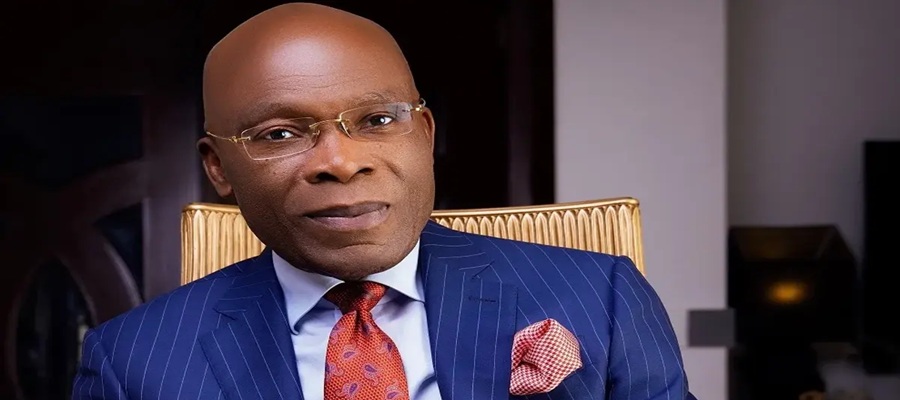
Africa’s foremost serial digital entrepreneur, Leo Stan Ekeh, has explained why he has stayed away from politics even when he had the opportunity to make a success out of it. He also expressed overflowing gratitude to Nigeria, a country he said has “boosted and blessed me.”

Leo Stan Ekeh, Zinox Founder
On whether he would join politics after a successful run in entrepreneurship, he said: “Me, politics? No. I would have been governor of my state long, long ago, but politics is not my calling. However, I support progressive, ideas-driven politicians across the country,” he said.
Ekeh who is the Chairman of Zinox Group was responding to questions during a forum of select mentees of young entrepreneurs which ended late Thursday. He recalled his early beginning in the nation’s Information Communication Technology (ICT) marketplace after returning to Nigeria from the United Kingdom.
The Zinox chief who turns 70 on February 22 took the mentees down memory lane, recalling how he introduced desktop publishing and switching the nation’s publishing landscape from analogue to digital as well as scaling up his business into what has become a conglomerate today.
“I returned to Nigeria from the United Kingdom after quitting my post-graduate programme because I believed so much in this country and the opportunities it presents. Though the country has blessed and bruised me, my dream was unambiguous: to propagate what I called ‘digital democracy’ in a country that in those days was wholly analogue. Today, I will say to a large extent that Nigeria has helped me to actualize my dream, though there is still work to be done.
“Once we were done with digitizing the media, we moved strongly into oil and gas, financial sector, and public sector where we impacted heavily on e-governance. Our ambitious Computerise Nigeria initiative ensured that homes, educational institutions, and ministries, parastatals and agencies (MDAs) which had no access to computers had access. We did not just dump computers on the people, we ensured they were skilled-up to effectively use the systems for enhanced productivity. Nigeria offered me the opportunity to do all this for which I am grateful,” he told the mentees.
Ekeh, an Imo state indigene, was in Owerri at the weekend with other dignitaries including Vice President Kashim Shettima and many governors, politicians and captains of industry at the grand finale of the Imo at 50 celebrations, where he was honoured with the Distinguished Star of Imo State (DSI) award.
While responding to questions on the state of the economy, Ekeh commended President Tinubu for the courage to start the reforms from the day he assumed office, arguing that any delay would have shrank the economy further and completely wiped out investors’ confidence in the Nigerian economy.
He referenced the recent verdicts from the World Bank and the Dr. Ngozi Okonjo-Iweala of the World Trade Organisation (WTO) as evidence that what indigenous entrepreneurs have been saying about the Tinubu reforms as truly progressive is not a farce.
“As a major player in Africa’s ICT ecosystem, I can assure you that major multinationals in this sector are not only investing more in Nigeria, they are collaborating with indigenous players and this is evident in the contribution of the ICT sector to the GDP.
“You will recall that the World Bank Managing Director, Anna Bjerde, who was in Nigeria recently, said Nigeria is now frequently cited globally as an example of steady, credible reform leadership. That says a lot about what entrepreneurs and employers of labour like me have continued to say about the Tinubu government.
“Sentiments aside, President Tinubu is a well exposed visionary leader. He is investment-friendly, he is courageous and he is a good team player. This has impacted the brave decisions he has taken and I am happy that global bodies like the World Bank, and the WTO are talking about it. I have known the President for many years and he has remained consistent to his commitment to national development. I speak here as an entrepreneur, not a politician. I don’t play politics. I am not a politician and I will not be one. I play in the digital space which is the enabler of development and I am happy doing what I’m doing,” Ekeh said.
He recalled Tinubu’s role when he launched the Zinox range of digital products in 2001 when Tinubu was governor of Lagos State, stressing that he has no reason not to support him the way he supports his governor.
“As host governor, he took over the show, owned it and drove it. And that’s because he was futuristic and driven by the vision of a digitally-driven economy. Tinubu is driven by pragmatism,” he said.
He charged the mentees to stay focused on their track and be intentional in their commitment to keep forging ahead even when the tide seems against them; adding that “entrepreneurship anywhere in the world is tough but with patience, perseverance and commitment, you will push through the veil.”


Nigerian Communications Commission (NCC) has said that compensation of subscribers for poor service quality, such as persistent network outages or failed calls is automatic.

This initiative aims to ensure fairness by mandating that operators provide automatic compensation, such as airtime credits, for failing to meet regulatory Quality of Service Key Performance Indicators (KPIs).
According to the NCC, operators are required and mandated to identify affected subscribers and provide compensation directly.
In a framework for compensation of consumers published on its website, NCC said that it has directed Mobile Network Operators (MNOs) to compensate subscribers affected by prolonged or repeated poor quality of service experience within specific Local Government Areas where operators fail to meet regulatory Quality of Service Key Performance Indicators (KPIs).
The NCC also stated that the directive does not replace existing consumer protection mechanisms.
The NCC, said the directive adds a direct compensation mechanism for affected subscribers and aligns with measures set in existing legislations such as the Consumer Code of Practice Regulations 2024 and the Quality of Service Regulations 2024.
This directive applies to only Mobile Network Operators licensed and operating in Nigeria that have failed to meet their Key Performance Indicators on Quality of Service. For Internet Service Providers (ISPs) operating in Nigeria, a compensation framework is already in place.
To be eligible to receive compensation
. You experienced poor network service in an affected Local Government Area; and
- You made at least one outgoing revenue generating event (billed call, SMS, or data session) during the relevant period.
The compensation covers service failures affecting voice, data, or SMS services.
Operators are required and mandated by existing regulations to monitor their network performance across locations and service disruptions against Quality of Service KPIs.
This enables them to identify affected subscribers without the need for individual complaints.
Only service failures that fall below the defined thresholds set by the Quality of Service Regulations issued by the NCC will qualify for compensation.
Short, isolated interruptions and immediately remedied interruptions may not qualify
Compensation will be provided in the form of airtime credits.
This airtime credit will not have utilisation restrictions, and subscribers will be able to use it for voice calls, USSD sessions, data subscriptions, etc on the operators’ network.
Federal Government has announced plans to deepen collaboration with private sector players and other stakeholders in a bid to strengthen Nigeria’s cybersecurity architecture and response systems.

NDPC
Minister of Communications, Innovation and Digital Economy, Bosun Tijani, disclosed this in a recent press statement, noting that the government is considering the establishment of a Cybersecurity Coordination Council.
According to the minister, the proposed council is aimed at enhancing national cyber resilience and ensuring a more coordinated response to emerging cyber threats across public and private institutions.
Tijani emphasised that cybersecurity must be treated as a collective responsibility involving government, industry, and civil society.
“Cybersecurity is a shared national responsibility. Protecting Nigeria’s digital economy requires strong partnerships, trusted collaboration, and collective vigilance across government, industry, and civil society,” he said.
He added that through sustained collaboration, Nigeria would strengthen its capacity to detect cyber threats early, respond effectively, and build a resilient and trusted digital ecosystem.
The minister also called for increased stakeholder participation in shaping a sustainable, partnership-driven cybersecurity framework capable of deterring cybercriminal activities and safeguarding citizens, businesses, and critical digital infrastructure.
Meanwhile, the Nigeria Data Protection Commission (NDPC) has commenced an investigation into an alleged data breach involving Remita Payment Services Ltd., Sterling Bank, and other entities.
In a statement signed by its Head of Legal, Enforcement and Regulations, Babatunde Bamigboye, the commission said notices of investigation were issued to relevant parties on April 1, 2026.
The NDPC noted that affected organisations and individuals are currently providing information to aid its inquiry into the incident.
“The aim of the investigation is to ensure that data subjects are protected with appropriate technical and organisational measures,” the statement read.
It added that the probe would examine the types of personal data involved, the scope and nature of the alleged breach, potential risks to data subjects, and mitigation steps taken where breaches are confirmed.
The commission further disclosed that its National Commissioner and Chief Executive Officer, Vincent Olatunji, has directed a broader review of organisations operating digital payment systems.
According to the NDPC, entities found to be non-compliant with provisions of the Nigeria Data Protection Act, 2023, particularly regarding technical and organisational safeguards, would be scrutinised as part of efforts to maintain the integrity of the nation’s data protection ecosystem.

Sunil Mittal led Bharti Airtel has crossed the 650-million customer mark globally, fortifying its position as the world’s second-largest telecom operator by mobile subscriber base, as per a regulatory filing by the telecom operator.

“According to GSMA Intelligence, Bharti Airtel is ranked second globally by mobile customer base, with operations spread across India and Africa,” the filing said.
Commenting on this milestone, Gopal Vittal, executive vice chairman, Bharti Airtel, said: “Achieving the milestone of 650 million customers to be the second largest operator globally is a great responsibility for us to serve our customers better every day,”
He added that the telco strives to raise the bar on innovation, reliability, and experience so that every customer interaction is an opportunity to earn trust and deliver value connection.
Currently, Airtel India serves around 368 million mobile customers, meanwhile over 179 million users have been plugged into its subsidiary Airtel Africa spread across 14 countries.
Its mobile money platform, Airtel Money reached more than 52 million customers.
Additionally, the telco serves around 13 million homes with high-speed internet services and over 15 million through its Digital TV offering.
With operations spanning 15 countries and network coverage reaching over two billion people, analysts say that the latest milestone is a testimony to the natural curve of evolving from a telecom operator into a broader digital services provider.

Offset Communications Slams N50m Suit against Qore Technologies for Alleged Copyright Infringement

Compensation for Poor Service Quality is Automatic- NCC

SERAP Sues CCB over Electoral Act, New Tax law

Tinubu Approves N3.3 Trillion Payment Plan to Boost Power Supply

NDPC Investigates Remita, Others over Alleged Data Breaches

Spotify’s Loud & Clear Report Reveals Over ₦60Bn Revenue for Nigerian Artists in 2025

Madonna University Taps Tech Guru Adote for Strategic Board Role

China Threatens to Shut Nigeria’s Satellite Over $11.44m Unpaid Debt

Healthcare Under Attack: Why Cybersecurity is Now Critical Care

Why JustMarkets Is a Strong Choice for Gold Trading




 E-Financial2 days ago
CBN, Banks, Fintechs Launch PSPC to Boost Nigeria’s Payment System

 News2 days ago
NITDA Strengthens Collaboration with NIPSS to Drive Digital Innovation, Orange Economy Growth

 General News2 days ago
FG, Others Say Nigeria Wastes 38m Tonnes of Food Annually

 E-Financial2 days ago
CycleFlow, IFC Launch Supply Chain Finance Platform in Nigeria

 E-Financial2 days ago
Anchor Gets Nigerian, Canadian Licences as Transactions Crosses $2.5Bn

 E-Financial2 days ago
Ecobank Assures of Seamless Easter Banking Services

 News2 days ago
NRS Takes Over Mineral Royalties Collection Under New Tax Laws

 E-Financial2 days ago
N4.65 Trillion in the Vault, but is the Real Economy Locked Out?