

Broadcasting
Why Nigerians Can’t Wait For Season 4 of Big Brother Naija


Big Brother Naija, Africa’s number one reality television show, is making a highly anticipated return on June 30 and Nigerians all over the world are beyond giddy with excitement.
Although the show makers, MultiChoice Nigeria, have not officially announced the theme for the new season, graphics and posters reading “Spicy Hot” have been deployed all over social media to promote the show.
Apart from the show’s endless supply of drama and sheer entertainment, Big Brother Naija has been able to excite Nigerians, and Africans, in a way that no other show on this part of the Atlantic can.
Somewhere between the colorful characters the show makers select every year and the odd but interesting tasks that the Housemates have to engage in, therein lies the secret of the Big Brother Naija magic formula.
One distinct element that Big Brother Naija possesses, is that it has made its success elusive and many times unattainable for copycats and knock offs is its ever-changing nature.
Season after season, the show changes in a way that is unique to its cause but without losing its identity.
It’s an intricate and delicate balance that MultiChoice has mastered and been able to recreate successfully for three seasons.
The first season of Big Brother Naija first aired back in 2006. Much like many first attempts, season one was a glorious run of trail, error and lessons learned.
When the show came back in 2017 with the “See GoBBe” theme, it was clear that the producers had done their homework, made some necessary adjustments and were ready for business.
2018’s Double Wahala edition was a result a seamless broadcast of entertainment which had Nigerians everywhere hooked.
From classrooms to beer parlors, nail salons, Bible study meetings and social media, Big Brother Naija content was inescapable.
As hard as it is to imagine, this new season will be even more riveting and here are a couple reasons why.
One of the biggest criticisms of Big Brother Naija was that it was shot in South Africa, not Nigeria.
The show’s producer always cited the fact that running a reality show round the clock in Nigeria was not the simplest of tasks.
It would appear, however, that they’ve been able to crack the logistics code because in January, Mr. John Ugbe, the Chief Executive Officer of MultiChoice Nigeria announced that this year’s season will take place in Nigeria.
Big Brother Naija’s return to Nigeria has definitely set off a new level of loyalty to the show in Nigerians.
A number of fan fiction conspiracy theories and jokes have emerged since the announcement as fans speculate how the show’s producers will “Nigerianize” the show as a result of the location.
Another reason Nigerians are more excited for this year’s edition of Big Brother Naija than they’ve ever been is the audition process.
Multitudes of hopefuls turned up for Big Brother Naija auditions all over the country earlier this year which definitely raises the stakes for the show’s producers because it means they have a bigger pool to fish in. This year’s audition process also featured the first online audition.
Apart from the over 5000 auditionees who showed up at venues, MultiChoice also held online auditions.
This elaborate selection process has created a lot of buzz about who the lucky men and women in the Big Brother house will be.
This is because at the end of the day, Big Brother Naija is about the people who inhabit the house and how much they resonate with the viewers.
If we’ve learned anything from fans of Efe or even Tobi and Cee-C, it is that Nigerians love an unlikely hero and an underdog they can root for.
Nigerians have gotten so passionate about their favorite housemate that they’ve organized themselves and bought gifts and hosted parties for them upon their exit from the house.
That’s the true magic of Big Brother Naija at the end of the day – looking at your television screen and seeing yourself in someone you’ve never met. In a day and age when representation matters more than ever, Big Brother Naija has filled a unique space in the hearts of Nigerians – the desire to be seen.



Canal+ is to cut jobs at MultiChoice as part of a sweeping restructuring plan aimed at stabilising the African pay-TV operator, following years of operational and financial pressure.

The move comes alongside a planned $115 million capital injection, underscoring the urgency of efforts to revive the business after the French media group took control.
The planned layoffs are expected to form a core element of a broader cost-cutting and efficiency drive, as Canal+ seeks to streamline MultiChoice’s operations and improve profitability.
The restructuring signals a shift toward leaner operations, with a focus on eliminating redundancies and optimising the company’s cost base.
MultiChoice has struggled in recent years with declining subscriber numbers across key African markets, weighed down by macroeconomic pressures, currency volatility, and changing consumer behaviour.
The rise of global streaming platforms has intensified competition, chipping away at the company’s traditional pay-TV dominance.
Canal+’s intervention marks a pivotal moment for MultiChoice, reflecting a more aggressive approach to repositioning the business.
By combining fresh capital with structural reforms, the new owners are aiming to both stabilise short-term performance and lay the groundwork for longer-term growth.
The $115 million injection is expected to provide immediate financial relief, supporting operations and potential strategic initiatives.
However, the accompanying job cuts highlight the depth of the challenges facing the company and the scale of transformation required to restore competitiveness.
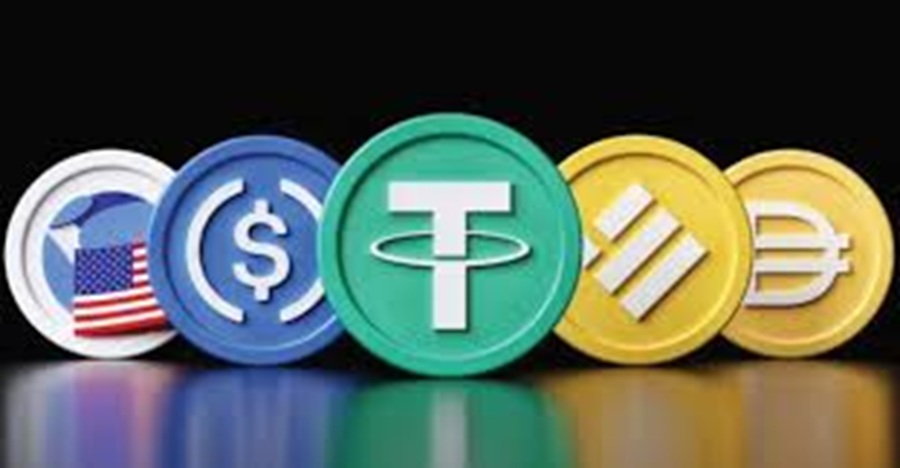
Nigeria has ranked first globally in the ownership of the two largest stablecoins, Tether (USDT) and USD Coin (USDC), reflecting the country’s growing reliance on dollar-linked digital assets.

USDT, USDC
Stablecoins such as USDT and USDC are designed to maintain a fixed value against the U.S. dollar, allowing users to store money digitally while avoiding the price volatility associated with cryptocurrencies like Bitcoin.
According to the 2026 Stablecoin Utility Report released by BVNK, about 59 percent of Nigerian crypto users hold USDT, while 48 percent own USDC, giving the country the highest combined ownership rate among all nations surveyed.
The report placed Nigeria ahead of several major economies, including Australia and India, highlighting the country’s strong adoption of dollar-denominated digital assets. Australia ranked second with 34 percent USDT ownership and 29 percent USDC, while India placed third with 30 percent USDT and 27 percent USDC holdings.
The study also examined adoption levels across other regions. Countries such as Colombia and Singapore showed strong usage of both stablecoins, while adoption levels were also notable in South Africa and the United States.
Other markets included in the analysis were Philippines, Thailand and Argentina, where stablecoin ownership has also increased significantly. Among European economies, the report said France and Germany showed moderate levels of adoption, while Latin American markets such as Mexico and Brazil recorded smaller but growing usage rates.
The United Kingdom also appeared in the ranking with modest levels of stablecoin ownership. The report noted that USDT ownership exceeds USDC in many countries, including Nigeria, Australia, India, Singapore, the Philippines, Thailand, Argentina and France.
However, USDC is often viewed as a more compliance-focused stablecoin because of its stronger transparency and regulatory alignment. In some markets, including South Africa, Colombia, Germany and Brazil, the report found that USDC adoption slightly exceeds USDT.
More broadly, the data suggests that stablecoin adoption is being driven largely by emerging economies rather than advanced financial markets. According to the report, countries such as Nigeria, Argentina and the Philippines are among the biggest users of stablecoins, where people increasingly rely on dollar-pegged digital assets to protect savings from currency volatility and facilitate cross-border payments.
Spotify has unveiled Nigeria-specific data from its annual Loud & Clear report, highlighting how Nigerian artists generated more than ₦60 billion in revenue from the platform alone last year, amid explosive growth in streams, local consumption, and global discovery.

The report, which analyzes millions of data points to illuminate music streaming economics, shows Nigerian artists’ revenue surged over 140% in the past two years.
This boom stems from rising global appeal and stronger domestic engagement, with 30.3 billion streams and 1.6 billion listening hours on Spotify in 2025. First-time discoveries of Nigerian music hit 1.3 billion, up 26% from 2024.
Locally, Nigerian tracks dominated Spotify Nigeria’s Daily Top 50, accounting for over 80% of features, while consumption of homegrown artists jumped 170% year-on-year.
“Nigeria’s music scene thrives on creativity, innovation, and global influence,” said Jocelyne Muhutu-Remy, Spotify’s Managing Director for Africa. “Loud & Clear spotlights how artists are forging sustainable careers and deepening local ties.”
Key highlights include:
55% year-on-year growth in local streams for Nigerian female artists.
75% surge in streams for independent Nigerian artists.
Independents and indie labels earning 58% of all royalties from Nigerian artists on Spotify.
Spotify’s editorial playlists featured nearly 2,000 Nigerian artists in 2025, boosting visibility. Nigerian music appeared in 320 million global user playlists and over 12 million in Nigeria, totaling more than 60 million playlists worldwide.
The report also notes evolving tastes, with top-growing genres in Nigeria over five years including pop urbaine, alternative pop, anime, emo, and drill.
For full details, visit spotify.com/loudandclear.

Court Jails ‘Colonel’, ‘Major’ of Global Money-Laundering Ring

Court Bans Kenyan Telcos from Recycling SIM Cards

Providus Bank Fully Meets CBN Capital Requirement, Sets Record Straight

African Tech Start-ups to Receive $46m of Speedinvest Africa Fund

Binance Earn: Simple Way to Earn Rewards on Idle Crypto Holdings

Kaspersky Discovers New Phishing Campaign Exploiting Google Tasks Notifications to Steal Corporate Credentials

esentry 2025 Report Shows Healthcare, Financial Services and Telecoms as Staging Grounds for Increased Cyberattacks in Africa

AfDB, UNDP Launch $10Bn AI Initiative for Africa

Mutual Benefits Assurance Settles ₦5.9bn Claims in January 2026

MultiChoice Suspends Yearly DStv Price Hike as Canal+ Pushes Growth




 E-Financial2 days ago
Kuda MFB Increases Kuda for Her Business Grants to ₦10 Million

 Telecom2 days ago
Vitel Wireless Lures Subscribers with “Data that Never Expires” Campaign

 News2 days ago
NSIA Sign MoU with UK’s Asset Green Ltd to Develop $496M Integrated Dairy Livestock Production Platform in Nigeria

 News2 days ago
BoI, MTN Foundation Launch N1Bn Fund for Women Entrepreneurs

 General News2 days ago
One SA Bank Equals Nigeria’s Entire Banking Sector – Why Recapitalisation Is Critical for Global Competitiveness

 Broadcasting2 days ago
Nigeria tops global rankings for USDT, USDC ownership

 General News2 days ago
Luno Launches First Crypto Prediction Market in Nigeria

 E-Financial1 day ago
World Bank Debars 3 PwC Subsidiaries for 21 Months over Alleged Project Fraud