

Telecom
Wiko Introduces Bleen Colour to Phone Landscape


Wiko Mobile, makers of Wiko phones have introduced Bleen as the new name for the picturesque and evocative colour of the latest entrant into the phone market.
Apart from its combination of style, technology, quality and competitive pricing, Marcel Van de Pas, international business director, Wiko Global, has stated that Nigerians can now delight themselves to the new colour introduced to the stylishness of smartphones across the globe by having a feel of Bleen.
Speaking on the attractive colour of Wiko, Van De Pas stated, “We are not red, we are not blue, we are not yellow. We are bleen”.
Bleen derives from blue and green, the romantic combination that has resulted in the colour of Wiko.
The combination produces a colour that is at once bright yet subtle and warm.
Van De Pas said the colour is one of fun attributes that draws the target audience to Wiko.
According to the Marseille-based French man who loves Nigeria, having previously spent six years here, the phone brand appeals to “the Wiko generation”.
The Wiko Generation refers to young people who are discerning, discriminating in their taste, understand the language and technology of their mobiles and demand top line performance from any handset that they embrace.
The Wiko Generation, according to Van De Pas, are young and smart and Nigeria has a large number of such people.
He said this at the official launch of 10 of its branded mobile devices at the prestigious Eko Hotel & Suites last Wednesday.
He stated that the young generation love to explore and try new things or have a combination of two things with which they are already familiar.
“In this present age full of innovation and technophiles, many mobile phone brands produce phones that come in additional colour options to sharpen the consumers’ ability to choose. Wiko phone offer colour matching back cover options, one which appeals and can be largely explored by Nigerian youths to define their sense of style and sharpen their fashion creative tendencies”, Van De Pas stated.
Of all the mobile brands existing in Nigeria, Wiko is the only brand that affords the consumer the opportunity to play around colours by purchasing one mobile device without buying additional back cover options.
The Wiko Rainbow device comes in 2two additional back cover options (yellow and bleen) apart from the black casing.
Wiko Highway, its flagship device, is one of the first smartphones to use 2.0 GHz Octa-Core technology.
The Highway’s exceptional features include a Gorilla Glass body, super bright 5″ FHD screen, 16MP back camera and 8MP front camera.
The Highway brand of smartphone is one of the best-in-class smartphones available in Nigeria today, he added.
Rainbow is another range of its flagship phones that is fashionable and comes with 5″ HD screen, 1.3GHz Quad-Core and 8MP camera to capture all the social moments.
It has a sleek design and a burst of colour options that entry-level smartphone users can choose from.
Other models of phones launched include Goa, Bloom, Sunset, Fizz and Lenny, and they all come with the user-friendly smartphone experience. The Lenny has a remarkable choice with 5″ FWVGA screen, 1.3GHz Dual-Core and 5MP camera.



PricewaterhouseCoopers (PwC), global professional services network, has reported that Nigerians lost about N12.5 billion from 2019 to 2023, through escalating digital fraud schemes.

AI-driven scams leverage artificial intelligence to create highly personalized and convincing fraudulent schemes, such as deepfake audio/video impersonations, automated phishing, and fake investment bots.
Globally, telecom fraud losses reached more than $38.95 billion during the same period, PwC said in its report titled “AI’s Dual Role in Telecom Fraud.”
The firm highlighted the dual nature of Artificial Intelligence (AI) in the telecom sector, warning that the technology is changing how fraud operates.
“AI has tremendous potential to drive positive change across sectors, but it also enables fraudsters to create and disseminate scams quickly and at scale,” PwC said in the report.
The report shows that telecom operators are no longer just communication providers but also critical infrastructure supporting digital banking and payments.
This shift has increased exposure to fraud. PwC noted that in Nigeria, 59 percent of e-banking customers have experienced scams, suggesting that telecom networks, which support mobile banking alerts, authentication messages, and digital payment links, are becoming attractive targets for criminals.
As telecom networks connect more closely with banks and fintech companies, fraud incidents in one sector can quickly spread to another, leading to regulatory scrutiny and loss of customer trust.
This growing overlap is creating a new risk layer in Africa’s digital economy, where mobile devices are often the main gateway to financial services.
PwC identified several common telecom fraud methods affecting operators and users, including SIM box fraud, SMS phishing, SIM swap fraud, subscription fraud, scam calls, and international revenue share fraud.
The report noted that AI could make these attacks even more sophisticated.
Criminal groups can now use AI tools to automate scam campaigns, generate convincing messages, and even create deepfake voices or identity impersonations to trick victims.
The firm warned that these capabilities could allow fraud schemes to spread across networks quickly, increasing financial losses if telecom companies fail to strengthen defenses.
Globally, the telecom, media, and technology sector already experiences the highest level of fraud, according to PwC’s 2022 Global Crime Survey. N
early two-thirds of companies in the sector reported fraud incidents, with about half involving cybercrime.
Despite the risks, PwC said telecom operators have a strong advantage in combating fraud because of the large amount of network and customer data they control.
By using AI and machine learning tools, companies can analyse network behaviour in real time and detect suspicious patterns early.
AI systems, for example, can identify unusual call patterns, abnormal message traffic, or activities occurring at odd hours that may signal fraudulent activity.
Some telecom operators have already introduced AI-powered spam detection tools that analyse hundreds of behavioural indicators before determining whether a message or call is likely to be fraudulent. According to PwC, real-time analysis could allow telecom companies to block scams before they cause significant financial losses.
However, PwC stressed that technology alone is not enough to tackle the problem.
The firm called for stronger collaboration between telecom operators, banks, and regulators to address fraud risks across the digital ecosystem.
“AI has tremendous potential to drive positive change across sectors, but it also enables fraudsters to create and disseminate scams quickly and at scale,” the report reiterated.
With millions of Nigerians relying on mobile networks for banking, payments, and identity verification, telecom companies are becoming frontline defenders against digital fraud.
PwC said a deeper understanding of how technology is changing fraud risks will be crucial for telecom operators seeking to protect customers and maintain trust in the country’s digital infrastructure.


Airtel Africa and SpaceX have commenced the successful testing of data and messaging services with Starlink Mobile in Kenya, in a significant step towards bringing satellite-to-mobile connectivity to millions of people across Airtel Africa’s 14 markets.

The testing was done in “no connectivity” areas – locations where terrestrial mobile networks did not have a signal. In these areas, Starlink Mobile was seamlessly activated, allowing 4G compatible smartphones access to Starlink’s constellation of 650 launched satellites to keep them connected.
During this testing phase, the connectivity was able to support light-data applications such as WhatsApp calling and messaging, maps, Facebook Messenger, and successful financial transactions via the Airtel app. Users remained connected to these apps and had access to key services even in the most remote locations.
Sunil Taldar, Chief Executive Officer, Airtel Africa, commented: “We are thrilled to move from announcement to actionable steps with our partners at SpaceX. This testing phase in Kenya is a testament to our commitment to expanding global access. By integrating Starlink Mobile’s technology, we are ensuring that our customers remain connected even when they travel beyond our terrestrial network.”
Following this testing in Kenya, Airtel Africa and Starlink Mobile plan to leverage the insights gained to expand the service across Airtel Africa’s 14 markets, in line with country-specific regulatory approvals. Additionally, the partners plan to launch voice calling and expanded data capabilities using Starlink Mobile V2 technology that will enable broadband directly to mobile phones.
Telecom
GATEWAY Programme Opens Doors for 340,000 Nigerian Youths to Tap into $1.85trn Global Gig Economy

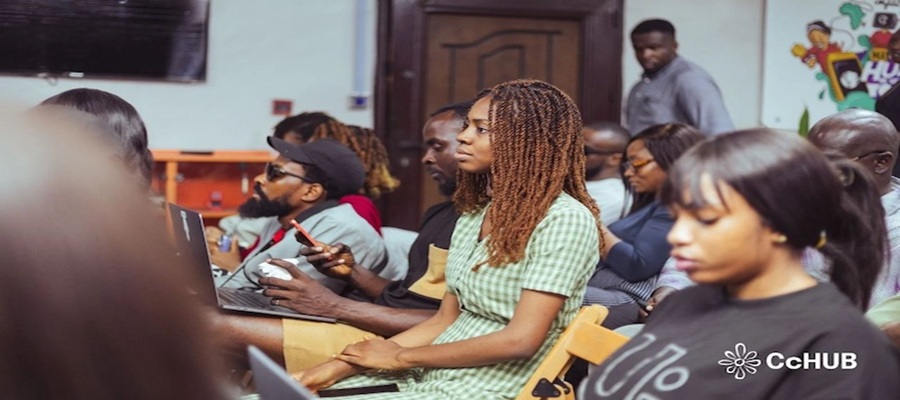
GATEWAY Programme, a transformative five-year initiative spearheaded by Co-creation Hub Ltd (CcHUB) in partnership with the Mastercard Foundation, has thrown open its registration portal to equip 340,000 young Nigerians with market-ready digital skills and direct pathways into sustainable global gig work opportunities.

Implemented across 10 strategic states – Lagos, Ogun, Oyo, the Federal Capital Territory (Abuja), Kano, Kaduna, Rivers, Delta, Edo, and Enugu – the programme targets Nigeria’s burgeoning youth population amid a global gig economy projected to reach $1.85 trillion by 2032.
It directly confronts the nation’s skills-to-employment mismatch by prioritising four high-demand creative digital disciplines: Digital Marketing, Video Production and Editing, Graphic Design, and UI/UX Design.
Managing Director of CcHUB, Mrs Ojoma Ochai, described the launch as a “life-changing intervention” in tackling youth unemployment and underemployment. “By connecting 340,000 vulnerable young people to high-demand creative digital skills and direct pathways into the global gig economy, we are enabling them to become immediate and sustainable income earners,” she stated. “Our commitment goes far beyond certification – we are focused on ensuring participants are successfully transitioned into dignified gig work.”
The programme’s inclusive design sets it apart, with deliberate quotas for women, Persons with Disabilities (PWDs), and displaced youth to bridge gender imbalances and promote equitable access to the digital workforce.
Participants undergo an initial digital literacy and skills assessment, then channelled into one of two tailored tracks: the Growth Pathway for experienced talents seeking portfolio enhancement, gig platform navigation, proposal writing, and financial management training; or the Foundations Pathway for beginners building core competencies before advancing.
Industry experts hail GATEWAY as a timely response to Nigeria’s youth dividend, where over 70 per cent of the population is under 30, yet formal job creation lags. CcHUB’s Programme Lead, Mr Timothy Aluko, noted that the selected skills emerged from demand analysis across major gig platforms like Upwork, Fiverr, and Freelancer, ensuring graduates compete effectively on the international stage.
Registration is now live on the official portal at gateway.cchub.africa, with physical access points, laptops, internet connectivity, and mentorship provided to maximise participation. Successful completers gain not just certifications but active matchmaking to verified employers, portfolio showcases, and ongoing support for sustained earnings.
This initiative builds on CcHUB’s legacy as Nigeria’s pioneering innovation centre, blending technology incubation with scalable social impact. As Nigeria races to harness its demographic advantage, GATEWAY positions the country as a formidable player in Africa’s digital renaissance, potentially generating thousands of remote jobs and forex earnings annually.
Stakeholders, including tech ecosystem leaders and youth advocacy groups, have applauded the programme’s scale and focus, urging swift uptake. With the portal now active, young Nigerians across the targeted states have a clear shot at economic independence through the flexible, lucrative world of global gig work.

Court Remands Hacker for Allegedly Stealing N3.09Bn from FCMB

CBN Directs IMTOs to Open Naira Settlement Accounts

Nigerians Lose N12.5Bn to AI-Driven Scams- PwC

SEDC Launches SEVCP to Expand Access to Capital for Startups

Kaspersky, AFRIPOL Conduct Joint Cybersecurity Training for African law Enforcement

Kaspersky Discovers New Phishing Campaign Exploiting Google Tasks Notifications to Steal Corporate Credentials

esentry 2025 Report Shows Healthcare, Financial Services and Telecoms as Staging Grounds for Increased Cyberattacks in Africa

AfDB, UNDP Launch $10Bn AI Initiative for Africa

MultiChoice Suspends Yearly DStv Price Hike as Canal+ Pushes Growth

MTN Nigeria Posts Record N1.70 Trillion Pre‑Tax Profit, Declares N20 Dividend for 2025




 E-Financial1 day ago
DLM SPV PLC Lists ₦9.00bn AAA-Rated Medium-Term Notes on FMDQ Exchange, Sets Benchmark in Corporate Bond Market

 E-Financial2 days ago
CBN Wins Central Bank of the Year Title @13th Global Awards

 General News2 days ago
Tech Firms Sack over 45,000 so Far in 2026

 News2 days ago
Morney Launches in Nigeria as E-invoicing Drives Finance Digitisation

 General News2 days ago
Jury Finds Elon Musk Liable for Misleading Twitter Investors

 Telecom2 days ago
FG Taps Quest Merchant Bank for Advisory on 90,000km Fibre Project

 General News2 days ago
Rockefeller, Global Energy Alliance Cross $100 million Mark in Africa Electrification Push

 News1 day ago
Metaverse Collapses, Horizon Worlds Shuts Down on Quest