

Broadcasting
WIPO Nigeria Canvasses Integration of IP into National Planning Strategies

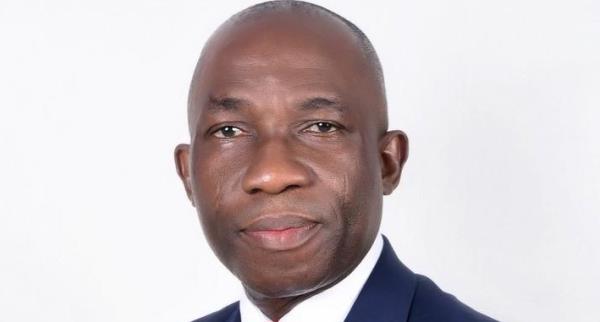
The Federal Government has been urged to fully incorporate issues of Intellectual Property (IP) within the country’s National Planning Strategies.

Counselor and Head of the World Intellectual Property Organisation (WIPO) Nigeria Office (WNO), Dr. Oluwatobiloba Moody, made the called in Abuja recently, as the Director-General of Nigerian Copyright Commission (NCC), Dr. John O. Asein inducted 18 winners and finalists of the WIPO National IP Essay Competition 2021 as Copyright Ambassadors. The theme of the competition instituted as part of activities marking the World Intellectual Property (IP) Day 2021 is: “IP, SMEs and Economic Recovery in Nigeria”.
Representative of the Director-General, NCC and Director, Finance and Accounts, Mr. Mark Obasi, noted that the essence of the study visit of the finalists to the Commission was to advance the gains of the students’ IP knowledge beyond the essay competition. He charged the 18 National IP Essay competition finalists that, having been inducted as Copyright Ambassadors, they should actively promote copyright awareness in their institutions and respective communities.
Dr. Moody, who led the IP Essay winners and finalists on a study visit to the Commission’s Headquarters, commended the ongoing efforts of Nigerian Government towards the development of a National Policy on Intellectual Property.
He said IP was a growing field in Nigeria which should be invested in substantially considering its huge development potentials. He added that IP education should be actively driven in all the universities and tertiary institutions which should be encouraged to incorporate IP as a priority course on their academic curricula.
The WIPO counselor noted that efforts at entrenching IP in Nigeria were on course, with sensitisation being driven at various levels. “We are not there yet but we are understanding the issues and pushing out a lot of initiatives to ensure that people are aware of the opportunities in IP and how it can play a major role in driving Nigeria’s future”, he stated.
According to him, a total of 170 students of tertiary institutions participated in the IP essay competition from across the country.
He indicated that the price package for the winners comprised a capacity building process in IP, including facilitation of their study tours to national IP organisations like the NCC, National Office for Technology Acquisition and Promotion (NOTAP), Trade Marks and Patents Registries; access to scholarships for WIPO Distance Learning courses; as well as international travels for IP development opportunities.
He commended the NCC for its supportive role and for hosting the finalists of the IP essay competitions in 2020 and 2021.
During their study visit to the NCC, the IP essay winners and finalists were exposed to knowledge of the regulatory and enforcement mandates of the Commission, and commercialisation potentials of copyright and IP rights.
Miss Oyin Komolafe, a 300 level law student of University of Ibadan, Oyo State, emerged as the overall winner of the competition while the two runners-up were Miss Honour Dahunsi, a 300 level law student of Adekunle Ajasin University, Akungba Akoko, Ondo State and Miss Chimdiebere Anya-Awa, a 400 level law student of University of Nigeria, Nsukka, Enugu State.
Miss Komolafe said she was elated being adjudged as the best in the competition in view of the prize and opportunities that abound for the winners. “IP is a nascent area in the field of law and I feel that with the opportunities attached, I will be able to optimise my expertise to practise IP law upon graduation”, she stated.
The finalists, also inducted as Copyright Ambassadors, were Ms. Blessing Nwankwo, a 300 level law student of Obafemi Awolowo University, Ile-Ife, Osun State; Ms. Queen Letam Nwibani, a 500 level law student of Rivers State University, Nkpolu-Oroworukwo, Rivers State; Mr. Badrudeen Lawal, a 500 level law student of Olabisi Onabanjo University, Ago Iwoye, Ogun State; Mr. Moses Olanrewaju and Mr. Abdulrahman Adebowale Adetunji; both 500 level law students of University of Ibadan, Oyo State; Mr. Gesiye-emi Emiemokumo, a 400 level law student of Niger Delta University, Wilberforce Island, Bayelsa State; Ms. Chioma Janefrances Ibeh, a 400 level dentistry student of University of Nigeria, Nsukka, Enugu State; and Mr. Oludayo Olufowobi, a 400 level law student of University of Lagos, Akoka, Lagos State.
Others were Mr. Victor Fabarebo, a 300 level law student of University of Ibadan, Ibadan, Oyo State; Mr. Maduabuchi Kingsley Arinze, a 500 level mechanical engineering student of University of Nigeria, Nsukka, Enugu State; Mr. Joshua Chizoma and Ms. Priscilla Okiwelu, both 500 level law students of University of University of Nigeria, Nsukka, among others.
Mr. Mike Akpan, Director of the training arm of NCC, Nigerian Copyright Academy (NCA), one of the resource persons that briefed the students, observed that a lot of people were getting interested in the field of IP and added that opportunities abound for IP scholars to explore the development potentials in Nigeria.
It would be recalled that the finalists of the maiden edition of the WIPO National IP Essay Competition in 2020 were similarly inducted Copyright Ambassadors at the Commission’s Headquarters in April 2021.
Others in attendance included: Director, Administration, Dr. Idowu Ogunkuade; Director, Planning Research and Statistics, Mr. Bitrus Dauda; Director, Regulatory, Mr. Augustine Amodu; and Director, Public Affairs, Mr. Vincent A. Oyefeso.



MultiChoice has said that it will not implement its customary yearly price increase on DStv and GOtv subscriptions.

This is the first time the Pay-TV company will not be adjusting its price in April, as it has in previous years, signalling a clear shift in direction under its new owner, Canal+.
The decision, confirmed by David Mignot, group chief executive,MultiChoice in an interview with TechCentral, comes as the pay television operator grapples with steep subscriber losses across its markets.
For many households accustomed to annual April tariff adjustments, the announcement will be a welcome break.
Responding to questions about whether DStv prices would rise in April as they have in previous years, Mignot gave a firm response: there will be no increase.
He explained that the company’s immediate focus is on rebuilding its subscriber base, making this an unsuitable period to adjust prices upward.
He added that while there are no current plans for a price hike, the company has not completely ruled out adjustments later in the year, especially if economic conditions demand it, such as significant currency movements.
MultiChoice has historically reviewed and raised DStv subscription fees in April, often citing inflationary pressures and rising content costs. As recently as April 2025, bouquet prices were adjusted upwards by between 2.1 per cent and 7.9 per cent.
The DStv Premium package rose from R929 to R979 per month, while DStv Access, the entry-level satellite package, recorded one of the steepest increases.
This year’s pause represents a break from that pattern and forms part of a broader reset following Canal+’s acquisition of MultiChoice in September 2025.
Mignot, who brings three decades of experience in the pay television industry, summed up his mission in simple terms: halt subscriber losses and return the business to growth.
The urgency behind the move is evident in MultiChoice’s recent performance.
The group has lost 2.8 million linear broadcasting subscribers in the two years ended 31 March 2025, with roughly half of those losses occurring in South Africa.
In the financial year to end-March 2025 alone, MultiChoice shed 1.2 million subscribers, representing an eight per cent year-on-year decline and leaving the group with 14.5 million active customers.
The previous year saw an even steeper drop of 1.6 million subscribers. By June 2025, Canal+ indicated that the pace of decline had intensified further.
The financial impact has been significant. Revenue for the year ended 31 March 2025 declined by R4 billion to R52 billion, while trading profit fell sharply by 49 per cent to R4 billion.
According to Mignot, the company’s difficulties stem less from its programming slate and more from weaknesses in its commercial execution.
He argued that in subscription businesses, a churn rate of between 12 and 15 per cent annually is inevitable as customers relocate, experience job losses, adjust household budgets, or change priorities. Without attracting a comparable number of new subscribers each year, losses accumulate.
Mignot maintained that the content offering remains strong, particularly in sport and general entertainment. He cited flagship brands such as SuperSport, M-Net and Africa Magic as evidence of sustained investment in programming. However, he stressed that content strength alone cannot offset a weakening subscriber acquisition engine.
He noted that MultiChoice’s commercial machinery had performed robustly across Africa until around 2022, describing the current challenges as relatively recent.
Drawing on Canal+’s experience in French-speaking African markets, Mignot pointed out that pricing there has remained largely unchanged for close to 14 years, supported by a volume-driven approach. He described his strategy as one focused on growing subscriber numbers while maintaining profitability.
While he did not dismiss the possibility of reviewing prices downward in future, he indicated that no such decision has been taken.


Spotify marked five years in Nigeria since its February 2021 launch with dramatic year-on-year listening growth averaging 163.5% through 2025, featuring triple-digit surges early on and sustained momentum, propelled by Afrobeats streams rocketing +5,022% alongside booming genres like Amapiano (+10,330%), Gospel/Praise (+5,499%), Hip-hop/Rap (+3,020%), and R&B (+2,602%).

Spotify
Indigenous language music listening surged +554% in Nigeria in 2024 and +87% in 2025, with global growth at +141% and +41% respectively, underscoring rising demand for local storytelling sounds.
The platform’s Nigerian artist roster expanded +158%, fueling a discovery boom where average listeners (aged 26) streamed 150 different artists recently; users created over 25 million playlists, logged 1.4 million play hours in 2025 alone, and streamed 59 billion podcast hours total.
Top Artists (2021-2025): Asake, Wizkid, Seyi Vibez, Burna Boy, Davido.
Top Songs: “Remember” (Asake), “Dealer” (Ayo Maff & Fireboy DML), “Awolowo” (Fido), “Kese (Dance)” (Wizkid), “Lonely At The Top” (Asake), “Joy is Coming” (Fido), “With You” (Davido feat. Omah Lay), “Terminator” (Asake), “MMS” (Asake feat. Wizkid), “Doha” (Seyi Vibez).
Nigeria’s debut stream was Shiga Lin’s Cantopop epitomizing borderless discovery from day one.
Nigerian singer, songwriter and producer Pheelz (Phillips Kayode Moses) is set to feature this weekend on African Voices Changemakers, the flagship magazine programme on CNN International.

The 30-minute episode, sponsored by digital solutions company Globacom, premieres on Saturday, February 21, 2026. In a candid sit-down with host Larry Madowo, Pheelz opens up about his journey from church musician to global hitmaker, reflecting on the intersections of faith, fame and the expanding influence of Afrobeats on the world stage.
Now 31, Pheelz began his musical path as a multi-instrumentalist in church before earning widespread acclaim in 2012 as the producer behind the hit tracks “First of All” and “Fucking with the Devil” on Olamide’s YBNL album. His rapid rise saw him named among NotJustOk’s Top 10 Hottest Producers in Nigeria in 2013.
He further solidified his reputation by producing nearly every track on Olamide’s Baddest Guy Ever Liveth, earning nominations at The Headies 2013 and in the Producer of the Year category at both The Headies 2014 and the Nigeria Entertainment Awards. In 2020, he clinched The Headies Producer of the Year award, and in 2021 secured the Soundcity MVP Award for Best Collaboration for “Finesse,” his smash hit with Bnxn (formerly Buju).
On the programme, Pheelz reflects on the experiences that shaped his sound and creative philosophy, discusses landmark collaborations, shares his perspective on artificial intelligence and artistry, and explains why sound, storytelling and culture remain central to African music’s global resonance.
The show airs on DSTV Channel 401 at 8:30 a.m. (WAT) on Saturday, with repeat broadcasts at 12:00 noon the same day; Sunday at 4:30 a.m. and 7:00 p.m.; Monday at 4:00 a.m. and 6:45 p.m.; and Tuesday at 6:45 p.m. The broadcast schedule continues through Monday of the following week.

Iran-Israel-US Conflict and CBN’s FX Gains: A Stress Test for Nigeria’s Monetary Stability

JAMB Uncovers AI-Driven Fraud Targeting UTME Candidates, Warns Parents

SERAP Asks FCCPC to Investigate Google, Meta, Others over Alleged Rights Abuses

Reps Mull Commission to Regulate Fintech Operations

TeamApt, Awabah Partner to Boost Pension Drive for Nigerians

Accidental Billionaire Opts for Jail Instead of Returning Money Credited Him by Mistake

New Horizons Nigeria Breaks Ground: First to Fuse Mandarin into ICT Curriculum

Kaspersky Brings more Transparency to Threat Detection with New Hunt Hub

NDPC Commits to Balancing Data Privacy, Protection Information

OADC Lagos Reinforces Commitment to Local Data Hosting and Digital Transformation @ NDPC’s National Privacy Week Summit




 Telecom2 days ago
MTN Nigeria Posts Record N1.70 Trillion Pre‑Tax Profit, Declares N20 Dividend for 2025

 General News2 days ago
More 14m Farmers to Benefit from AfDB-backed Initiative

 Telecom2 days ago
Dimension Data Nigeria Secures ₦20Billion Funding to Strengthen Digital Infrastructure

 Telecom2 days ago
Alerzo Liquidates Delivery Fleet as N4.38bn Moniepoint Loan Row Deepens

 News2 days ago
Galaxy Backbone Confirms Over 150,000 Active Official Government Email Accounts, Clarifies Status of GOVMAIL

 General News2 days ago
Newmark Webinar Explores How AI Could Transform Healthcare in Africa
 General News2 hours ago
SERAP Asks FCCPC to Investigate Google, Meta, Others over Alleged Rights Abuses
 E-Financial2 hours ago
Reps Mull Commission to Regulate Fintech Operations