

General News
Women to Watch in GMB’s Govt

The outgoing administration of President Goodluck Jonathan boasts of an array of influential women, who command much respect even among their male counterparts, according to the Punch.
Apart from the President’s wife, Dame Patience Jonathan, who pundit said was always interested in official matters and those who get elective and appointive positions,
it was said that the influence of the Minister of Finance, Dr. Ngozi Okonjo-Iweala; and the Minister of Petroleum Resources, Mrs. Diezani Alison-Madueke, made Jonathan’s administration popular.
The Punch said that that the two ministers currently head sensitive ministries in Jonathan’s government.
Likewise, the inauguration of Gen. Muhammadu Buhari as Nigeria’s new President on May 29 will throw up another set of influential women. Some of the women were believed to have invested their energy in the March 28 pre-election campaigns in which the All Progressives Congress presidential candidate won.
The women, parading what may be described as robust credentials, braved all odds to contest in elections like their male counterparts to represent the people of their various political constituencies or districts.
A few of them, according to observers, will wield a lot of influence in the incoming administration by the virtue of their positions as the wives of the President or vice-president, while others will hold sway because of the offices they occupy in the APC executive committee.
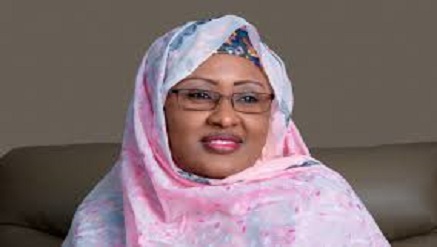
Aisha Buhari
The 44-year-old wife of the President-elect, Hajiya Aisha Buhari, will automatically become the country’s new First Lady on May 29 after her husband’s inauguration.
The Adamawa State born cosmetologist attended the famous Ahmadu Bello University, Zaria, where she earned a Bachelor of Science degree in Public Administration.
According to the Punch,Though some people have described the member of the United Kingdom Vocational Training and Charitable Trust and the International Health and Beauty Council as an introvert, she is said to be a consummate politician and strong believer in the project Nigeria.
The alumnus of the famous Carlton Institute of London and the Academy Esthetique Beauty Institute of France did tell everyone during the pre-election campaigns that her husband, if elected, would give women opportunities to contribute to the development of the country.
Hajiya Buhari demonstrated her passion for the development of Nigerian women at a campaign rally recently in Edo State, where she assured women that her husband would initiate policies that would guarantee their improved living standard.
She said, “I am here to let Edo women know that when my husband is elected into office as President, insecurity, the girl-child trafficking, the plight of the widows in the South-East will be looked into.
“There must be a cultural design that can accommodate the widow. A design that would make the girl-child comfortable wherever she is in this country.
“The portion of the girl-child is to have a high standard and moral society for her to live in, get married, have children, train them and also mould them to become future leaders.”
Dolapo Osinbajo
Little was known about Dolapo Osinbajo until her husband emerged as the APC vice-presidential candidate.
The grand-child of the late sage, Chief Obafemi Awolowo, is the leader of the Ladies Fellowship of the Redeemed Christian Church of God, Jesus House Paris, Banana Island, Lagos.
Described as humble and submissive wife by those who are close to her family, she supported her husband in 2007 to establish “The Orderly Society Trust,” a non- governmental organisation dedicated to the promotion of Christian ethics and orderliness.
While others sought political offices to touch the people’s lives, Mrs. Osinbajo yearned for a different avenue to reach the larger society, especially the poor. She therefore wrote and launched a book, “They Call Me Mama.”
She said the drive to write the book came from her experiences with some “street boys and men in Lagos State.” According to her, she aims to use the proceeds from the book to sustain her efforts in getting the street urchins off the roads and into homes. Mrs. Osinbajo said, “My weekly visit to the boys in their hideout under the bridge for several years has filled me with unforgettable stories. Reminiscences of these times are the focus of this book. Our original meeting spot which was lovingly referred to as ‘Under’, today; it has been transformed to the Muri Okunola Park.
“To me, they are beloved children and they call me ‘Mama.’ They are lost, but can be found. That was why I was compelled to write the book and I dedicate the book to everyone who is lost.”
Remi Tinubu
The senator representing Lagos Central is an educationist, administrator, philanthropist and Officer of the Order of the Niger. She was described as exemplary First Lady of Lagos State between 1999 and 2007 during which period she founded the New Era Foundation; a non-profit organisation, dedicated to youth development, girl-child education, women empowerment and inspiring youths to excellence.
It was believed that Tinubu’s re-election into the senate in the just concluded general elections would make her become more influential in the next government as she may head one of the sensitive committees in the upper legislative chambers.
As a senator, she hosts a quarterly town hall meeting with her constituents to render accounts of her stewardship and obtain feedbacks on their developmental needs. To date, she has sponsored three bills to provide Social Security for Elderly Citizens; seek the Amendment of the Labour Act to enhance employment opportunities for women and a bill to provide Special Economic Assistance to Lagos State in view of its status as a former capital city and the commercial capital of Nigeria.
Abike Dabiri-Erewa
The Chairman, House of Representatives Committee on Diaspora Affairs, is also considered as a force to reckon with in the forthcoming administration.
The dexterity with which she coordinated the APC presidential campaign alongside a senator-elect, Dino Melaye, had endeared her to the party.
Dabiri-Erewa was first elected into the House of Representatives to represent Ikorodu Constituency of Lagos State in 2003 and re-elected in 2007. She also won re-election in 2011.
The former Chairman, House Committee on Media and Publicity, had sponsored a number of significant bills that were passed by the Parliament, including the Freedom of Information Bill; a bill for an act to ensure full integration of Nigerians with physical disabilities and eliminate all forms of discrimination against them; the Nigerian Infant Health Welfare Bill (ensuring every child under five receives free medical care); Nigerian Diaspora Commission Bill; a bill to repeal Nigerian Press Council Bill and replace it with the Nigerian Press and Journalism Council Bill (strengthening the NPC and promote responsible journalism and protect the welfare of journalists in Nigeria).
Dabiri-Erewa did not contest for any elective office in the just concluded general elections; observers are of the opinion that her performance as Chairman, House of Representatives Committee on Diaspora as well as her activities during the APC campaign will earn her an enviable position in the incoming cabinet.
Hajiya Ramatu Aliyu
The President-General of the Global Women & Youth Empowerment Strategy will no doubt command much respect in Buhari’s administration by the virtue of her position as the APC Woman Leader.
Like her woman colleagues, Ramatu Aliyu, sunk herself in APC’s activities to ensure that the party wins the last presidential election.
Aliyu demonstrated her commitment to the party by mobilising the electorate, especially women, to collect their Permanent Voter Cards.
“The collection of the PVCs represents a veritable instrument to ensure that the people, to whom power resides, exercise their franchise in the legitimate pursuit of free choice and popular sovereignty,” Aliyu had said in a statement in Abuja.
Having capitalised on the numerical strength of Nigerian women, the APC Woman Leader told the women before the election that without the sacred power to vote in a democracy, they could hardly effect the change which they desire for the sake of their collective happiness and fulfilment.
He said, “Nigerian women constitute over 50 per cent of active voters during elections in the country. It is therefore, important that they avail themselves of the historic opportunity offered by the exercise to strengthen their electoral value and consolidate their demographic advantage, especially as we approach the 2015 general elections.
“Accordingly, I call on Nigerian women to rise in unison and ensure their active participation in the exercise. They should troop out en-mass and ensure that they collect their PVCs so that their votes will not only count but make the difference during elections.
“I urge that in the prevailing circumstance, our women should reaffirm their faith in democratic change and strengthen their resolve to enthrone good governance rooted in popular franchise, free and fair elections and robust democratic engagement.”
Aisha Jummai Al-Hassan
Though the Independent National Electoral Commission declared that the Peoples Democratic Party candidate, Mr. Darius Ishaku, won the Taraba State governorship election, the APC candidate in the poll, Senator Aisha Alhassan, has demonstrated that she is a force to reckon with.
Alhassan’s popularity grew after she defeated three male aspirants to clinch the APC governorship ticket at the party’s primary held at Jolly Nyame Stadium, Jalingo, amid heavy security.
If Al-Hassan had won the Taraba State governorship election, she would have become the first woman to be elected governor in the political history of the country.
Al-Hassan, a lawyer by training, rose to become Taraba State’s Attorney-General and Commissioner of Justice. She was appointed the Chief Registrar of the High Court of the Federal Capital Territory, Abuja, on December 17, 2003.
After she retired from service, she won election on the PDP platform to represent Taraba North Senatorial District in 2011, but defected to APC to seek the latter’s governorship ticket ahead of the 2015 general elections.


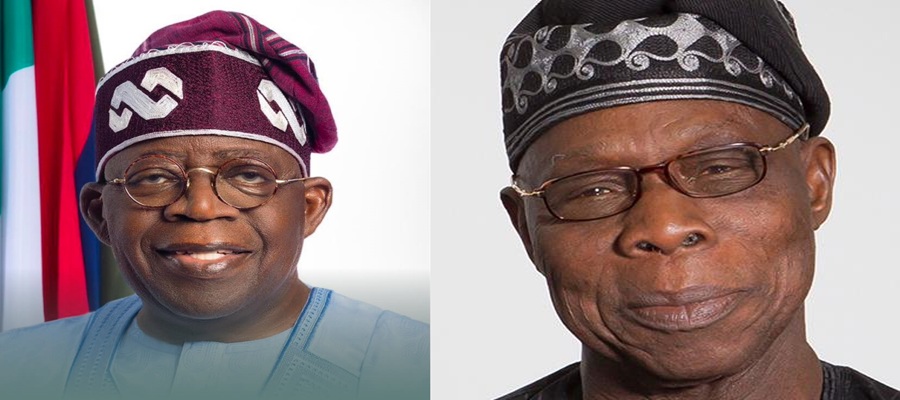
Leo Stan Ekeh, Chairman of Zinox Group and Africa’s foremost digital disruptor, has expressed gratitude to President Bola Ahmed Tinubu, and former President and African statesman, Chief Olusegun Obasanjo, for their goodwill messages and prayers on his birthday.

Ekeh, who turned 70 on Sunday, February 22, also extended gratitude to governors; former governors, including Babatunde Raji Fashola, former governor of Lagos state; National Assembly members; captains of industries, members of the global tech community, some of whom sent delegations to his house aside virtual goodwill messages sent from across the globe; royal fathers and the media.
In a post-birthday prayer and thanksgiving meeting with some members of the ICT media in his Ikoyi residence at the weekend, Ekeh said he was overwhelmed by the deluge of good wishes from Nigerians of all tribes and tongues.
Ekeh reflected on his relationship with President Tinubu over the past decades, describing Tinubu as a trustworthy and loyal friend who does not hesitate to make sacrifices for the good of the people he leads.
“President Tinubu has been my supporter long before I launched Zinox. He has always shown brotherly love,” he recalled.
He mentioned Mr. Sam Amuka, publisher of Vanguard newspapers; Lt. General T.Y Danjuma (retd), Founder, South Atlantic Petroleum; and Pa Obafemi Awolowo’s family as some of the many Nigerians with established companies who “experienced me and trusted me in the early days of my business life, and I didn’t disappoint”.
Recounting how Nigerians celebrated him on his birthday, he said: “In all my years, I have never seen such a show of love from Nigerians via different communications channels, from calls to social media. I was deeply touched by the kindred spirit of Nigerians. It tells me one thing: Nigerians are caring and loving people, and they appreciate quality and value-driven impact.
“I want to use this medium to say ‘thank you’ to those who sent me messages of goodwill, prayers through different communication platforms that I could not immediately acknowledge. I appreciate you all,” he said.
It will be recalled that President Tinubu while celebrating Ekeh on his birthday described him as one of “Nigeria’s pioneering innovators in the information technology sector.”
The President also commended Ekeh for his “commitment to promoting the Nigerian brand and creating opportunities for young Nigerians,” amongst his other achievements in the tech sector.
President Obasanjo, accompanied by his wife, Chief (Mrs.) Bola Obasanjo, who visited Ekeh to pray for him, described Ekeh as a “very kind man and an achiever who inspired many youths at a critical point in Nigeria’s information technology history.” He also prayed for the Zinox Group boss to live for 100 years and beyond.
As a sitting President, Obasanjo honoured Ekeh as an Icon of Hope and a role model for Nigerian youths on October 1st, 2001, and subsequently with the national honour of the Officer of the Federal Republic (OFR).
Others who joined Obasanjo in honouring Ekeh were former Lagos state governor, Babatunde Raji Fashola and his wife, former INEC Chairman, Professor Maurice Iwu and his wife, Chairman of MTN, Dr. Ernest Ndukwe and his wife; Mr. Atedo Peterside, Founder of Stanbic IBTC Bank and his wife; Chairman of Fidelity Bank, Mrs. Amaka Onwughalu and her husband; Managing Director Fidelity Bank, Dr. Nneka Onyeali-Ikpe; Mr. Udoma Udo-Udoma, Chairman Seplat Energy and his wife; Mr. Sam Amuka; Prof Anya O. Anya; Mr. Chris Uwaje, tech policy expert and his wife; Mr. John Momoh, Chairman of Channels Media Group and his wife; Mr and Mrs Walter, CEO of Providus bank, Mr. Roosevelt Ogbonna, group CEO of Access bank, Mrs. Victoria Ajayi, CEO of TVC Communications and her husband; Mrs. Nkeiru Anumudu, CEO of Globe Motors, secondary school mates of Ekeh including Charles Oputa (Charly Boy) who came with his wife; Leo Stan’s elder brother HRM Eze George Ekeh (aka Saint George), the traditional ruler Ishi Ubomiri Autonomous Community in Imo state; representatives of multinationals with whom he has partnered all through the years; among

Joint Admissions and Matriculation Board (JAMB) has said it has uncovered criminal syndicates that are deploying artificial intelligence tools to impersonate its officials and defraud candidates preparing for the Unified Tertiary Matriculation Examination (UTME).

Is-haq Oloyede, registrar of the board, disclosed this on Saturday in Abuja, warning that candidates and parents involved in the scheme would face severe consequences.
Mr Oloyede also said three top officials of the board have been found to have collaborated in sabotaging the system and have been recommended for dismissal.
He added that two other officials and a member of staff of Ahmadu Bello University, Zaria, are currently undergoing criminal prosecution for involvement in activities inimical to the integrity of the examination body.
Mr Oloyede said investigations revealed that more than 100 candidates were linked to the scheme, with 83 confirmed to have made payments to the syndicates.
He added that those involved cut across 25 states with three school proprietors in custody for aiding and abetting examination malpractice.
He further said the board had made recommendations to the Minister of Education for the cancellation of the affected registrations.
“What is important for us to emphasise here is that the students themselves and their parents are willing collaborators and cannot be regarded as innocent,” he said.
Mr Oloyede also expressed concern about the involvement of underage candidates, noting that about 38,000 underage candidates have registered for the 2026 UTME.
He said many of the candidates who patronised the syndicate are underaged, who have been pushed by their parents beyond their academic capacity.
While noting that JAMB’s mandate is limited to conducting examinations, he urged parents to refrain from encouraging malpractice.
“Parents must understand that paying for fraud does not secure a child’s future. It destroys it. You are teaching them that cheating is a strategy, that deception is acceptable, and that merit is optional,” he said.
Mr Oloyede rejected suggestions that the board should negotiate with suspects, including some who allegedly fled the country after last year’s examination.
He added that some computer-based test (CBT) centres had already been sanctioned.
He warned that paying for examination fraud or belonging to online groups offering such services would attract sanctions.
“Let it be clearly understood by all Nigerians that paying for examination fraud is a crime. Receiving illegal assistance is a punishable offence. Being a willing member of a WhatsApp group where these fake services are offered will no longer be condoned. Ignorance will not be accepted as a defence,” he said.
Mr Oloyede said the board is working with security agencies to tackle the fraud schemes.
He thanked the Office of the National Security Adviser, the Directorate of State Services, the Nigerian Police Force and the Nigeria Security and Civil Defence Corps for their support.
“As for capacity, we have the capacity to deal with all these issues. If we did not have the capacity, we would not be able to stay ahead of them. As they are planning, we are planning,” he said.
He added that JAMB has strengthened its technical systems, including the ability to detect prohibited devices during examinations.

Socio-Economic Rights and Accountability Project (SERAP) has urged the Federal Competition and Consumer Protection Commission (FCCPC) “to urgently investigate allegations that Google, Meta (Facebook), Apple, Microsoft (Bing), X (formerly Twitter), TikTok, Amazon, and YouTube are using opaque algorithms and market dominance to undermine Nigerian media, businesses, and citizens’ rights.”

In a complaint dated February 28, 2026, and addressed to Mr Tunji Bello, executive vice chairman and CEO, FCCPC; SERAP accused companies including Google, Meta (Facebook), Apple, Microsoft (Bing), X, TikTok, Amazon and YouTube of deploying opaque algorithms and leveraging market dominance in ways that allegedly undermine Nigerian media organisations, businesses, and citizens’ rights.
The complaint which was signed by Kolawole Oluwadare, deputy director, SERAP, said, “Big technology companies operate with enormous influence over Nigeria’s digital economy and information ecosystem, yet they often escape accountability for the harms they cause.”
SERAP urged the FCCPC “to take measures necessary to urgently prevent further unfair market practices, algorithmic influence, consumer harm and abuses of media freedom, freedom of expression, privacy, and access to information and ensure compliance with Nigerian laws and international standards.”
SERAP also urged the FCCPC “to convene a public hearing into the allegations of algorithmic discrimination, market dominance, data exploitation, and consumer harm involving Google, Meta, Apple, Microsoft (Bing), X, TikTok, Amazon and YouTube.”
SERAP also asked the FCCPC to convene a public hearing to investigate allegations of algorithmic discrimination, data exploitation, revenue diversion, and anti-competitive conduct involving the tech giants.
According to the organisation, dominant digital platforms now act as private gatekeepers of Nigeria’s information and business ecosystem, wielding enormous influence over public discourse and market competition without sufficient transparency or regulatory oversight.
“Millions of Nigerians rely on these platforms for news, information and business opportunities,” SERAP stated, warning that opaque algorithms and offshore revenue extraction models pose both economic and human rights concerns.
The group argued that the alleged practices threaten media plurality, consumer protection, privacy rights, and the integrity of Nigeria’s forthcoming elections.
SERAP pointed to actions taken by the South African Competition Commission, which investigated Google over alleged bias against local media content.
The South African probe reportedly resulted in measures including algorithmic transparency requirements, compliance monitoring and financial remedies.
SERAP urged the FCCPC to take similar steps to safeguard Nigerian media and businesses.
The organisation maintained that if established, the allegations could amount to violations of Sections 17 and 18 of the Federal Competition and Consumer Protection Act (FCCPA), which prohibit abuse of market dominance and anti-competitive conduct.
SERAP stressed that the FCCPC has statutory authority to investigate and sanction conduct that substantially prevents, restricts or distorts competition in Nigeria.
It also warned that failure by the Commission to act promptly could prompt the organisation to pursue legal action to compel regulatory intervention.
Citing concerns reportedly raised by the Nigerian Press Organisation (NPO), SERAP said big tech companies have fundamentally altered Nigeria’s information environment, creating what it described as a structural imbalance of power that threatens the sustainability of professional journalism.
Among the allegations listed are: Algorithms controlled outside Nigeria determining content visibility, monetisation of Nigerian news content without proportionate reinvestment, offshore extraction of advertising revenues, limited discoverability of Nigerian websites and platforms, and lack of transparency in ranking and recommendation systems.
SERAP argued that declining revenues in the Nigerian media industry have led to shrinking newsrooms, closure of bureaus, and the emergence of news deserts, weakening journalism’s constitutional role in democratic accountability.
The organisation further warned that algorithmic opacity and data-driven micro-targeting could influence voter exposure to information ahead of Nigeria’s forthcoming elections, raising concerns about electoral fairness and transparency.
SERAP emphasised that media freedom is guaranteed under Sections 22 and 39 of the 1999 Constitution (as amended), as well as international human rights instruments including the International Covenant on Civil and Political Rights and the African Charter on Human and Peoples’ Rights.
The group urged the FCCPC to: Initiate a full-scale investigation into the alleged conduct, convene a public hearing involving journalists, media organisations, SMEs, content creators and civil society groups, mandate transparency in ranking, recommendation and advertising algorithms, establish remedial measures, including a compensation fund for affected media organisations, summon relevant persons and demand production of documents, and impose sanctions where violations are established.
SERAP said urgent regulatory action is necessary to prevent ongoing consumer harm, protect competition, and safeguard constitutional rights in Nigeria’s digital space.

Leo Stan Ekeh at 70; thanks Tinubu, Obasanjo, Nigerians, Global Tech Community

Iran-Israel-US Conflict and CBN’s FX Gains: A Stress Test for Nigeria’s Monetary Stability

JAMB Uncovers AI-Driven Fraud Targeting UTME Candidates, Warns Parents

SERAP Asks FCCPC to Investigate Google, Meta, Others over Alleged Rights Abuses

Reps Mull Commission to Regulate Fintech Operations

Accidental Billionaire Opts for Jail Instead of Returning Money Credited Him by Mistake

New Horizons Nigeria Breaks Ground: First to Fuse Mandarin into ICT Curriculum

Kaspersky Brings more Transparency to Threat Detection with New Hunt Hub

NDPC Commits to Balancing Data Privacy, Protection Information

OADC Lagos Reinforces Commitment to Local Data Hosting and Digital Transformation @ NDPC’s National Privacy Week Summit




 General News2 days ago
More 14m Farmers to Benefit from AfDB-backed Initiative

 Telecom2 days ago
MTN Nigeria Posts Record N1.70 Trillion Pre‑Tax Profit, Declares N20 Dividend for 2025

 Telecom2 days ago
Dimension Data Nigeria Secures ₦20Billion Funding to Strengthen Digital Infrastructure

 News2 days ago
Galaxy Backbone Confirms Over 150,000 Active Official Government Email Accounts, Clarifies Status of GOVMAIL

 Telecom2 days ago
Alerzo Liquidates Delivery Fleet as N4.38bn Moniepoint Loan Row Deepens

 General News2 days ago
Newmark Webinar Explores How AI Could Transform Healthcare in Africa
 General News11 hours ago
SERAP Asks FCCPC to Investigate Google, Meta, Others over Alleged Rights Abuses
 E-Financial11 hours ago
Iran-Israel-US Conflict and CBN’s FX Gains: A Stress Test for Nigeria’s Monetary Stability