

E-Financial
World Bank Plans $1.65Bn Loans for Nigeria in 2025

The World Bank is set to decide on three major loan projects for Nigeria in 2025, totalling $1.65bn, as part of efforts to address critical developmental challenges in the country.

The loans, currently in the pipeline, will focus on internally displaced persons, education, and nutrition enhancement.
According to information obtained from the World Bank’s website, the loans are designed to support Nigeria’s social and economic recovery, particularly in vulnerable sectors requiring urgent intervention.
The first project, titled Solutions for the Internally Displaced and Host Communities Project, has a commitment amount of $300m and is scheduled for approval on April 8, 2025.
The project, which remains at the concept review stage, seeks to provide sustainable solutions for internally displaced persons and their host communities, addressing their social and economic challenges.
The second project, HOPE for Quality Basic Education for All, is expected to receive $553.8m in financing.
Its approval is slated for March 20, 2025, and it also remains in the concept review phase.
The third project, Accelerating Nutrition Results in Nigeria 2.0, involves the largest share of the proposed loans, with a commitment of $800m.
The World Bank is expected to hold a decision meeting on the project by February 20, 2025.
The $1.65bn financing package reflects the World Bank’s continued commitment to supporting Nigeria’s ongoing reforms.
The World Bank’s schedule indicates that decisions on these loans will be made in early 2025, with Nigeria’s ability to meet project prerequisites and demonstrate accountability in implementation likely to play a key role in getting the funds.


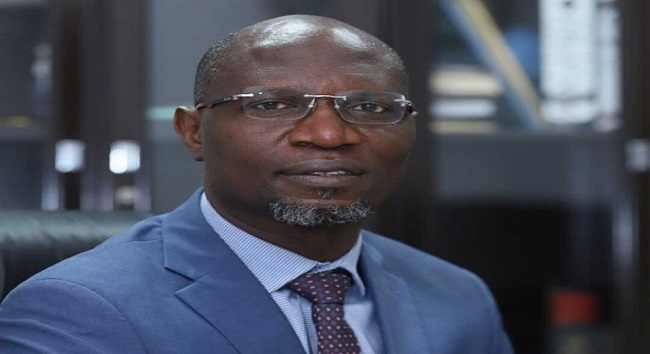
The Securities and Exchange Commission (SEC) has revised the minimum capital applicable to all categories of regulated capital market entities after 10 years.

The minimum capital review, according to the SEC, is informed by the need to strengthen market resilience, enhance investor protection, align capital adequacy with the evolving risk profile of market activities, and ensure that regulated entities possess sufficient financial capacity to discharge their obligations in a sustainable manner.
“The revised Minimum Capital framework seeks to: enhance the financial soundness and operational resilience of market operators; align capital requirements with the scope, complexity, and risk exposure of regulated activities; promote market stability and systemic risk mitigation; and support innovation and orderly development of new market segments, including digital assets and commodities markets,” SEC said in a January 16 circular to market operators.
The SEC circular was sent to all entities regulated by the Commission, including but not limited to core and non-core capital market operators; market infrastructure institutions; capital market consultants; financial technology (FinTech) operators; Virtual Asset Service Providers (VASPs); and Commodity market intermediaries.
All affected entities are required to comply with the revised Minimum Capital Requirements on or before June 30, 2027, the circular said.
“Entities that fail to meet the prescribed requirements within the stipulated timeline shall be subject to appropriate regulatory sanctions, including suspension or withdrawal of registration, as may be determined by the Commission,” SEC said.
Tier-1 Portfolio Managers (Full Scope) involved in the management of Collective Investment Schemes (CIS) and Alternative Investment Funds (Private Equity, Venture Capital, Infrastructure Funds etc) above N20 billion Net Asset Value (NAV), or discretionary and Non-Discretionary Private Portfolio Management Services above N20 billion Assets under Management (AuM), or exposure to foreign instruments up to 40 percent of the NAV are now required to have a minimum capital of N5 billion as against N150 million.
“Any Fund and Portfolio Manager with NAV/AuM of more than N100billion should have a minimum of 10 percent of the NAV/AuM as capital,” SEC added.
For the Tier-2 fund/portfolio managers (Limited Scope) who are in the business of management of Collective Investment Schemes with limited pooled fund creation of not more than 10 times the required capital (N20 billion) on Net Asset Value (NAV), or discretionary and non-discretionary private portfolio management services of not more than N20 billion, or those exposure to foreign instruments of not more than 20 percent of the NAV, now require N2 billion as minimum capital as against low of N150 million.
Likewise, broker-dealers whose services include: client execution, proprietary trading, margin/securities lending and advisory services no longer require N300 million minimum capital to operate but N2 billion.
The SEC said the minimum capital review from 2015 low is in line with its mandate under the Investments and Securities Act 2025 to regulate and develop the Nigerian capital market.
Also, Tier 1 issuing houses who do non-interest finance services, advisory & arrangement services but no underwriting now require N2 billion as against N200 million; while Tier 2 –issuing houses with underwriting and offers a ‘one-stop-shop’ for issuers, provides underwriting services, and renders advisory and product development services require N7 billion minimum capital for this business as against N200 million.
Also, the minimum capital requirement for brokers (client execution only) has been jacked up from N200 million to N600 million, while that of dealers (proprietary trading only) has been moved from N100 million to N1 billion.
Broker-Dealers’ (client execution, proprietary trading, margin/securities lending and advisory services) has been raised from N300 million to N2 billion, while Sub-Brokers’ (Digital) from N10million to N100million; Sub-Broker (Corporate) has been increased from N10million to N50 million. Also, sub-brokers’ (Individual) now need N10 million minimum capital for the business as against N2 million while inter-dealer brokers require N2 billion as against N50 million.


Securities and Exchange Commission (SEC) and the Nigeria Police Force have forged an alliance against illegal scheme operators, investment frauds, and cryptocurrency frauds in a bid to protect the hard-earned savings and the financial dreams of the Nigerian people.

Dr Emomotimi Agama, director-general of the SEC, stated this during a meeting with Kayode Egbetokun, Inspector General of Police, held in Abuja.
Agama said the SEC, as the sentinel at the gate of Nigeria’s formal capital markets, had the mandate to protect investors, maintain fair, efficient, and transparent markets, and promote the growth of a vibrant economy built on trust, which is done by setting rules, licensing operators and market surveillance.
He, however, stated that the Commission faced adversaries who operate in the shadows, outside regulated gates by exploiting the trust of people and promising miraculous returns such as 200 per cent in 30 days.
“Currently, there is a gap, a seam between identification and enforcement that these scammers exploit. Today, we aim to close that gap permanently. Therefore, we propose a robust, institutionalised collaboration with the following pillars: Joint Intelligence and Operations Task Force: Capacity Building and Knowledge Transfer; Streamlined Processes for Enforcement and National Public Awareness Campaign,” he stated.
The SEC DG advocated, “the establishment of a dedicated SEC-NPF team that combines market intelligence, forensic accounting, and understanding of complex financial schemes with investigative and intelligence-gathering capabilities. This team will be the rapid-response unit to new frauds.”
Agama also sought the permission of the IGP to go into a Memorandum of Understanding with the Cyber Security Unit of the Police Force in a bid to ensure that cyberspace is safe for all Nigerians
In his response, the IGP Kayode Egbetokun assured the SEC team that the Nigerian police Force is ready to collaborate with the Commission, strengthen partnership in all the ways possible, and ensure that the Commission achieves its aims.
He said, “Your role in the Securities and Exchange Commission is very crucial to the Nigerian Economy, and with our supervision and support from the government, we will ensure economic recovery and growth. If the police unit in SEC is strengthened, it is going to make such an impact on your enforcement drive. What you said speaks so much to your determination to ensure effective drive in the Capital market, and when we can achieve effective enforcement, it comes with so many benefits.
Egbetokun also congratulated the Commission on the recent achievement of the N100 trillion market capitalisation mark, adding that it will aid economic growth and development.
Nigerian fintech giant, Paystack has taken its boldest step yet beyond payments, acquiring Ladder Microfinance Bank. The fintech giant has quickly rebranded its new acquisition as Paystack Microfinance Bank (MFB) in a strategic shift that could reshape how African businesses access credit, deposits, and embedded financial services.

After nearly a decade building the backbone of online payments in Nigeria, the deal gives Paystack regulatory cover to hold deposits, lend directly to businesses and offer banking-as-a-service products.
More importantly, Paystack’s chief operating officer, Amandine Lobelle, highlighted that it allows the company to exert greater control over the trillions of naira that already flow through its platform every month, turning transaction data into a powerful engine for credit and treasury products.
“After 10 years of building payment infrastructure and going deep, we realised that businesses needed more than just getting paid to grow. We wanted to leverage the expertise that we have built over the last decade to continue to address some of the pain points that businesses have,” said Lobelle.
Paystack MFB will operate as a sister company to its payments business, initially focusing on working capital loans, merchant cash advances, overdrafts and term loans for small and medium-sized enterprises.
By using real-time payment data to underwrite loans, Paystack believes it can offer faster approvals and more accurate risk pricing than traditional lenders, directly tackling Nigeria’s estimated $32 billion small business financing gap.
For Paystack, founded in 2016 and acquired by Stripe in 2020, the move marks a strategic evolution from being just a payments processor to becoming a core part of the financial operating system for African businesses.
Today, Paystack supports more than 300,000 businesses across Nigeria, Ghana, and South Africa and has become one of Africa’s most trusted fintech infrastructure providers.
The banking licence is a game-changer as payments, once Paystack’s main growth engine, are increasingly commoditised across Africa. Lending, deposits and treasury services offer deeper margins, stickier relationships and long-term sustainability.
By layering banking services on top of payments, Paystack is betting that infrastructure depth will outperform flashy consumer scale.
However, the move also throws the Nigerian-born fintech giant into fierce competition with digital -first lenders and neobanks such as Moniepoint, Kuda, OPay and PalmPay, which already operate at massive scale. Still, Paystack’s strength lies in its merchant-first focus and developer-friendly APIs.

SEC Hikes Minimum Capital Requirements for Market Operators After a Decade

Study Shows Blocks in Telegram are Pushing the Underground Out

Galaxy Backbone Marks Two Decades of Powering Nigeria’s Digital Evolution

NGX Unveils Net-Zero Plan for Greener Capital Market

Galaxy Backbone Marks 20 Years, Tops FG Website Scorecard

Banks quietly move to enforce new ₦50 transfer levy from Jan. 1

FIRS says NIN, CAC Numbers to Serve as Tax IDs from 2026

Nigeria Police Arrest Okitipi, Nigerian Allegedly Linked to Microsoft 365 Hack

FIRS Declares NIN, CAC Numbers as Tax IDs from 2026

US Begins Partial Visa Ban on Nigerians January 1




 E-Financial2 days ago
Angst as FG Demands 7.5 Percent VAT on Mobile Bank Transfers, USSD

 News2 days ago
Moniepoint Launches Second Cohort of DreamDevs Initiative to Double Down on Africa’s Tech Talent Pipeline

 E-Financial2 days ago
NGX lists 3.156bn UBA shares, boosting capital to N513Bn

 E-Financial2 days ago
The Missing Pieces in Nigeria’s Banking Recapitalisation

 Telecom2 days ago
Glo Unveils Immersive Gaming Experience, Travel Saga

 E-Business2 days ago
Half of Global Companies Build SOCs to Enhance Cybersecurity, with a Focus on Human Expertise

 General News2 days ago
NITDA DG Reaffirms Nigeria–U.S. Partnership on Data Privacy, AI and Cybersecurity

 General News2 days ago
Paradigm Initiative Condemns the Internet Shutdown and Media Restrictions in Uganda Ahead of the 2026 General Election