

Telecom
Xiaomi Launches Redmi 9, Entry-level Smartphones

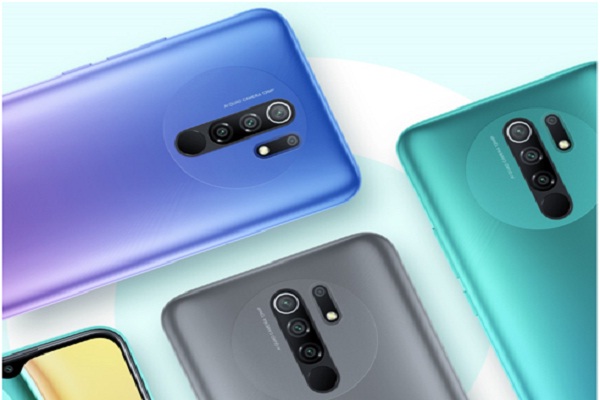
Xiaomi has officially launched the Redmi 9, Redmi 9A and Redmi 9C as part of the Redmi 9 series of entry-level smartphones.
The Redmi 9 series succeeds the Redmi 8 series by Xiaomi and aims to offer value for money smartphones in the budget segment. The new smartphones in the Redmi 9 lineup feature up to four cameras on the back, Full HD+ screens and high capacity batteries to boot.

According to Mr. Somoye Habeeb, marketing director, Xiaomi, Redmi 9 comes in as a smartphone intended to pacify enthusiasts who cannot afford the Redmi Note 9 series.It offers a cheaper price tag, which can be seen as a strategy to reach customers with a lower budget.
Today, Xiaomi launched three entry-level phones in Nigeria market: Redmi 9, Redmi 9A, and Redmi 9C. They are sold at different prices, but all of them are between N41, 900 – N66, 900and they have a very high value for money.
Given that they carry different prices and they are all devices released by Xiaomi, you probably understood that they are not at the same level. But a lot of people are wondering which one to buy: is it worth spending more for the Redmi 9 or it is better to save money for a Redmi 9A / 9C?
The Redmi 9 features a 6.53-inch Full HD+ (2340 x 1080 pixels) resolution display with a waterdrop notch cutout for the selfie camera. The screen is topped with a layer of Gorilla Glass 3 for added protection. The phone is 9.1mm thick and weighs at 198 grams.It is powered by MediaTekHelio G80 chipset with an octa-core CPU and Mali-G52 GPU and runs on MIUI 12 which is based on Android 10.
This is paired with upto 4GB RAM and upto 64GB storage options to choose from. There’s also an option to increase the phone’s storage further by using microSD cards of upto 512GB.The Redmi 9 features a quad-camera setup that consists of a primary 13MP camera with an f/2.2 aperture, an 8MP ultra-wide-angle camera with 118-degree field-of-view, a 5MP macro camera and a 2MP depth sensor. On the front, there is an 8MP selfie camera housed within the waterdrop notch cutout.The phone has a fingerprint sensor on the back and comes with a 5,020mAh battery with support for 18W fast charging out-of-the-box.Xiaomi has priced the Redmi 9 starting at N66, 900 for the 4GB RAM +64GB RAM variant. The phone comes in three colours– Grey, Green and Purple.
XIAOMI REDMI 9C SPECIFICATIONS AND PRICING

Xiaomi Redmi 9C also comes with a 6.53-inch screen but with HD+ (1600 x 720 pixels) resolution and a waterdrop notch cutout on the front which gives it a 20:9 aspect ratio. The phone is powered by MediaTekHelio G35 chipset with an octa-core CPU and PowerVR GE8320 graphics. This is paired with upto 3GB RAM and 64GB storage with an option to increase the storage by upto 512GB with microSD card.It runs on the latest MIUI 12 which is based on Android 10.
The phone comes with a triple camera array that consists of a primary 13MP camera with f/1.8 aperture, a 5MP macro camera and a 2MP depth sensor. There’s a 5MP selfie camera on the front housed within the waterdrop notch cutout.
The Redmi 9C comes with a rear fingerprint sensor and is fitted with a 5,000mAh battery but doesn’t support fast charging.
The Redmi 9C is priced starting at N46, 900the base variant with 2GB RAM and 32GB storage and N53,900 for the 3GB RAM variant with 64GB storage.
XIAOMI REDMI 9A SPECIFICATIONS AND PRICING

The Redmi 9A features the same set of display, battery and selfie camera as the Redmi 9C. It is powered by the MediaTekHelio G25 chipset with octa-core CPU and PowerVR graphics. This is paired with 2GB of RAM and 32GB internal storage with an option to expand the storage further by upto 512GB via microSD cards.
The phone runs on MIUI 12 and features a single 13MP primary camera. It can record in 1080p at upto 60FPS. The Redmi 9A doesn’t come with a fingerprint sensor.
Xiaomi Redmi 9A is priced N41, 900. The Redmi 9 is now available on sales nationwide.


MTN Nigeria CEO Karl Toriola has declared that the era of outsiders telling Africa’s story is over, positioning the continent as a global powerhouse of authors, architects, and innovators.

MTN Nigeria
Toriola made the remarks while accepting the ‘CEO of the Year’ award at the 2025 Most Influential People of African Descent (MIPAD) Recognition Ceremony in Lagos.
“For decades, stories about Africa were told about us, but rarely by us,” he said, rejecting outdated narratives of conflict and need. “We are no longer the subjects of the story; we are the authors. Africa’s time is now.”
He spotlighted African talent now leading global organisations, alongside Afrobeats and art reshaping world culture, drawing the Diaspora home with investments, not just emotions.
Toriola anchored his vision in MTN Nigeria’s journey, recalling a time when Nigeria’s 120 million people shared fewer than 500,000 telephone lines. “When MTN entered in 2001, analysts said Nigerians were too poor for mobile phones. They were wrong. They underestimated the Nigerian spirit,” he said.
From that first call in May 2001, MTN has connected over 84 million subscribers, building Nigeria’s “digital nervous system.”
He described Nigeria as uniquely investable due to its resilience and scalability, dedicating the award to MTN’s “real heroes”—engineers scaling masts and frontline customer service staff.
As MTN marks 25 years in 2026, Toriola pledged: “We are going nowhere. We are rooted in the soil of Nigeria and Africa.” He urged global elites to become the continent’s “Most Impactful Builders.”


Modern messengers, such as WhatsApp, Telegram, Signal and others, are often used for illicit purposes. Kaspersky Digital Footprint Intelligence has conducted an in-depth monitoring of over 800 blocked cybercriminal Telegram channels between 2021 and 2024.

While a range of illegal activities continues to be hosted on the platform, its environment has become noticeably more challenging for sustained underground operations.
Telegram’s bot framework and other built-in features make for a low-effort ecosystem for the underworld.
A single bot can simultaneously manage queries, process cryptocurrency payments, and instantly deliver stolen bank cards, info-stealer logs, phishing kits, or DDoS attacks to hundreds of buyers per day, often without operator involvement.
Unlimited, non-expiring file storage eliminates the need for external hosting when distributing multi-gigabyte database dumps or stolen corporate documents. This frictionless automation naturally favours high-volume, low-price, low-skill offerings, such as leaked bank cards or other data, hosting malware, etc.
High-value, trust-dependent deals (for instance, zero-day vulnerability information) still remain on reputation-gated dark-web forums.
Kaspersky researchers found two clear trends related to illegal activities on Telegram. The average lifespan of shadow channels has increased, with the proportion of channels surviving over nine months more than tripling in 2023-2024 compared to 2021–2022. At the same time, Telegram’s blocking activity has risen significantly.
Monthly takedown figures recorded since October 2024 – even at their lowest – are comparable to the peak levels seen throughout 2023, and the overall pace continued to accelerate in 2025. This impedes malicious activities.
Other disadvantages of Telegram for cybercriminals include the lack of default end-to-end (E2E) encryption for chats, the inability to use their own servers for communication (due to the messenger’s centralised infrastructure), and closed server-side code, which makes it impossible to verify its functionality.
As a result, several established underground communities, including the nearly 9,000-member BFRepo group and the Angel Drainer malware-as-a-service operation, have already begun shifting primary activity to other platforms or proprietary messengers, citing repeated disruptions of their activities on Telegram.
“Fraudsters find Telegram a convenient tool for many malicious activities, but the risk-reward balance is clearly shifting. Channels are managing to stay online longer than a couple of years ago, yet the dramatically higher volume of blocks means operators can no longer count on long-term stability.
“When a storefront or service disappears overnight – and sometimes reappears only to be removed again weeks later – building a reliable business becomes much harder. We’re starting to see the early stages of migration as a direct consequence,” comments Vladislav Belousov, Digital Footprint Analyst at Kaspersky.

Galaxy Backbone Limited (GBB), the Federal Government’s leading ICT infrastructure and shared services provider, will mark its 20th anniversary in June 2026 with a grand celebration that reflects two decades of innovation, resilience, and national impact.

Since its inception in 2006, Galaxy Backbone has been at the heart of Nigeria’s digital transformation journey; building the technological foundation that supports modern government operations and public service delivery. What began as a bold vision to connect government has grown into a critical national platform that drives efficiency, transparency, collaboration and innovation across the public sector.
Over the last 20 years, GBB has helped redefine how government works. By providing secure connectivity, enterprise-grade data centre services, cloud platforms, and digital collaboration tools, Galaxy Backbone has enabled Ministries, Departments and Agencies (MDAs) to move from fragmented, paper-based processes to more integrated, technology-driven systems.
This transformation has improved government-to-government coordination, strengthened engagement with businesses, and enhanced the delivery of services to citizens. Today, the digital infrastructure powered by Galaxy Backbone supports thousands of government users, hundreds of institutions, and critical national platforms that Nigerians rely on daily.
A key part of this journey has been the Federal Government of Nigeria’s investment, managed by GBB in robust national infrastructure, high-capacity and world class data centres, fibre-optic connectivity across multiple states, secure hosting services, and shared platforms that have helped government operate more efficiently and responsively. These contributions have played a pivotal role in Nigeria’s progress toward a more digital, agile and citizen-centered public service.
Galaxy Backbone’s impact has earned both national and global recognition. In 2025, the organisation was ranked first overall in the Federal Government Website Performance Scorecard, reflecting its commitment to excellence in digital service delivery. Internationally, GBB, a couple of years ago, received the prestigious United Nations Public Service Award, a testament to its leadership in promoting a whole-of-government approach to digital transformation.
As GBB celebrates two decades of service, this milestone is more than an organisational anniversary; it is a celebration of Nigeria’s digital evolution. It is an opportunity to appreciate how collaboration between government, industry partners, technology providers, and dedicated public servants has helped build a stronger, more connected nation.
The June 2026 anniversary celebration will bring together stakeholders from across the public and private sectors to reflect on the journey so far, acknowledge the partnerships that have shaped this success, and chart an ambitious course for the future. It will highlight how collective effort, shared vision, and innovation have positioned Galaxy Backbone as a strategic national asset.
Looking ahead, Galaxy Backbone remains committed to deepening digital transformation across the country; expanding infrastructure, strengthening cybersecurity, enhancing service delivery, and supporting the Federal Government’s drive for a smarter, more efficient and digitally empowered Nigeria.
At 20 years, Galaxy Backbone stands proud of its past, confident in its present, and inspired by the limitless possibilities ahead.

Zenith Bank Top Nigerian Bank Pick Ahead of GTCO, AccessCorp

Here Are Nigerian Banks That Have Secured Their Licences

ICPC Charges Ozekhome with Forgery, Corruption Over London Property

MTN CEO Toriola Hails Nigeria’s Telecom Transformation at MIPAD

SEC Hikes Minimum Capital Requirements for Market Operators After a Decade

Banks quietly move to enforce new ₦50 transfer levy from Jan. 1

FIRS says NIN, CAC Numbers to Serve as Tax IDs from 2026

FIRS Declares NIN, CAC Numbers as Tax IDs from 2026

US Begins Partial Visa Ban on Nigerians January 1

Galaxy Backbone Tops FG’s Website Performance Ranking



 E-Financial2 days ago
SEC Hikes Minimum Capital Requirements for Market Operators After a Decade

 Telecom2 days ago
Vodacom Crowned Africa’s Top Employer 3rd Year Running on Innovation, Ethical AI

 Telecom2 days ago
Study Shows Blocks in Telegram are Pushing the Underground Out

 News2 days ago
Nigeria Off EU High-Risk Money Laundering List in Major Financial Win

 News2 days ago
NGX Unveils Net-Zero Plan for Greener Capital Market

 Telecom2 days ago
Galaxy Backbone Marks Two Decades of Powering Nigeria’s Digital Evolution

 Telecom2 days ago
Galaxy Backbone Marks 20 Years, Tops FG Website Scorecard
 E-Financial3 hours ago
Zenith Bank Top Nigerian Bank Pick Ahead of GTCO, AccessCorp