

E-Financial
XL Africa to Boosts Investment in Digital Start-ups

The World Bank Group, through its newly launched XL Africa programme, will help 20 selected digital start-ups attract early stage capital between $250 000 and $1.5 million.
XL Africa is a five-month business acceleration initiative designed to support start-ups from Sub-Saharan Africa.
According to the World Bank, the companies will receive mentoring from global and local experts, learn through a tailor-made curriculum, increase their regional visibility, and get access to potential corporate partners and investors.
Makhtar Diop, vice-president for Africa at World Bank, says digital start-ups are important drivers of innovation in Africa.
“To scale and spread new technologies and services beyond borders, they need an integrated ecosystem that provides access to regional markets and global finance. Pan-African initiatives like XL Africa play a critical role by linking local start-ups with corporations and investors across the continent.”
XL Africa is funded by the governments of Finland, Norway and Sweden, and administered by the World Bank Group with implementation support from IMC Worldwide, VC4A and Koltai & Co.
The programme’s flagship activity includes an all-expenses-paid residency in Cape Town, where the ventures will have the opportunity to meet potential mentors, partners and other XL Africa start-ups.
It also includes workshops and face-to-face mentoring. The Cape Town residency will conclude with the Venture Showcase, a regional event in which the entrepreneurs will present their business models to a select audience of corporations and investors. The Venture Showcase Day coincides with another big Cape Town event in November, AfricaCom, which is hosted by a partner of XL Africa.
The programme has also collaborated with African investment groups, including the African Business Angel Network, AngelHub Ventures, Goodwell Investments, Knife Capital, Nest Africa, Silvertree Capital, Singularity Investments, South African Business Angel Network, TLcom Capital, Zephyr Acorn and 4Di Capital, and corporate partners, such as Orange, .Eco, Ringier, and Thomson Reuters.
In the African Digitalisation Maturity Report 2017 by Siemens, it is highlighted that African countries have a lot of needs, and digital can solve many of these by using disruptive technology to develop markets, governments, services and societies.
“Sophisticated organisations should put great emphasis on creating awareness around digitalisation as this has become a business imperative and no longer a pending trend. The greatest challenge in digitalising Africa lies in integrating all stakeholders to collaborate more effectively. There is a clear requirement for integration between government, regulators, society, local ‘family’ businesses, large international organisations and the public sector,” noted the report.
Klaus Tilmes, director of the Trade & Competitiveness Global Practice at the World Bank Group, adds the programme aims to spotlight the continent’s growing digital economy by scouting for and supporting the most innovative tech start-ups. “The success of these ventures will create a demonstration effect that can attract much-needed growth investment in the sector and catalyse scaling of transnational businesses in the region.”


Taiwo Oyedele, minister of Finance and Coordinating minister of the Economy, has said there are no secret expenditures or shadow budgets as insinuated.

Taiwo Oyedele, minister of Finance and Coordinating minister of the Economy
This followed comments by the International Monetary Fund (IMF) that discrepancies amounting to about two per cent of Nigeria’s Gross Domestic Product (GDP) exist between reported and actual budget deficits.
In a statement on Sunday, Oyedele said claims that the Federal Government spent over N8 trillion outside the approved budget misrepresented both the IMF’s position and Nigeria’s fiscal framework.
The minister stressed that the federal government does not operate a “shadow budget” or spend public funds outside constitutional and statutory provisions.
“The Federal Government has noted recent public commentary alleging that approximately two per cent of GDP amounting to over N8 trillion was spent outside the approved budget based on references to the IMF Representative in Nigeria and the Fund’s 2026 Article IV Consultation Report. These claims are incorrect and risk misleading the public regarding the government’s financial management,” he said.
According to him, “For the avoidance of doubt, the Federal Government does not operate a ‘shadow budget’ or expend public funds outside the constitutional and statutory framework established for public finance.”
Oyedele explained that under Sections 80 to 83 and 162 of the 1999 Constitution (as amended), public funds can only be withdrawn and spent in accordance with the Constitution and laws enacted by the National Assembly.
He noted that government spending is undertaken through duly enacted Appropriation Acts, Supplementary Appropriation Acts and other statutory authorities approved by the National Assembly, while multi-year capital projects are implemented under existing laws that permit capital rollovers.
“It is inaccurate to suggest that trillions of naira have been secretly spent outside legislative approval. Such allegations should have identified the specific projects purportedly executed without appropriation or legal authority and present credible evidence in support of the claim,” the minister stated.
Oyedele further clarified that several categories of government expenditure, including statutory transfers, first-line charges, debt service obligations, interventions for national security and infrastructure, and allocations to agencies established by law, are authorised under various Acts of the National Assembly.
“These expenditures are neither secret nor illegal. They are established by law, disclosed in various fiscal reports, and subject to applicable oversight, audit and accountability mechanisms,” he said.
The minister added that differences between Nigeria’s budget presentation and international fiscal reporting standards should not be interpreted as evidence of unlawful spending.
He also rejected suggestions that the reported amount translated into a higher fiscal deficit. “It is equally incorrect to suggest that the reported amount represents an increase in budget deficit.
A fiscal deficit is determined by the relationship between total government revenues and total government expenditures.
“Whether a capital project is financed through annual appropriations, supplementary appropriations, statutory transfers, approved intervention mechanisms, or other lawful financing arrangements does not, by itself, increase the fiscal deficit,” he explained.
According to Oyedele, the IMF’s observations relate mainly to “the comprehensiveness, timing and presentation of fiscal reporting rather than the legality of expenditure.”
He noted that the Tinubu administration was already taking steps to harmonise Nigeria’s budgeting process, recalling that President Bola Tinubu had requested the National Assembly during the presentation of the 2026 Appropriation Bill to end the practice of multiple and overlapping budgets in favour of a single, unified budget framework.
The minister maintained that the administration remained committed to prudent fiscal management, transparency and accountability, adding that reforms in revenue administration, treasury management, budget credibility and digitalisation of government financial processes had received recognition from the IMF, other multilateral institutions, international credit rating agencies and investors.
“Public debate is both welcome and essential in a democratic society. However, it should be based on facts and an accurate understanding of Nigeria’s constitutional and fiscal framework. Mischaracterising technical observations as evidence of unlawful expenditure neither advances informed public discourse nor strengthens democratic accountability,” Oyedele added.a
He reaffirmed the Federal Government’s commitment to transparency in the management of public resources and pledged continued collaboration with the National Assembly, oversight institutions, development partners and Nigerians to strengthen fiscal governance in line with international best practices.
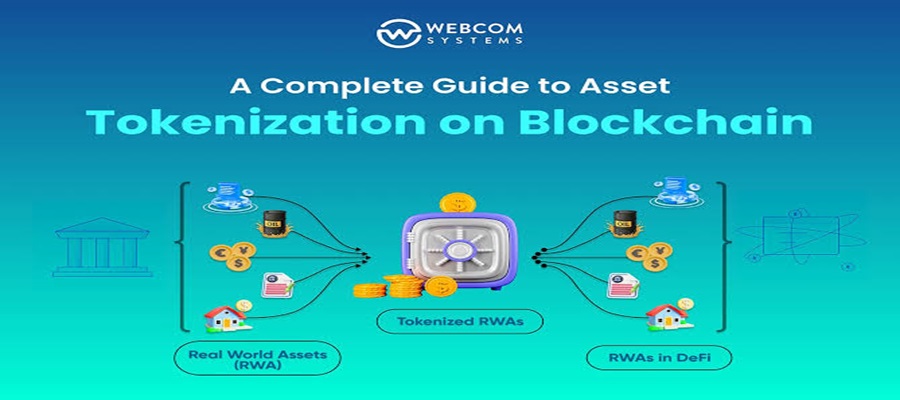
International Monetary Fund (IMF) has projected that tokenization and blockchain technology will fundamentally transform global financial market infrastructure (FMI), but insisted that regulated financial institutions will remain indispensable despite increasing automation of financial transactions.

The position is contained in a new IMF working paper titled “The Evolution of Financial Market Infrastructures in a Tokenized Economy: Exploring Blockchain Implementation Options for Issuance, Central Clearing, Settlement, and Reporting,” prepared by Yaiza Cabedo, Tommaso Mancini-Griffoli, Fabian Schär and Nicolas Zhang.
According to the report, tokenization represents the most significant technological advancement in financial market infrastructure since the transition from paper-based securities to electronic records, with the potential to streamline trading, settlement and post-trade operations across global financial markets.
However, the IMF cautioned that while blockchain technology and smart contracts can automate several operational processes, they cannot replace the governance, legal accountability and risk management functions performed by regulated financial institutions.
“Tokenization has the potential to reshape Financial Market Infrastructures more profoundly than any technological shift since securities dematerialization,” the report stated.
The IMF explained that distributed ledger technology (DLT) and programmable smart contracts can automate critical market activities, including record-keeping, transaction reconciliation, delivery-versus-payment settlements and collateral management, thereby reducing operational costs, settlement risks and processing delays.
While acknowledging the efficiency gains associated with tokenization, the IMF warned that the technology introduces new risks that policymakers and regulators must address.
Among the challenges identified are vulnerabilities in smart contracts, governance concentration within blockchain networks, reliance on external data providers known as “oracles,” privacy concerns, cybersecurity threats and fragmentation across different blockchain ecosystems.
Financial technology experts say the IMF’s position reflects growing consensus among regulators that blockchain should be viewed as an enabler rather than a replacement for traditional financial institutions.
Tokenization is the process of converting sensitive information or physical assets into secure, randomized digital identifiers called tokens.
On the other hand, Blockchain is a decentralized, distributed digital ledger that securely stores data across a network of computers.
Instead of relying on a central authority like a bank, network participants use consensus mechanisms to verify transactions.
Data is grouped into cryptographically secured “blocks” and chronologically linked into an unalterable chain

The World Bank has approved a fresh $1.25 billion loan for Nigeria under its Nigeria Actions for Investment and Jobs Acceleration (NAIJA) programme.

The approval was announced this week as the World Bank unveiled a new Country Partnership Framework (CPF) for Nigeria covering the 2026–2032 period.
According to the bank, the six-year framework is designed to support Nigeria’s development priorities by promoting private sector-led growth and creating more employment opportunities across the country.
“The World Bank Group has endorsed a new Country Partnership Framework for Nigeria spanning 2026–2032, setting out a strategy to create more and better jobs at scale by unlocking private sector-led growth,” the statement read.
It added that the bank had “also approved the Nigeria Actions for Investment and Jobs Acceleration Development Policy Financing operation, which supports Nigeria’s transition toward a more inclusive growth model that spurs growth and creates jobs.”
The latest approval follows recent criticism after reports emerged that the Federal Government was seeking another $1.25 billion facility from the World Bank to finance economic reforms, improve competitiveness and stimulate job creation.
The move drew concerns from many Nigerians, who argued that increasing foreign loans had not translated into better living conditions.
The World Bank said its new partnership framework builds on the country’s recent macroeconomic reforms, which it believes have strengthened economic growth, improved government revenue, increased external reserves and boosted investor confidence.
As part of the programme, the bank plans to help expand electricity access to 32 million Nigerians, provide broadband connectivity to 58 million people, improve health and nutrition services for 40 million citizens and support about 9.5 million farmers.
The framework also targets improvements in human capital development, agricultural productivity, energy supply and digital infrastructure.
Mathew Verghis, country director for Nigeria, World Bank, said the institution’s support would focus on ensuring that recent economic reforms deliver tangible benefits for Nigerians.
“Our new Country Partnership Framework provides the strategy for how the World Bank Group will support Nigeria over the coming years, with a strong focus on helping to create more and better jobs, particularly by enabling private sector-led growth.
“The recent macroeconomic gains have been critical to help stabilise the economy. Translating improved macroeconomic conditions into better living standards will require addressing the structural constraints to spur private sector investment and job creation,” he said.
The bank said the $1.25 billion Development Policy Financing operation is expected to back reforms aimed at improving Nigeria’s business environment and strengthening long-term economic growth.
According to the statement, the planned reforms include expanding capital markets, updating regulations for the digital economy and e-governance, accelerating electricity sector reforms, reducing trade barriers in line with Nigeria’s commitments under the Economic Community of West African States and the African Continental Free Trade Area, improving access to quality agricultural seeds and increasing domestic revenue generation.
“The NAIJA DPF operation, which amounts to $1.25bn, supports a set of Government reforms to strengthen the foundations for growth and competitiveness.
“These include deepening capital markets, modernising the regulatory framework for the digital economy and e-governance, advancing power sector reforms to accelerate electrification, lowering trade barriers in line with Nigeria’s ECOWAS and AfCFTA commitments to help ease price pressures, improving access to quality agricultural seeds, and strengthening domestic revenue mobilisation.”
Dahlia Khalifa,divisional director for Nigeria, International Finance Corporation, said ongoing reforms had positioned the country to attract more private sector investment.
“Nigeria’s long-term growth potential will be shaped by the economy’s ability to attract investment, raise productivity, and unleash private sector job creation, building on the capital of a rapidly growing population,” she said.
Also speaking, Ed Mountfield, vice-president and chief financial officer, Multilateral Investment Guarantee Agency, said although Nigeria’s reforms had created opportunities for investors, risks remained.
“Nigeria’s reform progress is creating important opportunities for private investment, but risks remain for investors. MIGA’s role is to help manage these risks—through guarantees and political risk insurance—so that investors can step in with confidence,” he said.
The newly approved facility is the second-largest single World Bank loan secured by Nigeria since President Bola Ahmed Tinubu assumed office, behind the $1.5 billion Reforms for Economic Stabilisation to Enable Transformation Development Policy Financing approved in June 2024.

SERAP Asks Akpabio, Abbas for Explain N1.3Bn Budgeted for ‘Fictitious’ Presidential Council

No Plans for Fresh Tariff Hike – MTN

FG Denies N8 Trillion ‘Shadow Budget’, Says IMF Quoted out of Context

Tokenization, Blockchain Technology will Transform Financial Institutions – IMF

Weebly Websites to Shut Down for Nigeria, 66 Other Countries from September

Mobile Internet Gender Gap Widest in Africa – GSMA

Nigeria Launches FreeTV Nationwide

NASENI Moves to Digitize CCB’s 5m Assets Declaration and Operations

UK, Nigeria Launch £15m Growth Programme to Accelerate Economic Transformation

Court Deals Fresh Blow to NBC, Throws Out Appeal over Broadcast Fines




 Broadcasting2 days ago
Why We’re Partnering With NIHOTOUR To Bring Nigerians In South Africa Home – Steve Babaeko

 News2 days ago
FG Clears N39Bn Pension Arrears for NITEL, PHCN, Other Retirees

 News2 days ago
How Fraudsters Emptied a Judge’s Account of N7.2 Million in Midnight Attack

 Telecom2 days ago
MTN Nigeria Celebrates Volunteers at Y’ello Care Impact Showcase

 E-Financial2 days ago
SEC Grants Approval to Luno, Other Crypto Firms under Regulatory Sandbox

 Telecom2 days ago
Xenophobia: MTN Nigeria Belongs to Nigerians, Not Only South Africans — Toriola

 Telecom2 days ago
Google Play launches $1m fund to support African game developers

 Telecom2 days ago
MTN Takes ‘The Gathering on 100’ Youth Empowerment Initiative to Kano