

E-Business
Youths Disillusioned as Delta State Innovation Hub Shuts Down

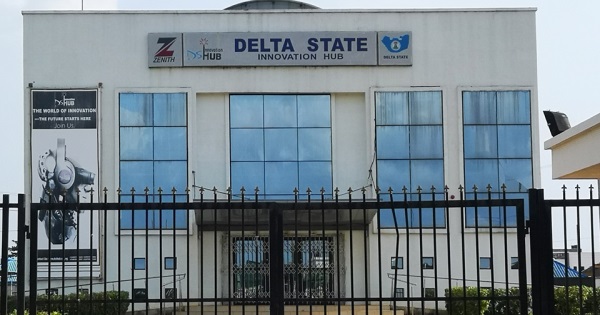
The decision by Delta state government to shut down its innovation hub has left teeming youths of the state disenchanted, Nigeria CommunicationsWeek investigations have revealed.
The common aim of innovation hubs is to promote local innovation, encourage relevant actors to share knowledge early in the development process, build Startups, create employment and foster entrepreneurial cooperation. The hubs support networking among local stakeholders and create links to investors and international organisations.
Primarily, governments facilitate and fund Innovation hubs to serve as centres of excellence for creativity and development of information technology amongst youths. The provision of innovation hubs could be a means of youth empowerment which would allow the youth to channel their creative energy into a potentially productive source for their communities.
Against this backdrop that Nigeria CommunicationsWeek recently visited Delta state innovation hub to ascertain the impact of the closure of the hub and its impact since last year on youth empowerment and what the state government’s plan to reopen the hub.
Among the youths that expressed their minds on the frustrations they are faced with the closure of the hub include Sylvester Nkeze, a web developer in Asaba, he worked as a software engineer and also involved in tutoring a lot of people who came to learn about fundamentals of software engineering in the hub when it was operational.
“The truth is beyond individuals having their personal skills; it was a kind of assembling point for people with like minds, the hub served as a place not only for people to learn but also to be able to gather people after they have done learning to share their ideas and use what they have learnt to create products or business for Delta State and Nigeria.
“Generally, the essence of the Hub is to make people converge their technological ideas into a scalable business that could help bring development and employment in the state. Nobody in this century can individually start a business, I’m talking of a large scale business and not small and medium scale business, and bigger businesses today are built on partnerships.
“There are a lot of people working around with great and good ideas and they don’t have people with like minds they can share those ideas with and be able to build on those ideas. The Hub served as a meeting point for such things to happen, the closure of the hub has totally destabilized the means through which a lot of ideas or large scale businesses could have been built or incubated that is one of the biggest problems.
“Right now, you have people walking around looking for menial jobs to do whereas their ideas could have been used to build businesses that could create jobs and even the government could tax for revenue. It is a big problem,” he said.
Henry Chuks, co-founder of Benx Technologies, Asaba based ICT firm, said that the implications of continuous closure of the Hub are enormous which include brain drain, youth unemployment among others.
According to him, “I know many people residing in Delta state who have left the state to better equipped hubs in Port Harcourt and Lagos after acquiring ICT skills and mentorship decided to establish in those states thereby leaving Delta with nothing. “More so, as they run their businesses in those states they will pay taxes and levies to those states’ government as such Delta state will lose that revenue.
“ICT is today the largest market globally, if 70 per cent of youths in Delta state are ICT inclined from programming to hardware engineering they can get jobs in or outside of the country, as well be self -employed with their talents which will help in addressing youth unemployment”.
According to Favour Asuainok, a student, “I just finished my OND from Ogwashi Polytechnic. My plan was to come and do my internship in Delta State Innovation Hub, when I contacted the director, he said the Hub is closed I was sad because I had plans of meeting great and like minds as well as sharing of ideas. I would love the government to look into this issue of closure of the Hub because, it is very important.
“I travel as far as from here (Asaba) to Awka in Anambra just because I want to attend Meet-ups and Hackathons to meet with like minds to bring innovative solutions to our problems in the country through technology. If Delta state government can look into this issue it will help to spring up starts-up that will create jobs in the state.
“Hub is a place of meeting. Information technology has paved the way all over the world, you see people that studied humanities, social science and languages among others coming to learn IT, because IT is thriving globally. If Delta state government truncates one of the key springboards for start-ups it is a very bad situation.
“I urge the government to not only opening the Hub back but also working in-hand with the ministry of youth and development so that this area of IT should be boosted in the state. Delta state is lagging behind, I have seen what states like Akwa Ibom, Edo and Lagos are doing, and this has resulted in youths in Delta going to Lagos where there are a lot of Hubs.
Providing insight on how the Hub operated before it was shut down, Pius Eke Jr, managing director, Mobile Software Solutions, operators of the Hub, he also served as the facility head of Delta State Innovation Hub.
He said innovation Hubs are designed for the youths of the areas they are located; Delta state innovation hub was no difference. “At the heart of the innovation Hub was an incubation and acceleration programmes, trainings, office and co-working spaces, youth development, business master-classes among others. We were assigned to ministry of Sciences and Technology as government supervising agency.
“Being a new subject in town, it was a bit difficult to be able to drive our intent and purpose to the teaming youths of Asaba as such we did a lot of marketing. Went to high institutions around Asaba such as Delta university, Awna Campus; Delta State Polytechnic, Ogwasi-uku; Delta state Polytechnic, Ozoro; Delta State University, Abaraka; and Delta state Polytechnic, Oghara.
“We were able to visit these higher institutions of learning and made them understand that the world is changing with new knowledge and new skills are actually in demand and they need to come and learn.
“As part of our service offering, aside incubation and acceleration programmes which of course is for already skilled people, we decided that since the skill is new in that terrain we would begin to teach these skills from beginning. So, we started teaching programming, and other technology related courses.
“With hindsight of our corporate and professional experience of successfully organising and running Innovation Hackathon in Tinapa with the Cross-River State Government for 4 years in partnership with ISPON, we helped in establish Software Clubs in 30 Universities Nationwide which has benefited many thousands of our youths. We organised meet-ups, we created platforms such as Asaba Tech Meet-up groups. We worked with Google to facilitate GDG Day shows as well bring tech conferences to Asaba and worked with CySic to bring cybersecurity training to Asaba.
“So, in all of these campaigns we had problems in having youths that resides in Delta engaging the Hub, instead the attraction we got were Deltains and non-Deltains from other States in other universities outside the state that come into the Hub when they are on holidays, internship or waiting for National Youth Service Corps, they find themselves coming back to Asaba as such visit the Hub.
“We had youths of Delta state that have gone to universities such as Covenant University, Afe Babalola University, Babcock University, University of Benin and University of Nigeria, Nsukka. Students from these schools came to the Hub to run one programme or the other.
“Delta State Innovation Hub was one of the first out of Nigeria. We ran the hub for three (3) years, without any funding from Delta State. We established the Innovation Hall of Fame, Created e-Government and Digital research Labs amongst others. Throughout the duration, we deployed 4 staff, external Resource persons, training materials and enormous resources from Lagos to Asaba. In 2016, during the public presentation of the hub, our Chairman and his Consortium partners chattered a Jet from Lagos to Asaba at enormous cost, to fly in some dignitaries, due to aviation fuel scarcity. In all of these, we didn’t get as much support as we expected from the government considering that it was Private Public Partnership initiative. All said, the hub experience was a monumental loss to Mobile Software Solutions and still counting.”
Instead, the state was expecting and requested for huge sums of money as revenue – forgetting that innovation hub is a Research Domain whose return on investment ranges from 7-10years year-in-year-out. Every of the activities we ran in the Hub, we ran it basically on our own from the leanest possible resource that we could run on. The hub has trained and mentored more than 1000 youths during its active inception at enormous cost to the project partner.
Responding, Engr. Mathew Tsekiri, commissioner for Science and Technology, Delta State, reassured that the state government has decided to reopen the hub as renovation work is on-going to reopen the facility for use by Delta youths.
“We are renovating hub, once we finish the renovation then we will start activities, it is going to be one of the best Hubs in the country.
“The MoU we signed with Mobile Software solution for the running of the hub has expired and we have decided to run the hub by ourselves.
“We are going to make it a proper education hub offering certified ICT trainings for graduates seeking for jobs, when we train them they will be employable or self-employed. We are going to offer high earned ICT courses.
“We have put the structure in place to manage the hub. We are not going to give it out to anybody to manage for us.
We intend to collaborate with ICT companies such as Google, Facebook among others, but we just want to get the hub up and running first.
We have the resources to get the hub running we are not going to seek for resources from any multinational ICT giants.
Meanwhile, available records reveal that Delta State indigenes are recognised in the Nigeria IT profession and Innovation Ecosystem as some of the high-flyers in policy, strategy and digital Innovation leadership. It is therefore a tragedy that while Delta State IT Professional has contributed significantly in the development of National and other States IT Policy agenda, they remain oblivious in their State. Perhaps, that is why the State Government has decided to consult Google and Facebook? The Investigation continues.



Galaxy Backbone (GBB) aligns with and celebrates the successful announcement by the Office of the Head of the Civil Service of the Federation on the achievement of a Paperless Civil Service, a significant milestone in Nigeria’s public sector reform and digital transformation agenda.

The milestone was formally highlighted at a press briefing led by the Head of the Civil Service of the Federation, Mrs. Didi Esther Walson-Jack, who commended Galaxy Backbone for its sustained support and contribution throughout the implementation of the programme.
GBB has played a critical role in enabling this transition by providing secure, scalable, and shared digital infrastructure that supports the digitisation of government processes across Ministries, Departments and Agencies (MDAs). Through the 1Government Cloud, MDAs have been empowered to migrate from paper-based workflows to digital platforms, improving efficiency, collaboration, data security, and service delivery across the Federal Civil Service.
In addition, GovMail, GBB’s secure government email platform, has strengthened official communication, enhanced records management, and reinforced cybersecurity standards—key pillars in sustaining a paperless operating environment.
Galaxy Backbone acknowledges the collective efforts of the Office of the Head of the Civil Service of the Federation, Permanent Secretaries, Directors of ICT, consultants, partners, and dedicated public servants whose commitment and collaboration ensured the smooth delivery of this initiative.
The Managing Director/Chief Executive Officer of Galaxy Backbone, Prof. Ibrahim Adeyanju, was represented at the press briefing by Akintayo Bamisaye, Acting Group Head, Research, Digital Innovation and Skills Department (RDIS).
GBB describes the achievement as a strong close to 2025 and reaffirms its commitment to supporting the Federal Government in building a modern, efficient, and digitally enabled public service.
At the close of 2025, Temidayo Ojo, the CEO of Jumia Nigeria, reflected on a year-end shopping season that points to the growing maturity of the country’s e-commerce market. “Black Friday is no longer a single, short-lived spike in activity,” he said.

“It has become a familiar, anticipated moment in the retail calendar, where consumers shop deliberately and with confidence.”
Preliminary KPIs for the two months ended November 30, 2025, show strong year-on-year growth in both orders and Gross Merchandise Value (GMV), with GMV growth outpacing order growth. This indicates that customers are placing fuller, more considered baskets rather than shopping in fragmented transactions. Nigeria ranked among Jumia Group’s better-performing markets, with engagement remaining steady throughout the Black Friday period rather than spiking briefly and tapering off.
A key factor behind this performance is the growing familiarity of consumers with online shopping. Customers are increasingly leveraging platform features such as saved carts, brand stores, and price comparison tools to plan purchases in advance. This trend suggests that digital commerce is becoming embedded in everyday habits rather than being viewed as a one-off event.
Ojo also highlighted the role of Jumia’s JForce network in connecting digital commerce to local communities. “Our agents are critical to ensuring that customers across Nigeria, including secondary cities and smaller communities, have access to variety, consistent pricing, and reliable delivery,” he said. “During peak periods like Black Friday, JForce agents can respond faster, serve more customers efficiently, and build stronger local relationships. This isn’t just a distribution channel—it’s a pathway to sustainable income and inclusion.”
Reflecting on the overall performance, the CEO concluded: “What we’re seeing this year-end is steady engagement across categories, stronger consumer confidence, and partners like our JForce agents benefiting from increased activity.
“It confirms that Nigeria’s e-commerce ecosystem is maturing, growing in a more structured and resilient way. As the December Holiday Sale continues, we expect these patterns of familiarity, trust, and participation to sustain momentum and drive both commerce and community impact across the country.”

Galaxy Backbone Limited (GBB) has been ranked first overall in the 2025 Federal Government Website Performance Scorecard.

This is a landmark achievement for Nigeria’s digital economy.
The ranking, conducted by the Bureau of Public Service Reforms (BPSR), is the definitive benchmark for digital excellence and transparency across all Ministries, Departments, and Agencies (MDAs).
Professor Ibrahim Adepoju Adeyanju, managing director and CEO of Galaxy Backbone, received the award during a ceremony in Abuja.
He described the feat as a validation of the agency’s“Nigeria First”data sovereignty strategy and its relentless pursuit of service excellence.
This recognition comes as the Federal Government intensifies its push to achieve a fully paperless civil service by December 31, 2025.
GBB has been the primary architect of this transition through its 1Gov Enterprise Content Management (ECM) platform, which now hosts the operations of almost all federal MDAs.
The award adds to a growing list of accolades for Galaxy Backbone in 2025, following its recent win of the “International Standard Excellence Award for Best IT Service Provider.”
As the central hub for government shared services, GBB’s performance serves as a blueprint for other agencies currently undergoing digital transformation.
With its expanded fiber-optic backbone now covering over 13 states and its secure cloud solutions, Galaxy Backbone remains the cornerstone of Nigeria’s vision to become a leading digital nation by the end of the decade.

FIRS Rebrands as Nigeria Revenue Service, as New Tax Laws Take Effect

Galaxy Backbone Celebrates the Federal Government’s Paperless Civil Service Milestone

Banks to Impose N50 Stamp Duty on Transfers of N10,000 and Above from January 1

How to Use the Correlation of Gold with Other Trading Assets in the Forex Market

How Nigeria’s New Tax Law Could Redefine Risk in the Banking Sector

Nigeria Records Highest Weekly Cyberattacks in Africa — Report

Financial Sector Faced AI, Blockchain and Organised Crime Threats in 2025 – Report

Cyber Tsunami Hits Nigeria as Breaches Surge 1,047%, esentry Q3 Report Reveals
Banks quietly move to enforce new ₦50 transfer levy from Jan. 1

Report Reveals Half of 2025’s Compromised Passwords were Already Leaked




 Telecom2 days ago
Nnaemeka Ani – The Architect of ‘Code and Courage’

 E-Financial2 days ago
Nigeria’s N58.18trn Budget and Rising Cost of Deficit Governance

 Telecom2 days ago
MTN Nigeria Appreciates Partners, Customers at Lagos Prestige Experience

 Telecom1 day ago
T2 Faces NCC Probe in Benue Over Major Service Outage in 9 LGAs

 Telecom1 day ago
MTN Nigeria Crowns Ayo Benzi Winner of Next Afrobeats Star

 Telecom1 day ago
NCC Grants 45 Days for Telecoms Firms to Fix Unapproved Shareholding Changes

 Telecom1 day ago
NCC Unveils Draft 5-Year Spectrum Roadmap, 60 GHz License-Exempt Guidelines to Boost Broadband, Innovation

 E-Business1 day ago
Jumia CEO says Black Friday Signals Nigeria’s E-Commerce Maturity