

Telecom
Zoho One Introduces a Unified and Intelligent Platform Experience for Modern Workplaces

Zoho Corporation, a global technology company, today announced numerous enhancements to Zoho One, its all-in-one business software platform. The latest update introduces a reimagined user experience designed to make collaboration easier, improve security, and deliver deeper intelligence across all 50+ applications. With this release, Zoho One offers a more connected and context-aware environment for organisations of all sizes.

“The Zoho One update reflects how work has evolved from using individual applications to operating within a unified platform,” said Kehinde Ogundare, Country Head, Zoho Nigeria. “Zoho One customers are not simply licensing apps; they are choosing a solution that allows Zoho to handle the technology while they focus on productivity.
“The enhancements announced today deliver a cohesive experience built on unified integrations, context, and data.”
Since its launch in 2017, Zoho One has grown to support more than 75,000 organisations worldwide, with customers using an average of 22 applications within the suite. The platform’s extensive integrations, privacy-focused architecture, and consolidated technology stack ensure reliability and consistency for businesses looking to streamline operations.
A Reimagined User Experience

Zoho One’s new interface places context at the centre of the user journey and removes traditional boundaries between applications. Spaces now organise tools by purpose—such as Personal, Organisation, and Department-specific groups—enabling employees to access what they need without switching between apps. A centralised search bar spans the entire ecosystem, allowing users to find information or trigger workflows instantly.
An enhanced Action Panel provides a full view of upcoming meetings, unread messages, pending tasks, and other key updates, helping employees remain informed regardless of which app they are using. The updated Dashboard consolidates data from Zoho and third-party apps into one central hub that can be customised using pre-existing or bespoke widgets.
The platform also introduces Vani, a new visual-first collaboration space that supports brainstorming, planning, and creation through diagrams, whiteboards, mind maps, and integrated video calling.
Native Integrations for Better Security and Efficiency
Zoho One continues to strengthen its position as a unified business operating system by offering native integrations across Zoho’s suite and with third-party applications. This reduces external entry points and supports faster anomaly detection. With Zoho Directory included, administrators also gain a secure platform for managing workforce identity and access within the same unified system.
A central integrations panel enables administrators to monitor and configure all connections. Foundational integrations bring application-specific portals—Zoho or third-party—into a single unified portal. Practical tasks such as domain verification and authentication can now be configured more easily.
The new Smart Offboarding feature introduces outcome-based integrations, allowing organisations to transfer department ownership, manage employee device data, and determine data access rights within a single workflow, ensuring smooth transitions.
Contextual Intelligence Powered by Zia
Zia, Zoho’s AI assistant, is now accessible throughout Zoho One, providing unified intelligence that supports decision-making and improves productivity. Zia can aggregate and contextualise information from various platforms, including third-party systems such as Google Workspace, and present it as clear, actionable insight.
Zia Hubs, the platform’s intelligent content management system, now has a dedicated space where contracts, meeting recordings, and other important assets are automatically organised. Through Zia Search, employees can quickly surface relevant information without navigating multiple locations.
Ask Zia, available from the bottom toolbar, enables prompt-based searches across Zoho One, providing quick visibility into schedules, tasks, recent interactions, and other key details.


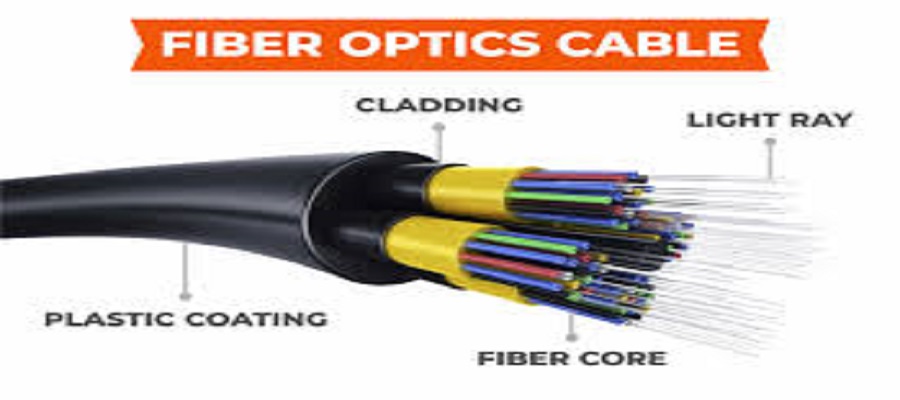
Nigeria’s telecom operators recorded 155, 397 fibre-cut incidents between April and May 2026, and these they blame on why internet or calls suddenly stop working.

Data from the Nigerian Communications Commission (NCC) showed fibre-cut incidents increased from 74 276 in April to a record 79 121 in May, bringing the two-month total to the highest level recorded by the industry.
This represents a 2 428% increase from the 5 934 incidents reported during the first quarter of 2026.
Vandalism remained the leading cause of fibre cuts, accounting for more than 54 000 incidents despite telecom infrastructure being designated as Critical National Information Infrastructure, a classification intended to strengthen protection of key digital assets.
Also road construction constantly damages fiber where iggers and machines tear up buried cables during road repairs or construction.
Even with all these, some state governments make it hard for companies to fix cables quickly across different areas with all manners of fees and levies.
The NCC designation provides for penalties of up to 10 years’ imprisonment for offenders, but operators continue to face widespread infrastructure damage.
Proposed solutions, including Nigeria’s Dig-Once policy and AI-powered fibre sensing technologies, have yet to achieve widespread adoption.
The NCC is developing a cost-based framework for shared underground duct infrastructure, while operators are exploring AI-powered fibre sensing technologies that can detect cable damage in real time and improve network resilience.
Nigeria is pursuing ambitious broadband targets under its National Broadband Plan and has expanded fibre deployment to about 35 000 kilometres.
However, infrastructure protection has not kept pace with network expansion, leaving subscribers vulnerable to unreliable connectivity despite continued operator investment.

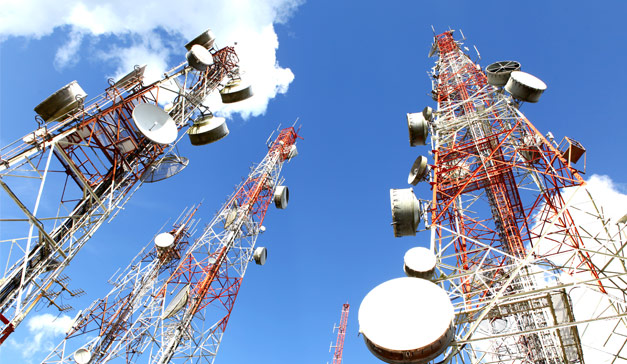
Standard Bank has partnered with Helios Towers to provide a $29 million Social Documentary Credit Facility. According to the financial services company, this transaction marks Standard Bank’s first Documentary Credit Facility structured in a Sustainable Finance format.

It notes that the facility will support the procurement and importation of telecommunications infrastructure and related services across Africa.
It will also provide payment certainty to suppliers, while supporting Helios Towers’ working capital requirements and infrastructure expansion programme, the bank adds.
Structured in accordance with the Loan Market Association’s Social Loan Principles, the financing is designed to promote digital connectivity and telecommunications infrastructure development in underserved markets.
This will help Helios Towers further expand its footprint and enhance mobile network coverage and connectivity across the continent.
Helios Towers operates one of Africa’s independent telecommunications tower platforms, enabling mobile network operators to extend coverage across multiple markets.
Standard Bank notes that the facility supports the expansion of tower infrastructure and services, increased network densification and improved connectivity in underserved markets and remote regions across the African continent.
It will also drive digital inclusion and tackle the digital divide while supporting economic growth and socio-economic development.
“This transaction demonstrates the power of innovation in trade finance. By combining a first-to-market Social Documentary Credit Facility with a cross-border funding solution, Standard Bank has supported Helios Towers’ growth ambitions while helping extend digital connectivity to underserved communities across Africa,” says Benoit Samouilhan, global transaction banker at Standard Bank Corporate and Investment Banking.
According to the bank, this facility enables positive social impact by increasing and improving network coverage and connectivity in some of the world’s most remote regions.
“Reliable digital infrastructure is fundamental to Africa’s future growth and development,” says Alex Carter, group finance director at Helios Towers.
“This facility provides us with the flexibility and certainty needed to support our ongoing infrastructure investments while advancing our mission of expanding connectivity across the continent. We value our longstanding relationship with Standard Bank and look forward to building on this partnership.”

Nigerian Communications Commission (NCC) will on Thursday convene a stakeholders’ consultative forum to review the draft business rules for Mobile Virtual Network Operators (MVNOs) in Nigeria.

NCC
The forum, scheduled to hold at 10 a.m. at the NCC Annex Office, Mbora, Abuja, is expected to bring together telecommunications operators, industry associations and other stakeholders to provide input on the proposed regulatory framework before its finalisation.
The commission announced the event on its official social media platforms, inviting interested stakeholders to participate in the consultation process.
The engagement is part of the NCC’s efforts to strengthen the regulatory framework for MVNO operations and promote greater competition, innovation and consumer choice in Nigeria’s telecommunications sector.
Mobile Virtual Network Operators are telecommunications service providers that offer mobile services by leasing network capacity from licensed Mobile Network Operators (MNOs), rather than owning spectrum licences or telecommunications infrastructure.
The NCC has identified the MVNO licensing framework as one of its initiatives aimed at deepening competition, expanding access to telecommunications services and driving digital inclusion across the country.
The consultative forum is expected to provide stakeholders with the opportunity to review the draft business rules, make recommendations and contribute to the development of a robust operational framework for the emerging MVNO segment.
The commission is expected to issue further details on the outcome of the consultation after the meeting.

NBC Scraps Annual Digital Access Fee on DSO

Surge in Fibre Cuts Hobbles Service Provisioning

Why Bandits, Kidnappers are Hard to Trace despite NIN-SIM Linkage – FG

First Securities Brokers Empowers Nigerians to Trade in the Stock Market with the Launch of FirstInvest App

Quest Merchant Bank Hosts Great Place to Work® Nigeria Study Mission

NRC, Ponzi Scheme Collapses Resulting Loss of Billions of Naira
Nigeria Launches FreeTV Nationwide

NASENI Moves to Digitize CCB’s 5m Assets Declaration and Operations

Lebara Nigeria Launches Lebara Play, Africa’s First Telecom-Owned Micro-Drama Platform

CANAL+ Partners Samsung to Pre-Load DStv Stream on New Samsung TVs In Nigeria, Other African Countries




 Telecom3 days ago
MTN Nigeria Slashes Cost of Broadband Internet Router, Unwraps New Data Bundles for Low-Budget Users

 E-Financial3 days ago
Nigerians Accumulate $59Bn in Cryptocurrency Assets —FDC

 E-Financial3 days ago
Flutterwave Partners Xoom on Transfers into Nigeria

 General News3 days ago
Nearpays, Nigerian Fintech Becomes First African Startup to Win UN’s AI for Good Innovation Factory

 News3 days ago
DataPro Upgrades Dangote Cement’s Credit Rating to AA+

 Telecom3 days ago
Nokia’s 14 Years of Mobile-Phone Supremacy Ended in an Afternoon

 E-Business3 days ago
Tinubu Orders NIMC to Enrol Every Nigerian by End of this Year – DG

 General News3 days ago
Fintech Brands Should Communicate Right in a VUCA Economy