

General News
NCC Appoints Reuben Muoka as Director of Public Affairs

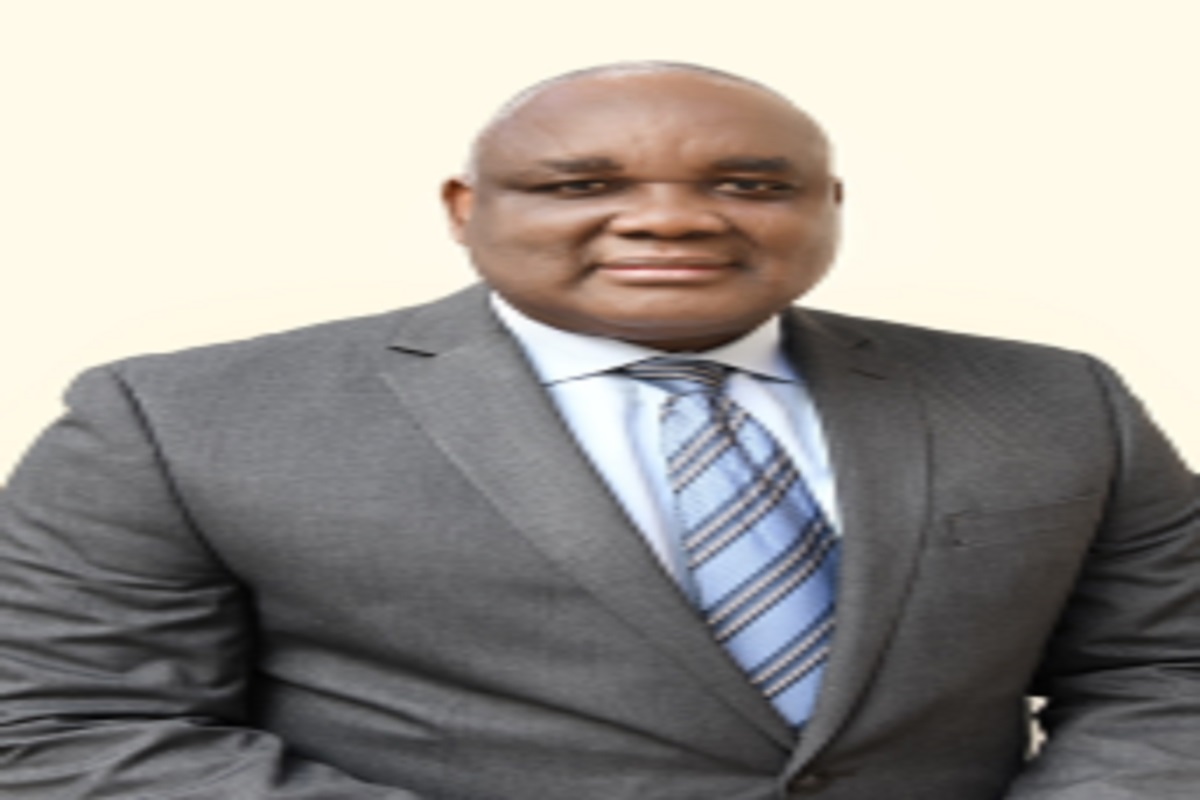
The Management of the Nigerian Communications Commission has appointed Reuben Muoka, an innovative journalist and consummate public relations practitioner, as its new Director of Public Affairs (DPA).

Reuben Muoka takes over from Dr. Ikechukwu Adinde, who has assumed duties as the Director of Special Duties Department of the Commission.
The new NCC’s spokesman was recently promoted a substantive director, alongside Ismail Adedigba, now Director of Research and Development (R&D); and Gwa-Tobi Mohammed, who has also assumed duties as Director/Secretary to the Board of the Commission.
Muoka was in 2021, appointed to head the Special Duties Department, which superintends the International Relations Unit; Emergency Communication Centres Unit; the Public Private Partnership Unit; and the Security Services Unit of the Commission. He was promoted as Director of the Department before his current redeployment to lead the Public Affairs Department, the arm of the Commission mandated to manage the image and visibility of Nigeria’s telecom regulator and a leading light of the Nigerian public service.
Muoka is expected to bring his rich and versatile experience in both specialized and traditional journalism, public relations, integrated marketing communications (IMC), corporate communication and people management, to bear on the Commission’s vision to expand the frontiers of its public goodwill and the impact of its reputational assets.
A former Deputy Communications Editor of the Vanguard Newspapers, former Deputy General Manager at MTS First Wireless (Nigeria’s first mobile telephone operator), Muoka joined the NCC in 2007 as a Principal Manager, and was deployed to the Public Affairs Department where he headed the Media and Public Relations Unit.
He later rose from the rank of Principal Manager to the position of an Assistant Director in 2010, and by 2015, as a Deputy Director, appointed to head the re-engineered Public Relations Unit of PAD.
In 2017, he was redeployed to the Policy, Competition and Economic Analysis Department to head the Economic Analysis unit of department.
Muoka earned M.Sc. degree in Mass Communication from the University of Lagos, specialising in Public Relations and Advertising, where he had earlier successfully completed a Postgraduate Diploma (PGD) in the same field of Mass Communication. Much earlier, he had obtained a bachelor’s degree in Performing Arts at the University of Ilorin.
As a mark of his distinctive journalism career, Muoka received a fellowship of the Egyptian Embassy in Nigeria to undertake a Pan-African training and tour of Egypt in 1999, leading to an award of a continental Diploma Certificate in Journalism at the instance of the Egyptian Ministry of Information, and the African Journalists Union (AJU) in Cairo, Egypt.
The focused, innovative and illuminating coverage and analysis of the Information and Communications Technology (ICT) in the pre and immediate post liberalisation period of telecom industry in Nigeria is credited to the insights of visionary journalists like Muoka, whose pioneering initiative led to the establishment and institutionalisation of the Hi-Tech Desk in Vanguard Newspapers in late 1990s. As the Chairman of the League of Communications Correspondents (LECCO), Muoka led his colleagues to give voice and focus to the advocacy for the liberalisation and deregulation of the telecom industry in Nigeria in the 1990s.
During his active days in journalism at Vanguard Newspapers, Muoka served concurrently as Africa’s contributing editor to the London-based CommunicationsWeek for four years beginning from 1998, during which he undertook copious reportage of the African telecom landscape. The London-based magazine shared Muoka’s work to an enthusiastic global audience in a rare showcase of Africa’s promise as a flourishing point for the emergent converging telecommunications industry.
Between 1995 and 2001, Muoka leveraged his expertise to provide part-time public relations consultancy to notable companies and institutions in the telecommunications industry, including the Nigerian Mobile Communications Limited, Abuja; Multi-links Telecommunications Limited, Lagos; Satellite Telecommunications Limited, Lagos; Pulse Marketing Communications Ltd, Lagos; and the Nigerian Communications Commission, Abuja, years before he joined the Commission as a staff.
Reuben Ejike Muoka is a member of the Nigeria Union of Journalists (NUJ); a full member of the Nigerian Institute of Public Relations (mnipr); and an associate member of the Registered Practitioners of Advertising (arpa), regulated by the Advertising Practitioners Council of Nigeria (APCON).
On behalf of the Board and Management of the Commission, I heartily congratulate Reuben on his new role and look forward to working closely with him and his team in Public Affairs Department, as key internal stakeholders in the Commission’s re-engineering processes to meet and surpass Federal Government’s expectations for a robust telecommunications sector and a remarkably emergent digital economy.


Economic and Financial Crimes Commission (EFCC) has partnered with the National Space Research and Development Agency (NASRDA) to deploy advanced space and geospatial technologies in investigations and asset management.

Ola Olukoyede, executive chairman of the EFCC,
The move is expected to deepen transparency, strengthen asset recovery and curb economic sabotage according to a statement by Dele Oyewale, head, Media and Publicity, EFCC.
He said that the partnership was formalised through the signing of a Memorandum of Understanding (MoU) on Thursday in Abuja
The agreement is aimed at strengthening inter-agency collaboration, particularly in the areas of investigations, asset tracking and fraud risk assessment, marking a new phase of cooperation between the anti-graft agency and Nigeria’s space research and regulatory authority.
Speaking at the signing ceremony, Ola Olukoyede, executive chairman of the EFCC, described the agreement as a practical demonstration of the power of collaboration among government agencies.
He noted that closer cooperation would make it easier for institutions to effectively deliver on their statutory mandates.
According to Olukoyede, the MoU clearly defines the responsibilities of both agencies and establishes a framework for sustained cooperation.
He disclosed that a special monitoring and implementation team would be constituted to ensure the effective operationalisation of the agreement and to periodically review its impact.
“We will put a team together that will monitor the operationalisation of this MoU and also review the effectiveness of the platform from time to time.
“When agencies work together in the spirit of collaboration, it not only enhances efficiency but also encourages other ministries, departments and agencies to explore similar partnerships in the overall interest of national development”, he said.
Explaining the specifics of the partnership, the EFCC chairman said NASRDA would provide advanced technological tools to boost the Commission’s investigative capacity and asset tracking, while the EFCC would deploy its expertise to support the agency in fraud risk assessment.
“We will support you in the area of fraud risk assessment, and you will support us in promoting our investigative capacity.
“Where our eyes cannot get to, with the aid of your technology, we will be able to get there”, Olukoyede said.
He noted that the collaboration would be particularly beneficial to investigations into illegal mining activities, which have been linked to economic sabotage and rising insecurity in parts of the country.
“With the technology you are going to support us with, we will be able to identify some of these areas,” he added.
Olukoyede further expressed optimism that the partnership would significantly enhance the EFCC’s asset management processes, stressing that asset recovery remains one of the core pillars of the Commission’s mandate.
He explained that recovered assets are scattered across the country and exist under different legal statuses, including interim and final forfeiture.
“In some of these places, we may not have enough personnel to physically secure the assets. But with your support, we will be able to deploy geospatial technology and asset tagging devices to monitor both movable and immovable assets in a transparent and accountable manner”, he said
In his remarks, Matthew Adepoju, director-general and chief executive officer of NASRDA, welcomed the partnership, describing the MoU as a major milestone in the pursuit of justice and regulatory compliance within Nigeria’s space ecosystem.
Adepoju stressed that space-related activities are strictly regulated in developed economies and should be treated with similar seriousness in Nigeria, particularly in view of the potential misuse of satellite assets.
“You cannot go anywhere in Europe, continental America or the Far East and be doing business in the space ecosystem without the country ensuring that you are doing the right thing.
“We know for a fact that some satellite assets are being used negatively in driving insecurity in the country”, he said.
He also raised concerns over the use of satellite-mapped data on Nigeria’s natural resources to aid illegal activities, especially illegal mining, which he identified as one of the drivers of insecurity.


DalaHill Law Practice and the Bank of Agriculture (BoA) have signed a Mutual Accountability Framework (MAF), marking a milestone in the launch of a climate finance initiative funded by the African Climate Foundation (ACF) and valued at US$100,000.

According to a statement by the firm, the signing took place during a kickoff ceremony at the BoA headquarters in Abuja and formalised the roles, responsibilities and shared commitments of both institutions in delivering the project. The framework was signed by Ayo Sotinrin, BoA Managing Director, and Mohammed Hamza, Managing Associate at DalaHill.
The ACF-funded initiative is designed to support BoA’s institutional transition towards climate-aligned agricultural finance. Central to the programme is the establishment of a Clean Energy Delivery and Innovation Unit (CEDIU), a dedicated function that will integrate climate risk considerations, environmental data and sustainability principles into the bank’s strategy, operations and investment decision-making.
Under the initiative, BoA will also be supported to develop Clean Energy Access Systems and Climate Finance Development Frameworks, alongside a pipeline of bankable, climate-aligned agricultural projects.
These projects are expected to attract domestic and international capital into the sector, contributing to efforts to bridge Nigeria’s estimated $247.3 billion financing gap for its green energy transition.
Speaking on behalf of DalaHill, Mohammed Hamza described the initiative as a pivotal intervention in Nigeria’s agricultural and climate finance landscape. He said the firm is acting as a trusted adviser, working with institutions to deliver catalytic and transformative solutions.
According to him, DalaHill is deploying a multidisciplinary technical team to support BoA’s transition into a climate-aligned institution capable of attracting finance for scalable, investment-ready agricultural projects.
He highlighted the strategic importance of the project, noting that while ACF has traditionally focused on renewable energy, climate alignment within the agricultural sector is critical to driving Nigeria’s broader energy transition. He added that the initiative represents ACF’s first climate finance grant promoting agriculture in Nigeria.
In his remarks, Sotinrin expressed appreciation to the project partners and acknowledged longstanding gaps within Nigeria’s agricultural finance ecosystem. He reaffirmed BoA’s commitment to driving systemic change by attracting climate-aligned expertise, strategic funding and increased national and international attention to the sector.
Sotinrin also noted that the initiative aligns with the Federal Government’s climate and sustainability agenda, referencing Nigeria’s participation at an ongoing global climate sustainability conference in Abu Dhabi.
He further highlighted strong government backing for BoA’s transformation, including presidential approval in October 2024 of a US$1 billion recapitalisation plan aimed at strengthening the bank’s capacity to support national development.
DalaHill Law Practice is a full-service commercial law firm headquartered in Abuja, with a strong track record in advising on economically catalytic projects across sectors including energy, infrastructure, finance, trade and emerging markets.
The firm is known for structuring complex transactions, managing regulatory risk and supporting projects that promote sustainable growth and long-term economic impact in Nigeria and beyond.

Kaspersky’s new global research reveals that 65% of online shoppers believe they can detect fraud on their own, while only 42% actually use security software to protect their payments and block malicious links.

Experts consider this a major risk for online buyers. Over the past year Kaspersky identified nearly 6.7 million phishing attacks globally impersonating online stores, payment systems, and banks, with 55.6% targeting online shoppers.
As the post-holiday and summer sales season kicks off, Kaspersky conducted a survey to examine consumer cybersecurity practices employed during online shopping. The findings show that 97% of respondents demonstrate a substantial level of awareness of online security risks and implement at least some measures to safeguard their digital transactions.
However, the survey found that fewer than half the participants use dedicated security software to block phishing attempts and protect payment transactions. This concerning trend is particularly pronounced among the 55+ year old generation, with only 32% of respondents in this age group actually using security software when making online purchases.
The most commonly adopted security protocols include being vigilant about potential warning signs, such as suspicious hyperlinks or unusual website design (65%) and verifying seller authenticity (62%).
Kaspersky experts emphasise that while these practices are essential protective measures for online shopping, they constitute only foundational protection strategies rather than the comprehensive fraud prevention provided by a security solution.
Other steps that could protect online shoppers, like using a separate credit card for digital purchases or using a separate email address to register with unfamiliar online shops, were chosen by 33% and 26% of survey participants, respectively.
Meanwhile, 30% claimed to consult with friends and relatives before making a purchase. Interestingly, this option is highly popular among the younger generation, with 37% opting for it, while it is less common among older people (21%).
“Throughout the year, we’ve observed that online shoppers have consistently been one of the most desirable targets for scammers. During sales periods, their scams can become even more pervasive. Staying vigilant is crucial, but protecting yourself requires more than just awareness.
It is particularly concerning how scammers are now using AI to craft more sophisticated, targeted phishing attempts that are increasingly difficult for regular users to recognise,” comments Olga Altukhova, Senior Web Content Analyst at Kaspersky.
Sales seasons are peak times for scammers. To protect yourself against emerging threats, implement the following security practices:
– Don’t save your full credit card details on websites unless absolutely necessary.
– Consider using a separate debit card specifically for online purchases and set up transaction alerts on your bank and credit card accounts.
– Be extra cautious of “flash sales” that seem too good to be true. Watch out for websites that pressure you into making quick decisions, and be wary of sellers who refuse returns or exchanges.
– Use different passwords for each online account and enable two-factor authentication wherever possible.
– Apply a security solution with a strong anti-phishing component. For instance, Kaspersky Premium received the annual ‘Approved’ certification from the leading testing lab AV-Comparatives in 2025 for detecting 93% of phishing URLs, demonstrating outstanding anti-phishing capabilities, powered by AI technology.
– Scammers constantly evolve their methods, so staying informed about new phishing techniques can help you recognise and avoid them. The Kaspersky Security blog will help you keep your finger on the pulse of emerging cyberthreats.
The study was conducted by Kaspersky’s market research center in November 2025. A total of 3000 respondents from 15 countries (Argentina, Chile, China, Germany, India, Indonesia, Italy, Malaysia, Mexico, Saudi Arabia, South Africa, Spain, Turkey, the United Kingdom, and the United Arab Emirates) took part in the survey.

SEC Hikes Minimum Capital Requirements for Market Operators After a Decade

Study Shows Blocks in Telegram are Pushing the Underground Out

Galaxy Backbone Marks Two Decades of Powering Nigeria’s Digital Evolution

NGX Unveils Net-Zero Plan for Greener Capital Market

Galaxy Backbone Marks 20 Years, Tops FG Website Scorecard

Banks quietly move to enforce new ₦50 transfer levy from Jan. 1

FIRS says NIN, CAC Numbers to Serve as Tax IDs from 2026

Nigeria Police Arrest Okitipi, Nigerian Allegedly Linked to Microsoft 365 Hack

FIRS Declares NIN, CAC Numbers as Tax IDs from 2026

US Begins Partial Visa Ban on Nigerians January 1




 E-Financial3 days ago
Angst as FG Demands 7.5 Percent VAT on Mobile Bank Transfers, USSD

 News3 days ago
Moniepoint Launches Second Cohort of DreamDevs Initiative to Double Down on Africa’s Tech Talent Pipeline

 E-Financial3 days ago
The Missing Pieces in Nigeria’s Banking Recapitalisation

 E-Financial3 days ago
NGX lists 3.156bn UBA shares, boosting capital to N513Bn

 E-Financial2 days ago
Paystack Expands Beyond Payments into Banking

 Telecom3 days ago
Glo Unveils Immersive Gaming Experience, Travel Saga

 E-Business3 days ago
Half of Global Companies Build SOCs to Enhance Cybersecurity, with a Focus on Human Expertise

 General News3 days ago
NITDA DG Reaffirms Nigeria–U.S. Partnership on Data Privacy, AI and Cybersecurity