

News
11 Interesting Things You Should Know About Africa

Africa Day was celebrated on 25 May, and YouTube and ViacomCBS Networks Africa organized the “Africa Day Benefit Concert At Home”, which was streamed on the MTV Base Africa YouTube channel.
The concert gave fans across the globe an opportunity to experience the beauty of music from across the continent while raising funds to support food and health needs for children and families affected by the COVID-19 pandemic.
In a world of social distancing, quarantine, curfews and lockdowns, the Africa Day Benefit Concert At Home also reminded us of the mellifluous and lively rhythms that African music is known for. Music is just one of the things that reflects Africa’s vibrant culture and fascinating peoples. Here are eleven others.
- Language
Over 25% of the world’s languages are spoken only in Africa, which is home to an estimated 2000 languages. With a population of over one billion people, Africa has the highest linguistic diversity in the world. Nigeria alone is known to have over 250 languages. Arabic is the most widespread official language, other widely spoken languages are Berber, Igbo, Swahili, Hausa, Zulu, Portugese, Amharic and Yoruba.
- Heritage sites
Have you heard of the ‘smoke that thunders’, ‘iSimangaliso– a place of miracle and wonder’, ‘Mosi-oa-Tunya’, or ‘Kilimanjaro?’ These are just a few of the UNESCO world heritage sites in Africa. Africa has a total of 89 cultural world heritage sites – places that represent the combined works of nature and of man. They reveal Africa’s beauty and diversity. Some other heritage sites to check out are the Okavango Delta in Botswana, Namib Sand Sea in Namibia and Osun Osogbo Sacred Grove in Nigeria.
- Travel destinations
Africa is still one of the best travel destinations in the world. The continent welcomes visitors to its clear beaches, wondrous vistas and a rich history. From the National Museums of Kenya to the Arab Republic of Egypt- considered to be the cradle of civilization – Africa offers truly memorable experiences. Other popular tourist locations include São Tomé e Principe, Seychelles, Zanzibar, Rwanda, Reunion Island and Morocco.
- Mineral resources
Around 30% of the earth’s remaining mineral resources are in Africa. These include uranium, platinum, diamonds, cobalt, gold, oil and gas reserves. Nigeria is the fifth largest exporter of oil, ahead of Iraq and Kuwait. Nickel and uranium can be found in Burundi, titanium in Gambia, and diamonds in Angola, Botswana, Central African Republic and Democratic Republic of Congo. It is interesting to note that almost half of the gold ever mined on earth has come from a single place – the Witwatersrand, in South Africa.
- Early African art
Art has always been synonymous with Africans. The earliest form of African art is rock art. The oldest rock art images – scientifically dated from 27,000 years ago – are in Namibia. The petroglyphs, rock carvings that depict animals like giraffes that no longer exist in the area, are preserved in the Saharan sands in Niger and date back to 6500BC. The earliest known sculptures are the remarkable terracotta pottery heads from the Nok culture of Nigeria and are dated around 500 BC through to 200 AD. Metal sculptures, wood carvings and textiles also make up some of the early African art.
- Young population
Africa has been home to some of the world’s oldest civilizations and now, it is the home to a very young growing population. The African population is much younger than the rest of the world with over 50% of Africans under the age of 20. This has enabled the continent to record growth in industries that fit this young demography such as fintech, entertainment, transportation, technology, real estate, fashion and food processing.
- Fashion
African fashion has come a long way to where it is now – bold, diverse and original. Notable celebrities like Beyoncé, Jidenna, Chimamanda Adichie Ngozi and Erykah Badu have been spotted wearing African prints as fashion choices. African fashion designers like Nigeria’s Deola Sagoe or South African’s Sindiso Khumalo have been able to build recognizable brands not just in Africa but across the world.
- African heroes
Africa also has its long list of heroes. These are notable personalities that have been identified for their admirable courage, nobility, or exploits. From Nelson Mandela, South African statesman to Kofi Annan, Ghanaian and the first African to be elected as Secretary-General from the ranks of UN staff; Chinua Achebe, Nigerian novelist; Desmond Tutu, South African cleric and Nobel Peace Prize winner; Ellen Johnson Sirleaf, Liberian stateswoman; Paul Kagame, Rwandan statesman and Wangari Maathai, Kenyan human rights and environmental conservation advocate, Africa has a wealth of heroes who are celebrated worldwide.
- Food
Africa presents diverse culinary options. Preparing iconic dishes from Africa needs a unique set of skills and preparation techniques. From jollof rice from Nigeria, Piri piri chicken from Mozambique, Waakye from Ghana, Cachupa from Cape Verde, Yassa from Senegal to Superkanja from Gambia, African cuisine leaves a lasting impression on your palette. In Nigeria, to really enjoy your meals, you must explore the art of eating with your fingers. This is the norm in most African countries.
- Architectural wonders
The Pyramids of Giza in Egypt date back to 2500BC. Pyramids in Sudan were originally built by the Kush under the ruling of Nubian Kings in the 4th century BC. Africa is known for its architectural wonders. The Corinthia Hotel Khartoum in Sudan, Aksum’s Giant Stelae in Ethiopia, the Reunification Monument in Cameroon, the Walls of Great Zimbabwe, Alice Lane Towers in South Africa and the Great Mosque of Djenne in Mali, all showcase Africa’s ingenious creativity.
- Tribal ceremonies
African tribal ceremonies pay homage to the rituals that mark important occasions in tribal life. The Maasai people of Kenya and Northern Tanzania view spitting as a form of blessing and a sign of respect. The Mursi tribe of Ethiopia is one of the last tribes in Africa where it’s the norm for women to wear large pottery or wooden plates in their lower lips and the courtship dance for young men of the Wodaabe tribe in Niger is an annual ritual competition where the winner is then eligible for marriage.
Africa is arguably considered the cradle of the world’s civilization. It’s rich culture is visible in its languages, food, tourist attractions and most especially, its people. The second largest continent in the world is distinctively unique and offers an unparalleled experience for those willing to visit or know more about its heritage.



EFCC


The African Development Bank Group last week approved an investment of €6.5 million in the Saviu II fund in order to support technology start-ups through their seed phase and first institutional fundraising, mainly in French-speaking Central and West Africa.

The Bank will invest €4.5 million as equity and €2 million as a first-loss hedging tranche on behalf of the European Commission, under the Boost Africa Programme.
This participation of the Bank Group will enable the Saviu II fund to give priority to companies with a strong technological or digital component.
Saviu II, the second investment vehicle of Saviu Partners, plans to invest between €500,000 and €3 million in about 20 technology or technology-oriented business-to-business start-ups in the seed phase or carrying out first institutional fundraising.
The Saviu II venture capital fund aims to make at least 60% of its commitments in the French-speaking countries of West and Central Africa: Côte d ‘Ivoire, Cameroon, Benin, Senegal, Togo, Burkina Faso and Mali.
The fund can also co-invest in promising technology companies in East Africa that have a strong team and business model, and whose strategy includes entering the market in French-speaking West African countries and establishing a strong presence there.
In addition, the fund will devote a dedicated envelope to pre-seed investments, focusing on minority equity investments, usually in co-investment with studios, incubators or other ecosystem partners.
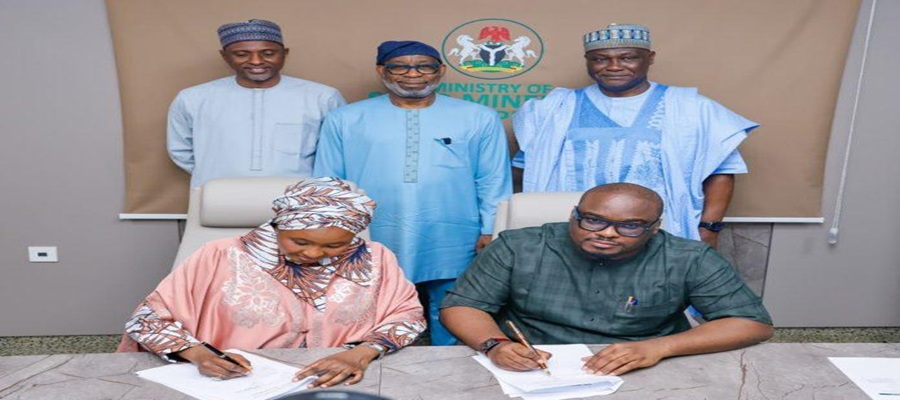
Nigerian Government has signed a $1.3 billion Memorandum of Understanding (MoU) with Africa Finance Corporation (AFC) via the Solid Minerals Development Fund (SMDF) to fund an alumina refinery, national geoscience mapping, and a strategic investment vehicle for mining growth.

Special Assistant to the Minister of Solid Minerals Development, Segun Tomori, said the refinery will process one million tonnes of bauxite yearly using a modern Bayer process, powered by an on-site gas-fired cogeneration plant.
Minister Dele Alake called it a transformative milestone boosting GDP, aligning with reforms that improve investment climate, regulations, and licensing to attract private capital. He directed agencies to fast-track permits.
The 20-year project at 95% utilization eyes 19 million tonnes total output, $1.2 billion annual GDP addition, $25 billion economic impact, and $8 billion forex earnings, per feasibility studies.
SMDF Executive Secretary Fatima Shinkafi termed it the agency’s biggest funding deal, supporting value-addition policy.
The partnership extends to geoscience mapping for mineral data, de-risking exploration, and a joint vehicle for mining assets.
Permanent Secretary Engr. Farouk Yabo praised the reforms. Shinkafi signed for government; AFC’s Franklin Edochie for the corporation, witnessed by AFC CEO Samaila Zubairu.
Tomori positioned it as Nigeria’s largest private mining investment and FDI magnet.

SEC Revokes Registration of Kensington Agro Trading Limited

NCDC Raises Alarm over Lassa Fever Ravaging 18 States in Nigeria

Lagos Deploys Drones, AI to Boost Traffic Response

Purple Woman 3.0 Is Back, to Empower Women in Tech this IWD 2026

NRS Targets N40trillion in Tax, Royalty Revenue in 2026

Accidental Billionaire Opts for Jail Instead of Returning Money Credited Him by Mistake

Kaspersky Brings more Transparency to Threat Detection with New Hunt Hub

Dr. Cairo Ojougboh Foundation Bolsters Nigeria’s Education Drive with ₦2.7m Student Support

NDPC Commits to Balancing Data Privacy, Protection Information

OADC Lagos Reinforces Commitment to Local Data Hosting and Digital Transformation @ NDPC’s National Privacy Week Summit




 E-Financial2 days ago
Iran-Israel-US Conflict and CBN’s FX Gains: A Stress Test for Nigeria’s Monetary Stability

 E-Financial2 days ago
Mutual Benefits Assurance Reaffirms Full Regulatory Compliance, Enhanced Governance

 General News2 days ago
JAMB Uncovers AI-Driven Fraud Targeting UTME Candidates, Warns Parents

 General News2 days ago
SERAP Asks FCCPC to Investigate Google, Meta, Others over Alleged Rights Abuses

 Telecom1 day ago
Sunil Bharti Mittal Conferred GSMA Lifetime Achievement Award for Transforming Global Telecommunications

 News2 days ago
TeamApt, Awabah Partner to Boost Pension Drive for Nigerians

 News2 days ago
FlashChange CEO, Bidemi Oke, Urges Startups to Build Strong Governance Structures Early

 Telecom1 day ago
Why Digital Trust Matters: Secure, Responsible AI for African SMEs?