

News
7700sqm New Maryland Mall Commissioned


Lagos is fast becoming Africa’s real estate and retail capital. Despite the plethora of markets, street side shops and grocery stores across the state, social evidence suggests that residents still clamour for the modern, stress-free shopping experience.
Located where the defunct Maryland Shopping Center was once located, Maryland Mall sits on one of the most important arterial routes in Lagos today, with an estimated 5,000 cars passing through every hour.
The mall sits on a total land size of 7,700sqm and will have the first dedicated underground car park within any mall in Nigeria. It will play host to a mix of local and international brands anchored by Shoprite, The Place restaurant, Stanbis IBTC Bank, amongst other retail, hospitality and entertainment brands.
Thankfully, residents of this fast growing city can now boast of an additional shopping mall, the Maryland Mall, thanks to the foresight of Purple Capital Partners Limited (PCPL), which began financing and developing the N5 billion retail, lifestyle and entertainment complex barely three years ago.
Declaring the Maryland Mall open for business, Mrs Onikepo Akande, president, Lagos Chamber of Commerce and Industry (LCCI) said: “It is my sincere belief that this new mall will help to expose and grow the manufacturing and commercial potential of Lagos state and by extension, the national economy.”
“Indeed, retail is one of the cornerstones of trading and investment, and Purple Capital, the developers of Maryland Mall, have done extremely well to give Maryland a new lease of life through this retail investment,” Mrs Akande says.
The official commissioning of Maryland Mall is coming barely two months after Purple Capital attracted additional funding for the retail development in the form of a N800 million investment from asset management firm, AXA Mansard Investments Ltd.
As Nigeria’s industrial and commercial capital, Lagos is expected to lead the national count for modern shopping malls over the next decade, in tandem with the city’s fast growing population, currently put at anywhere between 17 and 20 million people.
Mr. Omotola Mobolurin, chairman of Purple Capital Partners Limited said: “I am delighted about the safe arrival of this new retail, lifestyle and entertainment infrastructure, with the capacity to provide merchants and shoppers with amenities and services that befit the state’s mega-city status. It is particularly gratifying that the construction and financing for this retail development is being concluded on time and within projected funding estimates.”
Ms Sola David-Borha, Atedo Peterside, chief executive officer, Stanbic IBTC Holdings Company, “The discipline, focus and resilience of indigenous financial industry firms like Purple Capital is worthy of emulation,” said Mr. Atedo Peterside, Chairman of Stanbic IBTC Holdings Plc. “This successful delivery of the Maryland Mall project showcases the fact that domestic investment fueled by the indefatigable spirit of Nigerian entrepreneurs is key to driving social harmony and national economic growth.”
Dr. Enase Okonedo, Dean, Lagos Business School, Pan Atlantic University, said, “The Maryland Mall will be a boost to economic activity in Lagos and its environs. In the long term, the retail facility will also create hundreds of direct and indirect jobs across a range of industries, with significant positive impact on the agriculture and agro-allied, real estate, retail, construction technology, logistics, finance and investment, facilities management, marketing communications, physical asset management and asset protection sectors.”
The exterior of the mall will be a 550 square meter LED screen, the largest in Sub-Sahara Africa. This unique feature will set it apart from any other retail complex in Africa’s most populous nation.
Currently, only 2% of Nigerians shop in formal retail supermarkets compared to 60% of South Africans, 30% of Kenyans, 4% of Ghanaians and 2% of Cameroonians.
The Maryland area aptly illustrates the various realities of city life. Located right in the middle of mainland Lagos, Maryland has been a residential district and a hectic hub of social activities for decades: it is also an economic and commercial nerve center; a major intersection connecting citizens and visitors alike to the major thoroughfares across the city, and a perfect exhibit of the city’s quest for affordable, urban development.
Retail trade presently accounts for about 30 per cent of the world’s GDP (gross domestic product).
This is about $22 trillion of retail sales each year. Official government data shows that Nigeria attracted over $1.5 billion in investments into its formal retail sector over the last three years. Available statistics also show that over 80 million Nigerians now live in metropolitan areas, creating huge opportunities for formal retail to thrive.
Lagos is currently home to several malls. Most of these malls are however located on the coastal, more affluent sections of the state – in the Ikoyi-Victoria Island-Lekki peninsula axis – commonly referred to as the Island.
On the mainland side of Lagos are population heavy zones like Ojota, Oyingbo, Ojuelegba, Mile 2, Ikorodu and Ikeja, the state’s administrative capital which also has many residential cum commercial districts, like Agege, Ogba, Ojodu, and Maryland just to name a few.
Purple Capital Partners Limited (PCPL) is a specialist investment firm with business areas in Principal Investment, Private Equity and Real Estate. PCPL has raised over USD50million to fund its various projects in the retail, entertainment and leisure (REL) sectors over the last three years. Maryland Mall is PCPL’s flagship retail project.
—


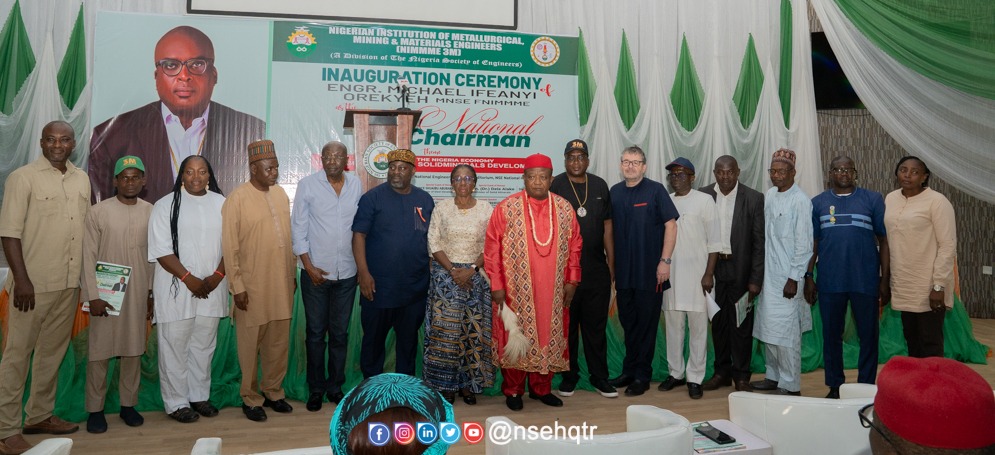
Nigerian Institution of Metallurgical, Mining and Materials Engineers (NIMMME or 3M), a vital division of the Nigerian Society of Engineers (NSE), has inaugurated Engr. Michael Ifeanyi Orekyeh, MNSE, as its 13th National Chairman in a colourful ceremony held on Wednesday, March 11, 2026, in Abuja.

Center …Igwe Aguleri Dr Michael Idigo (Ezeudo) Royal Father of the Day and Deputy President of NSE Engr Valerie Agberagba (Representing the President of NSE Engr Ali Rabiu MFR) to his left.
NSE President, Engr. Ali Alimasuya Rabiu, FNSE, MFR, who delivered the opening remarks through his Deputy, Engr. Valerie Ifeuko Agberagba, FNSE, described the event as a major milestone for engineers specialising in metals, mining and materials science – professionals whose expertise is crucial for constructing durable roads, factories, bridges and other infrastructure projects essential to Nigeria’s economic growth and industrialisation.
Engr. Rabiu warmly congratulated Engr. Orekyeh, a Senior Mechanical Engineer at the Federal Ministry of Works and Infrastructure, alongside his newly elected executive committee, for securing the confidence of their peers through a democratic election process.
He emphasised that the inauguration transcended a mere change of guard, positioning it as a renewed commitment to repositioning the 3M Institution for greater impact in addressing Nigeria’s developmental challenges.
These engineers are at the forefront of transforming raw natural resources extracted from the earth – such as iron ore, coal, limestone, gold and other solid minerals – into finished products like steel beams, construction aggregates and high-performance materials used in homes, industries and public infrastructure across the country.
The NSE President expressed profound gratitude to the outgoing National Chairman, Prof. Abdulrahman Asipita Salawu, FNSE, for his exemplary service during his tenure, while calling on all members to close ranks and provide unwavering support to the incoming leadership.

Engr Michael Orekyeh National Chairman 3M-NIMMME Delivering his speech after being sworn in
In a detailed charge to the new executives, Engr. Rabiu outlined key focus areas in straightforward terms: aggressive advocacy for policies that boost the metals, mining and materials sectors; development and enforcement of rigorous professional standards; expanded capacity-building programmes for members; upholding ethical leadership and integrity; fostering collaboration with other NSE technical divisions and branches; and proactive engagement with government agencies, private industries and the general public to drive tangible outcomes.
He underscored the urgency of these priorities amid Nigeria’s pressing national issues, including dilapidated road networks, high unemployment rates, inadequate industrial base and environmental degradation, urging engineers to forge stronger partnerships with policymakers, research institutions and the organised private sector.
“The challenges facing our country today demand stronger synergy between engineering professionals, policymakers and industry stakeholders,” Engr. Rabiu stated, reaffirming NSE’s overarching mission to promote engineering excellence that safeguards lives, property and the nation’s natural resources.
A standout feature of the event was the spotlight on a homegrown innovation in road construction tailored to Nigeria’s tropical climate characterised by year-round warmth and heavy torrential rains, in contrast to the frost-resistant designs prevalent in temperate Western countries.
Dubbed Cement-Stabilised Soil Pavement with Integrated Microsurfacing, the technology leverages abundant local soils like laterite as the base material, stabilised with cement and specialised additives in a central mixing plant to achieve uniform strength and superior water resistance.
This approach eliminates the inconsistencies of traditional in-situ mixing methods, delivering roads that are more durable, cost-effective and quicker to build while reducing dependency on imported asphalt.
The inauguration lecture, themed “Diversifying the Nigerian Economy through Metals and Solid Minerals Development,” resonated deeply with participants, highlighting Nigeria’s vast untapped reserves of over 40 commercially viable solid minerals spread across more than 500 locations nationwide. Engr. Rabiu reiterated NSE’s steadfast commitment to supporting federal and state governments with technical expertise, policy recommendations and innovative solutions to responsibly harness these resources for job creation, revenue generation and sustainable development without compromising ecological balance.
Delivering the keynote address, Mr. Vassily Oye Barberopoulos, Managing Director of Nigerian Foundries Group based in Ota, Ogun State, passionately advocated for replicating the successful Local Content policy from the oil and gas sector in the solid minerals industry.
He noted that mining operations demand a wide array of components – from castings and forgings produced in foundries to fabricated parts – yet foreign mining firms predominantly import these, stifling local manufacturing. Mr. Barberopoulos called for robust legislation championed by the National Assembly, Ministry of Solid Minerals Development, Manufacturers Association of Nigeria (MAN) and NIMMME to mandate local sourcing, mirroring the transformative impact of the Nigerian Content Development and Monitoring Board (NCDMB) in petroleum, which unlocked billions in opportunities for indigenous firms.
Guest Lecturer, Engr. Ebosie Ezeoke, Executive Chairman of Anambra State Materials Testing Laboratory (ASMTL), enlightened the audience on an eco-friendly, low-cost cold paving technology for road construction.

L-R Mr Obi Asika Director General National Council on Arts and Culture NCAC….Mr Vassily Oye Barberopoulos MD Nigerian Foundries Group
He described the method as revolutionary, being five times stronger and far more durable than conventional flexible asphalt pavements, while slashing costs and minimising environmental impact through reduced energy use and emissions during production and application – ideal for Nigeria’s constrained budgets and harsh weather conditions.
Engr. Michael Orekyeh, also linked to Anambra State’s ICT Agency initiatives, was formally sworn in by the immediate past Chairman, Prof. Abdulrahman Asipita Salawu, FNSE, represented by Prof. Aje Tokan, a former National Chairman of the institution.
In his acceptance speech, the new helmsman unveiled an ambitious strategic roadmap centred on maximising member participation in specialised committees and Strategic Sector Groups (SSG); deepening partnerships with government ministries, agencies and private sector players; rolling out comprehensive training schemes to upskill 3M professionals; and introducing a modernised certification framework to enhance credibility and employability in the global marketplace.
The well-attended ceremony drew an array of high-profile dignitaries, reflecting the event’s national significance and the broad support for advancing Nigeria’s engineering landscape.
Prominent among them were the Royal Father of the Day, Igwe Dr. Michael C. Idigo (Ezeudo), Igwe Aguleri; Special Guest of Honour, Mr. Obi Asika, Director-General of the National Council for Arts and Culture (NCAC), Abuja; Keynote Speaker Mr. Vassily Oye Barberopoulos; Guest Lecturer Engr. Ebosie Ezeoke; Director-General of the Mining Cadastral Office (MCO), Engr. Obadiah Nkom (represented by Engr. A. Habila); President of the Association of Professional Women Engineers of Nigeria (APWEN), Engr. Chinyere Nnenna Igwegbe; Chairman of the Nigerian Institution of Petroleum Engineers (NIPE), Dr. Yetunde Aladeitan; past 3M National Chairman, Prof. Aje Tokan; and Managing Director of Geocardinal Engineering, Engr. Jacob Adeyemo.

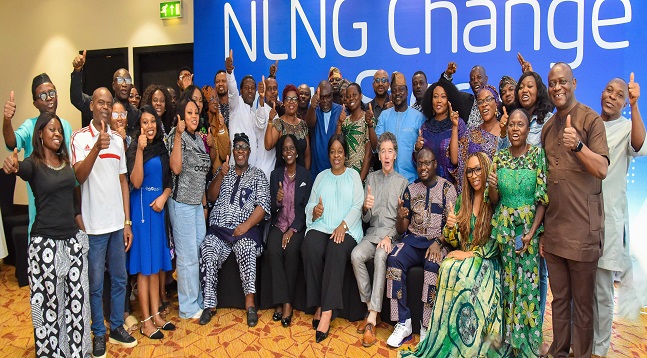
NLNG has demonstrated its dedication to media development in Nigeria through the successful completion of the second edition of the #NLNGChangeYourStory workshop for 2026, which took place in Lagos.

The workshop convened 40 participants representing diverse media outlets to examine the changing landscape of journalism shaped by artificial intelligence and digital communication. Discussions centered on how new media technologies can support real-time reporting, extend audience reach across borders, and foster deeper, more effective engagement on digital platforms.
Speaking at the event, the General Manager, External Relations and Sustainable Development at NLNG, Sophia Horsfall, described the workshop as part of the company’s broader effort to strengthen engagement with the media while supporting professional excellence in journalism. She noted that the initiative reflects NLNG’s belief that well-informed reporting plays an important role in shaping public understanding of critical sectors such as energy, economic development, and sustainability.
She encouraged participants to leverage the insights and practical knowledge gained during the workshop to elevate the quality, depth, and credibility of their reporting.
“NLNG views this engagement as a strategic partnership. We provide the energy that powers nations and generates revenue for our nation; you provide the information that powers our minds. We have been proud to host you, but our pride will only be justified when we see the ‘New Standard’ in your next feature, your next broadcast, and your next investigative report.
As you head back to your various stations, I urge you to take the spirit of this workshop with you.”
The programme combined expert-led discussions with hands-on learning. Digital communication specialist Dan Mason guided participants through key aspects of digital storytelling, while veteran journalist Taiwo Obe led a practical Journalism Clinic. Together, the sessions equipped participants with practical skills in data visualisation, online verification, audience engagement, and managing a strong digital presence.
Through the workshop, NLNG reiterated its commitment to promoting journalistic excellence and supporting the media industry’s digital transformation. The #NLNGChangeYourStory programme has now empowered over 400 journalists with enhanced digital communication and social media skills across its various editions.


Cosmetic products are widely used in Nigeria, but many consumers remain unaware of the chemicals they may contain.

Federal government has therefore approved the first national policy on cosmetics safety and health after nearly two decades of stalled attempts.
The policy was launched at the Sixty sixth National Council on Health in Calabar.
It establishes a clear system to regulate how cosmetic products are manufactured, imported, sold, used and disposed of.
The new policy supports major government priorities.
It aligns with the National Strategic Health Development Plan II, the National Chemical Safety Policy and the National Environmental Health Action Plan.
It also advances the Nigeria Health Sector Renewal Investment Initiative and strengthens the country’s commitments under the International Health Regulations and the Minamata
Convention on Mercury.
By improving regulation and surveillance, the policy strengthens health security, protects consumers and supports economic diversification.
It also responds to state level priorities, since implementation will take place across all thirty six states and the Federal Capital Territory.
Everyday products, real health risks
Cosmetics are part of daily life for millions of Nigerians, but many people do not know what is inside the products they use.
Amina Yusuf, a shop attendant in Tarauni local government area, Kano State, said she developed skin irritation after using a product sold as a “natural toning oil”.
“I thought it was safe because it was called organic,” Yusuf said. “But my skin became sensitive, and small cuts took longer to heal.”
A health worker later explained that the product likely contained harmful chemicals.
In Kura local government area, community members described how some traders repackage creams without labels. One resident said a neighbour developed rashes after using a mixture bought at a weekly market.
“People buy what they can afford,” she said.
“Most of us do not have access to formally regulated shops.”
In Sabon Gari market, Kano State, an expectant mother, Gloria Okafor, learned during an antenatal visit that a cream she used for stretch marks might contain heavy metals.
“I was careful with food and medicine during pregnancy,” Okafor said. “I never imagined body cream could be a risk.”
These experiences reflect wider challenges: limited consumer awareness, informal distribution systems and economic pressures that make unregulated products common.
The scale of the problem
Recent national and global assessments highlight both the scale and the safety concerns within Nigeria’s cosmetics sector.
Nigeria’s cosmetics industry has grown into a dynamic and increasingly sophisticated sector, with a market valuation exceeding US$ 7.8 billion¹.
Globally, the cosmetics market is valued at over US$ 429.2 billion², presenting both economic opportunity and regulatory challenges, particularly in low and middle income countries (LMICs) such as Nigeria.
Since 2022, Nigeria has registered close to 9 000 cosmetic products that meet national regulatory requirements under the oversight of the National Agency for Food and Drug Administration and Control³, reflecting strengthened compliance efforts.
However, toxicological evidence remains concerning. Globally, over 100 known carcinogens and at least 15 endocrine disrupting chemicals have been identified in cosmetic formulations². In Nigeria, a study conducted in Anambra State found lead contamination in 62% of tested cosmetic products, with concentrations ranging from 0.10 to 42.12 mg/kg⁴ (exceeding the World Health Organization permissible limit of 10 mg/kg). Additional investigations in Ibadan and Lagos confirmed cadmium, lead and nickel levels above international safety limits in personal care products⁵⁻⁶.
These findings underscore the urgent need for strengthened surveillance, consumer awareness and enforcement to protect public health.
Why regulation matters
Studies in Nigeria have found high levels of lead, cadmium and other harmful substances in some cosmetic products.
These chemicals can cause kidney problems, skin damage and complications during pregnancy.
Market surveillance efforts in Kurmi market, Kano Municipal local government area, reveal widespread mislabelling and repackaging practices.
According to Audu Tanimu, National Agency for Food and Drug Administration and Control officer, “Some products are intentionally labelled to avoid suspicion, but laboratory testing shows restricted substances. Enforcement efforts are ongoing, yet informal supply chains continue to complicate traceability.”
Turn the vision to reality
After years of Nigeria’s vision to develop a cosmetic policy, World Health Organization (WHO) worked with the Federal Ministry of Health and Social Welfare, the National Agency for Food and Drug Administration and Control, the Nigeria Economic Summit Group, state governments, Resolve to Save Lives (RTSL), civil society and industry groups in 2025 to turn this into reality.
It provided technical guidance, reviewed evidence, supported meetings with partners and helped strengthen surveillance and reporting systems.
This support built on years of collaboration to improve chemical safety and International Health Regulations core capacities.
This work was supported by funding from the Foreign, Commonwealth and Development Office (FCDO) and RTSL.
What will change
The new policy introduces three main areas of action:
- Regulatory oversight and governance — A unified national system will ensure all cosmetic products meet safety and quality standards and improve coordination across agencies.
- Cosmetics vigilance and health intelligence — A national early warning system will help detect harmful products faster and support quicker public health responses.
- Strengthening the cosmetics value chain — The policy supports safer manufacturing and responsible trade. It also aligns with African Continental Free Trade Area opportunities, helping local industries grow while protecting workers and consumers.
These changes are expected to reduce exposure to harmful chemicals, lower the number of cosmetic related health complications and improve consumer confidence.
A collective effort
Implementation will begin across all states and the Federal Capital Territory.
The Federal Ministry of Health and Social Welfare, the National Agency for Food and Drug Administration and Control, the Nigeria Economic Summit Group, state governments, civil society and private sector actors will lead the rollout. WHO and Resolve to Save Lives will continue supporting government efforts to strengthen surveillance, raise awareness and promote safer markets.
This milestone reflects the combined efforts of government, regulators, communities and partners working toward a shared goal: protecting Nigerians from harmful exposures and strengthening national health security.
A call to action
- Political and financial commitment from government counterparts at all levels to prioritise implementation of the policy.
- Consumers should choose labelled and registered cosmetic products to safeguard their health.
- Industry actors should follow national safety standards.
- Health workers play a critical role in identifying cosmetic related health effects early and responding appropriately.
- Everyone should help raise awareness about the health effects of cosmetics and protect communities from preventable harm.

Tech Expert Unveils BAT-BOT AI App to Curb Fake News ahead of 2027 Elections

MTN Nigeria Races Ahead in Fibre Broadband Market

CBN Tightens BVN Rules to Curb Fraudulent Banking Transactions

Nova Bank Appoints Jude Anele as Managing Director/CEO

CBN Rolls Out New Rules for Safer Instant Payments, More Customer Control

Kaspersky Discovers New Phishing Campaign Exploiting Google Tasks Notifications to Steal Corporate Credentials

esentry 2025 Report Shows Healthcare, Financial Services and Telecoms as Staging Grounds for Increased Cyberattacks in Africa

AfDB, UNDP Launch $10Bn AI Initiative for Africa

Mutual Benefits Assurance Settles ₦5.9bn Claims in January 2026

Pheelz Shares His Journey on Glo-Sponsored African Voices




 General News3 days ago
Interswitch Advocates Trust-Driven Infrastructure as Cornerstones of Africa’s Cross-Border Capital Future

 News3 days ago
NLNG Advances Media Excellence with Change Your Story Workshop

 E-Business3 days ago
Why JustMarkets Is a Strong Choice for Gold Trading

 E-Financial3 days ago
CBN Orders Banks to Restrict Access to Banking Services for Loan Defaulters

 E-Financial3 days ago
UBA Business Series Celebrates ‘Gen.W: The Evolved Woman’ in Push for Female Empowerment

 Telecom3 days ago
NDPC Warns Content Creators Against Privacy Violations in Viral Videos

 General News3 days ago
FCCPC Launches Fuel Price Surveillance, Probes Airline Price Gouging, Resolves N10bn Complaints

 Telecom2 days ago
VDT Communications Achieves Two Prestigious Certifications ISO /IEC 27001:2022, ISO/IEC 27032:2023 Reinforcing its Leadership in Broadband Service Provision