

E-Business
5 Tips for the Perfect Digital Cleanup

As life returns to normal following the festive season break, now is the best time to do some much-needed cleaning of your digital footprint. Not only will this give you a ‘fresh’ start to the year, but it will also enable you to be more productive. Below are several tips from Kaspersky experts to give your digital hygiene a boost.

- Delete unnecessary files
It does not get any more basic than this. However, deleting files you no longer need can take a surprisingly long time to do. While it can be intimidating, especially if you have thousands of files, it is best to start with deleting 20 to 50 files per day.
You can start by cleaning up your desktop of all those shortcuts and folders you no longer need. See this as a quick win which will improve your computer’s performance and give you a sense of order.
Next steps can be removing unnecessary files as we unfortunately accumulate a lot when surfing the Internet – you can remove these from the downloads folder, while the performance tab of an Internet security app (like that offered by Kaspersky) can help you to check all large files or duplicates in addition to temporary files stored in the deeper layers of your operating system. Once you’ve finished removing unnecessary files, don’t forget to empty the Recycle Bin.
- Clean up your email and messengers
In today’s connected world, it has become easy to be overwhelmed with emails. Start with the basics like unsubscribing from all those newsletters you never get around to reading.
Another ‘easy’ task would be to get rid of all those unread messages from months or years ago. If you have not read any of them yet, chances are you will never do. Another great way to declutter your drive is to delete old messenger chats. If they are not relevant to your job or have importance in your personal life, get rid of them. Of course, do not forget to clear out the spam folder.
Most email programmes do so automatically but only after a set amount of time or size threshold has been reached. Do a check once a week and delete any spam messages. This is also a great way to see if there are no relevant messages that accidentally found their way into the spam folder.
Always remember, when you are unsubscribing from email messages, to confirm that the URL in your browser coincides with what you intend on unsubscribing from before entering any login credentials (if at all required). This is to prevent possible phishing attacks stealing your details.
- Uninstall unused applications
Whether on your smartphone or laptop, chances are you have apps installed that you have not used in a long time. Some of them, especially on the smartphone side, you might never have opened since getting your device.
These take up storage space and memory and can potentially be a security risk if they are compromised due to being outdated. Start by deleting one unused app per day.
Soon, your device will be feeling ‘fresh’ from the freed-up storage space. You will also be surprised the level of permissions certain apps have to your files and/or your device location.
- Turn off unnecessary notifications
Another challenge of our increased connectedness is the number of digital notifications we receive. Whether it is from a fitness app or a birthday reminder, things can quickly get out of control.
You can either decide to disable all notifications, but this defeats the point of getting them in the first place. Rather, identify the apps that abuse notifications and disable these. Many devices have introduced a focus mode that you can activate to temporarily disable notifications while you are attending a meeting or need to concentrate on a specific task.
- Check your passwords
This is probably the thing that people dread the most. Very few adhere to good password management practices, often using the same password for all their digital accounts. But now is the time to kick this bad habit and start using a tool like Kaspersky Password Manager.
This application shows which of your passwords might be unsafe, and helps you create secure and unique ones using random generators. It stores passwords in encrypted form and automatically synchronises them across all your devices.
“In a digitally driven and connected world, regular users of digital devices should always consider their cyber hygiene – the steps they can take to improve their online security and maintain system health.
A fundamental principle of cyber hygiene is that it becomes part of everyday routine. Using a reliable security solution like Kaspersky Premium and training yourself to form good habits around information technologies will help you stay protected and productive,” says Brandon Muller, Technical Expert for the MEA region at Kaspersky.


E-Business
Firm Discovered a New Corporate Phishing Technique using a Popular AI Web Development Platform
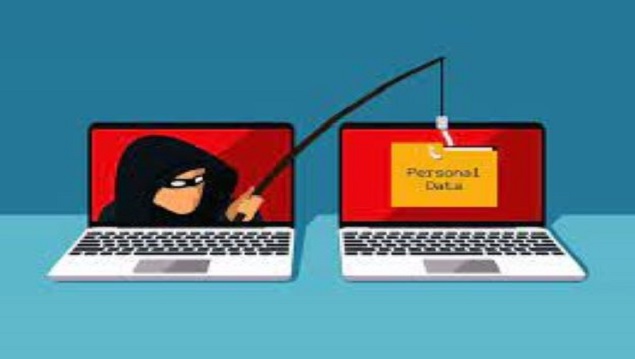
Kaspersky has discovered that attackers have begun exploiting another legitimate service for malicious purposes – this time it is Tencent EdgeOne Pages, a platform for creating and hosting web applications.

Attackers are misusing its capabilities to generate phishing emails targeting corporate users. Previously Kaspersky has described similar attacks leveraging Google services and web applications generated by Bubble, an AI-powered app builder, to hunt for corporate credentials.
Employees across multiple industries including the industrial sector, sales, and government are among the targets. The goal of the attack is to steal login credentials for corporate resources. Over the past 30 days, the company’s experts have detected more than 8,000 phishing emails using this tactic, including messages in English, Korean, and Russian.
The Tencent EdgeOne Pages service is positioned as a platform for quickly creating and deploying web applications using AI. Scammers misuse it to generate and publish phishing pages in minutes with virtually no web development skills.
Attackers host phishing pages on EdgeOne’s legitimate cloud infrastructure and use trusted domains. As a result, such sites appear to be established and secure to many protective solutions, complicating the detection of such attacks.
How the attack begins
The user receives an email from the alleged “corporate email support team”. The message states that the account login credentials will expire in 48 hours, and that failure to update them may result in problems receiving or sending emails.
To avoid restrictions, the user is prompted to click a link and enter relevant information. Phishing emails are not limited to this narrative, and could deliver any corporate message, such as a message from the HR department or a notification of a received document that should be downloaded.
Clicking the link in the email opens a page with a form for entering the victim’s name, email address, and password. It is a simple design, with virtually no additional elements.
After the user enters their login and password, the data is transferred to a server controlled by the attackers.
“We are seeing a continuation of the trend in which attackers use AI and no-code platforms as part of their phishing infrastructure. We’ve previously observed a similar scheme using the Bubble platform, and here we have yet another example.
“While the communication used in these phishing attacks is typical and has been used before multiple times, the attack technique itself significantly lowers the barrier to entry for attackers and accelerates the creation of phishing resources.
“Previously this required at least basic web development skills, but now an infrastructure for fraudulent emails can be created in minutes,” comments Roman Dedenok, Anti-Spam Expert at Kaspersky.
E-Business
Kaspersky Report Shows Early 2026 Witnessed an Increase in Cyberattacks on the Manufacturing Sector

According to a new Kaspersky ICS CERT report, in Q1 2026 the percentage of industrial control systems (ICS) on which malicious objects were blocked reached 19.6% globally. Kaspersky security solutions blocked malware from 10,052 different malware families of various categories on industrial automation systems.

Regionally, the share of ICS computers that were attacked ranged from 27.4% in Africa to 9.1% in Northern Europe. Compared to the previous quarter, attacks on the manufacturing sector in Q1 increased in multiple regions, including in Europe and Asia.
Regional split
In terms of overall numbers across all industry sectors, five regions saw an increase in the share of attacked ICS computers in Q1 2026 compared to the previous quarter. These were Southern Europe, Russia, Northern Europe, Canada and Africa.
Industries
In Q1, biometric systems traditionally placed first in terms of the share of ICS computers on which malicious objects were blocked, at 26.4%. These systems commonly have Internet access, are used for email, and, in many cases, have minimal cybersecurity controls within the organisations that use these systems.
Regionally, Southern Europe leads the ranking based on the percentage figures for biometric systems, at 35.15%. Africa follows at 29.58%, and Central Asia comes in third at 28.53%.
In the manufacturing industry, Southeast Asia ranks first among regions in terms of the percentage of ICS computers attacked (23.21%), followed by Africa (21.36%) and South Asia (20.13%).
In 2025, Kaspersky and VDC Research estimated that in just the first three quarters of 2025 cyberattacks on manufacturing organisations via ransomware could have generated over $18 billion globally in losses. Actual business losses could have been even higher when factoring in supply-chain disruptions, reputational damage, and recovery expenses.
“Legacy operational technology systems remain deeply embedded in manufacturing environments, which makes them vulnerable. Supply chain complexity and branching of the trusted partner network expands the attack surface beyond the network perimeter.
Attackers are realising that targeting OT assets of an industrial enterprise is not rocket science, which is why factory shutdowns bring massive financial losses,” commented Evgeny Goncharov, Head of Kaspersky ICS CERT.

Nigeria Data Protection Commission (NDPC) has launched the Meta-Supported Initiatives for Data Protection (M-SIDP), a strategic programme aimed at strengthening data privacy awareness, regulatory compliance and institutional capacity across Nigeria’s digital ecosystem.

The initiative follows the conclusion of regulatory proceedings involving Meta Platforms Inc., the parent company of Facebook, Instagram and WhatsApp, over concerns relating to the processing of personal data belonging to Nigerian users. The matter was resolved in 2025 through a court-approved settlement.
Under the agreement, Meta committed to supporting a two-year programme of public-facing data protection measures designed to advance the objectives of the Nigeria Data Protection Act (NDP Act) 2023, the General Application and Implementation Directive (GAID), and the NDPC Strategic Roadmap and Action Plan (SRAP) 2023–2027.
Announcing the initiative, the Commission said the programme would strengthen safeguards for data subjects while promoting responsible data processing practices among organisations operating in Nigeria.
According to a statement signed by Itunu Dosekun, head of the NDPC Media Unit, the programme will focus on governance, research and development, safety and sustainability mechanisms for technology ecosystems, capacity building for Data Protection Officers (DPOs) and Data Protection Compliance Organisations (DPCOs), as well as public awareness campaigns targeted at vulnerable groups.
The Commission stated, “As part of the settlement, Meta committed to supporting a two-year programme of public-facing data protection measures that aligns with the objectives of the Nigeria Data Protection Act, 2023 (NDP Act), the NDP Act General Application and Implementation Directive (GAID) and the NDPC Strategic Roadmap and Action Plan (SRAP) 2023–2027.”
The NDPC stressed that the settlement does not limit its regulatory authority.
“Nothing in this settlement limits the Commission’s independent statutory powers as we continue to exercise our regulatory mandate in relation to data processing activities in Nigeria, in accordance with the NDP Act and other applicable laws,” it stated.
The development comes amid rising global scrutiny of technology companies over data privacy practices, with regulators in regions including the European Union and the United States tightening enforcement against breaches and non-compliance.
Nigeria has also intensified efforts to strengthen its privacy framework following the enactment of the Nigeria Data Protection Act in 2023, which established the NDPC as an independent regulator empowered to monitor compliance, investigate violations and impose sanctions.
Industry experts warn that increasing digital adoption across banking, telecommunications, e-commerce, healthcare and public services has heightened risks of identity theft, cybercrime and unauthorised data sharing.
The NDPC has in recent years stepped up enforcement actions against organisations that violate data protection rules, while also expanding accreditation for Data Protection Compliance Organisations and training for privacy professionals.
The Meta-supported initiative is expected to address gaps in public awareness and technical capacity, while also supporting research and policy development on emerging issues such as artificial intelligence, cross-border data transfers and platform governance.
The Commission said it would provide periodic updates on the implementation of the programme and called on stakeholders to support efforts to build a secure, transparent and accountable privacy ecosystem in Nigeria.

Airtel Africa Foundation Publishes Inaugural Annual Report

Mobile Internet Gender Gap Widest in Africa – GSMA

Kaspersky Warns of “Grey” Scam Websites Exploiting User Trust

Access Holdings Affirms Long-Term Value Strategy @ 4th AGM

Zoho Unveils Homegrown Server, Takes Bold Step Toward Tech Independence

CBN Extends PoS Geo-Fencing Enforcement Deadline to August 2026

FG to Launch Nationwide Free Digital TV Platform June 17

Jumia Nigeria Records Strong Q1 2026 Growth as Technology-Led Strategy Drives Market Expansion

NCC Drafts New Rules for Virtual Mobile Operators

FG to Balance Innovation with National Security with Stronger Drone Regulations




 E-Financial3 days ago
Report Faults Banks over N91.1 Trillion Sterilised at CBN

 E-Business3 days ago
NDPC, Meta Launch 2-Year M-SIDP after Regulatory Settlement

 E-Financial3 days ago
CBN to Deploy AI in Fight Against Payment Fraud

 E-Business2 days ago
Kaspersky Report Shows Early 2026 Witnessed an Increase in Cyberattacks on the Manufacturing Sector

 Telecom2 days ago
Nigeria, Others Stuck on WiFi 4 As World Adopts WiFi 6, WiFi 7

 Telecom2 days ago
Yuno Partners with Onafriq to Unlock Pan-African Payments for Global Merchants

 E-Financial2 days ago
Senate Moves to Regulate Crypto Sector, Seeks Investor Protection

 General News2 days ago
IMF Warns Nigeria of Risks in $5Bn Swap Deal with First Abu Dhabi Bank