

E-Financial
Moniepoint Strengthens Efforts to Broaden Financial Access Through Collaborative Initiatives

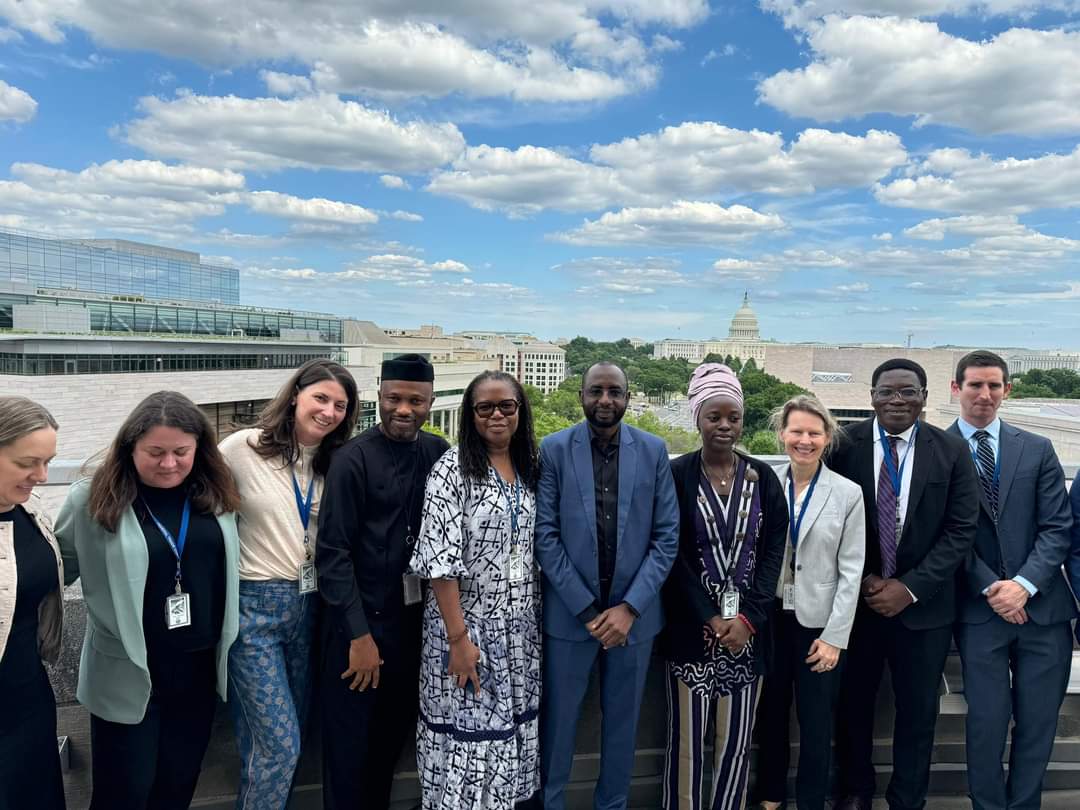
Moniepoint Inc, Africa’s fastest growing financial institution according to the Financial Times has underscored the importance of a collaborative and holistic stakeholder approach in advancing the future of financial and economic inclusion in Nigeria.
In a recent high-level policy dialogue between the Nigerian government and private sector stakeholders held in Washington DC, Moniepoint Inc’s Group CEO and Co-Founder, Tosin Eniolorunda emphasized the importance of public-private collaborations in addressing trust issues that have slowed down the adoption of innovative fintech solutions for economic and financial inclusion.
“Moniepoint has long championed the importance of financial inclusion and financial happiness. Building trust with the public and government, improving business and consumer access to the financial system are critical issues that are aligned to our philosophy.
“As testament to our commitment, we recently launched a landmark report investigating Nigeria’s informal economy, highlighting opportunities to widen financial inclusion to historically underserved communities.
“The outputs from this strategic gathering will go a long way in bolstering Nigeria’s economy even as closer linkages are formed from public-private collaboration which will be a huge boost to the overall development and competitiveness of the larger financial services industry,” Eniolorunda said.
The event, which brought together government officials, regulators, law enforcement agencies, and fintech industry leaders at George Washington University, aimed to leverage innovative approaches to drive a sustainable and inclusive financial system in Nigeria.
Vice President Kashim Shettima, addressing the gathering via video conference, highlighted the urgent need for financial innovation to drive Nigeria’s economic and financial inclusion agenda. This aligns with President Bola Ahmed Tinubu’s administration’s commitment to bringing over 30 million unbanked Nigerians into the formal financial sector as part of the Renewed Hope Agenda.
“We must develop a sustainable collaboration approach that will facilitate the adoption of inclusive payment to achieve our objective of economic and financial inclusion,” Vice President Shettima stated.
The dialogue focused on addressing critical challenges in Nigeria’s fintech ecosystem, including regulatory oversight, security concerns, and trust issues that have hindered the widespread adoption of innovative financial solutions. Participants explored strategies to enhance interagency collaboration and strengthen the overall effectiveness of the financial services sector.
Philip Ikeazor, Deputy Governor of the Central Bank of Nigeria responsible for Financial System Stability, emphasized the need for ongoing collaboration among all stakeholders to meet the goals of the Aso Accord on Economic and Financial Inclusion.
Kashifu Inuwa Abdullahi, Director General of the National Information Technology Development Agency (NITDA), advocated for “a digital-first approach and the fusion of digital literacy with financial literacy to address trust issues affecting the inclusive payment ecosystem.”
Dr. Nurudeen Zauro, Technical Advisor to the President on Economic and Financial Inclusion, explained that the gathering aims to evolve into a mechanism providing relevant information to the Office of the Vice President, facilitating effective decision-making for economic and financial inclusion.
The event resulted in various recommendations covering rules, infrastructure, and coordination, with a focus on implementable actions and clear accountabilities. As discussions continue, Moniepoint remains dedicated to leveraging its expertise and technology to support the government’s financial inclusion goals and create a more financially inclusive society for all Nigerians.
Other notable speakers included Inspector General of Police Mr. Kayode Egbetokun, Executive Director of the Center for Curriculum Development and Learning (CCDL) at George Washington University Professor Pape Cisse, Assistant Vice President at Merrill Lynch Wealth Management Mr. Reginald Emordi, Regional Director for Africa at the Center for International Private Enterprise (CIPE) Mr. Lars Benson, and United States Congresswoman representing Florida’s 20th congressional district, The Honorable Sheila Cherfilus-McCormick, Prof Olayinka David-West from the Lagos Business School among others.



Central Bank of Nigeria (CBN) has asked commercial banks to restrict loan defaulters, specifically large-ticket obligors, from accessing credit facilities.

A large ticket obligor is a borrower (an individual or company) that owes a very large amount of money to a bank.
The directive is coming a week after the CBN asked financial institutions to stress test.
It is uncertain if the two directives are connected or what may have triggered the loan-related instruction, but the apex bank said it furthers its mandate to protect Nigeria’s financial system.
“In furtherance of its mandate to promote a sound financial system, protect depositors, and enhance prudential compliance within the banking sector, the Central Bank of Nigeria (CBN) hereby directs all banks to restrict non-performing large ticket obligors, whose activities pose systemic risk to the financial system, from accessing specified banking services,” the circular reads in part.
“Any large-ticket obligor with a non-performing facility recorded in the CRMS and/or any licensed private credit bureau shall not be granted additional credit facilities. For the purpose of this restriction, credit facilities include loans and other forms of direct credit.
“In addition, such obligors shall not be granted banking facilities or contingent liabilities such as bankers’ confirmations, letters of credit, performance bonds, or advance payment guarantees.”
On strengthening collateral coverage, the CBN asked financial institutions to obtain additional realisable collateral from such obligors to adequately secure existing exposures.
The CBN said large ticket obligors are borrowers whose exposures are as defined under Clause 3.2 (d) of the prudential guidelines for deposit money banks in Nigeria 2010, or a customer with a combined exposure across banks, as shown in the credit risk management system (CRMS), and/or as shown in the reports of a licensed private credit bureau, “that exceed the Single Obligor Limit (SOL), which materially affect a bank’s Capital Adequacy Ratio (CAR) or otherwise pose a systemic risk to the financial system”.
“This directive reinforces earlier measures, particularly the circular titled “Prohibition of Loan Defaulters from Further Access to Credit Facilities in the Banking System” issued on June 30, 2014 (Ref: BSD/DIR/GEN/LAB/07/015). This is to ensure consistency and effectiveness in curbing credit abuse by large-ticket obligors,” the circular further reads.
The regulator said it will monitor compliance with the directive to ensure consistent implementation across the banking industry.
The CBN warned that noncompliance would attract appropriate regulatory sanctions in line with the provisions of the Banks and Other Financial Institutions Act (BOFIA) 2020.
Nigerian banks are undergoing a recapitalisation programme, slated to end by March 31.
So far, about 30 banks have met the minimum capital requirements announced in March 2024.

United Bank for Africa (UBA) Plc, Africa’s Global Bank, on Thursday, hosted a captivating edition of its quarterly Business Series, bringing together accomplished female leaders and entrepreneurs to discuss the theme “Gen.W: The Evolved Woman.”

L-r: Media Personality, Tobi Bakre; Head, Retail Products, United Bank for Africa (UBA), Tomiwa Sotiloye; Group Head, Customer Experience, UBA, Michelle Nwoga; Entrepreneur, Fine Funky, Olufunke Davies(fine Funky); Founder, ORIKI, Joycee Awosika; Group Head, Brands, Marketing & Corporation, UBA, Alero Ladipo; Renowned broadcaster, Arise TV, Ayo Mairo-Ese; Head, Remittances, UBA, Uzoamaka Oyeka, Media Personality, Tomike Adeoye, and Executive Director Designate, Digital Banking, UBA, Emmanuel Lamptey, during the UBA Business Series, themed, “Introducing gen.w – The Evolved Woman,” which was held at the UBA House in Lagos, on Thursday.
The hybrid session which was held at the UBA House in Marina Lagos and also transmitted live to participants across the globe, is part of activities to mark the International Women’s Month and focused on the evolving role of women in leadership, business, and innovation, highlighting how African women are redefining success while also creating sustainable impact across their various spheres of operation.
UBA’s Group Head, Customer Experience, Michelle Nwoga, who gave the opening remarks at the event, explained that the evolved woman is one who is taking charge, volunteering and making their voice heard above the noise.
The event was moderated by popular media personality and actor, Tobi Bakre; who said, “When I think about the evolved woman, I personally do not see a checklist or a finish point. In my own opinion, it is a woman who is grounded in her own self-worth and gives room for other women to be grounded in theirs, choosing herself daily and ultimately letting other women around her know and believe that they belong here too.”
The event featured panel conversations with leading entrepreneur and founder of ORÍKÌ Group, Joycee Awosika; celebrated media personality and digital entrepreneur Tomike Adeoye; founder of Fine-Funky, Olufunke Davies, and award-winning broadcaster, Ayo Mario-Ese who shared experiences around their struggles and eventual evolution as female business owners.
From her point of view, Joycee Awosika, an energy economist who has been focused on promoting the African heritage, the evolved woman is one who has awareness of who she is. “That woman does not need to ask to sit at the table, she is creating her own table and adding value. As your company is growing, you must grow too, and always do an audit of where you need to become a better leader” she stated.
To Tomike Adeoye, the question of what a woman is bringing to the table has now become obsolete, as the evolved woman is now bringing their own table. “She is now more vocal about their struggles, setting the standards and she is not ready to give up on her dreams,” she added.
Ayo Mario-Ese expressed worry about females who are usually laidback about speaking up and sharing their achievements, and said that women need to own their own stories: “A lot of women are doing phenomenal work and are sometimes afraid of showcasing what they are doing. As an evolved woman, you have to find out what you are comfortable doing, and create your own unique offering, and also be open to collaboration.”
“Creating unique designs that are affordable remains my driving force and something that has helped me grow as an evolved woman,” remarked Olufunke Davies, who confessed to having ventured into a lot of businesses before finding her niche. “It is important to do your research, streamline and think about relatability. But the important thing I will say is start where you are as it is a progression.”
The Group Head, Brand, Marketing and Corporate Communications, Alero Ladipo, who commended the panellists and the attendees for taking their time to join the event said, “Raising each woman up is actually not that hard; because, everyone has their community as well as their story; and so as women, we need to take position so that you can give to others.”
Ladipo took time to speak about the Gen W platform, put together by the bank, as she explained that it is a lifestyle platform dedicated to the evolved woman, adding, “Through expert insights, real stories, and practical resources, the platform connects women who are building brands, creating businesses, growing careers, and leading across industries.
“They also have access to a plethora of discounted products and loans. The best part: it is open to every woman. No UBA account needed. This is Gen W, for the evolved woman,” she said.
UBA continues to reaffirm its commitment to empowering women and entrepreneurs through platforms such as the Business Series, which continues to serve as a hub for mentorship, knowledge exchange, and thought leadership. By convening influential voices and sharing practical experiences, the bank aims to inspire a new generation of women leaders and innovators across Africa and beyond.
By Blaise Udunze
In barely two weeks, Nigeria’s banking sector will once again be at a historic turning point. As the deadline for the latest recapitalisation exercise approaches on March 31, 2026, with no fewer than 31 banks having met the new capital rule, leaving out two that are reportedly awaiting verification. As exercise progresses and draws to an end, policymakers are optimistic that stronger banks will anchor financial stability and support the country’s ambition of building a $1 trillion economy.

CBN
The reform, driven by the Central Bank of Nigeria (CBN) under Governor Olayemi Cardoso, requires banks to significantly raise their capital thresholds, which are set at N500 billion for international banks, N200 billion for national banks, and N50 billion for regional lenders. According to the apex bank, 33 banks have already tapped the capital market through rights issues and public offerings; collectively, the total verified and approved capital raised by the banks amounts to N4.05 trillion.
No doubt, at first glance, the strategy definitely appears straightforward with the idea that bigger capital means stronger banks, and stronger banks should finance economic growth. But history offers a cautionary reminder that capital alone does not guarantee resilience, as it would be recalled that Nigeria has travelled this road before.
During the 2004-2005 consolidation led by former CBN Governor Charles Soludo, the number of banks in the country shrank dramatically from 89 to 25. The reform created larger institutions that were celebrated as national champions. The truth is that Nigeria has been here before because, despite all said and done, barely five years later, the banking system plunged into crisis, forcing regulatory intervention, bailouts, and the creation of the Asset Management Corporation of Nigeria (AMCON) to absorb toxic assets.
The lesson from that experience is simple in the sense that recapitalisation without structural reform only postpones deeper problems.
Today, as banks race to meet the new capital thresholds, the real question is not how much capital has been raised but whether the reform will transform the fundamentals of Nigerian banking. The underlying fact is that if the exercise merely inflates balance sheets without addressing deeper vulnerabilities, Nigeria risks repeating a familiar cycle of apparent stability followed by systemic stress, as the resultant effect will be distressed banks less capable of bringing the economy out of the woods.
The real measure of success is far simpler. That is to say, stronger banks must stimulate economic productivity, stabilise the financial system, and expand access to credit for businesses and households. Anything less will amount to a missed opportunity.
One of the most critical issues surrounding the recapitalisation drive is the quality of the capital being raised.
Nigeria’s banking sector has reportedly secured more than N4.5 trillion in new capital commitments across different categories of banks. No doubt, on paper, these numbers may appear impressive. Going by the trends of events in Nigeria’s economy, numbers alone can be deceptive.
Past recapitalisation cycles revealed troubling practices, whereby funds raised through related-party transactions, borrowed money disguised as equity, or complex financial arrangements that recycled risks back into the banking system. If such practices resurface, recapitalisation becomes little more than an accounting exercise.
To avert a repeat of failure, the CBN must therefore ensure that every naira raised represents genuine, loss-absorbing capital. Transparency around capital sources, ownership structures, and funding arrangements must be non-negotiable. Without credible capital, balance sheet strength becomes an illusion that will make every recapitalization exercise futile.
In financial systems, credibility is itself a form of capital. If there is one recurring factor behind banking crises in Nigeria, it is corporate governance failure.
Many past collapses were not triggered by global shocks but by insider lending, weak board oversight, excessive executive power, and poor risk culture. Recapitalisation provides regulators with a rare opportunity to reset governance standards across the industry.
Boards must be independent not only in structure but also in substance. Risk committees must be empowered to challenge executive decisions. Insider lending rules must be enforced without compromise because, over the years, they have proven to be an anathema against the stability of the financial sector. The stakes are high.
When governance fails, fresh capital can quickly become fresh fuel for old excesses. Without governance reform, recapitalisation risks reinforcing the very weaknesses it seeks to eliminate.
Another structural vulnerability lies in Nigeria’s increasing amount of non-performing loans (NPLs), which recently caused the CBN to raise concerns, as Nigeria experiences a rise in bad loans threatening banking stability.
Industry data suggests that the banking sector’s NPL ratio has climbed above the prudential benchmark of 5 percent, reaching roughly 7 percent in recent assessments. Many of these troubled loans are concentrated in sectors such as oil and gas, power, and government-linked infrastructure projects, alongside other factors such as FX instability, high interest rates, and the withdrawal of Covid-era forbearance, which threaten bank stability.
While regulatory forbearance has helped maintain short-term stability, it has also obscured deeper asset-quality concerns. A credible recapitalisation process must confront this reality directly.
Loan classification standards must reflect economic truth rather than regulatory convenience. Banks should not carry impaired assets indefinitely while presenting healthy balance sheets to investors and depositors.
Transparency about asset quality strengthens trust. Concealment destroys it. Few forces have disrupted Nigerian bank balance sheets in recent years as severely as exchange-rate volatility.
Many banks still operate with significant foreign exchange mismatches, borrowing short-term in foreign currencies while lending long-term to clients earning revenues in naira. When the naira depreciates sharply, these mismatches can erode capital faster than any credit loss.
Recapitalisation must therefore be accompanied by stricter supervision of foreign exchange exposure, as this part calls for the regulator to heighten its supervision. Banks should be required to disclose currency risks more transparently and undergo rigorous stress testing at intervals that assume adverse currency scenarios rather than best-case outcomes. In a structurally import-dependent economy, ignoring FX risk is no longer an option.
Nigeria’s banking system has long been characterised by excessive concentration in a few sectors and corporate clients, which calls for adequate monitoring and the need to be addressed quickly for the recapitalization drive to yield maximum results.
Growth in most advanced economies comes from the small and medium-sized enterprises that are well-funded. Anything short of this undermines it, since the concentration of huge loans to large oil and gas companies, government-related entities, and major conglomerates absorbs a disproportionate share of bank lending. This has continued to pose a major threat to the system, as the case is with small and medium-sized enterprises, the backbone of job creation, which remain chronically underfinanced. This imbalance weakens the economy.
Recapitalisation should therefore be tied to policies that encourage credit diversification and risk-sharing mechanisms that allow banks to lend more confidently to productive sectors such as agriculture, manufacturing, and technology rather than investing their funds into the government’s securities. Bigger banks that remain narrowly exposed do not strengthen the economy. They amplify its fragilities.
Nigeria’s macroeconomic conditions, which are its broad economic settings, are defined by frequent and sometimes sharp changes or instability rather than stability.
Inflation shocks, interest-rate swings, fiscal pressures, and currency adjustments are not rare disruptions; but they have now become a normal part of the economic environment. Despite all these adverse factors, many banks still operate risk models that assume relative stability. Perhaps unbeknownst to the stakeholders, this disconnect is dangerous.
Owing to possible shocks, and when banks increase their capital (recapitalization), it is required that banks adopt more sophisticated risk-management frameworks capable of withstanding severe economic scenarios, with the expectation that stronger banks should also have stronger systems to manage risks and survive economic crises. In Nigeria today, every financial institution’s stress testing must be performed in the face of the economy facing severe shocks like currency depreciation, sovereign debt pressures, and sudden interest-rate spikes.
Risk management should evolve from a compliance obligation into a strategic discipline embedded in every lending decision.
Public confidence in the banking system depends heavily on credible financial reporting.
Investors, analysts, and depositors need to be able to understand banks’ true financial positions without navigating non-transparent disclosures or creative accounting practices, which means the industry must be liberated to an extent that gives room for access to information.
Recapitalisation provides an opportunity to strengthen the enforcement of international financial reporting standards, enhance audit quality, and require clearer disclosure of capital adequacy, asset quality, and related-party transactions. Transparency should not be feared. It is the foundation of trust.
One thing that must be corrected is that while recapitalisation often focuses on financial metrics, the banking sector ultimately runs on human capital.
Another fearful aspect of this exercise for the economy is that consolidation and mergers triggered by the reform could lead to workforce disruptions if not carefully managed. Job losses, casualisation, and declining staff morale can weaken institutional culture and productivity. Strong banks are built by strong people.
If recapitalisation strengthens balance sheets while destabilising the workforce that powers the system, the reform risks undermining its own economic objectives. Human capital stability must therefore form part of the broader reform strategy.
Doubtless, another emerging shift in Nigeria’s financial landscape is the rise of digital financial platforms that are increasingly changing how people access and use money in Nigeria.
Millions of Nigerians are increasingly relying on fintech platforms for payments, microloans, and everyday financial transactions. One of the advantages it offers, is that these services often deliver faster and more user-friendly experiences than traditional banks. While innovation is welcome, it raises important questions about the future structure of financial intermediation.
The point here is that the moment traditional banks retreat from retail banking while fintech platforms dominate customer interactions, systemic liquidity and regulatory oversight could become fragmented.
The CBN must see to it that the recapitalised banks must therefore invest aggressively in digital infrastructure, cybersecurity, and customer experience, while cutting down costs on all less critical areas in the industry.
Nigerians should feel the benefits of recapitalisation not only in stronger balance sheets but also in faster apps, reliable payment systems, and responsive customer service.
As banks grow larger through recapitalisation and consolidation, a new challenge emerges via systemic concentration.
Nigeria’s largest banks already control a significant share of industry assets. Further consolidation could deepen the divide between dominant institutions and smaller players. This creates the risk of “too-big-to-fail” banks whose collapse could threaten the entire financial system.
To address this risk, regulators must strengthen resolution frameworks that allow distressed banks to fail without triggering systemic panic, their collapse does not damage the whole financial system, and do not require taxpayer-funded bailouts to forestall similar mistakes that occurred with the liquidation of Heritage Bank. Market discipline depends on credible failure mechanisms.
It must be understood that Nigeria’s banking recapitalisation is not merely a financial exercise or, better still, increasing banks’ capital. It is a rare opportunity to rebuild trust, strengthen governance, and reposition the financial system as a true engine of economic development.
One fact is that if the reform focuses only on capital numbers, the country risks repeating a familiar pattern of churning out impressive balance sheets followed by another cycle of crisis.
But the actors in this exercise must ensure that the recapitalisation addresses governance failures, asset quality concerns, risk management weaknesses, and transparency gaps; and the moment this is done, the banking sector could emerge stronger and more resilient.
Nigeria does not simply need bigger banks. It needs better banks, institutions capable of financing innovation, supporting entrepreneurs, and building economic opportunity for millions of citizens.
The true capital of any banking system is not just money. It is trust. And whether this recapitalisation ultimately succeeds will depend on whether Nigerians see that trust reflected not only in financial statements but in the everyday experience of saving, borrowing, and investing in the economy. Only then will bigger banks translate into a stronger nation.
Blaise, a journalist and PR professional, writes from Lagos and can be reached via: [email protected]

VDT Communications Achieves Two Prestigious Certifications ISO /IEC 27001:2022, ISO/IEC 27032:2023 Reinforcing its Leadership in Broadband Service Provision

CBN Orders Banks to Restrict Access to Banking Services for Loan Defaulters

NLNG Advances Media Excellence with Change Your Story Workshop

Interswitch Advocates Trust-Driven Infrastructure as Cornerstones of Africa’s Cross-Border Capital Future

Why JustMarkets Is a Strong Choice for Gold Trading

Kaspersky Discovers New Phishing Campaign Exploiting Google Tasks Notifications to Steal Corporate Credentials

esentry 2025 Report Shows Healthcare, Financial Services and Telecoms as Staging Grounds for Increased Cyberattacks in Africa

AfDB, UNDP Launch $10Bn AI Initiative for Africa

Pheelz Shares His Journey on Glo-Sponsored African Voices

Mutual Benefits Assurance Settles ₦5.9bn Claims in January 2026




 General News2 days ago
Court Freezes Bank Accounts of Petrocam, Founder over Alleged N9Bn Zenith Bank Debt

 E-Business3 days ago
FG Moves to Strengthen Children’s Online Safety

 E-Financial3 days ago
CBN Directs Banks to Activate Anti-Money Laundering Systems

 General News2 days ago
FCCPC Says Telcos, Energy Firms Lead Consumer Complaints in Nigeria

 Telecom2 days ago
Techeconomy Unveils IWD 2026 Power List Celebrating 100 Women Shaping the Future

 Telecom3 days ago
Canal+ Unveils €100m Rescue Plan to Revive MultiChoice after Subscriber Slump

 E-Business3 days ago
How Africa Can Turn the AI Wave into Inclusive Growth

 E-Business2 days ago
Kaspersky Uncovers a New Android Malware Campaign Disguised as Starlink Application