

General News
IHS Nigeria, UNICEF Assess Impact of their Lifesaving Oxygen Plant Donated to Oyo State

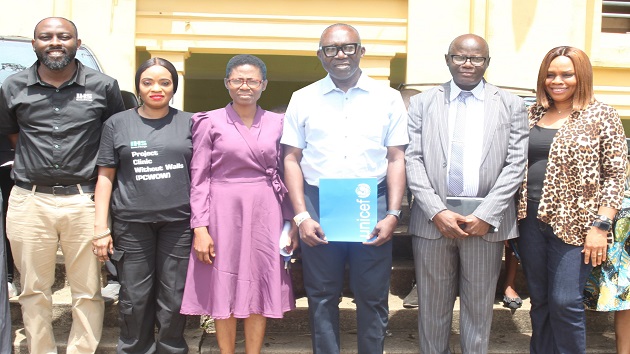
IHS Nigeria, part of the IHS Holding Limited (“IHS Towers”) group, one of the largest independent owners, operators, and developers of shared communications infrastructure in the world by tower count, has continued its impact assessment tour of its oxygen plant projects situated in different hospitals across the country.

The telecommunications infrastructure company visited Jericho Specialist Hospital, Ibadan, Oyo State on Wednesday, June 18, 2025, to assess the usage condition of the oxygen plant jointly donated in collaboration with the United Nations Children’s Fund (UNICEF) in May 2024.
The oxygen plant donation is part of IHS Nigeria’s commitment to improving Nigeria’s healthcare system through sustainable, impactful initiatives designed to serve health facilities in the state.
Ahead of a tour of the facility, the IHS and UNICEF team were received at the Oyo State Ministry of Health by the Honorable Commissioner for Health, Dr. Oluwaserimi Adewunmi Ajetunmobi alongside the Permanent Secretary and other Directors from the Ministry and the Oyo State Hospital Management Board.
The visit, led by senior officials from IHS Nigeria and UNICEF, provided an opportunity to evaluate the plant’s operational efficiency, its integration into critical care delivery, and its broader impact on the state’s healthcare system.
Commenting on the visit, Titilope Oguntuga, Director, Sustainability, IHS Nigeria remarked: “At IHS, sustainability is at the core of everything we do. Our focus spans four key pillars which are Ethics & Governance, Environment & Climate Change, People & Communities and Education & Economic Growth.
This oxygen plant initiative speaks directly to our commitment to people and communities. As we assess the progress of this project, we are reminded of its alignment with key Sustainable Development Goals, including good health and well-being, responsible consumption, and partnerships for the attainment of the SDG goals.”
“We are here not just to inspect the plant, but to witness the impact, strengthen relationships, and continue building a partnership that delivers real value to Nigerians.” She added.
Health Specialist, UNICEF Lagos, Dr. Olufemi Adeyemi commented: “It is a pleasure to witness the results of our strong collaboration with IHS Nigeria and Oyo State. On behalf of UNICEF, I want to sincerely thank the state for providing an enabling environment that makes impactful partnerships like this possible.
“We are here to assess how well the oxygen plant is performing. We no longer want to see lives lost due to a lack of oxygen. We want to be assured that the investment made is truly saving lives and delivering the impact it was intended to.”
Commissioner of Health, Oyo State, Dr. Oluwaserimi Adewunmi Ajetunmobi expressed appreciation for the initiative, saying: “This partnership between IHS Nigeria and UNICEF is a testament to the power of collaboration in strengthening our healthcare system.
“The oxygen plant at Jericho Specialist Hospital has become a critical asset in our fight to reduce avoidable deaths, especially among newborns and vulnerable patients. It is not just a donation; it is a life-saving intervention that has redefined emergency response capabilities in the state.
“We commend IHS Nigeria and UNICEF for their foresight, dedication, and long-term commitment to healthcare delivery in Oyo State.”
Dr. Akintunde Ayinde, Permanent Secretary, Oyo State Ministry of Health commented on the significance of the oxygen plant and the broader impact of the partnership.
“Before COVID-19, oxygen therapy was not prioritized in most hospitals, government or private. But when the crisis hit, IHS Nigeria and UNICEF didn’t just donate equipment, they identified the gap and moved quickly to close it. This oxygen plant has completely transformed our emergency response system. We’ve gone from scarcity to stability. Patients who once struggled to access oxygen especially those who couldn’t afford it now receive it without delay’’.
“Beyond the donation, IHS and UNICEF brought us a sustainability model, trained engineers, and introduced a more efficient, solar-powered oxygen management system. We’re now extending oxygen access to primary and secondary care centers and even supplying private clinics in crisis. For me, this initiative is not just impactful, it is lifesaving. We are truly grateful and committed to building on this collaboration to ensure long-term impact.” He added.
The oxygen plant is equipped with 50 units of 6-cubic-meter cylinders and 150 units of 3 cubic meter cylinders that currently supplies both private and public hospitals including primary health centers all over Oyo state.
The hospital management acknowledged the difference the plant has made in ensuring prompt availability of oxygen even for primary healthcare centers that are unable to pay, and in improving the medical outcomes for many patients who need oxygen as part of their management.
Recall that earlier this year; the team had visited the Olabisi Onabanjo University Teaching Hospital (OOUTH), Sagamu, to evaluate the operational status and impact of the oxygen plant installed in Ogun.



Economic and Financial Crimes Commission (EFCC,) has declared Halimat Adenike Tejuosho, a women leader of the City Boys Movement, wanted.

Halimat Adenike Tejuosho,
A notice issued by the EFCC on Monday via X said Tejuosho has been declared wanted over an alleged case of obtaining money by false pretence.
The notice was signed by Dele Oyewale, head of Media and Publicity for the EFCC.
The anti-graft agency called on members of the public with useful information about her whereabouts to contact any of its offices nationwide.
The Commission also urged the members of the public to reach out via its official phone lines or email, or report to the nearest police station or other security agencies.
Recall that the City Boy Movement recently appointed Tejuosho as the South-West Zonal Women Leader.
According to a statement signed by the Movement, Tejuosho is to provide strategic leadership and coordination for women-focused activities in the zone, driving political mobilization, civic engagement, and advocacy.
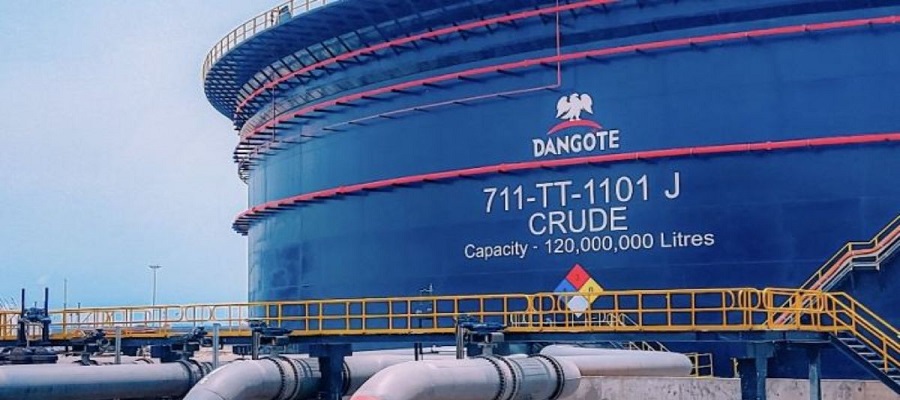
African Export-Import Bank (Afreximbank) has disclosed plans to finance three additional refineries in Nigeria as part of a broader push to reduce the country’s reliance on imported petroleum products and strengthen local refining capacity.

Denys Denya, senior executive vice president of the bank, made the disclosure on Monday during a virtual media briefing focused on the institution’s 2025 financial performance, crisis response initiatives, and long-term industrialisation strategy.
“We are also financing refining on the continent, which will alleviate the importation of refined products. We are not only supporting Dangote; we’re supporting three other refineries in Nigeria,” Denya said.
The briefing, which focused on the bank’s 2025 financial performance, crisis response initiatives, and industrialisation strategy, also featured a question-and-answer session with journalists across Africa.
Denya explained that the push into refining is driven by recent disruptions in global supply chains, particularly linked to tensions in the Middle East, which have raised the cost and complexity of fuel imports for African economies.
According to him, Afreximbank has adopted a dual approach of supporting immediate trade finance needs while investing in long-term productive capacity to reduce structural import dependence.
He said, “For import-dependent economies, the cost of import is very high… so we have taken a proactive approach of engaging with financial institutions on the continent to increase their facilities so they can issue high-value letters of credit.”
The bank’s intervention is backed by a $10bn Gulf Crisis Response Programme, designed to stabilise access to essential imports such as fuel, food, fertilisers, and pharmaceuticals, while also supporting sectors exposed to global shocks.
Denya noted that the facility is already seeing uptake from countries including Kenya, Ethiopia, and Tanzania, warning that demand could accelerate if geopolitical tensions persist.
Beyond short-term interventions, the Afreximbank executive stressed that financing refining projects across Nigeria and other African countries remains central to the bank’s long-term strategy of industrialisation and export development.
He said the bank’s support for large-scale industrial projects, including the Dangote Group refinery, reflects its commitment to reducing Africa’s reliance on imported refined products and strengthening regional value chains.
“Our support for industrialists who are making a difference on the continent is testimony to this approach. We will continue to champion projects that reduce Africa’s reliance on imported refined products,” he added.
Denya further disclosed that the bank is financing similar refining projects in Angola as part of a continent-wide push to achieve self-sufficiency in petroleum products.
The shift towards local refining, he explained, is also expected to improve macroeconomic stability by reducing foreign exchange pressures associated with fuel imports.


The Gathering on 100 has officially concluded its pilot edition, closing out 100 continuous hours of culture, creativity, and community engagement at the National Stadium, Surulere. At the climax of the five-day immersive youth experience, MTN Nigeria and the gatherers of the event unveiled the defining message of the movement: “Live It 100.”

The event brought together thousands of young Nigerians in a massive convergence of music, sports, gaming, and creative sessions. From watching the sunrise for four consecutive mornings to actively shaping culture in real-time, attendees experienced a shared journey rooted in endurance and expression.
Operating under a partnership model rather than a traditional corporate sponsorship, MTN stepped back to let the youth lead. The techo embraced the primary narrative that “The Gathering is the fire; MTN is the oxygen”.
Karl Toriola, Chief Executive Officer, MTN Nigeria, said: “The energy we have witnessed here in Surulere over the past 100 hours is proof of the unstoppable spirit of the Nigerian youth. Our strategic intent was to position MTN as the critical engine behind this vibrant youth movement, ensuring the brand is seen as an enabler, not an intruder. The Gathering is the fire; MTN is the oxygen. ‘Live It 100’ is our commitment to powering the platform where the conversation happens. We are giving them the autonomy to lead, while we listen.”
A focal point of the event was the high-stakes Pitchathon segment, which provided a structured arena for startups to showcase working products. Rather than a traditional, heavily branded corporate event, the space felt authentic, unscripted, and transparent, allowing founders to interact directly with expert judges, potential investors, and a live audience.
Onyinye Ikenna-Emeka, Chief Marketing Officer, MTN Nigeria, shared: “The ideas and partnerships formed over these 100 hours show exactly what happens when corporate Nigeria is finally listening to young Nigerians. We recognise that traditional business engagement doesn’t always work for this generation, which is why we empowered the youth to lead. By supporting The Gathering, we are not just celebrating culture; we are fueling the young Nigerian through youth-led innovation and actively investing in their economic potential.”
Beyond business activity, the event recorded consistent engagement across its programming, providing deep insight into the evolving role of youth within Nigeria’s economy. The sustained 100-hour activity highlighted a growing, resilient base of digitally engaged participants who own their lanes and actively create their own opportunities.
As the event closed, MTN reaffirmed their commitment to expanding the platform, ensuring that The Gathering on 100 will continue to evolve as a vital space for both cultural expression and youth-led economic opportunity.

Buhari, SSG’s Signatures Forged to Defraud Nigeria of $6.2m in CBN – EFCC

EFCC Declares Tejuosho, City Boys Movement’s Women Leader Wanted over “419”

Angst as FG Drops $32.8m Fine on Meta for Data Breach

Afreximbank to Fund 3 New Refineries in Nigeria

CSCS Targets Market Leadership Through Technology, Diversified Revenue

FG to Gift Nigerians over 100 Free TV Channels from May 15

Microsoft Revamps Copilot in Workplace AI Push

Dangote Refinery Debunks Speculations on IPO

What Adekunle Gold’s Support Means for ‘The Gathering on 100

NRS Takes Over Mineral Royalties Collection Under New Tax Laws




 Telecom2 days ago
Elon Musk Launches XChat with Video Calling to Take on WhatsApp, Messenger

 Telecom2 days ago
MTN-Backed Pitchathon Awards ₦45m to Startups @‘Gathering on 100’ in Lagos

 Telecom2 days ago
How NITDA Is Transforming Corps Members into Digital Millionaires

 Broadcasting2 days ago
SERAP, NGE Sue NBC over Threat to Sanction Broadcasters

 Telecom2 days ago
Globacom Unveils Two New TVCs Showcasing the Future of Connectivity

 E-Financial2 days ago
CRMI Backs CBN’s New Measures to Curb Fraud

 E-Financial2 days ago
Systemically Weak Banks Put Nigeria’s $1Trillion Ambition at Risk

 News2 days ago
BOI MD, Olasupo Olusi, Charts Tech-Driven Path to Growth for Nigeria